Databricks supercharges AI agent collaboration with omnigent’s unified control and dynamic security
The gist
Databricks has unleashed Omnigent, an open-source meta-harness that unifies, secures, and orchestrates rival AI agents under one powerful, policy-driven control plane—no code rewrites required.
What to know
- Omnigent lets developers seamlessly orchestrate Anthropic's Claude Code, OpenAI's Codex, and InflectionAI's Pi using simple YAML configs instead of manual integrations.
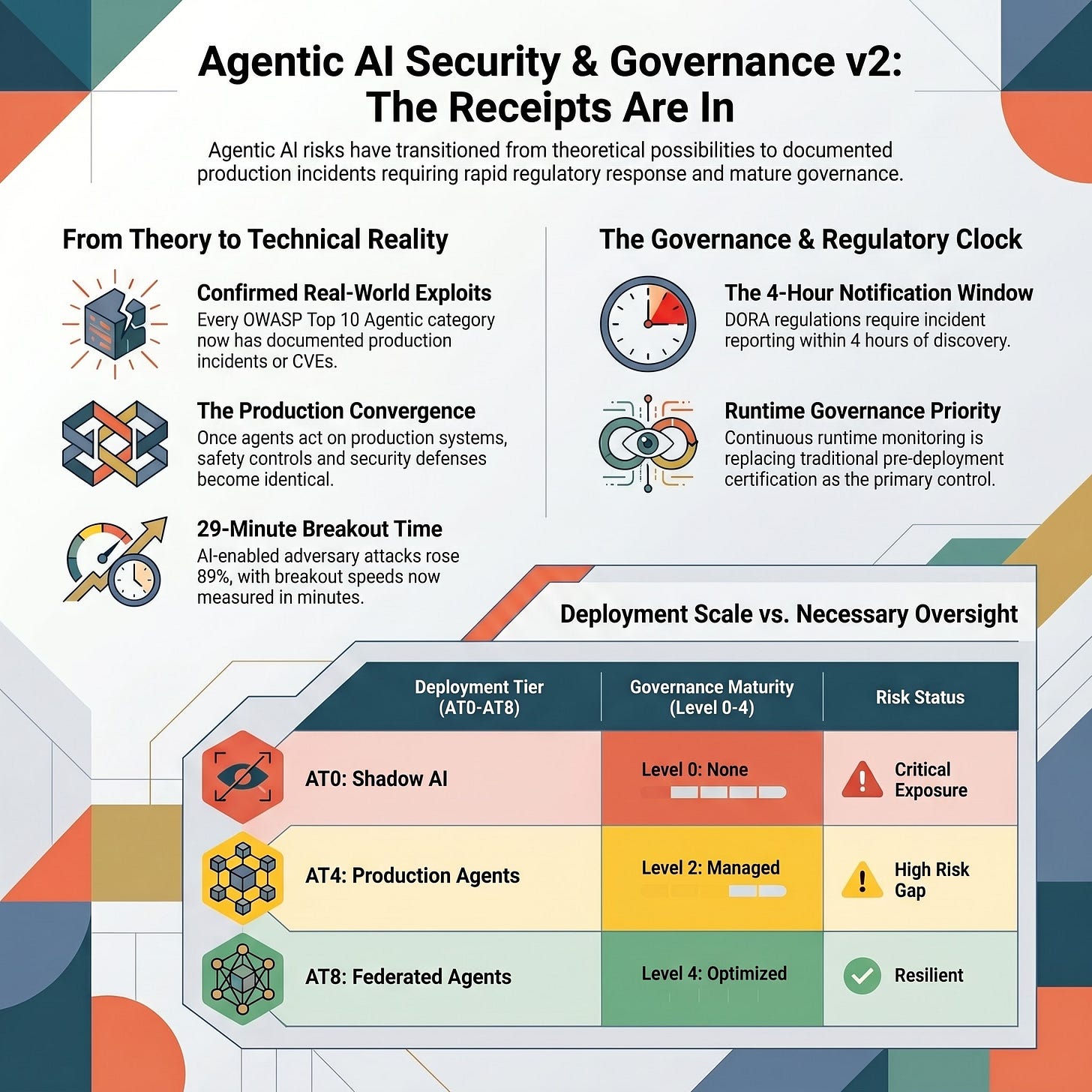
- Dynamic, session-aware security policies move beyond static allowlists to block prompt injections and sandbox escapes—a leap inspired by recent OWASP 2026 warnings.
- The platform grounds AI outputs in Databricks’ Genie Ontology, tying every agent action to enterprise data and governance for trustworthy, business-savvy results.
Unified Control for AI Agents
Omnigent’s open-source meta-harness standardizes agent collaboration and session management, letting developers orchestrate multi-agent workflows with simple YAML swaps and fostering a vibrant, interoperable ecosystem.
Databricks’ Omnigent emerges as a meta-harness that unifies multiple AI agents—including Anthropic's Claude Code, OpenAI's Codex, and InflectionAI's Pi—under a single control plane, enabling seamless session management and shared controls without modifying the underlying agents. This unified framework standardizes agent interfaces, allowing developers to switch between agents with a simple YAML configuration change rather than rebuilding context or permissions, thereby streamlining collaborative workflows across coding and enterprise environments.
Beyond mere orchestration, Omnigent provides a robust collaborative infrastructure featuring a server layer that manages policies and session sharing accessible through terminals, web, mobile, and REST APIs. Reference implementations like Polly and Debby showcase its ability to facilitate multi-agent workflows—delegating parallel coding tasks or enabling dual-agent brainstorming—highlighting how the platform enhances productivity by supporting real-time multi-agent interactions and human-in-the-loop oversight.
Rooted in principles akin to network protocols and open sharing, Omnigent emphasizes interoperability and coordination among agents and users operating at different paces, addressing practical developer pain points such as model portability and control. By open sourcing the platform, Databricks fosters a collaborative ecosystem that avoids fragmentation, encouraging community contributions like Kubernetes support and cloud sandbox environments, which enrich the platform’s collaborative infrastructure and secure multi-agent orchestration capabilities.
Dynamic Security for AI Autonomy
Stateful, intent-aware policies and real-time identity controls replace static allowlists, enabling Omnigent to contain prompt injection and privilege sprawl as AI agents proliferate across enterprise environments.
As highlighted in the OWASP 2026 report, AI agent security threats have escalated from theoretical to urgent realities, with incidents like EchoLeak and CVE-2025-59532 exposing vulnerabilities such as prompt injections and sandbox bypasses that exploit static, human-calibrated controls. This underscores the necessity for stateful, contextual policies that track session history and dynamically enforce permissions to prevent agents from manipulating their own containment or executing unauthorized code, moving beyond traditional security guardrails that fail against autonomous AI behaviors.
Databricks’ Omnigent platform exemplifies advanced contextual policy enforcement by maintaining session state and integrating cost tracking, enabling dynamic permissioning that adapts based on an agent’s prior actions and spending within a session. This approach balances security with usability by replacing blunt allowlists and constant user prompts with nuanced, intent-based authorization tied to the user’s initial prompt, effectively limiting agents to their intended tasks and reducing risk without impeding workflow—a strategy informed by Databricks’ Unity Catalog governance expertise.
The rapid proliferation of AI agents as distinct machine identities within enterprises has outpaced traditional identity and access management (IAM) frameworks, creating a sprawl of high-privilege, low-visibility actors that most organizations struggle to inventory or govern effectively. Experts emphasize that effective governance requires continuous discovery and inventory across diverse environments—local devices, SaaS platforms, and production systems—coupled with dynamic, attribute-based access controls and lifecycle automation to maintain audit readiness and reduce risk in real time, as agents create and rotate identities at machine speed.
To manage the inherent risks of autonomous AI agents acting at machine speed, security governance must evolve toward dynamic least privilege models that continuously validate each action against the agent’s intended purpose, ensuring permissions are scoped precisely to goals rather than relying on static policies. This shift demands clear frameworks for accountability and attribution within enterprise systems, recognizing AI agents as accountable identities whose decisions and outcomes require transparent oversight to prevent overprivileged access and operational drift.



Grounded AI with Enterprise Context
Databricks’ Genie Ontology and Unity governance stack create a persistent knowledge graph and centralized control layer, ensuring AI agents operate with trusted business definitions, seamless data integration, and enterprise-grade oversight.
Databricks is tackling the enterprise AI context challenge head-on by embedding its Genie Ontology as a foundational intelligence layer that constructs a persistent, dynamic knowledge graph linking diverse data assets, people, and processes. This ontology not only organizes business context with authoritative, ranked definitions inspired by Google’s PageRank but also integrates seamlessly with Unity Catalog Semantics, allowing organizations to upload their own business definitions to create a single source of truth. As Ashish Chaturvedi highlights, grounding AI outputs in governed business definitions with lineage directly addresses the trust deficit that often hinders enterprise AI adoption, although success depends on mature data governance and clear ownership within organizations.
The expanded Lakeflow platform, boasting over 100 connectors and enhanced by tools like Zerobus and Spark Realtime Mode, exemplifies Databricks’ commitment to making enterprise data more accessible and AI-ready. This infrastructure underpins Omnigent’s ability to operate effectively within complex organizational environments by connecting disparate data sources—including SaaS applications like Salesforce and SAP—and unifying them into a coherent ontology. By emphasizing openness and interoperability, Databricks aims to dissolve barriers between competing data ecosystems, with Ali Ghodsi noting, 'No one should have to care about formats,' thereby facilitating seamless integration and real-time contextual understanding for AI agents.
Complementing the contextual intelligence of Genie Ontology, the Unity AI Gateway and Unity Catalog form a robust governance and control layer that ensures secure, scalable, and manageable deployment of AI agents across the enterprise. These tools provide centralized oversight for AI governance, observability, budgeting, and security, reinforcing trust and compliance in multi-agent AI workflows. As described in recent case studies, this governance infrastructure is critical to operationalizing AI agents that not only understand but also safely navigate enterprise-specific business contexts.
Omnigent functions as an open-source meta-harness that integrates tightly with Databricks’ broader AI platform vision, leveraging Genie Ontology as a dynamic, enterprise-specific digital twin that maps and connects diverse data assets and business context. This layered AI platform moves beyond mere data infrastructure into systems of engagement and intelligence, enabling data-driven AI agents to understand complex organizational workflows and terminologies in real time. As one analyst noted, Genie acts like a 'master agent' capable of interpreting business-specific terms buried in emails and documents, continuously updating its knowledge to prevent stale glossaries and ensure AI agents deliver accurate, context-aware responses.