Debt, deceit, and democracy on the brink: trump’s authoritarian surge sparks grassroots uprising

The gist
With the U.S. debt crisis deepening and Trump’s authoritarian playbook expanding, a surging grassroots rebellion is fighting to keep American democracy from the brink.
What to know
- Bipartisan corruption and runaway spending have ballooned the national debt, with mandatory outlays set to devour 77% of the federal budget by 2026.
- The Trump administration is aggressively pushing nationwide voter ID laws, militarizing agencies, and undermining democratic norms through politicized appointments and disinformation.
- Grassroots movements like No Kings have mobilized thousands of events and legal challenges to demand term limits, ethics reforms, and push back against book bans and restrictive voting laws.
Corruption Fuels Inequality
Bipartisan self-preservation and unchecked government waste drive wealth concentration, leaving ordinary Americans to shoulder the burden of a rigged fiscal system.
Entrenched political incentives and bipartisan dysfunction have created a self-perpetuating system of fraud, waste, and abuse that entrenches wealth inequality and fiscal instability. As noted in late 2025 analyses, Democrats and Republicans alike protect their own patronage networks—ranging from sanctuary cities and welfare pipelines to defense contracts and donor-funded projects—ensuring political self-preservation at the expense of meaningful reform. This dynamic exacerbates a bifurcated economy where the asset-rich elite continue to accumulate wealth while the poor and middle class suffer the brunt of fiscal mismanagement, living in effectively separate economic realities.
Unchecked government spending, far outpacing revenue growth, has driven the U.S. into a deepening national debt crisis that threatens economic survival and institutional integrity. By early 2026, analyses revealed that for every dollar of new tax revenue since 2019, Washington added $1.58 in spending, with mandatory expenditures and debt interest consuming 77% of the federal budget. Ray Dalio underscored this unsustainable trajectory, highlighting a 40% deficit and a debt load six times annual revenue, with half the $2 trillion deficit attributed to interest payments—effectively 'plaque in the system' that squeezes out productive investment and risks catastrophic economic consequences.
Systemic corruption blurs the line between legal and illegal theft, as government fraud and waste—estimated to drain 10% of the federal budget annually—are perpetuated by political patronage and lack of accountability. The Minnesota fraud scandal exemplifies how politicians prioritize rewarding supporters over fiscal responsibility, with estimates suggesting trillions lost across federal, state, and local levels. This pervasive corruption not only undermines public trust, as Mayor Paige Cognetti and others have lamented, but also presents a political opportunity for opposition parties to challenge entrenched bipartisan dysfunction and demand reform.
Beyond fiscal mechanics, the erosion of democratic institutions is fueled by the overwhelming influence of dark money and political incentives that prioritize self-interest over public good. The infusion of over $50 million in dark money during Chicago primaries and controversial budget provisions—such as mandated government-controlled kill switches in vehicles—reflect a systemic expansion of government control under the guise of safety, further eroding democratic accountability. Experts like Dr. Julie Sweetland argue that addressing these structural design flaws, rather than superficial affordability issues, is essential to reversing institutional decay and creating a system that works by default for ordinary Americans.



Power Consolidation by Design
Legal manipulation, institutional weaponization, and cruelty as policy tools are eroding equality and normalizing authoritarian governance from the top down.
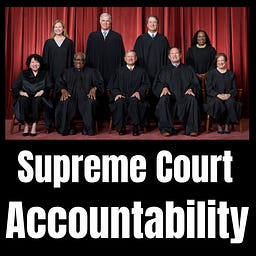
By early 2026, unchecked government power manifested through fiscal manipulation and legal overreach has deeply eroded democratic equality and agency. The administration’s ability to create fiat money without public consent fueled unfair inflation that privileged select groups, while the conservative Supreme Court, shaped by the Federalist Society and dark money campaigns, has endorsed expansive executive authority, facilitating authoritarian governance. As one analysis cautioned, although formal legal equality remains essential, attempts to enforce equal outcomes have historically led to tyranny, underscoring the delicate balance between equality and authoritarian overreach.
Authoritarian tactics have increasingly relied on cruelty and dehumanization as deliberate tools to consolidate power and suppress dissent. The indefinite detention of immigrant families without legal cause, as seen with Afghan and Somali refugees, exemplifies cruelty as a policy feature rather than a flaw. This dehumanization extends to reducing complex human tragedies to mere statistics or entertainment, eroding social cohesion and empathy. A federal judge’s revelation that the Justice Department launched a baseless criminal investigation into Federal Reserve Chair Jerome Powell to pressure interest rate decisions further illustrates the weaponization of legal institutions to serve executive interests, undermining the rule of law.
Militarization and fear-based governance have become hallmarks of the administration’s authoritarian approach, both internationally and domestically. The January 3rd Venezuela operation, involving bombing a sovereign capital and capturing its president, was framed by Defense Secretary Pete Hegseth as a bloodless resource grab, despite casualty estimates nearing 80. Domestically, ICE’s unprecedented $170.1 billion budget has transformed immigration enforcement into a militarized force with National Guard deployments, drone surveillance, and border zones declared military areas, normalizing an armed federal presence in civilian life. This militarization is coupled with fear-driven rhetoric portraying multilateral institutions as threats to American sovereignty, increasing public tolerance for executive overreach.
Executive overreach under this administration is further exemplified by politicized appointments and the intertwining of public office with personal profiteering, which undermine institutional integrity and democratic norms. The appointment of Markwayne Mullin as Secretary of Homeland Security, chosen for loyalty to Stephen Miller rather than competence, alongside chaotic leadership transitions like Kristi Noem’s firing, reflect a militarized and opaque governance style. Meanwhile, Defense Secretary Hegseth’s broker’s attempt to invest in defense ETFs benefiting from ongoing conflicts reveals how public office has become a 'side hustle' for personal gain. Additionally, President Trump’s use of pardons to shield connected fraudsters such as Joseph Schwartz and George Santos not only subverts justice but entrenches a hierarchy where the powerful receive absolution while victims face dead ends.




Election Rules as Weapons
Trump’s campaign to reshape election laws and sow distrust leverages misinformation and centralized control to undermine faith in the democratic process.
By early 2026, Donald Trump and his allies had launched a multifaceted campaign to undermine election integrity, aggressively pushing for nationwide voter ID laws and restrictions on mail-in voting despite overwhelming evidence that voter impersonation is virtually nonexistent. These efforts, including the promotion of the Save America Act—which would require voters to produce passports or birth certificates, disenfranchising millions—and executive orders mandating early submission of voter rolls, aim to reshape electoral rules and suppress voter participation ahead of the midterms. This strategy is designed not only to change the mechanics of voting but also to erode public confidence in the democratic process by casting doubt on election outcomes before and after votes are cast.
Trump’s revival of the 2020 election fraud playbook involves relentless amplification of false claims about widespread voter fraud, including conspiracies about foreign manipulation of voting machines and racially charged narratives like the Great Replacement Theory. These baseless allegations, despite bipartisan audits confirming the accuracy of election results and data showing only 68 noncitizen votes out of over a billion cast since 1982, are weaponized to justify legal actions and administrative interference, such as Justice Department lawsuits demanding voter lists and directives to prove fraud claims. This coordinated misinformation campaign, amplified over 30 times on Truth Social since January 2026, seeks to delegitimize elections and deepen societal divisions.
Beyond misinformation, Trump’s strategy includes a push to nationalize election administration, signaling an intent to centralize control and override traditional state and local authorities. By emphasizing victories in key counties and urging Republicans to 'take over elections in 15 places,' Trump aims to leverage local officials sympathetic to his claims to influence outcomes, while unprecedented federal actions—such as the FBI raid on a Fulton County elections warehouse—underscore escalating institutional involvement. However, this election sabotage effort depends heavily on widespread belief in Trump’s power, which is eroding even among his supporters, and faces resistance from within the Republican Party itself, suggesting that institutional pushback and legal challenges may limit the effectiveness of these subversive tactics.
Experts like Ian Bassin contextualize these developments within a broader authoritarian playbook marked by the politicization of independent institutions, disinformation, executive aggrandizement, suppression of dissent, and election corruption. Trump’s presidency is seen as the American manifestation of a global illiberal trend, with post-2020 tactics resembling a more dangerous iteration of Hungary’s Orbán 2.0 strategy, where entrenched political forces build protective systems to execute devastating assaults on democratic norms. This systemic erosion of democratic institutions through coordinated misinformation and administrative interference poses a profound threat to the integrity of U.S. elections and the health of its democracy.






Grassroots Pushback Gains Traction
Community-led movements are filling the accountability gap left by weakened institutions, securing real victories against authoritarian overreach and policy abuses.
By early 2026, grassroots activism had solidified as the linchpin of democratic accountability amid weakening institutional checks, with movements like No Kings mobilizing over 2,000 nationwide events to demand term limits and binding ethics codes. This people power, exemplified by sustained weekly advocacy and mass nonviolent rallies, not only counters authoritarian normalization but also builds a resilient accountability infrastructure that formal institutions like the courts currently lack, reinforcing the historic truth that meaningful reform arises from bottom-up civic engagement rather than top-down directives.
Sustained civic engagement extends beyond protests to encompass legal challenges and community organizing that directly confront authoritarian tactics such as widespread book bans—6,870 documented in one school year—and restrictive voting laws, with 31 enacted in 2025 disproportionately impacting marginalized communities. Organizations like Protect Democracy, co-founded by Ian Bassin, play a pivotal role in this ecosystem by anticipating authoritarian playbooks involving disinformation, politicization of independent institutions, and election corruption, emphasizing that defending democracy requires continuous vigilance and coordinated legal resistance.
Grassroots resistance also manifests in tangible victories that demonstrate the power of organized public pressure, such as the 67,000-signature petition in Alabama that compelled Governor Kay Ivey to commute Charles 'Sonny' Burton’s death sentence, illustrating how community-driven activism can hold officials accountable and influence policy outcomes. This activism intersects with broader struggles against regulatory capture and corruption, highlighted by over 700 former EPA scientists exposing the Trump administration’s rollback of pollutant protections under former chemical industry lobbyists, underscoring that defending democratic norms is inseparable from environmental justice and transparent governance.
To raise the political cost of authoritarian lawbreaking and prevent impunity, commentators urge the establishment of formal, public-facing accountability projects that document abuses and build legal cases for future prosecution. Such initiatives, combined with millions of Americans actively refusing to back down in streets, ballots, and communities, exemplify how collective civic engagement is not merely symbolic but a living practice essential to championing democratic rights, holding leaders accountable, and inspiring meaningful voter participation during this heightened political crisis.

War Profiteering Drives Policy
Aggressive foreign interventions and defense industry ties are fueling endless conflict abroad while draining resources and stability at home.
By early 2026, U.S. foreign policy under the Trump administration revealed a troubling fusion of aggressive geopolitical posturing and war profiteering, as exemplified by efforts from figures like Pete Hegseth’s Morgan Stanley broker to channel investments into defense giants such as RTX, Lockheed Martin, and Palantir. This approach prioritized military spectacle and coercive threats—most notably Trump’s explicit warnings to 'obliterate' Iranian civilian infrastructure—while neglecting critical defensive domains like cybersecurity, leaving U.S. cyber defenses weakened amid escalating Iranian cyberattacks. Such a strategy underscores a preference for dramatic displays of power over the steady competence necessary for national security, deepening domestic instability.
The neoconservative agenda, closely intertwined with Israeli strategic interests and described as the 'vanguard of the Israel lobby,' has long driven U.S. engagement in costly Middle Eastern conflicts under misleading pretenses, such as the false WMD narratives that justified the Iraq War. This conflation of U.S. and Israeli objectives—where policymakers like Joe Biden assert there is 'no daylight' between the two nations’ interests—has perpetuated regime change wars that serve Israeli expansionist goals rather than American or regional stability. The resulting 'forever wars' not only strain U.S. political capital but also fuel a fiscal crisis, as the intertwining of war profiteering and neoconservative advocacy creates a perverse incentive structure promoting continuous conflict.
Domestic political and fiscal turmoil is further exacerbated by the ongoing Iran conflict and broader Middle East entanglements, where strategic alliances with Saudi Arabia and Israel have pressured escalations, including Trump’s aggressive posture toward Iran. Legislative responses like Rep. Ro Khanna’s bill to halt U.S. gasoline exports amid the Iran war highlight attempts to curb war profiteering and mitigate economic fallout. Meanwhile, nearly $1 trillion in Iran war funding has been described as an 'almost $1 trillion mess,' underscoring how these international conflicts feed into a complex governance and fiscal crisis marked by polarized debates over war powers and executive overreach.
U.S. geopolitical maneuvering extends beyond the Middle East, as seen in decisions to divert military aid from Ukraine to the Middle East and Trump’s controversial pressure on Ukraine to cede territory to Russia, alongside renewed engagements with Russian lawmakers. These moves illustrate how international alliances and conflicts are deeply entangled with domestic political narratives and governance challenges, complicating oversight and fueling instability at home. The interplay of these global strategies with domestic political dynamics reveals a fractured approach that undermines coherent policy-making and contributes to the erosion of democratic institutions.
Media Weakness, Systemic Resilience
As media consolidation and party dysfunction threaten scrutiny, America’s dispersed power structures remain a critical—if fragile—defense against democratic collapse.
By early 2026, the consolidation of media ownership has raised concerns about the erosion of critical coverage, particularly regarding the Trump administration, which may have dulled public discourse and weakened democratic accountability. Damon Linker highlights how this media landscape shift, combined with the Democratic Party's 'somewhat lamentable state' and uncertain prospects for regaining control of the House in 2026 or the presidency in 2028, casts doubt on the party's ability to spearhead democratic renewal. This convergence of constrained media scrutiny and faltering political leadership underscores a precarious moment for democratic governance.
Despite these challenges, institutional strengths embedded in the American political system—such as the regional dispersal of power and the robust separation between Congress, the White House, and the Supreme Court—offer a bulwark against the worst-case scenarios of democratic erosion. Linker points out that while the Trump administration has actively undermined democratic norms, these structural safeguards may preserve the core of democracy, suggesting that resilience remains possible even amid political and fiscal crises.