Electric truck revolution hits speed bumps: swappable batteries surge as megawatt charging strains grids
The gist
As electric heavy trucks hit the highways, charging bottlenecks and grid woes are sparking a battery-swapping boom—but operator confidence is running on empty.
What to know
- Megawatt Charging Systems can slash eHGV charging to 30–45 minutes but demand up to 10 MW per truck stop, straining local grids and pushing integrated solutions like Zenobē’s to the forefront.
- Battery swapping, led by CATL’s 5,000-truck network in Indonesia and Bosch’s BaaS tech, delivers 3–10 minute swaps, drastically cutting downtime and easing fleet electrification financing.
- Despite rising interest from volatile fuel prices and government incentives, only 9% of HGV operators are confident in zero-emission trucks, citing infrastructure headaches and uncertain resale values.
Grid Strain vs. Fast Swaps
Swappable batteries and integrated charging solutions are emerging as the pragmatic answer to megawatt charging’s massive grid demands and operational bottlenecks for electric trucks.
The Megawatt Charging System (MCS) represents a breakthrough in reducing electric heavy goods vehicle (eHGV) charging times to 30–45 minutes by delivering over 1 MW of power, aligning well with drivers’ mandatory break schedules. However, despite its speed, practical challenges such as the need for reliable universal booking systems and driver monitoring during charging can diminish the effectiveness of these breaks. Moreover, the immense power demand—up to 10 MW for a truck stop with 10 chargers, equivalent to powering 10,000 homes—poses significant grid infrastructure challenges and costs, underscoring the necessity for holistic, integrated charging solutions like those pioneered by UK-based Zenobē, which cuts installation costs and times by treating vehicle and charging infrastructure as a unified problem rather than separate issues.
Battery swapping technology, exemplified by CATL’s deployment in J&T Express’s fleet of over 5,000 heavy-duty trucks, offers a compelling alternative to fast charging by enabling recharge times as short as three to five minutes. This rapid turnaround drastically reduces fleet downtime and addresses charging speed bottlenecks, with CATL’s network expanding to 305 stations by early 2026. Bosch MC Battery Service Innovations further highlights battery swapping’s advantage for long-haul trucks, noting that a 5–10 minute swap vastly outperforms the 30–45 minute megawatt charging window. Additionally, Battery-as-a-Service (BaaS) models, supported by Bosch’s 'Battery in the Cloud' technology, provide transparency on battery health and residual value, easing financing hurdles and making electrification more accessible to fleet operators. The success of this model in China is already influencing plans in Europe, where CATL and Octopus Energy aim to replicate the battery-swapping infrastructure.
Innovations in electrifying auxiliary equipment, particularly transport refrigeration units (TRUs), are significantly reducing grid dependency and operational complexity for electric fleets. European-developed battery-only TRU systems integrate solar panels and e-axle regenerative braking to harvest energy, enabling some routes to eliminate grid charging altogether. Having been successfully deployed across multiple European countries for nearly two years, these systems not only streamline operations by minimizing plug-in times and refueling needs but also facilitate rapid scaling of electric TRU fleets without costly infrastructure upgrades, offering both economic and operational benefits.
Companies like Janus Electric are advancing full-stack heavy freight electrification by combining diesel-to-electric truck conversions with swappable batteries, dedicated charging hubs, and sophisticated software platforms. This integrated approach reduces adoption friction for fleets and creates recurring revenue streams, exemplifying how technological innovation extends beyond hardware to include software-driven fleet management solutions that optimize charging schedules, monitor battery health, and coordinate energy use, thereby accelerating the practical scaling of electric heavy truck fleets.




Fleet Electrification in Action
Major logistics players are proving electric trucks are viable today by pairing route-specific deployments with charging infrastructure and innovative battery swapping to maximize uptime and cut costs.
Leading logistics companies worldwide are operationalizing electric heavy truck fleets through targeted deployment on key freight routes combined with robust infrastructure support. For example, Australia's Linfox is rolling out 26 Volvo eHGVs across Melbourne, Brisbane, and Adelaide, supported by 25 fast-charging stations and solar energy systems at its hubs, enabled by over $19 million AUD in federal funding. Similarly, MAN is advancing long-haul electrification between Hungary and Germany using a meet-and-turn trailer swapping system on 500 km routes, planning to expand to 50 electric trucks with enhanced charging infrastructure at plants and service centers, demonstrating how infrastructure and operational tactics go hand in hand to scale electric trucking.
Innovative operational strategies like battery swapping and route optimization are critical to reducing downtime and extending electric truck usability in large fleets. CATL’s partnership with Indonesia’s J&T Express to deploy over 5,000 heavy-duty electric trucks equipped with swappable batteries enables recharging in just three to five minutes, a game-changer for fleet scalability. This approach is complemented by electrification of light-duty vehicles and warehouse equipment, illustrating a holistic logistics electrification strategy that boosts operational efficiency and sustainability.
Economic viability is increasingly driving electric truck adoption on demanding routes, as demonstrated in Chile where operational costs for electric trucks now match or beat diesel counterparts. Trailer Logistics’ deployment of Windrose E670 trucks with 705.2 kWh batteries on routes up to 670 km, supported by Enel X’s ultra-fast 600 kW charging stations along Ruta 5 Sur, highlights how extended range capabilities and charging infrastructure enable practical long-haul electrification. With upfront costs offset by operational savings within two to three years for fleets exceeding 10,000 km monthly, electrification is becoming a financially sound choice for heavy transport.
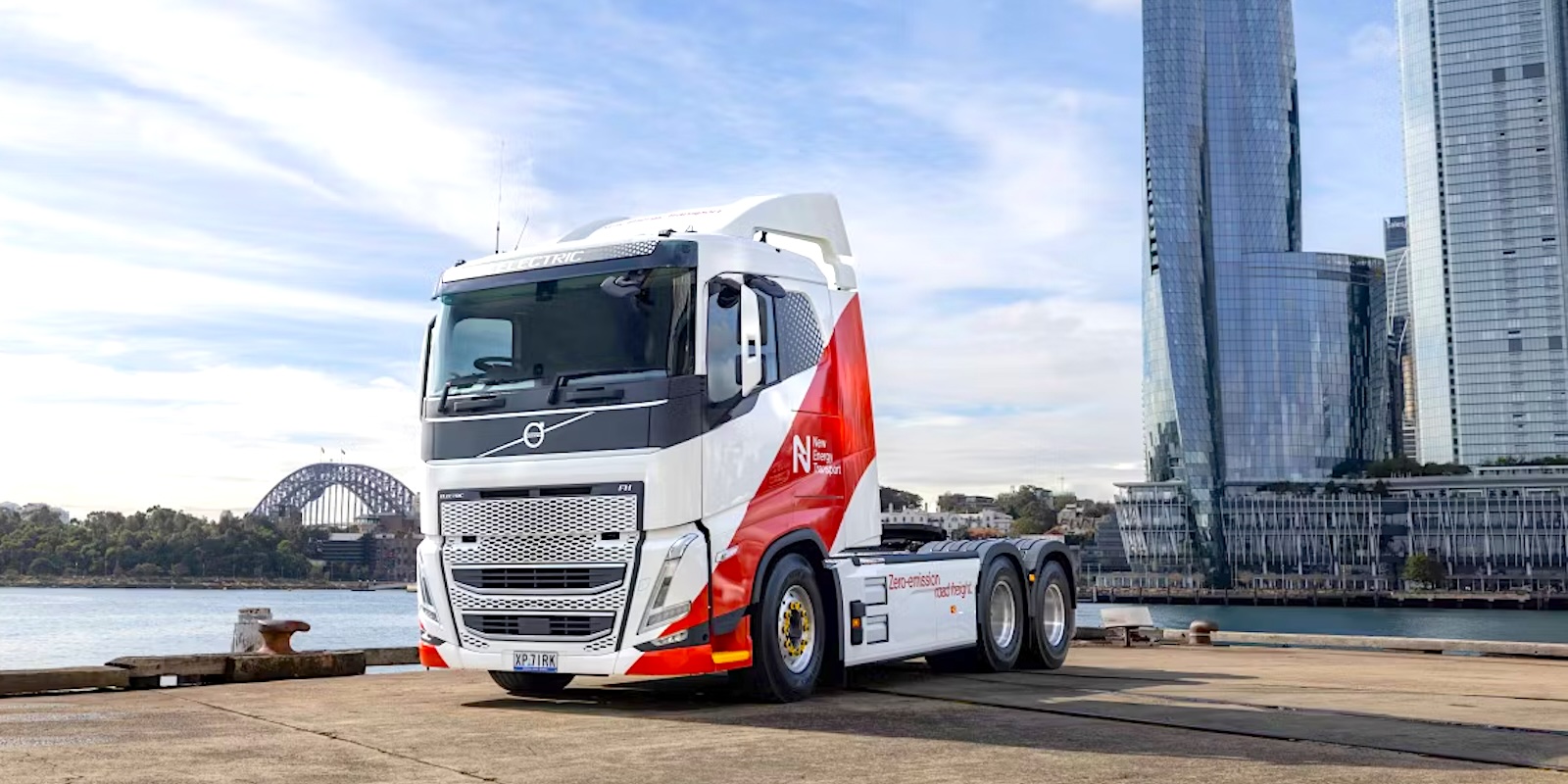
Scaling electric heavy truck fleets requires not only infrastructure but also strategic partnerships and operational flexibility to integrate seamlessly into existing logistics workflows. New Energy Transport’s introduction of Volvo FH Electric trucks for urban deliveries in Sydney exemplifies this, leveraging fast charging during natural downtime such as shift changes and loading to maintain schedules. CEO Martin Merrick emphasizes the synergy of a ready customer, an invested freight operator, and a truck partner with proven technology, while financial innovations like leasing arrangements with the Clean Energy Finance Corporation help lower barriers to adoption, enabling incremental fleet growth supported by mobile charging units.
Financing Fuels Adoption
Transparent battery data and government-backed incentives are breaking down financial barriers, making electric truck fleets more accessible and attractive to operators and financiers alike.
Battery-as-a-Service (BaaS) models, exemplified by Bosch's 'Battery in the Cloud' technology, have emerged as pivotal in overcoming financial barriers related to battery residual value by providing transparent, real-time data to financiers. Klaus Sekot highlights that this transparency enables banks, insurers, and leasing companies to confidently finance battery-electric vehicle fleets, a model already scaling in China through the Bosch-Mitsubishi joint venture's battery swapping infrastructure in Chizhou. This approach not only reduces upfront costs but also enhances operational efficiency by cutting battery swap times to five to ten minutes, a stark improvement over traditional megawatt charging durations, signaling a scalable blueprint that Europe is poised to adopt with some delay.
Government incentive programs, particularly California’s HVIP combined with Port of Los Angeles grants, have dramatically lowered the net cost of diesel-to-electric truck conversions, sometimes approaching near-zero expenses for fleet operators. This financial support has catalyzed significant fleet electrification projects, such as Ability Tri-Modal’s expansion from four to twenty converted trucks, backed by Janus Electric’s proprietary Charge & Change Station infrastructure. The repeat orders and scaling commitments underscore growing market confidence and demonstrate how targeted incentives, paired with innovative conversion and charging solutions, effectively drive large-scale adoption of electric heavy trucks.
In Australia, innovative financing arrangements like the partnership between Volvo Financial Services and the Clean Energy Finance Corporation have been instrumental in reducing leasing costs for heavy electric trucks, facilitating the deployment of models like the Volvo FH Electric. This financial innovation, coupled with strategic collaborations among manufacturers, fleet operators, and major customers such as Unilever, exemplifies a holistic approach to accelerating electrification. As Martin Merrick of Volvo Group Australia notes, the convergence of a willing customer, an investing freight operator, and proven technology creates a powerful momentum, while Unilever’s commitment highlights the role of corporate leadership in driving decarbonization through electric road freight.
Janus Electric’s comprehensive full-stack solution, integrating diesel-to-electric truck conversions, swappable batteries, charging hubs, and software platforms, represents an innovative business model designed to reduce upfront costs and operational friction for fleet electrification. By creating recurring revenue streams and addressing multiple adoption barriers simultaneously, Janus exemplifies how vertically integrated approaches can streamline the transition to electric heavy trucks, complementing government incentives and infrastructure developments to accelerate market uptake.
Fuel Price Volatility Drives Shift
Soaring fuel prices are accelerating fleet interest in electric trucks for short-haul routes, but high upfront costs and data gaps are slowing actual purchases despite clear operational savings.
Volatile fuel prices have significantly enhanced the economic appeal of electric heavy trucks, especially for short-haul, return-to-base routes under 100 miles that align with medium-duty fleet operations. For instance, Workhorse's electric step vans in Ohio demonstrated fuel cost savings rising from 42.5 cents to 73.6 cents per mile as gasoline prices surged from $2.98 to $4.83 per gallon, translating to roughly $11,000 annual savings on a 50-mile daily route. Mike Roeth of the North American Council for Freight Efficiency highlights that such routes, which represent about half of U.S. freight miles, are particularly well-suited for electrification, with customers like Purolator and Gateway Fleets already adopting electric step vans for these 'lollipop routes.'
Despite electric trucks commanding 50% to 100% higher upfront costs compared to diesel counterparts, operational savings fueled by volatile fuel prices are prompting fleet operators to conduct more sophisticated cost analyses. Workhorse CEO Scott Griffith remarked, 'The phone is certainly ringing, and the interest is high, and everyone’s doing the math,' underscoring growing market curiosity. However, as Jacob Richard of Calstart cautions, actual purchase or lease uptakes remain uncertain due to limited data, indicating that while conversations have intensified, tangible market shifts are still emerging.
In Chile, fluctuating oil prices combined with high operational mileage are driving heavy transport fleets toward electric trucks as a cost-competitive alternative. Hernán Searle notes that relying solely on oil is increasingly risky, with electric trucks saving approximately 100 Chilean pesos per kilometer compared to diesel, which costs about 400 pesos/km. Although electric trucks carry a higher upfront price tag—around $200,000 versus $130,000–$180,000 for diesel—the total cost of ownership becomes favorable for fleets exceeding 10,000 kilometers monthly, with payback periods as short as two to three years. Meanwhile, advances like Windrose’s E670 truck boasting a 670 km range and Enel X’s upcoming 600 kW ultra-fast charging corridor along Ruta 5 Sur are mitigating range and infrastructure challenges, enabling broader adoption despite residual value uncertainties and the nascent scale of Chile’s electric fleet.
In the U.S., technology-neutral incentives such as California’s Heavy-Duty Vehicle Incentive Program (HVIP) and Port of Los Angeles grants are pivotal in bridging the cost gap for diesel-to-electric truck conversions, sometimes reducing net conversion costs to near zero. This financial support has catalyzed fleet expansions, exemplified by Ability Tri-Modal increasing its electric truck conversions from 4 to 20 units, backed by Janus Electric’s proprietary charging infrastructure. Janus CEO Ben Hutt emphasizes that while electric conversions carry higher upfront costs, these incentives are crucial for overcoming economic barriers and scaling market adoption in rapidly growing regions like California.
China’s Battery Swap Blueprint
China’s rapid rollout of battery swapping and Battery-as-a-Service is slashing downtime and inspiring similar efforts in Europe, while infrastructure gaps and operational tactics remain stumbling blocks elsewhere.
China's rapid advancement in battery swapping infrastructure, highlighted by the Bosch-Mitsubishi joint venture in Chizhou, demonstrates a transformative approach to electric heavy truck operations by slashing downtime to just 5-10 minutes per swap compared to traditional megawatt charging times of 30-45 minutes. Klaus Sekot emphasizes this efficiency as a game-changer for long-haul trucking, and the integration of Battery-as-a-Service models, supported by Bosch's 'Battery in the Cloud' technology, addresses critical financing hurdles by providing transparent battery health data that reassures banks and insurers. This comprehensive ecosystem not only accelerates fleet electrification in China but also sets a promising template that Europe, with initiatives from CATL and Octopus Energy, is beginning to explore despite anticipated delays.
Scaling charging infrastructure remains a pivotal challenge, encapsulated by the persistent 'chicken and egg' dilemma where insufficient infrastructure limits fleet adoption, and low demand discourages investment in charging networks. The Zero Emission HGV and Infrastructure Demonstrator (ZEHID) project offers valuable operational insights but stops short of resolving these systemic issues, underscoring the complexity of infrastructure deployment. Meanwhile, although vehicle-to-grid (V2G) technology faces skepticism in heavy truck applications, leveraging charging windows during driver breaks and loading times emerges as a pragmatic strategy to optimize electric truck utilization and edge closer to diesel parity, suggesting that innovative operational tactics may be as crucial as infrastructure expansion in overcoming policy and capacity barriers.
Confidence Crisis Among Fleets
Uncertainty over resale values, grid constraints, and costly infrastructure are fueling deep skepticism among heavy truck operators, despite falling prices and government support.
By mid-2026, a stark confidence gap persisted among heavy goods vehicle (HGV) operators regarding zero-emission trucks, with BVRLA research revealing only 9% expressing confidence in their commercial viability, while a striking 68% remained unconvinced. This skepticism contrasts with voices like Ian Dennis of Zenobē, who emphasized that electric trucks are already proving their worth in real-world fleet operations, buoyed by falling purchase costs, government grants, and integrated charging solutions that collectively reduce operating expenses. Yet, despite these positive signals, the gulf between belief and widespread adoption remains wide.
A critical barrier underpinning this confidence crisis is the uncertainty over residual values of electric heavy trucks, which Catherine Bowen identified as the biggest obstacle to unlocking large-scale financing. This financial hesitancy is compounded by the 'perfect storm' of higher upfront vehicle prices and rising funding costs, making fleet operators wary of committing capital. Additionally, operational challenges such as charging downtime and the nascent state of physical charging infrastructure exacerbate adoption hesitancy, as one industry insider highlighted the tremendous costs and inefficiencies in the class 8 segment.
Charging infrastructure presents a formidable hurdle, especially for large fleets, where power demands can surpass the capacity of entire cities. An illustrative case involved Warner's attempt to electrify a municipal fleet of 100 trucks outside Chicago, which required more power than the city could supply, underscoring the scale of infrastructural challenges ahead. This limitation not only strains existing grids but also feeds into operational concerns about reliability and downtime, further dampening fleet operators’ readiness to transition.
Beyond financial and infrastructural issues, regulatory constraints such as gross vehicle weight limits remain a significant adoption barrier. Ian Dennis pointed out that increasing these weight limits to offset the mass of heavy batteries could remove a major obstacle, suggesting that policy adjustments are essential to complement technological and market advances. Addressing this would help align regulatory frameworks with the evolving realities of electric heavy-duty trucking, potentially accelerating operator confidence and fleet electrification.