EPA’s truck emissions rollback fuels industry relief—and environmental backlash—as DEF act codifies softer rules
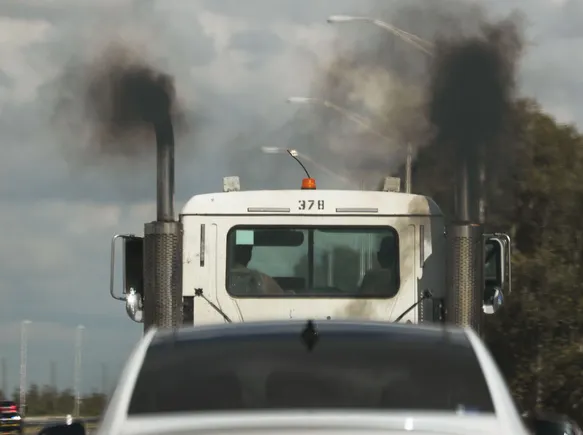
The gist
The EPA’s rollback of truck NOx rules and the bipartisan DEF Act have sparked fierce relief in the trucking industry—and fierce backlash from environmentalists—by prioritizing operational certainty over stricter emissions enforcement.
What to know
- The EPA's 2026 proposal rolls back key 2027 truck emissions rules, saving the industry up to $12 billion by easing warranty mandates and scrapping DEF-triggered engine derates.
- The Diesel Engine Flexibility Act gives manufacturers and fleets a 10-year legal safe harbor, allowing trucks to run near-normal speeds for thousands of miles even after DEF faults.
- Environmental advocates warn these changes risk undercutting long-term NOx reduction targets, delaying stricter standards needed for cleaner air and public health.
EPA Loosens Truck Rules
The EPA’s rollback slashes warranty requirements and eliminates DEF-triggered shutdowns, saving fleets billions while recalibrating the balance between cost and compliance.
In July 2026, the EPA unveiled a proposal to roll back several stringent provisions of the 2027 heavy-duty truck NOx emissions rules, aiming to ease compliance costs while preserving ambitious emissions reduction targets of 80–90%. Key changes include scaling back warranty requirements—reverting to 100,000 miles/5 years for model year 2027 engines—and delaying longer useful-life mandates until 2030. These adjustments are projected to save the commercial vehicle industry up to $12 billion overall, or approximately $6,000 per new vehicle, without significantly compromising environmental goals, a balance welcomed by industry leaders like Cummins CEO Jennifer Rumsey who praised the added flexibility.
A notable operational relief in the EPA’s proposal is the elimination of diesel exhaust fluid (DEF)–triggered engine derates, which have historically caused disruptive roadside shutdowns and safety concerns. Instead, the EPA plans to implement visual and audible warnings to alert drivers of low DEF levels, allowing vehicles to remain operational and reducing costly downtime. This shift addresses longstanding industry complaints about DEF-related engine restrictions while maintaining the integrity of emissions control, thereby improving reliability and safety for truck operators.
To further reduce regulatory burdens without delaying the 2027 effective date of the NOx standards, the EPA proposes introducing a nonconformance penalties framework that would permit manufacturers to sell engines that do not fully comply with emissions thresholds in exchange for a fee. This approach aims to provide manufacturers with greater flexibility and cost savings while preserving the overall environmental objectives of the program. The rollback reflects a broader EPA acknowledgment that while emissions technologies offer significant benefits, overly stringent regulations can become cost prohibitive and operationally burdensome, prompting a recalibration of the balance between environmental goals and industry realities.



Emissions Tech Drives Costs Up
Complex aftertreatment systems have pushed new truck prices up by as much as $25,000 and caused operational headaches, fueling industry frustration with past EPA mandates.
By mid-2026, the introduction of stringent EPA NOx emission regulations marked the first major overhaul in 17 years, bringing with it a wave of complex aftertreatment technologies such as diesel particulate filters and diesel exhaust fluid (DEF) systems. These systems, with components like particulate filters costing up to $3,000, have significantly increased maintenance complexity and costs, pushing the price of new trucks up by $8,000 to $25,000 and imposing a heavy financial burden on fleet operators.
Operationally, these emission systems have introduced severe challenges, notably engine derates that can slow trucks to a crawl of 5 miles per hour, resulting in increased downtime and frequent towing incidents. Truckers have voiced frustration, with common complaints highlighting how these derates disrupt schedules and reduce productivity, underscoring the unintended consequences of the EPA’s well-intentioned regulations.
In response to mounting operational and maintenance burdens, the EPA has proposed rolling back certain NOx requirements, including plans to eliminate DEF-related engine derates. These regulatory adjustments aim to strike a balance by easing unplanned maintenance and operational disruptions while preserving environmental protections, with projected savings of up to $12 billion for truck operators, reflecting a pragmatic shift in policy to address real-world challenges faced by the trucking industry.
While the EPA’s updated guidance retains the Biden administration’s core NOx standards, it incorporates modifications such as warranty adjustments to mitigate operational concerns. This nuanced approach acknowledges the complexity of integrating advanced emission technologies into heavy-duty trucks, aiming to reduce maintenance headaches without compromising the overarching goal of cleaner air.
DEF Act: Industry’s Legal Shield
The DEF Act locks in regulatory relief for a decade, transforming EPA guidance into law and protecting fleets from abrupt policy reversals and costly downtime.
Industry stakeholders, including manufacturers and independent technicians, have rallied behind the Diesel Engine Flexibility Act (DEF Act) for providing a critical 10-year legal safe harbor that codifies the EPA’s softened emissions control inducements. This statutory backing offers much-needed regulatory certainty, enabling manufacturers to confidently deploy updated software fleetwide and giving technicians clear legal parameters to work within. The DEF Act effectively transforms the EPA’s revised inducement guidance—which allows trucks to maintain normal speeds for up to 4,200 miles after a DEF fault, a stark departure from the previous policy of forcing trucks to limp at 5 mph within hours—into a more durable framework that industry groups hail as a game-changer for reducing costly downtime and operational disruptions.
Fleet operators have long grappled with the harsh operational realities of the EPA’s earlier inducement policies, where even a single faulty DEF sensor could trigger severe penalties like speed limits down to 5 mph within hours, causing expensive delays and repairs. With towing costs around $1,200 and sensor replacements taking weeks, these strict inducements translated into significant financial and logistical burdens. The DEF Act and the EPA’s 2025 guidance revision together represent a welcomed reprieve, easing these punitive measures and allowing trucks to continue operating at near-normal capacity during fault conditions, thereby safeguarding fleet productivity and reducing repair-related downtime.
Despite the EPA’s more flexible inducement guidance announced in August 2025, manufacturers and industry advocates stress that without the DEF Act’s statutory codification, this progress remains precarious. Since the EPA’s guidance is merely a memo subject to reversal by future administrations, stakeholders fear a return to the stringent policies that have plagued operators. The DEF Act thus serves as a crucial legislative shield, ensuring that the regulatory relief and operational flexibility currently enjoyed are not easily undone, a point manufacturers emphasized strongly in Congressional testimony.
Environmentalists Sound the Alarm
Advocacy groups warn that easing DEF enforcement and warranty rules threatens long-term air quality goals and sets a precedent for delaying future emissions crackdowns.
Environmental and clean transportation advocates have voiced strong concerns over the EPA's 2026 proposal to end Diesel Exhaust Fluid (DEF) derates, which promises $12 billion in savings for bus and truck operators. These groups warn that easing warranty and enforcement provisions, while financially beneficial in the short term, risks undermining the long-term emissions performance critical to achieving sustained reductions in nitrogen oxides (NOx) and meeting broader climate goals. They argue that such regulatory relaxations could set a dangerous precedent, potentially delaying the adoption of stricter emission standards necessary to protect air quality and public health.
Bipartisan Law Redefines Enforcement
The DEF Act cements softer EPA inducement rules into law, trading immediate operational relief for a slower path to stricter emissions—and sparking debate over environmental trade-offs.
The Diesel Engine Flexibility Act (H.R. 9618) embodies a rare bipartisan consensus aimed at codifying the EPA's recent guidance on Diesel Exhaust Fluid (DEF) system inducements into law, providing a 10-year safe harbor that shields manufacturers and operators from penalties tied to softened emissions enforcement. This legislative move responds directly to industry concerns about the fragility of relying on EPA guidance memos—which can be revoked by future administrations—thereby injecting much-needed regulatory certainty into a landscape where manufacturers warned Congress of the risks posed by shifting policies.
By legally endorsing EPA Administrator Lee Zeldin's more lenient inducement schedules, the DEF Act addresses the operational headaches caused by overly strict emissions rules that previously forced compliant trucks to crawl at 5 mph within hours of a DEF fault. Under the new framework, trucks receive a warning light and can continue operating at near-normal speeds for up to 650 miles or 10 hours before mild derates kick in, with drastic speed reductions delayed for nearly a month. This pragmatic compromise acknowledges the real economic toll of DEF system failures, with the EPA estimating annual savings of $13 billion to farmers and truckers due to reduced downtime.
While the DEF Act delivers tangible operational relief and legal clarity, it simultaneously signals an implicit delay in the enforcement of stricter emissions controls, underscoring the enduring tension between environmental ambitions and the practical realities of the heavy-duty trucking industry. Dubbed 'half relief bill, half noise,' the legislation reflects a political balancing act where easing economic burdens on operators comes at the cost of postponing some environmental progress, a trade-off that continues to fuel debate among policymakers and stakeholders alike.