Europe counters china’s EV surge with retro revivals
The gist
As China dazzles with EV tech, Europe is fighting back at the 2026 Paris Motor Show—by electrifying its most beloved classics and betting on nostalgia to win over buyers.
What to know
- Chinese brands like BYD and Geely dominated headlines with 10-minute charging and performance figures, while European automakers revealed electric reboots of icons like the Renault Espace, Citroën 2CV, and Alpine A310.
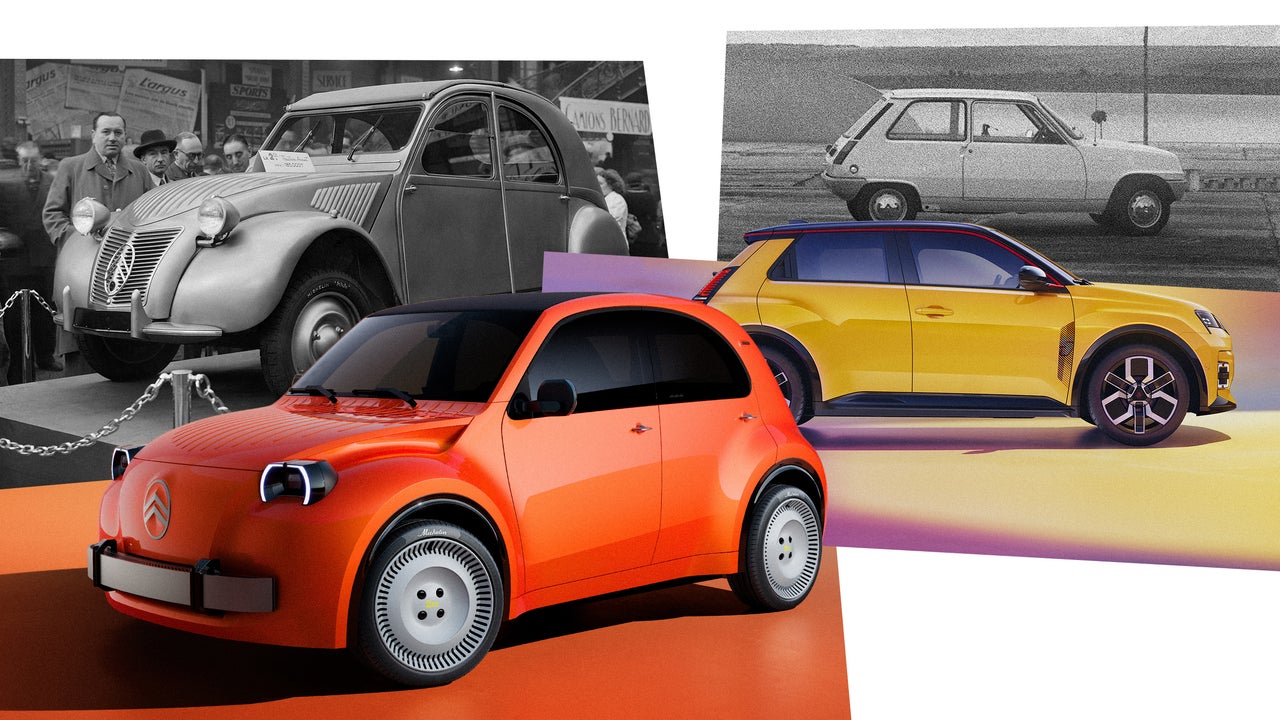
- Renault’s heritage push is paying off: the Renault 5 E-Tech became Europe’s best-selling small electric car in early 2026, racking up over 100,000 sales in 2025—even attracting buyers too young to remember the original.
- Citroën is turning retro into reality with a €15,000 electric 2CV aiming for 2028 production, but Europe’s heritage strategy is about emotional branding, not catching up to China’s EV tech lead.
Paris: Tech vs. Tradition
Chinese EV makers commanded Paris with rapid-charging, high-performance models, while Europe countered with concept cars rooted in nostalgia rather than technological breakthroughs.
The 2026 Paris Motor Show made the competitive contrast hard to miss: InsideEVs described attendees being “bombarded with advertisements for Geely and BYD,” while Chinese brands pushed a technology-first message built around “10-minute charging times, mind-bending power figures, and unconventional designs.” That posture reflected a broader advantage already reshaping the market, with China’s domestic NEV share hitting 65.2% in August, according to the CPCA, and battery pack costs at $84 per kilowatt hour versus $150-plus in Europe and the U.S., reinforcing why Chinese exhibitors arrived in Paris with the aura of technical momentum.
European unveilings at the same show underscored the other side of that contrast: InsideEVs said “most brought re-interpreted concept versions of their greatest hits,” citing “From the Renault Espace to the Citroen Is Finally Bringing Back The 2CV… and the Alpine A310,” and adding that “the most exciting European efforts were concept cars,” even as Chinese brands showcased concrete performance claims. BYD touted “10-97% charge times of 9 minutes,” Zeekr’s 9X was described with “111-mile electric range,” and Li Auto said its i6 could charge “from 10-80% in under 11 minutes,” a display of technological dominance that framed Paris as a show where Europe answered with heritage-inflected reveals rather than matching the headline tech.


Renault’s Nostalgia Strategy
Renault is leveraging emotional design and iconic heritage to set itself apart, focusing on brand identity and visual appeal instead of competing head-to-head on EV specs.
At Paris, Renault showed how European brands are using heritage as a competitive tool, not a museum exercise. At the 2026 Paris Motor Show, Renault used the concept to translate Gordini heritage into future design cues, showing how nostalgia and brand DNA are being used as a forward strategy rather than a one-off styling exercise. Electric Vehicle Web reported that the “Renault 8 Gordini Concept” was “an exploratory project and an exercise in style that reinterprets the Gordini heritage rather than preview a production Renault 8,” yet also said that “certain ideas could” carry forward, making nostalgia a pipeline for future EV design cues and recognizable brand DNA rather than a one-off show-car flourish.
That matters because the differentiation Renault is emphasizing is emotional and visual, not a claim to leapfrog rivals on core EV performance. Gauvin told Autocar Renault “had found a balance between looking dynamic without being aggressive,” and that this was “something he was interested in applying to future models”; with a body described as “1.27 metres” tall, plus a wide track and prominent wheelarches, the concept turns familiar character and approachable identity into a deliberate offset to a technology race Europe is not leading.
Legacy as Modern Playbook
European automakers are turning historic nameplates into contemporary brand pillars, using recognizable silhouettes to win over both longtime fans and a new generation unfamiliar with the originals.
For Europe’s legacy carmakers, heritage is being deployed as brand architecture, not decorative retro. Renault executives told Everything Electric CARS that using heritage means putting it “in a very modern world,” insisting “it’s not at all an exercise of nostalgia,” while vice president of brand design Alexandre Malval told Fast Company that the goal is “not to reproduce cars from the past” but to reinvent them for current needs; that framing matters because familiar nameplates and silhouettes give EVs instant emotional legibility that newer rivals cannot manufacture overnight.
The commercial logic is that recognition travels beyond memory: Renault says the R5’s UK success includes young buyers who “didn’t remember the original R5,” and Fast Company says the Renault 5 E-Tech became “Europe’s best-selling small electric car in the first half of 2026” after Renault sold more than 100,000 in Europe in 2025. Volvo makes the same strategic case from the premium end, with Thomas Ingenlath arguing, “We have to go premium,” and explaining that the “XC90 12 years ago” shifted Volvo into a “prestige brand” in America—“That’s what we have to do to survive.”


Citroën’s 2CV Goes Electric
Citroën’s €15,000 electric 2CV moves from retro concept to real production, signaling a shift from nostalgic tributes to accessible, heritage-driven EVs with mass-market ambitions.
The most concrete proof of the heritage-to-EV turn is Citroën’s decision to revive one of Europe’s most recognizable economy cars as an actual electric product path, not a museum-piece tribute. The Autopian captured that shift in the headline, “Xavier Chardon Unveils Citroën’s €15k ‘Tin Snail’ Electric 2CV Ahead of Oct 11 Reveal,” with the named executive publicly unveiling a “€15k ‘Tin Snail’ Electric 2CV” before a specific reveal date, signaling a program framed around affordability, identity and market intent rather than nostalgic show-stand theater alone.
That production-minded framing hardened once Citroën moved from teaser language to a concept explicitly tied to manufacturing plans, showing how a heritage badge is being translated into a modern EV with practical direction. Yahoo described the next step in the headline, “Citroën Debuts Electric 2 CV Concept with Removable Seats, Aiming for 2028 Production,” a formulation that matters because it links retro design cues to a dated production objective, making the 2CV revival one of the clearest examples of a European brand turning legacy nameplates into future electric product strategy.

Updates Outpace Tech Parity
Heritage-inspired EVs are multiplying and evolving across brands, but the flurry of updates underscores Europe’s focus on differentiation—not closing the technology gap with China.
What looked like a handful of nostalgic showpieces is becoming a broader product play. EV Powered said the Updated Renault 5 gets subtle updates for 2027, including new Vibrant5 and Hyper5 roof and wing decals and a Clio Williams-inspired look that can also be specified for the first time, while Renault has also announced that the entry-level Five on sale in Europe will get a new powertrain in the coming weeks, replacing the 94bhp motor and 40kWh battery with a 108bhp motor and 36.5kWh battery.
The spread is also cross-brand, but it still reads as differentiation rather than proof that Europe has closed the tech gap. At the 2026 Paris Motor Show, Euronews framed the scene as Renault reviving 1984 E-Space and Citroën unveiling an electric 2CV, with Europe’s ailing carmakers dusting off retro badges, and Citroën planning a Euro-built electric car within two years, targeting 15,000; EV Powered also said the Renault 5 update uses tweaks to the bodywork and battery systems and revisions to the battery management systems to lift the 40kWh model to 196 miles.