Europe rearms as Nato trust frays
The gist
Europe is turbocharging defense and tech spending as the Ukraine war exposes its reliance on the US and sparks a race for security autonomy.
What to know
- Germany’s defense budget is soaring to nearly €90 billion and Poland aims for 5% of GDP by 2026, signaling a historic rearmament drive.
- Defense tech investment in Europe will jump from $100 million in 2019 to $1.5 billion by 2025, with AI startups like Helsing grabbing major contracts to replace outdated military systems.
- Cybersecurity and digital resilience are now seen as core to national defense, driving supply chain crackdowns, legal reforms, and a pivot to home-grown innovation.
Warfare Redefined: Europe’s Wake-Up
Russia’s invasion of Ukraine shattered Europe’s old defense playbook, forcing leaders to prioritize rapid rearmament, indigenous tech, and operational independence as US security guarantees erode.
The Ukraine war has acted as both a wake-up call and a proving ground for Europe, exposing critical vulnerabilities in traditional defense paradigms and accelerating the shift toward security autonomy. The conflict revealed that modern warfare now favors cheap, rapidly produced systems—such as FPV drones capable of destroying million-euro tanks—over expensive legacy platforms, and highlighted the peril of Europe’s dependence on US-supplied air, missile, and satellite systems. This operational reality, combined with the erosion of US security guarantees—underscored by Vice President JD Vance’s warnings and the Trump administration’s rhetoric—has compelled European leaders to commit publicly to rearmament, as seen at the Munich Security Conference, and to embed higher defense spending into core budgets, with Germany’s defense outlays approaching €80-90 billion and Poland aiming for 5% of GDP by 2026.
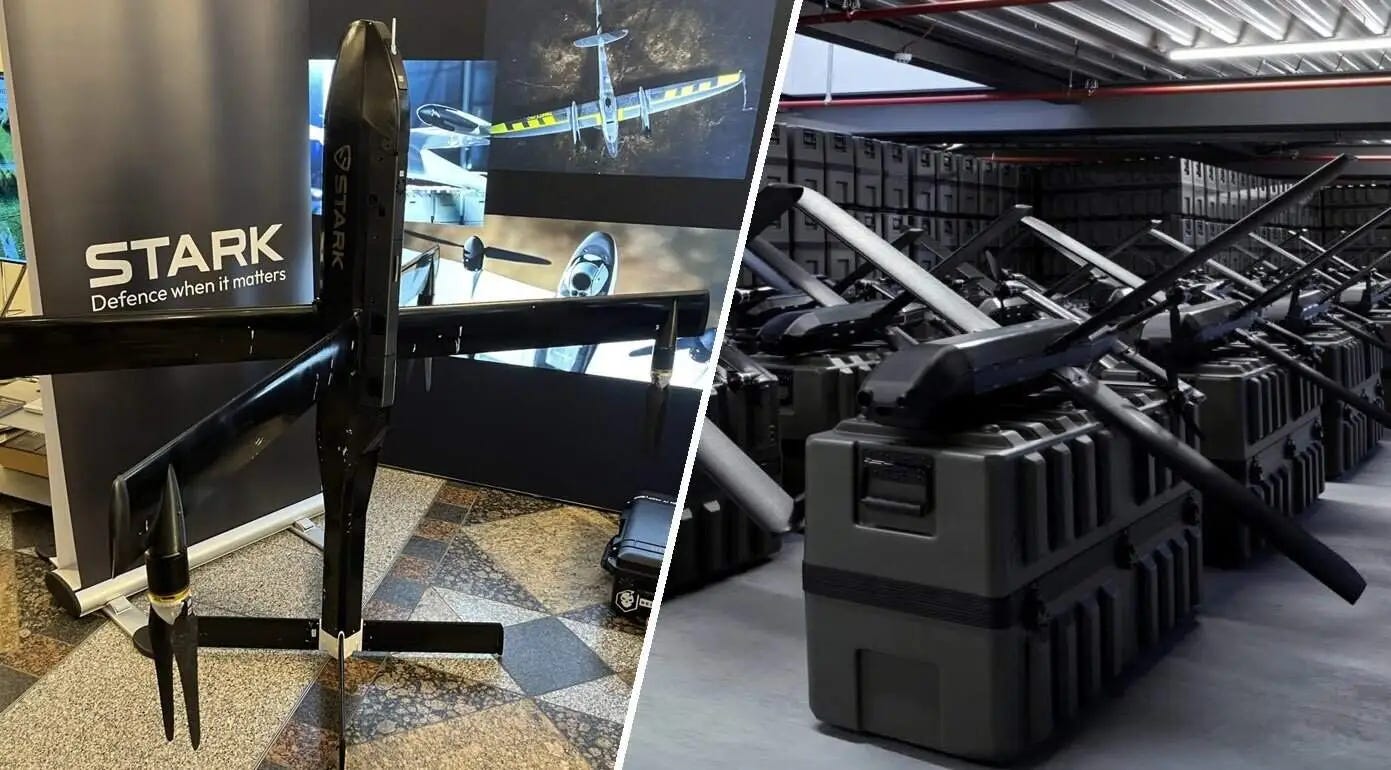
Europe’s drive for security autonomy is not just about military hardware, but also about industrial and technological transformation, with the defense sector undergoing a historic expansion. The continent’s home-grown ammunition industry—anchored by firms like Rheinmetall, Nammo, Nexter, and BAE Systems—has become strategically vital, especially as factories are located in politically sensitive regions where jobs carry significant weight. Simultaneously, investment in drones, AI, and autonomous systems is surging, with European tech clusters in Tallinn, Stockholm, Munich, and Paris competing globally and companies like Helsing raising $600 million last year. This dual-use innovation not only enhances military capability but also promises commercial returns, as government contracts like Germany’s €536M strike drone deal with Helsing and Stark attract private capital and localize supply chains.
The urgency of Europe’s strategic realignment is further underscored by escalating geopolitical threats and the visible fraying of the transatlantic security fabric. Russian aggression, cyber operations from Moscow and Beijing, and direct threats to European defense leaders—such as the foiled plot against Rheinmetall CEO Armin Papperger—have made clear that Europe must be prepared to act independently. Even traditionally neutral countries like Ireland are reassessing their defense postures, while the UK is being urged to treat Ukraine’s security as its own and to rebuild deployable mass and munitions stockpiles. Collectively, European defense investment is set to exceed $2.6 trillion over the next decade, marking a continent-wide commitment to strategic independence and a recognition that the price of peace is rising.
However, the path to security autonomy is riddled with difficult trade-offs and political challenges. Europe must reconcile the urgent needs of frontline states like Poland, which is buying American equipment for immediate deterrence, with the longer-term imperative to build indigenous capabilities and defense-industrial capacity. Public support for strengthening hard and soft power is strong, but there is reluctance to accept the fiscal sacrifices required, and leaders face the delicate task of shifting investment from traditional platforms to emerging technologies without alienating politically influential industrial regions. As Dr. Sophy Antrobus notes, 'the only way to deter war is to prepare for it,' but doing so will require not just money and materiel, but also sustained political will and public engagement.






Cyber Becomes National Power
Cybersecurity now shapes sovereignty and global leverage, with European states legalizing offensive tactics and racing to outpace state-backed cyber threats in a militarized digital arena.
By early 2026, cybersecurity has become inseparable from national sovereignty and geopolitical strategy, transforming from a technical concern into a core instrument of global policy and economic leverage. As articulated in the analysis, 'cyber is no longer just a technical battlefield; it’s an instrument of global policy and economic control,' compelling Chief Information Security Officers (CISOs) to recalibrate their strategies beyond regulatory compliance to encompass broader geopolitical realities. This evolution underscores that in the current era, security is sovereignty, and the playbook for cyber defense must be as attuned to shifting alliances and international tensions as it is to technical threats.
The Ukraine war has catalyzed a dramatic surge in European investment in defense technology, with annual funding leaping from $100 million in 2019 to $1.5 billion in 2025, and a projected doubling of defense budgets to €600 billion over the next 5-7 years. This influx is fueling a new generation of AI-enabled defense startups—such as Helsing, Frankenberg, and Titan—backed by the NATO innovation fund and now securing substantial government contracts. As the U.S. signals it will no longer underwrite European defense, the continent is accelerating R&D to replace legacy military systems with AI and autonomous platforms, aiming for technological sovereignty in an era where digital infrastructure and cyber capabilities are as vital as tanks or missiles.
The convergence of technological innovation and military preparedness is further underscored by the normalization of offensive cyber operations among European democracies, a trend accelerated by Russia’s invasion of Ukraine and persistent state-backed cyber threats. Countries like Germany, France, and Denmark are updating legal frameworks to authorize proactive cyber tactics—including the legalization of spyware and the recruitment of hackers through specialized 'hacker academies'—while the U.S. explores leveraging private contractors for offensive operations. This shift reflects a broader militarization of cyberspace, where persistent, low-visibility disruptions and identity-based attacks have replaced singular headline-grabbing incidents, demanding continuous threat hunting and operational readiness across both public and private sectors.
As cyber warfare becomes a simultaneous front alongside kinetic conflict—'Missiles fly, networks light up'—the security of digital infrastructure and supply chains has emerged as a frontline concern. Incidents such as Poland’s ban on Chinese-made vehicles near military sites, legal scrutiny of hardware vendors like TP-Link, and operational impacts from Starlink satellite restrictions on the Russian battlefield illustrate how physical and digital supply chain vulnerabilities now shape strategic outcomes. These developments are prompting organizations and governments to adopt multi-provider failover strategies, scrutinize vendor affiliations for political risk, and recognize that the security of everything from cloud connectivity to IoT-enabled vehicles is now inextricably linked to national defense.



Industrial Surge and Supply Risks
Europe’s defense boom is straining production lines and exposing critical supply chain chokepoints, as political pressure for homegrown innovation collides with the urgent need for scale and speed.
Europe's defense sector is undergoing a historic industrial transformation, marked by surging budgets, sweeping realignment of manufacturing, and a decisive shift toward indigenous production. Companies like Rheinmetall, Nammo, Nexter, and BAE Systems are anchoring a home-grown ammunition industry, while tech clusters in Tallinn, Stockholm, Munich, and Paris are fueling innovation in autonomous systems. This dual-use investment not only enhances military capabilities but also generates long-term commercial returns for civilian industries, as defense R&D increasingly pays for itself twice over.
The urgency to build rapid military capability is colliding with the need for sustainable, innovation-driven procurement models, exposing the limits of Europe's industrial base. Germany's Leopard 3 tank program, for example, has faced pressure to divert funds toward drones, while Poland's immediate security needs have driven it to buy American-made Abrams tanks and F-35s, highlighting the inability of European industry to deliver at speed. This tension underscores a broader challenge: balancing the political and economic imperatives of supporting domestic industry with the operational necessity of fielding advanced systems quickly in a volatile security environment.
Massive new investments—such as Germany’s €100 billion special fund and the EU’s €150 billion SAFE loan facility—are fueling a continental defense boom, with the combined European pipeline exceeding $2.6 trillion over the next decade. Yet, the bottleneck is not money but industrial production capacity: critical munitions like TNT remain dangerously concentrated, with all of continental Europe’s supply coming from a single Polish factory until new initiatives like Sweden’s SWEBAL come online. As Rheinmetall targets a fivefold revenue increase by 2030 and order books swell, the sector faces the dual challenge of scaling up output and diversifying supply chains vulnerable to geopolitical shocks.
To ensure resilience and permanence, Europe is rethinking procurement by moving away from episodic hardware stockpiling toward models that resemble cloud infrastructure—paying for guaranteed production capacity rather than just inventory. Laws like Germany’s Bundeswehrbeschaffungsbeschleunigungsgesetz are compressing acquisition timelines, while major contracts, such as the €536 million strike drone deal with Helsing and Stark, are attracting private capital and concentrating talent. However, only 5-10% of defense budgets typically flow into R&D and technology, prompting calls for a more innovation-driven approach to sustain surge capacity and operational credibility, as demonstrated by the rapid iteration of systems tested in Ukraine.
Britain’s Defense Crossroads
Despite leading support for Ukraine and growing public concern, the UK faces a dangerous gap between escalating threats and chronic underinvestment, prompting calls for radical transparency and resilience reforms.
By early 2026, the UK’s role within NATO has come under intense scrutiny as warnings from figures like NATO Secretary General Mark Rutte highlight the real risk of a Russian attack within five years, underscoring the urgency for Britain to close the widening gap between escalating geopolitical threats and its own defense investment. Despite the Strategic Defence Review and National Security Strategy flagging the UK’s vulnerability, analysts such as Neil Brown criticize the country’s 'wanton disinvestment in defence capabilities since the end of the Cold War,' arguing that there is 'no good excuse' for the lack of preparedness in the face of mounting peer conflict risks from Russia and other CRINK states.
While the British public overwhelmingly recognizes the importance of strengthening both hard and soft power—three-quarters support such measures—there remains a disconnect between this sentiment and willingness to fund defense through higher taxes or spending cuts, exposing a critical challenge for government transparency and public engagement. Dr Sophy Antrobus points to the need for more open dialogue, suggesting that the UK could learn from Scandinavian models: Denmark’s establishment of a Ministry of Resilience and Preparedness and Sweden’s nationwide distribution of the ‘In Case of War’ brochure in 2024 exemplify how institutionalized public preparedness can bolster national resilience.
Britain’s proactive leadership in supporting Ukraine—through early lethal aid, advanced defense systems, intelligence sharing, and the landmark 2024 UK–Ukraine Agreement on Security Co-operation—has cemented its status as a linchpin of European security, especially as US involvement wanes. The deepening of this commitment with the 2025 ‘100-year partnership’ signals a long-term strategic pivot, with the UK now expected to shoulder greater responsibility within NATO, particularly as a Northern Flank power safeguarding the High North and North Atlantic approaches.
To meet these heightened expectations, Britain must accelerate the modernization and expansion of its armed forces, rebuild deployable mass, and scale up defense-industrial output—ambitions that demand a more candid domestic debate on defense prioritization and a structurally higher share of public expenditure. This shift is not just about military hardware; it also requires treating Ukraine’s security as inseparable from Britain’s own, stepping up sanctions, seizing ‘shadow fleet’ tankers, and deploying aircraft over Ukraine, all without waiting for a US ‘backstop’ or a formal peace deal, as recent analyses urge.