Ford bets big on $30k electric truck to outpace rivals
The gist
Ford is making a $30,000 electric truck bet to leapfrog Tesla and Chinese rivals, banking on radical new tech and manufacturing to spark its own Model T moment.
What to know
- The 2027 Ford Fathom midsize EV pickup will launch at around $30,000, aiming to undercut competitors on price and tech—think native Apple Maps and hands-free BlueCruise driving.
- A secretive West Coast skunkworks led by ex-Tesla exec Alan Clarke is reinventing Ford’s EV design and assembly, using a new UEV platform and an 'assembly tree' process for up to 40% faster builds.
- Despite a $19.5 billion EV writedown and F-150 Lightning woes, Ford is doubling down with $5 billion in new investments and bold partnerships to make advanced, affordable EVs mainstream.
Ford’s Existential EV Gamble
Driven by CEO Jim Farley’s urgent mandate, Ford is overhauling its culture and manufacturing with ex-Tesla talent and Silicon Valley methods to survive the global EV race.
Ford’s transformation of its electric vehicle lineup is driven by an existential imperative articulated by CEO Jim Farley, who has repeatedly emphasized that losing the EV race to Tesla and Chinese competitors would mean losing Ford’s future. This high-stakes context has propelled Ford to adopt a bold strategy focused on affordability and utility, exemplified by the planned launch of a midsize electric pickup truck priced around $30,000, designed to directly outperform rivals like BYD and Xiaomi through rigorous benchmarking and innovation.
A pivotal element in Ford’s strategic shift is the recruitment of Tesla veteran Alan Clarke to lead a secretive West Coast 'skunkworks' team tasked with reinventing Ford’s EV design and manufacturing processes. Clarke’s mandate—to create a competitive EV lineup that can outmatch Tesla and Chinese manufacturers—reflects a deliberate leadership and cultural shift toward innovation and agility, distancing the project from traditional Detroit norms and aiming to produce vehicles with the sophistication and appeal of Apple or Tesla products.
Under Farley’s direct oversight, Ford is embracing innovative manufacturing techniques inspired by Tesla’s 'unboxed' approach, such as reducing parts count through large aluminum castings, to improve efficiency and lower costs. This manufacturing innovation is coupled with a software-driven strategy, including the integration of Apple Maps and expansion of BlueCruise hands-free driving subscriptions, which grew 20% in Q2 2026, underscoring Ford’s commitment to embedding advanced technology and subscription services deeply into its EV ecosystem to better compete with Tesla, Rivian, and GM.
Despite significant financial setbacks—including a $19.5 billion EV writedown and the discontinuation of the F-150 Lightning—Ford remains resolutely committed to this 'moon shot' initiative, framing the upcoming Fathom electric pickup as a transformative 'Model T moment.' This strategic pivot toward affordable, scalable EVs, supported by a new Universal Electric Vehicle platform and multiple major product launches planned over the next three years, signals Ford’s determination to reclaim competitiveness in the global EV market amid intense pressure from Tesla and Chinese manufacturers.


Reinventing EV Manufacturing
Ford’s new UEV platform and radical 'assembly tree' process slash costs and complexity, merging tech-forward design with domestic battery production and advanced digital assembly plants.
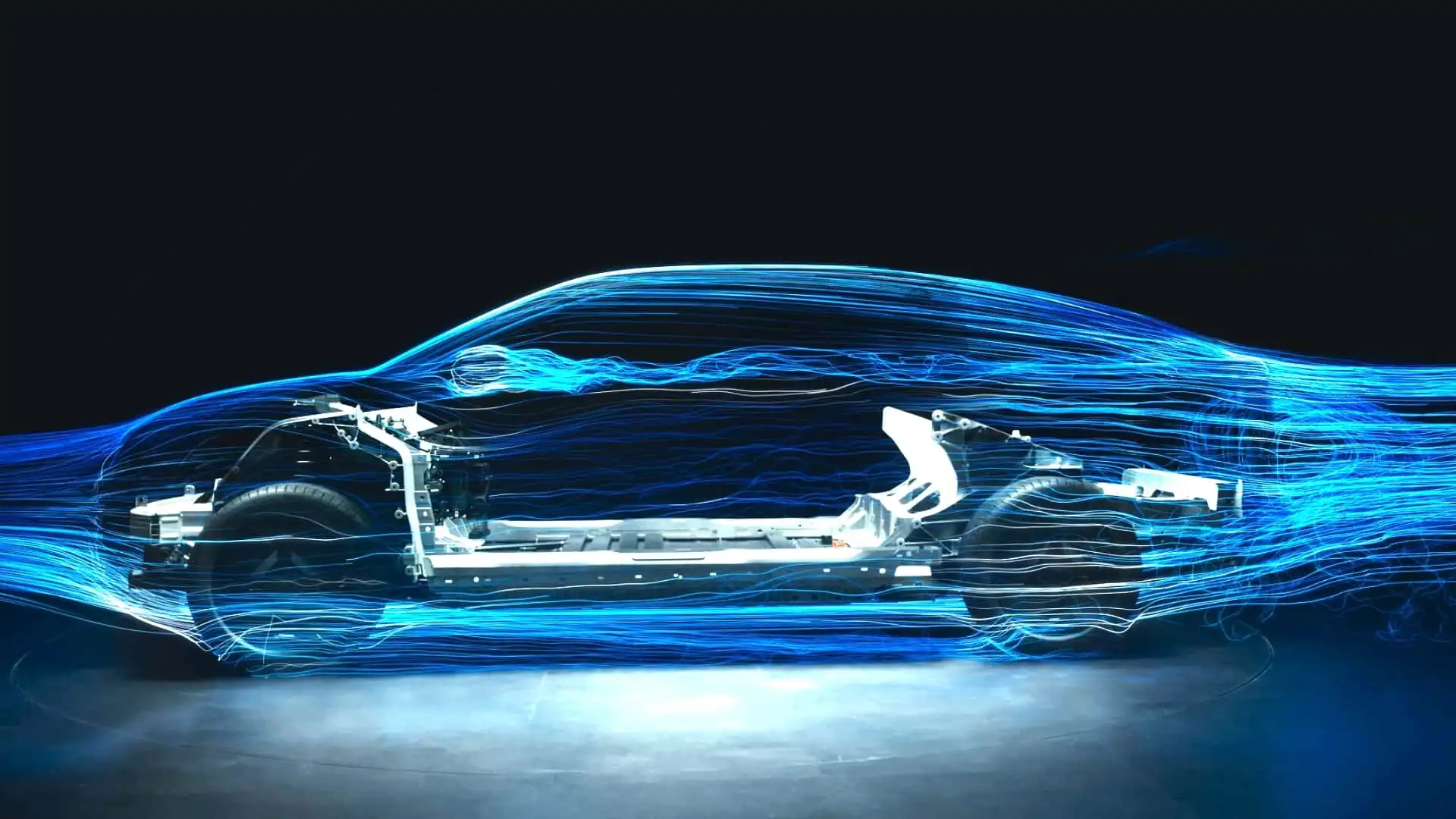
Ford’s Universal Electric Vehicle (UEV) platform marks a radical departure from traditional automotive engineering, embracing software-driven, clean-sheet design principles that prioritize energy efficiency and innovation over legacy methods. Developed in a dedicated skunkworks facility separate from Ford’s usual engineering hubs, the UEV platform aims to reduce the high cost of EV battery packs—which still represent about 40% of total vehicle cost—by optimizing the platform’s overall efficiency, including parts flexibility, wiring simplification, and integration of a flexible one-piece PCB for battery interconnects. This approach was unveiled with a polished, Apple-style keynote dubbed 'Ford Bounty Hunters: The Pursuit of Efficiency,' underscoring the company’s commitment to a tech-forward, problem-solving mindset.
Complementing the UEV platform, Ford’s manufacturing revolution centers on the Universal EV Production System, which replaces the century-old moving assembly line with an innovative 'assembly tree' process. This method constructs three major vehicle sections—the front, rear, and structural battery pack—in parallel before merging them, enabling up to 40% faster assembly and a net 15% efficiency gain after automation and insourcing. Large single-piece aluminum castings have replaced dozens of smaller stamped and welded parts, streamlining assembly and reducing complexity, while pre-kitted parts and a wiring harness that is over 4,000 feet shorter and 22 pounds lighter enhance both quality and ergonomics for workers.
A centerpiece of Ford’s UEV production innovation is the structural lithium iron phosphate battery pack that doubles as a load-bearing floor sub-assembly, integrating seats and carpet to lower the vehicle’s center of gravity and increase interior space. This design not only improves vehicle dynamics but also aligns with Ford’s broader strategy to insource battery production domestically at BlueOval Battery Park Michigan, reducing reliance on foreign supply chains and ensuring compliance with federal EV tax credit requirements. These manufacturing and platform advancements are supported by a sweeping $5 billion investment, including nearly $2 billion dedicated to modernizing the Louisville Assembly Plant with enhanced digital infrastructure, tripled Wi-Fi access points, private 5G connectivity, and the highest level of final assembly automation in Ford’s global network.


Fathom: Ford’s Model T Moment
The 2027 Fathom pickup targets mass-market dominance with a $30K price, advanced software, and practical design, aiming to outmaneuver Chinese EV makers and redefine Ford’s future.
Ford's product vision for the affordable midsize electric pickup, culminating in the 2027 Fathom, represents a strategic pivot from its earlier high-end electric trucks like the F-150 Lightning. By engineering a new Universal Electric Vehicle (UEV) platform from the ground up, Ford aims to deliver a practical, scalable EV starting around $30,000—roughly $20,000 below the average new car price in the U.S.—to compete directly with Chinese EV manufacturers who have pressured prices through cost-efficient battery and manufacturing innovations. This shift is underscored by CEO Jim Farley's characterization of the effort as a 'Model T moment,' emphasizing affordability, manufacturing efficiency, and mass-market appeal as critical to Ford's survival and competitiveness in the evolving EV landscape.
The Fathom distinguishes itself through advanced software integration and practical features that elevate it beyond a basic affordable EV. It debuts native Apple Maps running directly on the vehicle’s displays—independent of smartphones—offering EV-specific routing, battery preconditioning, and real-time traffic updates, a first for any automaker. Coupled with Ford's upgraded BlueCruise hands-free driving system aiming for semi-autonomous, eyes-off-the-road capability by 2028, the Fathom democratizes cutting-edge technology typically reserved for premium models, aligning with Ford’s goal to make advanced tech 'simple, useful, and truly attainable.'
Designed for practicality and versatility, the Fathom seats five passengers and offers more cabin space than a Toyota RAV4, positioning it as a commuter-friendly yet capable midsize pickup. It incorporates cost-effective and sustainable lithium iron phosphate (LFP) batteries produced domestically, initially launching with a standard-range model and planning a longer-range variant. Ford’s focus on reducing complexity extends to adopting a 48-volt low-voltage electrical system and implementing a new 'assembly tree' manufacturing process at its Louisville plant to improve production efficiency and profitability, addressing the financial pitfalls that plagued the F-150 Lightning.
The Fathom’s pricing strategy is a deliberate effort to fill a unique market gap as the only sub-$30,000 electric truck, undercutting competitors like Tesla and Chinese EV makers while offering truck utility absent in affordable EVs such as the Chevrolet Bolt EUV and Nissan Leaf. Priced at $28,350 before destination fees, it sits just above Ford’s gas-powered Maverick pickup, making it accessible to a broader audience concerned with affordability without sacrificing essential features like bidirectional charging, a digital key, and a front trunk. However, key performance metrics such as EPA range, towing capacity, and charging speeds remain undisclosed, leaving some buyer decision factors pending as preorders approach.



Apple Maps Powers Ford Autonomy
Ford’s deep partnership with Apple brings native navigation and data-driven autonomy to its EVs, signaling a bold shift to software-defined vehicles and affordable hands-free driving.
Ford is pioneering a strategic partnership with Apple to embed Apple Maps natively within its Universal Electric Vehicle (UEV) platform launching in 2027, moving beyond traditional smartphone projection models like CarPlay. Utilizing Apple’s MapKit for Automotive SDK, this integration offers turn-by-turn navigation, real-time traffic, and intelligent EV-specific routing with battery preconditioning, all customized to align with Ford’s brand identity. CEO Jim Farley emphasizes this move as part of Ford’s mission to make advanced technology 'simple, useful, and truly attainable,' setting Ford apart from competitors still reliant on Google-based systems.
The native Apple Maps integration plays a critical role in advancing Ford’s BlueCruise hands-free driving system, managed by Ford’s Latitude AI division, toward full Level 3 autonomy with eyes-off capability targeted for 2028. By leveraging Apple Maps’ detailed road-level data and geofencing, BlueCruise aims to enable seamless on-ramp-to-off-ramp autonomous driving, marking a significant technological leap from its current hands-free but eyes-on operation across over 130,000 miles of approved highways. This evolution underscores Ford’s commitment to making autonomy an affordable feature rather than a premium luxury, with Doug Field stating, 'Autonomy shouldn't be a premium feature.'
Ford’s shift toward a vertically integrated software-defined vehicle (SDV) approach, exemplified by its Apple partnership, reflects a broader industry trend of deep collaboration between automakers and big tech to accelerate innovation and autonomy. This collaboration enables continuous data feedback loops beyond static HD mapping, enhancing both navigation and autonomous capabilities while addressing automakers’ concerns over interface control and privacy. As Soumya Sen notes, this marks a growing willingness among automakers to embrace AI-enabled software platforms, moving past earlier hesitations about ceding control to tech giants like Apple.
Despite the ambitious roadmap and significant investment—approximately $1 billion within the Model e segment’s $4 billion expected loss—market sentiment currently undervalues Ford’s autonomy efforts, pricing the company at about nine times forward earnings without factoring in the potential upside from the 2028 eyes-off driving promise. This disconnect highlights an opportunity for investors to recognize the long-term value embedded in Ford’s advanced software and autonomy integration as it positions itself competitively against Tesla, Rivian, and GM in the rapidly evolving EV landscape.


Political and Financial Storms
Ford’s EV revolution faces fierce political backlash, massive losses, and leadership turmoil—testing whether bold bets and tech innovation can overcome entrenched resistance and market skepticism.
Ford's EV transformation faces a complex web of political resistance and financial uncertainty that threatens to stall its progress. In the U.S., federal policies and political rhetoric have increasingly undermined climate science and EV adoption, framing electric vehicles as threats rather than solutions, which complicates Ford's strategic efforts. Despite these headwinds, Ford is cautiously advancing with investments in its Universal Electric Vehicle platform and incentivizing internal efficiency innovations, signaling a commitment to navigate through the polarized consumer landscape and industry skepticism.
Financial pressures loom large over Ford's EV ambitions, highlighted by the cancellation of its best-selling electric pickup and a staggering $19.5 billion write-down tied to the F-150 Lightning program. While Ford pivots toward a more affordable midsize electric pickup built on the new UEV architecture, aiming for profitability within a year of launch, the Model e segment continues to hemorrhage losses—projected at $4 billion in 2026—including substantial investments in autonomy and energy businesses. This financial strain is compounded by leadership changes, such as the departure of Doug Field and organizational restructuring, which inject further uncertainty into execution risks for both EV and autonomy programs.
Ford’s ambitious autonomy goals, including delivering a Level 3 eyes-off driving system by 2028, remain highly uncertain amid a history of program cancellations and shifting leadership. Market skepticism is palpable, with investors valuing Ford at about nine times forward earnings and treating its autonomy efforts as a cost center rather than a growth driver. While Ford’s core business shows improved EBIT margins and raised guidance, the autonomy program’s integration into the broader EV strategy adds to the financial and operational risks during this critical transformation phase.
Manufacturing innovation is central to Ford’s strategy to reduce costs and compete effectively, especially against Tesla’s used EV market dominance. The shift from the traditional moving assembly line to a novel 'assembly tree' system promises significant efficiency gains—20% fewer parts, 25% fewer fasteners, and a 15% faster assembly process—while the adoption of a structural battery pack and lithium iron phosphate chemistry aligns with supply chain resilience and federal tax credit compliance. By targeting a lower five-year cost of ownership than a three-year-old used Tesla Model Y, Ford aims to carve out a unique competitive position in the sub-$30,000 electric truck segment, though potential challenges remain around repair complexities and insurance costs.