Founder succession spurs boom in CEO advisory services
The gist
Founder-CEO succession is no longer an afterthought—advisory giants are scrambling to help companies dodge leadership meltdowns before it’s too late.
What to know
- In late 2026, McKinsey, Spencer Stuart, and Pearl Meyer all ramped up CEO advisory services as boards realized emergency handoffs just don’t cut it.
- Founder-led firms are splitting ownership, board, and executive roles as the average leadership exit now takes 9 to 11 years and scaling demands more than founder improvisation.
- When founders step aside—like David Lortscher at Curology—companies often hit growing pains, as the skills for scrappy innovation rarely map to managing 300+ employees.
Advisory Firms Scale Up
Major consultancies are pouring resources into CEO succession services, transforming a once last-minute fix into a cornerstone of boardroom strategy.
The late-2026 buildout in succession advice was framed as a response to a long-recognized weakness in how boards handled CEO transitions. “Before 2015, boards typically initiated CEO succession only when a departure was imminent, such as after a CEO announced leaving or was incapacitated,” and Spencer Stuart’s own research later tied the correction to a broader shift after 2015, when “this emergency, candidate-centered approach was replaced by a continuous, multi-year leadership pipeline model between 2015 and 2022, as documented by Spencer Stuart's study of S&P 1500 CEO appointments.”
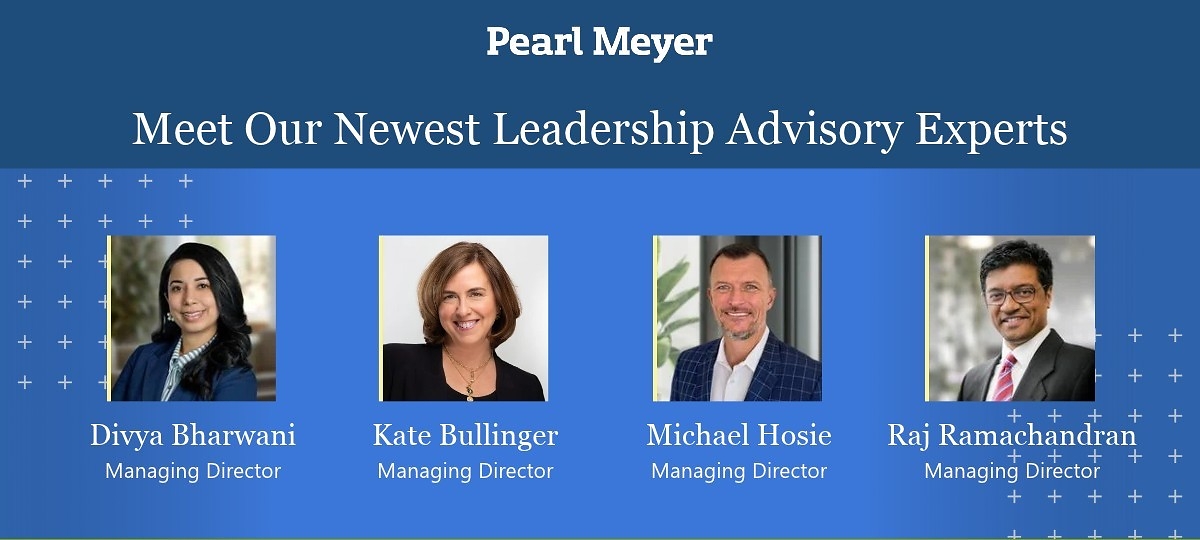
By late 2026, that diagnosis had turned into visible capacity expansion at major advisory firms, underscoring both demand and concern around founder-CEO succession risk. PR Newswire reported that Spencer Stuart “Strengthens Global CEO Advisory Offering, Expanding Support for CEOs from Succession Through Value Creation,” while Pearl Meyer announced it “Expands Leadership Advisory Practice with Four New Managing Directors,” a pair of moves that showed firms were not just commenting on succession exposure but investing in broader leadership-advisory infrastructure to address it.

Governance Over Personality
Boards are dismantling founder-centric power structures, splitting authority to safeguard mission and stability as companies outgrow their original leaders.
As founder-led companies mature, succession pressure is increasingly being handled as a governance design problem rather than a personality issue. Between 2015 and 2022, founder succession governance evolved by separating authority across ownership, board oversight, and executive management—an institutional response to the friction created when founder control overlaps with CEO duties; put more plainly, “Between 2015 and 2022, governance shifted to explicitly separate founder ownership, board governance, executive management, and the founder’s continuing role,” a change that became central to advisory frameworks built to preserve mission while reducing transition volatility.
That role-splitting matters because scaling companies cannot rely indefinitely on founder improvisation when capital, hiring, and board expectations become more complex. Interviews in late 2026 describe founders needing to recalibrate after growth rounds, avoid premature hiring, and clarify what the founder should still “own and drive,” while boards and advisers help recruit operators around them; with “an average exit is nine to 11 years,” the leadership handoff has to protect a long-term strategic mission, which is exactly why demand is rising for professional CEO guidance and more formal governance frameworks.


Scaling Exposes Founder Limits
As startups balloon to hundreds of employees, founder instincts give way to management systems, forcing hard pivots in leadership style—and often, the leader.
The friction in founder succession starts with a basic mismatch between what built the company and what running it at scale demands. David Lortscher said he stepped back at Curology because “I don't think I'm the best person to be running a 300 person company… my interest is trying to like innovate, like create products, not to manage like a 300 person org chart,” a recognition that the founder’s centralized, product-led style can become less effective as the organization matures and management systems matter more than individual instinct.
That liability becomes clearer as headcount and complexity rise: as companies grow to around 800 people, founder-style “leading from the front” becomes impractical, forcing the CEO to shift from direct execution to building formal systems and managing people and processes. As one CEO put it, at “800 People… there are too many problems for you to lead from the front on… there’s just too much surface area… a lot of your job becomes recruiting, hiring… putting them on the right work and now learning those new” operating levers, which helps explain why handoffs often bring a temporary period of value disruption.