Free speech fights intensify as censorship pressures mount
The gist
Free speech is under fire as governments, tech giants, and universities clash over who controls what you can say online and on campus.
What to know
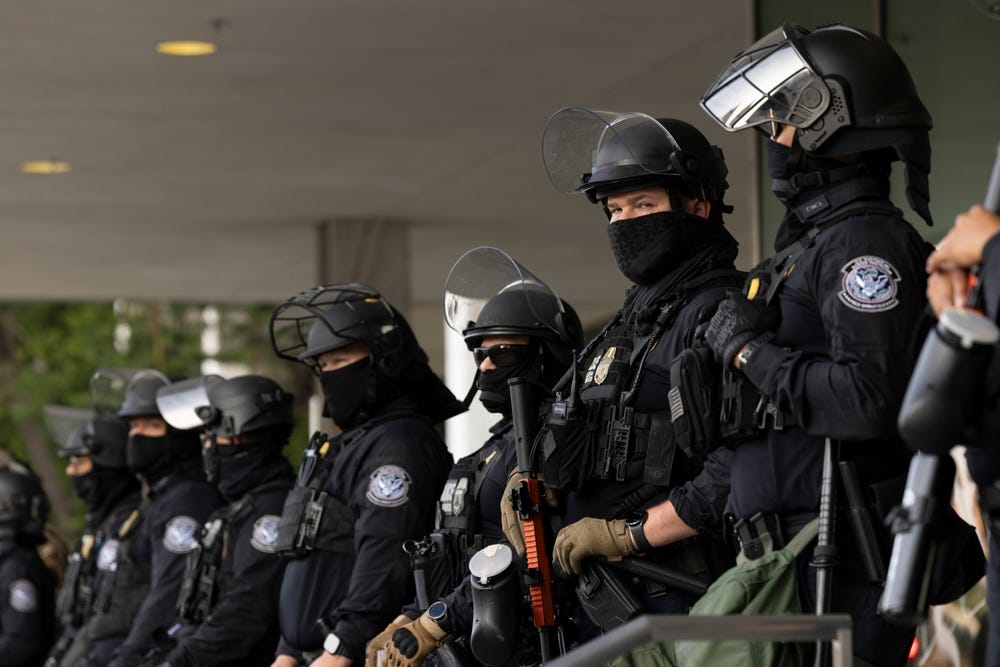
- FIRE’s 2026 lawsuit against officials like Pamela Bondi and Kristi Noem spotlights unconstitutional government pressure on tech platforms to censor ICE-reporting groups, testing the limits of First Amendment protections.
- A whopping 64% of Americans distrust both social media companies and government regulators to fairly police online speech, fueling bipartisan calls for greater transparency and unbiased moderation.
- Expanded antisemitism definitions and high-profile campus crackdowns are blurring the line between hate speech and dissent, sparking fears that legitimate debate—especially on Israel-Palestine—is being suffocated by overbroad censorship.
Government Pressure, Private Censorship
Officials are sidestepping the First Amendment by using vague terms like 'doxxing' to pressure platforms into silencing watchdog groups, raising urgent constitutional alarms about indirect censorship.
By early 2026, the legal battle spearheaded by FIRE against Attorney General Pamela Bondi and Secretary of Homeland Security Kristi Noem highlights the constitutional tension when government officials pressure private platforms like Facebook and Apple to censor groups reporting on ICE activities. This indirect censorship raises profound First Amendment concerns, especially as these groups use public information to document law enforcement actions, a practice that courts recognize as protected speech rather than punishable 'doxxing.'
Government officials have increasingly weaponized vague terms such as 'doxxing,' 'conspiracy,' 'harassment,' and 'misinformation' to justify censorship, blurring the critical line between protected and unprotected speech. However, as FIRE’s lawsuit underscores, the First Amendment does not carve out exceptions for broadly defined 'doxxing,' and constitutional protections remain robust unless speech falls within narrowly defined categories or incites imminent lawless action—a high bar not met by the ICE reporting groups involved.

Bipartisan Distrust, Legal Gaps
Americans’ deep skepticism toward both tech giants and regulators is fueling demands for transparent, unbiased moderation as Section 230’s broad protections and global political tensions force a reckoning over who sets the rules for online speech.
Tech platforms face a bipartisan squeeze in content moderation, pressured by both left-leaning UK censorship trends and right-wing US demands, illustrating the complex political landscape they navigate. Despite this, free speech advocates like Preston Byrne highlight efforts such as Wyoming's Granite Act and Delaware's similar initiatives to establish cross-party censorship shields, underscoring that free speech protection transcends partisan divides. This tension is further complicated by historical American values that prioritize speech protection—even unpopular speech—as a public good, challenging calls for censorship measures like age verification as unnecessary overreach.
Section 230 remains a pivotal yet contentious legal shield that exempts social media platforms from liability for user-generated content, creating a regulatory gap compared to traditional media. This exemption fuels debate over whether platforms should adhere to the same legal standards as newspapers, especially given the global complexity where platforms risk complying with restrictive or harmful national laws. Experts argue that elected representatives—not tech CEOs like Elon Musk or Mark Zuckerberg—should define online speech rules to preserve democratic sovereignty, particularly as failure to regulate platforms effectively threatens election integrity and national sovereignty, notably in Europe.
Public trust in both social media companies and government regulators is alarmingly low, with 64% of Americans distrusting both entities to fairly regulate online speech, according to FIRE’s 2024 Social Media Report. Americans demand transparency, unbiased moderation, and robust appeal processes, signaling acceptance of content moderation only if it is conducted fairly and openly. This skepticism is compounded by widespread concern—75% of Americans—about government pressure on tech platforms to suppress speech, alongside fears of surveillance with 77% worried about government access to user data, revealing deep unease across political lines about indirect censorship tactics such as 'jawboning' that bypass formal legal processes.
Public concern about government involvement in speech regulation fluctuates with political power shifts, reflecting partisan fears of censorship depending on who holds authority. By April 2026, liberals expressed heightened worry about government pressure on tech companies, reversing the fall 2023 trend when Republicans were more distrustful of government speech regulation. This dynamic underscores the persistent challenge of balancing free speech protections with political realities, as government officials increasingly resort to indirect pressure on platforms to control discourse without formal legal oversight, effectively outsourcing censorship in ways that unsettle democratic norms.

Institutions Tighten Speech Controls
Universities and government agencies are pushing the boundaries of free expression, with crackdowns on student media, employee speech, and even applause at public meetings revealing how easily speech codes can chill dissent.
Universities and professional organizations have become flashpoints in the struggle to balance free speech with anti-discrimination and institutional policies. For instance, the University of Alabama’s controversial shutdown of two student magazines—Alice and Nineteen Fifty-Six—citing a nonbinding memo from then-U.S. Attorney General Pam Bondi about 'unlawful proxies' for discrimination, underscores the legal and ethical tightrope institutions walk. Similarly, the American Diabetes Association’s ejection of researchers distributing an editorial critical of President Trump at its conference highlights the tensions between organizational censorship and individual expression within professional settings.
Public agencies and government bodies have increasingly imposed speech restrictions that complicate the traditional understanding of free expression in public forums. Florida’s wildlife agency not only barred employees from criticizing their employer on social media but also accessed critics’ driver’s license records under the guise of safety, prompting First Amendment attorney Gary Edinger to emphasize, 'We’re Americans. We get to do that.' Meanwhile, Los Angeles City Hall’s ban on uttering certain offensive words—even when quoted or protested—reflects a growing willingness among officials, like Council President Marqueece Harris-Dawson, to push the boundaries of permissible speech in civic spaces.
The enforcement of speech codes in public meetings has sometimes led to disproportionate and counterproductive outcomes, illustrating the delicate balance between maintaining order and protecting free expression. The arrest of high school physics teacher Lux Claridge in Emporia, Kansas, for merely clapping five times at a city commission meeting—despite the applause not being disruptive—exemplifies how rigid application of rules can ironically stifle the very public discourse they aim to regulate. This incident highlights the ongoing challenge of calibrating enforcement to respect constitutional rights while preserving decorum.
Amid these challenges, educational initiatives offer a hopeful counterpoint by fostering dialogue and understanding across ideological divides. At FIRE’s third annual Free Speech Forum, nearly 200 high school students engaged in debates on contentious issues, learning that 'sometimes the first step toward defeating an idea is having the courage to speak with the person who holds it,' a lesson inspired by Daryl Davis’s courageous engagement with KKK members. Such programs suggest that nurturing open conversation remains a vital strategy for navigating free speech tensions in society.
Antisemitism Policies Muzzle Debate
Expanded definitions of antisemitism on campuses and in public life are conflating criticism of Israel with hate speech, stoking backlash and threatening to suppress vital debate on the Israeli-Palestinian conflict.
By mid-2026, expanded definitions of antisemitism, propelled by overt pro-Israel lobbying, began to significantly restrict academic debate and public discourse, particularly on university campuses. The adoption of the International Holocaust Remembrance Alliance’s (IHRA) working definition into university policies—such as at Columbia University and Reed College—has blurred the line between protected speech and harassment, often conflating legitimate criticism of Israel with hate speech. This trend has sparked concern that these policies, reinforced through federal civil rights settlements, exceed legal requirements and risk stifling open discussion on the Israeli-Palestinian conflict, as highlighted by the Office for Civil Rights’ failure to differentiate between harassment and First Amendment-protected speech.
The conflation of criticism of Israel with antisemitism has paradoxically fueled resentment and skepticism within communities, as broad and sometimes unfounded labeling of conspiracy theories and political references—such as mentions of George Soros or terms like 'Deep State'—as antisemitic has led to accusations of censorship and manipulation. Commentators argue that overextension of antisemitic labels may inadvertently generate more antisemitism, with some suggesting this dynamic is exploited to justify increased surveillance and humanitarian regulation crackdowns, thereby complicating genuine efforts to protect minorities without infringing on free expression.
Despite the alarming rise of antisemitism on social media platforms, where influential figures like Tucker Carlson, Candace Owens, Hasan Piker, and Jackson Hinkle propagate hateful tropes contributing to a surge in violent attacks against Jewish communities, many within the Jewish community remain steadfast in their commitment to free speech. Legal advocates like David Goldberger of the ACLU of Illinois emphasize that constitutional protections must apply universally—even defending neo-Nazis’ rights to march in Holocaust survivor communities—arguing that government censorship is a precarious and unreliable shield against antisemitism, and that constitutional principles offer a more durable safeguard against discrimination and repression.

Wartime Censorship Goes Global
The Israel-Iran conflict and rising security fears are driving governments worldwide to revive emergency powers and deploy AI surveillance, incrementally eroding free speech under the guise of public safety.
By mid-2026, the intensifying Israel-Iran conflict has catalyzed a wave of free speech restrictions across Western democracies, where legislative and social measures aim to shield Israel from criticism. This crackdown includes expanded definitions of antisemitism that curtail academic debate and public discourse, effectively conflating legitimate criticism with hate speech. These wartime pressures have revived emergency powers reminiscent of post-9/11 policies, raising alarms about the potential permanent erosion of democratic rights amid the fragile balance between security and liberty.
The erosion of free speech in the U.S. is emblematic of a broader global trend where governments incrementally restrict expression under the pretext of maintaining order and safety, as captured by the adage, 'Free speech dies by inches, not bonfires.' Local examples like Los Angeles banning certain words in public comments and Emporia arresting a teacher for clapping illustrate how authorities assert sweeping control, while new technologies such as AI complicate these debates by raising novel questions about accountability for harmful misinformation.
Internationally, the digital realm has become a battleground for speech regulation, with governments deploying legal and technological tools to police content on platforms like Telegram. Australia’s legal action against Telegram for extremist content and Russia’s charging of Telegram’s founder with aiding terrorism exemplify this global censorship trend. Simultaneously, domestic agencies like ICE employ AI-driven surveillance across nearly 20 social media platforms to gather 'anticipatory threat intelligence,' echoing historical wartime surveillance practices and underscoring the continuity of speech regulation in security contexts.
Journalism’s Role in Speech Battles
Journalists face mounting pressure to defend open debate—even unpopular views—as pandemic-era censorship of experts and nuanced discussions by platforms like Twitter exposes the peril of letting tech firms dictate the boundaries of public discourse.
Taylor Lorenz underscores journalism's vital role in safeguarding free speech, even for viewpoints journalists personally oppose, to prevent major tech platforms from becoming unchecked arbiters of discourse. She warns that without this defense, companies like Twitter may moderate content primarily to curry favor with regulators rather than uphold genuine free discussion. This perspective highlights the media's responsibility to foster open, nuanced conversations rather than allowing simplistic or inflammatory rhetoric to dominate, as exemplified by Lorenz's distinction between sharing complex theories like the lab leak hypothesis and censoring reductive slogans such as 'China virus.'
The pandemic era exposed the intricate challenges journalists face in balancing misinformation control with protecting legitimate scientific debate. Lorenz reveals that under the Biden administration, Twitter censored not only misinformation but also credible voices including scientists, public health experts, academics, and disabled individuals who raised concerns about vaccine efficacy and ongoing precautions. This episode illustrates the precarious position of journalism amid evolving information landscapes, where the line between harmful falsehoods and necessary dissent can blur, demanding careful, context-sensitive editorial judgment.