From AI frenzy to value revival: market upended as tech titans stumble and old economy soars
The gist
Wall Street’s AI obsession just got upended—tech’s titans are tumbling as value stocks, small caps, and old-school assets roar back to life.
What to know
- After AI-fueled mega-cap tech stocks drove 30% of S&P 500 gains from 2023-2025, disappointing earnings and speculative excess sparked a dramatic investor exodus.
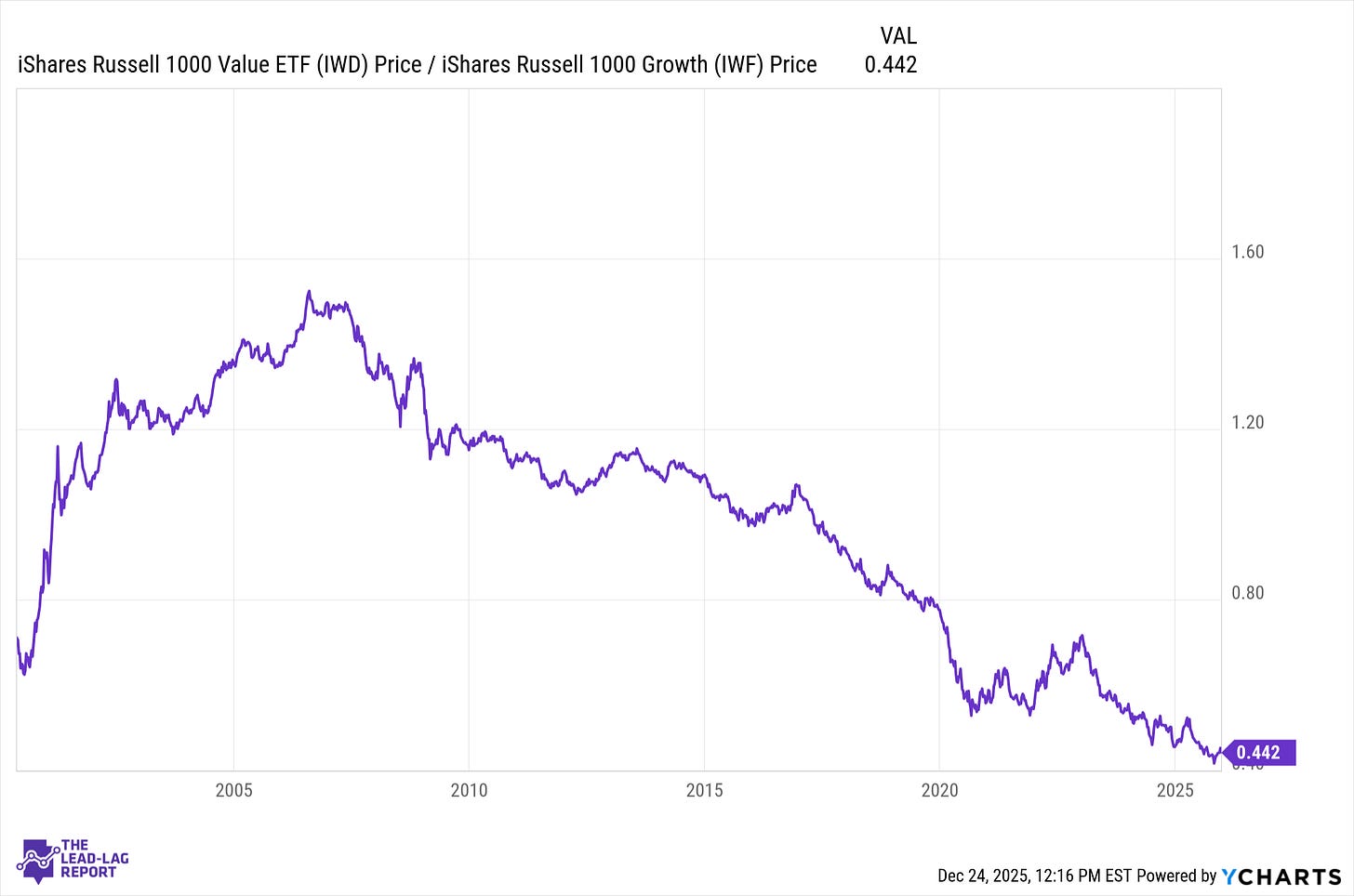
- By early 2026, energy stocks surged 27% YTD and two-thirds of S&P 500 companies outperformed the index, while real assets and international equities surged on a weaker dollar.
- Extreme volatility and single-stock dispersion now rule, rewarding disciplined, fundamentals-focused investors and making capital discipline and cash flow king in a riskier world.
Tech Titans’ Bubble Bursts
A handful of mega-cap AI giants drove record market concentration and speculative excess, masking the fragility beneath the S&P 500’s surge until disappointing earnings triggered a sharp reversal.
The era of AI-led growth from 2023 through late 2025 was defined by an extraordinary concentration of market gains in a handful of mega-cap tech titans—most notably the so-called 'Magnificent 7'—whose dominance propelled the S&P 500 to new highs and pushed forward P/E ratios near the top of their 20-year range. By the end of 2025, the top 10 stocks, almost all tech or tech-adjacent, accounted for nearly 41% of the index, with the MAG7 alone responsible for roughly 30%—a level of concentration reminiscent of the dot-com bubble. This narrow rally masked underlying fragility: fewer than 30% of S&P 500 components outperformed the average in any of the last three years, turning the index into what one analyst called 'a narrow concentrated bet on a handful of mega cap tech names masquerading itself as diversification.'
This AI-fueled boom was underpinned by record profitability—net margins hit 13.2%, the highest since 2009—and by the perception that mega-cap tech companies could deliver both superior quantity and quality of earnings with remarkably low volatility. However, as 2025 drew to a close, cracks began to show: earnings disappointments from giants like Broadcom and Oracle triggered sharp pullbacks, while record-low free cash flow yields and a $5.39 trillion AI investment spree raised uncomfortable questions about the sustainability of returns. Michael Purvis observed that these companies were converging on similar business models and warned, 'free cash flow yields on stocks like Microsoft, they're at, you know, record lows right now,' highlighting the speculative excesses and vulnerabilities that were building beneath the surface.
By late 2025, the speculative fever reached a crescendo, echoing the tech and telecom boom of the late 1990s, as frantic AI-driven dealmaking and capital expenditures swept the sector. Yet, macroeconomic headwinds—including deteriorating economic signals, rising long-term interest rates, and inflation worries—prompted investors to hedge portfolios and reassess their risk appetite. Growth-oriented, high-multiple tech names with strong profit margins, such as Salesforce and HubSpot, began to materially roll over, exposing the market’s vulnerability to a rerating of its most crowded trades. As one analyst put it, 'that's what's really likely to bring the market down is the big tech names... being rerated lower in a material way.'
The unwinding of market concentration became unmistakable as 2025 ended and 2026 began: tech-heavy indices like the Nasdaq suffered their worst week since November, and capital rotated out of expensive AI-heavy names into value-oriented, lower-cap stocks and 'old economy' sectors. The equal weight S&P 500 index outperformed its cap-weighted counterpart by the widest margin since 1992 in early 2026, signaling a broadening of market leadership and a potential end to the era of mega-cap tech dominance. Historically, such peak concentration has preceded prolonged periods where diversified, broad-based equity approaches outperform, as seen in the seven-year stretch after 2000 when the equal weight index returned 65% while the traditional S&P declined 9%.






Value Sectors Seize Spotlight
Rising inflation, massive tech capex, and global turmoil sparked a dramatic investor pivot from AI-fueled growth to energy, industrials, and real assets as old-economy sectors reclaimed market leadership.
The rotation away from AI-led tech dominance was catalyzed by a confluence of rising inflation risks, aggressive capital expenditure, and a shifting macro environment that undermined the appeal of long-duration growth assets. As inflation concerns mounted in early 2024, Treasury yields surged and the market began to punish tech giants for their massive, and increasingly less profitable, AI investments—Alphabet, Amazon, Meta, and Microsoft collectively projected a staggering $650 billion in capex for 2026, up 60% from the prior year. However, this spending spree strained business models, led to increased debt issuance, and failed to deliver immediate revenue, prompting investors to rotate into value sectors like energy, industrials, and materials, which benefited directly from both the capex outflows and the broader search for cash flow certainty.
Geopolitical tensions, particularly the escalation of conflict in Iran and ongoing instability in Venezuela, acted as powerful catalysts for the rotation into real assets and value sectors. The targeting of Kharg Island, responsible for 90% of Iran’s oil exports, created a persistent risk premium under oil prices, while U.S. and Israeli strikes fueled fears of crude supply disruptions and sent energy stocks soaring—up 27% year to date by March 2026. These events, combined with policy shifts such as the CME’s increased margin requirements on silver and Europe’s €500 billion infrastructure fund, not only buoyed energy and materials but also reinforced the narrative that old-economy sectors like defense, industrials, and utilities offered both upside from AI-driven demand and downside protection from global volatility.
Monetary policy played a pivotal role in accelerating the market rotation, as central banks responded to evolving inflation dynamics and macroeconomic uncertainty. The Fed’s rate cutting cycle, which brought the funds rate down to 3.50-3.75%, provided a tailwind for smaller, rate-sensitive companies, fueling a breakout in the Russell 2000 and supporting the shift toward value and small caps. However, persistent inflation—highlighted by a hotter-than-expected February PPI and a core PCE reading of 3.0%—complicated the easing path, with geopolitical shocks like the Iran conflict delaying expected rate cuts and adding further volatility to the rotation narrative.
The psychological and structural impact of AI disruption also contributed to the rotation, as investors grew wary of the risks posed to established software and cloud businesses. The rapid evolution of AI, exemplified by Anthropic’s new automation tools and high-profile layoffs at firms like Block, sparked a broad de-risking across growth sectors and led to a material underperformance of the S&P 500 software and services group—lagging the broader index by 24%, the widest gap in decades. This sentiment shift, coupled with the rise of the HALO (Heavy Assets, Low Obsolescence) trade and the outperformance of companies perceived as immune to AI disruption, signaled a decisive move away from speculative tech toward tangible, cash-generating assets.





Market Leadership Broadens Out
As tech dominance faltered, small caps, value stocks, and international equities surged on the back of robust earnings, fiscal stimulus, and a global hunt for undervalued opportunities.
By late 2025 and into early 2026, the market underwent a dramatic broadening of leadership as capital rotated decisively away from the AI-led mega-cap tech cohort and into undervalued sectors, small and mid-cap stocks, and real assets. This shift was catalyzed by a confluence of factors: aggressive monetary easing, historically compressed valuations for value stocks, and a growing skepticism about the sustainability of sky-high growth multiples. As the S&P 500 equal weight index and the Russell 2000 small-cap index broke out to all-time highs—contrasting with the stagnation and outright declines in the 'Mag 7' tech giants—investors flocked to sectors like energy (up over 20% YTD), industrials, materials, and consumer staples, with stalwarts like Walmart and Costco seeing their forward P/E ratios approach those of tech titans. The result has been a market where, as of early 2026, 66% of S&P 500 companies are outperforming the index, and previously neglected areas such as international equities, especially in Europe and Asia, are gaining traction amid a weakening dollar and robust fiscal stimulus abroad.
The resurgence of value and small-cap stocks has been underpinned by improving earnings trends, rising productivity, and supportive macroeconomic policies. Forward EPS estimates for small caps have surged since mid-2025, with real revenue per worker inflecting upwards and net profit margins recovering across most major markets, partly attributed to AI-driven productivity gains—95% of surveyed companies report AI has boosted efficiency, with healthcare leading the charge. Policy tailwinds, including U.S. tax cuts and capex incentives, as well as Europe's €500 billion infrastructure fund, have further fueled this rotation, enabling smaller, economically sensitive firms to outpace their large-cap peers. As speculative small-cap growth names falter, investor focus has shifted toward companies with balance-sheet strength, cash-flow generation, and valuation discipline, marking a notable change in market character.
Defensive and physical economy sectors—energy, utilities, industrials, and materials—have emerged as the new market darlings, benefiting from both cyclical and structural forces. The energy sector, up 27% YTD by March 2026, has been buoyed by surging AI data center power demand and persistent geopolitical shocks, such as the Iran conflict, which have created a durable risk premium and a floor under oil prices. Meanwhile, utilities and materials are riding the wave of infrastructure spending and the narrative that traditional assets are essential to the digital economy, with companies like Jones Lang LaSalle and European oil majors (Harbour Energy, Aker BP, Equinor) favored for their balance-sheet strength and stable cash flows. This 'HALO' (Heavy Assets, Low Obsolescence) trade reflects a market increasingly wary of AI disruption and seeking shelter in sectors with tangible assets and pricing power.
The rotation has also exposed vulnerabilities in former growth leaders, particularly technology and consumer discretionary sectors. As investors reprice risk and question the ROI of massive AI infrastructure capex, mega-cap tech stocks have seen their multiples contract—Microsoft is now valued similarly to Exxon—and software names like Salesforce and Monday.com have suffered sharp declines. The market is punishing companies for unchecked spending, and the once-unquestioned habit of buying every tech dip has given way to selective hedging and a preference for firms with regulatory moats or proprietary data. This bifurcation is evident in the outperformance of semiconductors, which benefit from AI-driven capacity constraints, even as the broader tech sector bleeds to the downside.






Cash Flow Becomes King
Investors are rewarding companies with disciplined capital allocation and real cash flow, driving a decisive shift away from speculative growth toward balance-sheet strength and tangible assets.
Investors are rewarding companies with disciplined capital allocation and real cash flow, driving a decisive shift away from speculative growth toward balance-sheet strength and tangible assets.
Stock-Picking Rules the Day
Record volatility and single-stock dispersion have punished passive bets and speculative tech, making valuation discipline and fundamentals the new edge in a fractured, riskier market.
The post-AI bull market has ushered in a regime marked by heightened volatility, record dispersion, and pronounced sector divergences, fundamentally reshaping both risks and opportunities for investors. Since the rotation began in late 2025, mega-cap tech stocks—especially the 'MAG 7'—have suffered double-digit drawdowns and contracting multiples as capital flows into undervalued sectors like energy, financials, industrials, and small caps, with equal-weighted indexes posting their strongest relative performance in decades. This environment has not only punished overexposure to high-innovation, uncertain AI bets, but also rewarded disciplined, fundamentals-driven strategies: value portfolios buying stocks at deep discounts to intrinsic value have outperformed the S&P 500 by a wide margin, while defensive names and international equities (such as MercadoLibre and Alibaba) have surged as U.S. stocks stumble.
While the macro backdrop remains broadly supportive—corporate earnings are resilient, profit margins hover at record highs, and 2026 S&P 500 earnings are forecast to grow 12-13%—investors are grappling with significant uncertainty. Market prices for top stocks have run well ahead of fundamentals, with the S&P 500’s forward P/E ratio near 23x and the Shiller CAPE at 40, both historically elevated levels. At the same time, current earnings forecasts already bake in over 200 basis points of margin expansion, and bullish sentiment is tempered by the historical reality that only half of bull markets deliver positive returns in their fourth year, making disciplined stock selection and valuation sensitivity more critical than ever.
The new landscape is a stock-picker’s market, with extreme single-stock dispersion—recently hitting 99th percentile levels—creating both headaches and opportunities. Investors are increasingly abandoning blanket sector bets and passive strategies in favor of frameworks emphasizing quality, free cash flow yield, and capital discipline, as evidenced by the outperformance of equal-weighted S&P 500 strategies after past dispersion spikes. Meanwhile, narratives around AI disruption and overinvestment have triggered sharp selloffs in software and private credit, but also set up selective buying opportunities in undervalued financials, small caps, and asset-heavy sectors like energy and materials. As one analyst put it, 'the market is now punishing companies for increasing CapEx,' signaling a shift toward tangible value and away from speculative growth.
Geopolitical and macro risks are adding a persistent volatility floor, with the broadening Middle East conflict—such as attacks on Iran’s Kharg Island—fueling energy price shocks and acting as a tax on global liquidity. Rising 10-year yields, widening high-yield spreads, and mounting stress in private credit markets (where redemption gates are now common) all point to the risk of a looming liquidity crisis, which could force asset sales even in fundamentally sound sectors. In this environment, investors are advised to screen for capital discipline, treat private credit exposure with skepticism, and use precious metals as a hedge, while remaining alert to the housing market’s decline as a potential recessionary signal.