From 'bigot' to booster: lindsey graham’s legacy fuels GOP soul-searching after sudden death
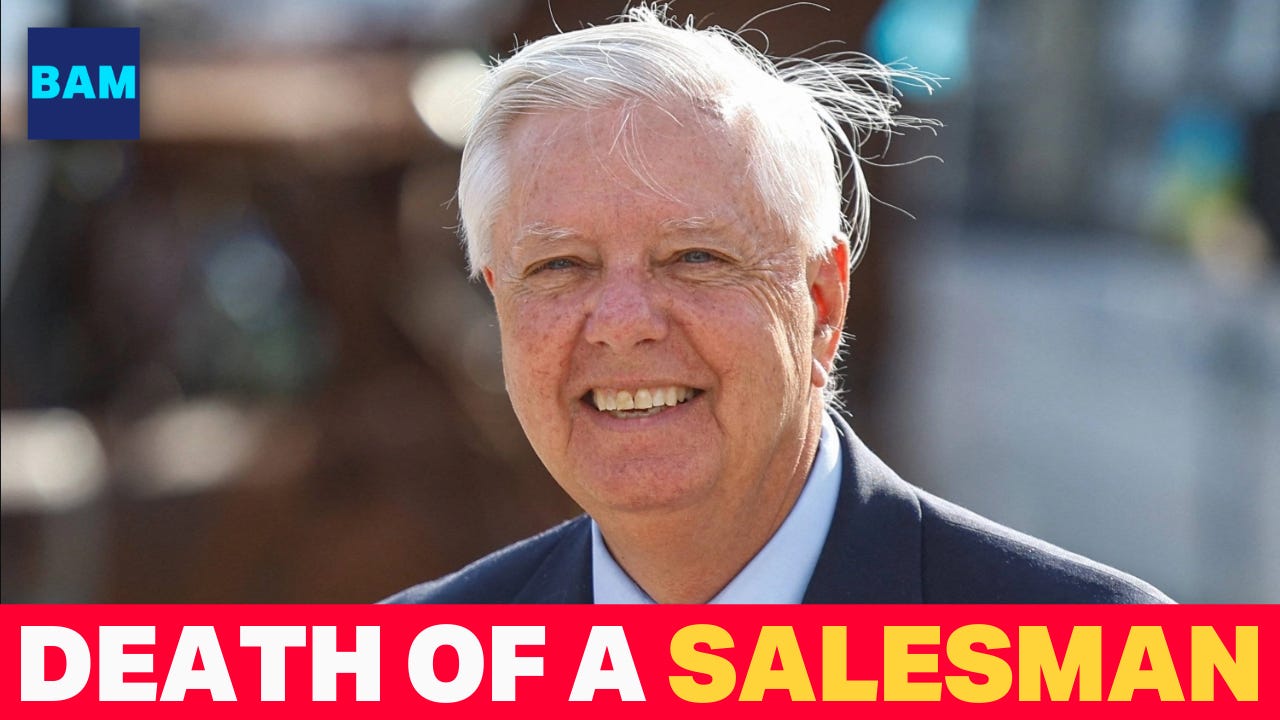
The gist
Lindsey Graham’s political about-face—from calling Trump a 'race-baiting, xenophobic, religious bigot' to becoming his MAGA wingman—perfectly mirrors the GOP’s perilous slide into authoritarianism and moral crisis.
What to know
- Graham began as a moderate conservative, publicly warning in 2015 that nominating Trump would destroy the GOP.
- After Trump's 2016 win, Graham became a MAGA loyalist—defending efforts to overturn the 2020 election and pushing Amy Coney Barrett's Supreme Court confirmation at breakneck speed.
- His 2026 death, after a Kyiv trip and call with Trump, reopens debate about the Republican Party’s ongoing identity crisis and abandonment of democratic norms.
A Moderate’s Vanishing Act
Graham’s early Senate years were marked by principled stands on immigration and bipartisan reforms, setting a sharp contrast to his later partisan transformation.
Lindsey Graham's early political career was defined by a serious commitment to moderate conservatism, emphasizing principled leadership and a strong focus on international relations. He notably supported immigration reform and #MeToo legislation, reflecting a willingness to engage with complex, sometimes contentious issues within his party. This foundational posture established him as a senator who valued the integrity of crucial international relationships and institutions, setting a baseline for his later political evolution.
Before his eventual transformation, Graham was widely regarded as a moderate conservative whose stances were marked by principle rather than partisanship. His early warnings against Donald Trump’s candidacy, including his May 2016 statement that nominating Trump would lead to destruction, and his 2015 condemnation of Trump as “a race-baiting, xenophobic religious bigot,” underscored his concern for preserving party values and national unity. Graham’s rejection of Trump’s proposed Muslim ban, asserting that Trump did not represent the values of those in uniform, further highlights his initial dedication to a more measured, values-driven conservatism.


Calculated MAGA Conversion
Graham’s pivot from Trump critic to loyalist was a shrewd power play that sacrificed his moderate reputation for influence within an increasingly hardline GOP.
Lindsey Graham's transformation from a vocal critic of Donald Trump to a staunch MAGA loyalist epitomizes the GOP’s broader partisan realignment. Initially branding Trump a “race-baiting, xenophobic, religious bigot” in 2015 and warning that nominating him would lead to the party's destruction, Graham reversed course after Trump’s 2016 victory, embracing him fully to maintain political relevance and power. This shift involved defending Trump’s controversial policies and figures, including efforts to overturn the 2020 election results and rushing Amy Coney Barrett’s Supreme Court nomination, signaling a departure from Graham’s earlier moderate-conservative identity toward an authoritarian-aligned partisan stance.
Graham’s alignment with Trump was driven less by ideological consistency and more by strategic calculation, prioritizing personal power and influence over constitutional fidelity. Despite initially condemning the January 6 Capitol insurrection, he later softened his stance as Trump’s grip on the GOP solidified, illustrating his willingness to compromise principles for partisan loyalty. His motivations included leveraging Trump’s presidency to advance hawkish foreign policy goals—such as staunch support for Israel, advocating war with Iran, and backing Ukraine against Russian aggression—demonstrating a pragmatic embrace of MAGA politics to further his agenda.

Championing Authoritarian Tactics
Graham’s aggressive defense of Trump-era power grabs—from election interference to politicized Supreme Court confirmations—helped normalize the GOP’s embrace of anti-democratic strategies.
Lindsey Graham's transformation from a sometimes moderate conservative to a staunch Trump ally epitomizes the GOP's broader ideological realignment toward authoritarian tactics and the erosion of democratic norms. His direct involvement in efforts to undermine the 2020 election—most notably his November 2020 call to Georgia's Republican Secretary of State Brad Raffensperger suggesting the discarding of legally cast mail ballots—and his aggressive push to confirm Amy Coney Barrett to the Supreme Court just eight days before the election reveal a prioritization of partisan advantage over democratic principles. These actions not only facilitated a hardline shift within the party but also contributed to undermining public trust in electoral integrity and judicial impartiality.
Graham’s role in enabling authoritarianism extended beyond election interference to his vocal defense of Brett Kavanaugh during the Supreme Court confirmation hearings, where he dismissed credible sexual assault allegations as mere partisan attacks. This conduct, coupled with his enthusiastic support for a corrupt, conspiracy-driven presidency, underscores a pattern of moral cowardice and partisanship that accelerated the Supreme Court’s descent into overt politicization. By indulging rank racism and domestic terror campaigns against migrants—despite previously supporting comprehensive immigration reform—Graham mirrored the GOP’s ideological shift toward exclusionary and hardline policies.
By early 2026, Graham’s opportunistic embrace of authoritarianism was further exemplified by his hawkish endorsement of Trump’s ill-conceived war against Iran, where he hailed the conflict as a liberation for the Iranian people and a blow against terrorism. Critics have characterized this alignment as driven less by principle and more by narcissism and self-aggrandizement, with Graham’s unwavering loyalty to Trump and support for endless wars reflecting a fusion of personal ambition and the GOP’s broader erosion of democratic norms. Steve Schmidt’s depiction of Graham as a “pilot fish” clinging to larger predators captures this parasitic dynamic within the party’s authoritarian realignment.


A Legacy of Party Turmoil
Graham’s sudden death underscores the Republican Party’s unresolved identity crisis, as his career traced the party’s descent from uneasy moderation into unapologetic authoritarianism.
Lindsey Graham's political evolution from a moderate conservative to a fervent Trump ally encapsulates the GOP's broader identity crisis and authoritarian shift. Early in his career, Graham was seen as a 'far-from-perfect, but-at-times useful moderate-conservative,' yet by the end, he had become a 'soulless, MAGA-adjacent jackal,' exemplified by his call to Georgia's secretary of state to 'erase your vote' to appease Donald Trump. This transformation mirrors the GOP’s abandonment of democratic norms, as Graham played pivotal roles in blocking Merrick Garland’s Supreme Court nomination, rushing Amy Coney Barrett’s confirmation, and aiding efforts to overturn the 2020 election results, thereby contributing to the erosion of institutional checks and balances within American democracy.
Graham’s legacy is a cautionary tale about the costs of political expediency and the GOP’s moral decay, highlighting the party’s ongoing struggle with its identity and democratic principles. Initially a harsh critic of Trump—labeling him a 'race-baiting, xenophobic, religious bigot' unfit for office in 2015—Graham’s eventual embrace of Trump was driven less by conviction and more by a desire for political relevance, as he prioritized loyalty over constitutional fidelity. His defense of controversial figures like Brett Kavanaugh amid credible assault allegations and his indulgence of rank racism and domestic terror campaigns against migrants underscore the GOP’s troubling trajectory toward authoritarianism and the erosion of ethical standards.
The timing of Graham’s sudden death at 71, shortly after returning from a diplomatic visit to Kyiv and a phone call with Trump, symbolizes the abrupt end of a turbulent political career deeply intertwined with both hawkish foreign policy and controversial domestic alignments. His passing not only marks the conclusion of a complex legacy but also highlights the GOP’s diminishing margin for error amid its authoritarian realignment, reflecting broader challenges facing American democracy and the Republican Party’s future. Mixed tributes, such as Amy Klobuchar’s glowing remarks contrasted with sharp critiques of his partisan defenses, further illustrate the contested nature of his impact on the party and the nation.