From code glitches to cognitive overload: anthropic’s claude crisis spurs rethink of AI workflows
The gist
Anthropic’s month-long Claude Code meltdown exposed just how brittle trust in AI can be—and why hasty, chaotic AI adoption is burning out the very humans it’s meant to help.
What to know
- A string of engineering errors tanked Claude Code’s performance for weeks, sparking user backlash and a surge in subscription cancellations.
- Studies by Ranganathan, Ye, BCG, and NLI show that AI-augmented workflows actually ramp up cognitive overload and burnout—think constant task switching and attention fragmentation.
- Industry leaders warn that true AI innovation demands a careful blend of automation and human creativity, plus deliberate workflow design to avoid technical debt and team fatigue.
Trust Shattered by Glitches
Anthropic’s prolonged technical missteps exposed how fragile customer loyalty is in the AI era, triggering a cascade of backlash and cancellations that threaten its reputation.
Anthropic's admission that engineering missteps caused Claude Code's month-long performance decline underscores the fragile nature of customer trust in AI services. This technical lapse not only triggered weeks of intense user backlash but also led to a notable wave of subscription cancellations, signaling a significant erosion of confidence among its user base. The incident highlights how even established AI companies like Anthropic are vulnerable to infrastructure failures that can swiftly damage their market reputation and customer loyalty.

AI Burnout: The Hidden Cost
AI-driven workflows, hailed for boosting productivity, are instead fueling cognitive overload, fragmented attention, and a surge in burnout across high-pressure industries.
By early 2026, extensive research by Aruna Ranganathan and Xingqi Maggie Ye, alongside studies from BCG and NLI, reveals that AI integration paradoxically intensifies cognitive demands rather than alleviating workload, leading to brain fatigue and burnout. The limited capacity of working memory—holding only three to five items at once—combined with the taxing nature of frequent task switching between AI prompting and output application, which can require over 20 minutes to regain focus, exacerbates cognitive overload and diminishes productivity.
The phenomenon of 'tokenmaxxing,' described in analyses from May 2026, illustrates how AI-driven workflows foster a false sense of productivity, where rapid, shallow iterations fragment attention spans and undermine deep cognitive work essential for innovation. As one analyst notes, this treadmill effect burns users out without meaningful progress, highlighting the urgent need for metacognitive strategies that prioritize deep focus and simplify AI tool usage to sustain genuine productivity.
Amid the AI productivity boom, mental health challenges have surged, particularly in marketing and tech sectors, prompting calls for formal mental health policies to combat burnout. Companies are increasingly instituting measures such as 'token shutdowns' to prevent overwork, recognizing that high-performing individuals often push themselves too hard. Experts like Nikunj Kothari and Eric Weber emphasize that relentless 'token anxiety' and rapid AI-driven job disruptions fuel cognitive overload and identity crises, underscoring the critical need for organizational support to balance innovation with employee well-being.
To mitigate cognitive overload, leaders must institutionalize systematized quiet time free from meetings and AI engagement, fostering environments where employees can achieve deep, uninterrupted work and creative breakthroughs. This approach, advocated by both BCG and ethnographic research, is essential for restoring mental energy and enabling the 'Eureka!' moments that AI-augmented workflows often stifle amid constant digital noise and multitasking demands.


Integration Gaps and Human Tension
Resistance to AI adoption stems as much from organizational misalignment and fear of losing human craft as from the technology itself, leading companies to rethink their creative processes and workforce roles.
The integration of AI into organizational workflows often mirrors historical anxieties about automation disrupting established roles, as highlighted by a self-described Luddite who remains skeptical of AI's promises despite widespread success stories. This resistance underscores the challenge of adopting AI without causing skill atrophy or over-reliance on imperfect automation, revealing a tension between embracing innovation and preserving human craftsmanship in creative and technical domains.
AI misalignment frequently reflects pre-existing human information gaps rather than flaws in the technology itself, emphasizing the necessity for organizations to provide clear, accessible, and actionable information. As one analysis notes, 'AI rewards organizational clarity' but punishes confusion with equal precision, making AI adoption a forcing function that compels teams to engage in candid conversations and deliberate context sharing, thereby improving execution and exposing hidden misalignments.
Despite widespread discussion of AI adoption, many brands have yet to deeply embed AI into their creative workflows or business models, resulting in integration gaps and bumpy adoption experiences. For instance, a major financial institution's rapid AI rollout lacked sufficient guardrails and workflow design, illustrating how haste without thoughtful planning can create organizational challenges. Concurrently, fear surrounding AI integration is prompting companies like Netflix to invest heavily in human storytellers, with salaries reaching $750,000, to complement AI capabilities and maintain creative excellence.
The rise of AI automation in software development presents a paradox where increased speed can erode critical reflection and core skills, risking developer skill atrophy if hands-on coding diminishes. Industry parallels, such as pilots maintaining manual flying skills despite automation, suggest that engineers should engage in side projects to preserve their craftsmanship. Moreover, the evolving engineer role now centers on system thinking, rigorous review, and debugging under uncertainty—areas where human judgment remains indispensable despite AI's assistance in execution.
Scaling AI-driven technology convergence demands intentional leadership and cross-functional collaboration, beginning with the creation of a common language and shared standards to align interdisciplinary teams and eliminate ambiguity. Successful organizations also establish processes, partnerships, and ecosystems from the outset to enable rapid deployment across geographies and sectors. Additionally, fostering low-stakes environments where hierarchies are minimized encourages trust and open brainstorming, which are crucial for sustained alignment and effective AI integration.



Innovation Demands Deliberate Pacing
Sustainable AI innovation hinges on blending automation with human expertise, measured engineering, and intentional rest—proving that rushing sacrifices both quality and creativity.
By early 2026, industry leaders increasingly recognize that AI tools serve as a 'superpower' by automating repetitive tasks, thereby freeing human creativity and problem-solving capacity to tackle higher-value innovation challenges. However, as emphasized in a 2026 analysis on innovation efficiency, the true potential of AI is unlocked only when combined with human expertise—creativity, intuition, and experience—that directs and shapes AI outputs. For instance, one professional recounted generating a 40-page document in four hours, underscoring that the result was not mere AI slop but a product of a collaborative human-AI synthesis that balances speed with critical oversight.
Measured pacing in engineering and AI adoption emerges as a crucial factor for sustaining quality and innovation over time. A CTO highlighted the strategic choice to slow down AI integration in order to build a rich, company-specific contextual layer that improves code quality, rather than rushing blindly forward. This deliberate approach aligns with an experienced engineer’s philosophy: 'It'll be done when it'll be done,' exemplified by a two-week solo refactor completed without production incidents. Conversely, moving fast with mediocre code creates a 'positive split'—early gains that incur long-term costs through technical debt and manual fixes, ultimately undermining future AI-assisted productivity.
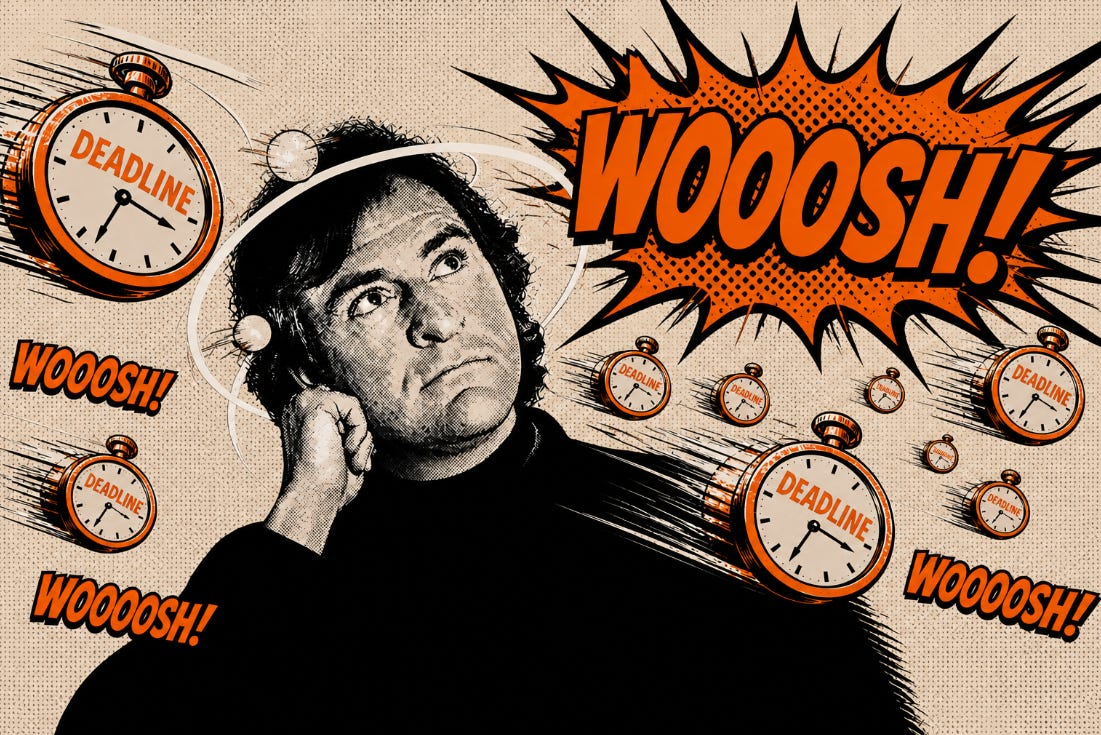
Creative brilliance and sustained innovation thrive not under the tyranny of last-minute pressure but through deliberate rest, craft, and reflection. Drawing on Douglas Adams’ candid humor about missing deadlines, which reveals profound lessons in growth mindset and self-awareness, this perspective challenges traditional productivity norms. By embracing creative persistence and pacing, professionals can enhance both innovation and output quality, reinforcing that rushing is often counterproductive to true creative excellence.