From coders to conductors: AI agents double developer productivity—but human oversight is the new bottleneck in 2026’s software arms race
The gist
By 2026, developers aren’t just coding—they’re conducting armies of autonomous AI agents that have doubled (or even quintupled) software productivity, but human oversight is now the biggest speed bump in the software arms race.
What to know
- AI agents like Anthropic’s Claude Code and Ex-Meta’s orchestrator now handle 65%+ of product code and have slashed release times from 15 days to 1 at companies like Snowflake.
- Developers have evolved into 'AI conductors,' mastering multi-agent systems and orchestration platforms (n8n, Hermes Agent) to keep up with rapid-fire, AI-driven iteration.
- Despite the automation boom, enterprises from TD Bank to Nationwide are wrestling with governance, hallucination risks, and technical debt—making robust human-in-the-loop controls more vital than ever.
Rise of the AI Conductor
Developers now orchestrate fleets of autonomous AI agents, driving a radical shift in software creation, collaboration, and team enablement far beyond traditional coding.
By 2026, developers have transcended traditional coding roles to become AI conductors, orchestrating autonomous, multi-agent workflows that dramatically boost productivity—often doubling or even quintupling output. Pioneers like Kyler Ross of Cloaked have led this transformation by developing agent-friendly AI architectures that embed deep company context and automation, enabling rapid iteration and seamless team enablement beyond simple chatbot interactions. This evolution is exemplified by innovations such as Ex-Meta’s autonomous agent orchestrator and Garry Tan’s Claude Code, which manage complex, long-duration AI-driven coding tasks with minimal human intervention, signaling a fundamental shift in software craftsmanship and collaboration.
This new role of AI conductor demands mastery over agentic system design, continuous feedback loops, and personalized rule creation, as top engineers navigate the complexities of orchestrating multi-agent AI toolchains. Platforms like n8n and frameworks featuring recursive coding agents have become pivotal in unifying fragmented AI tools, enabling developers to optimize performance and maintain flow amid the chaotic AI arms race. Furthermore, immersive AI enablement and role-specific training programs, such as those at Automattic, are crucial in equipping developers with the skills to manage these sophisticated workflows while redefining collaboration and oversight in large organizations.
As developers embrace their conductor roles, they face significant challenges balancing soaring operational costs, technical debt, and evolving governance demands amid an escalating AI-driven software arms race. The integration of agentic workflows within collaboration platforms like Slack and the reliance on unified enterprise data streams are reshaping team management and oversight, requiring sharper human governance to prevent bottlenecks. This duality—of unprecedented productivity gains alongside leadership upheaval and governance complexity—is redefining the software development lifecycle and the strategic responsibilities of developers in 2026.




Agentic Workflows Redefine Teams
Multi-agent AI systems and asynchronous interfaces empower both developers and non-coders to accelerate product delivery, collapsing weeks of work into hours across the enterprise.
By 2026, AI agents and agentic workflows have fundamentally transformed developer productivity, with companies like Airbnb pioneering asynchronous, AI-powered interfaces that empower both coders and non-developers across enterprise and product management domains. This shift is echoed industry-wide, from Google Cloud’s retail architectures to Meta’s efficiency pivots, demonstrating how multi-agent orchestration and seamless integration across platforms like Slack, Mac apps, and project management tools such as Asana and Linear enable teams to accomplish vastly more, faster. Notably, Anthropic’s Claude Tag drives 65% of product code through proactive, asynchronous Slack agents, while Snowflake slashed release times from 15 days to 1, underscoring the tangible impact of these innovations on accelerating workflows and product delivery.
The evolution of AI agents into tailored, multi-instance systems blending local and cloud workflows has empowered developers to orchestrate complex, autonomous multi-agent systems that double productivity and redefine their roles from coders to AI conductors. Tools like Anthropic’s Claude Code and Hermes Agent exemplify this transformation by enabling continuous feedback loops, self-improving workflows, and real-time session streaming, which facilitate sophisticated orchestration and seamless integration across diverse toolchains. This agentic workflow paradigm collapses multi-round conversational tasks into single prompts, streamlines code generation, automated testing, and incident management, and supports smaller, agile teams to iterate faster and upskill dynamically amid the intensifying AI-driven software arms race.
Open-source projects and innovative platforms such as n8n, OpenMontage, and Deus Data’s Codebase Memory MCP are accelerating developer workflows by introducing flexible automation, self-healing capabilities, and hierarchical memory architectures that enhance AI agent design and enablement. These advancements fuel continuous iteration and autonomous automation, transforming complex API orchestration and data integration into intuitive, scalable processes that revolutionize both software development and creative workflows. The rise of agentic AI tools like Claude Code and Agent Cookie further exemplifies how integrated AI-driven orchestration and secure API pipelines boost productivity while personalizing experiences across business and family use cases.
Despite the dramatic productivity gains—often doubling or even achieving up to 40x improvements as seen with Snowflake and AI coding agents—human oversight remains the critical bottleneck in 2026’s AI-driven software landscape. Developers are increasingly acting as AI conductors, orchestrating autonomous agents while enforcing rigorous quality controls to manage hallucinations, technical debt, and governance challenges. Platforms like Codacy, Tolaria Alliance, and Blitzy exemplify this shift by integrating deterministic AI code gates, context engines, and continuous feedback loops that reduce errors and streamline collaboration. However, as AI agents automate complex tasks and scale rapidly, mastering seamless orchestration and evolving oversight frameworks is essential to tame complexity and sustain these unprecedented productivity gains.




Human Oversight: The New Bottleneck
As AI agents automate core development tasks, enterprises scramble to strengthen governance, context engineering, and error prevention to avoid costly hallucinations and technical debt.
In 2026, human oversight has emerged as the critical bottleneck in AI-driven software development, despite AI agents doubling developer productivity and automating complex workflows. Leading enterprises like Nationwide, Comcast, and TD Bank are grappling with the escalating challenges of governance, security, and developer enablement as AI agents autonomously generate, review, and validate code at machine speed. This surge in automation demands that IT and project managers rethink traditional team orchestration and embed robust human-in-the-loop controls to prevent costly errors, hallucinations, and unchecked autonomous coding, as exemplified by the controversy surrounding Claude Code’s auto-accept feature.
The rapid evolution of AI agents from coding assistants to enterprise workflow powerhouses has intensified governance and technical debt challenges, as these agents often operate with brittle, single-path reasoning that can lock them into flawed hypotheses. This brittleness, compounded by the entangled and lossy nature of large language model representations, complicates transparency and maintainability, making human oversight indispensable for catching errors and managing complex multi-step agent trajectories. Developers are increasingly adopting the role of AI conductors—leveraging tools like Codacy’s AI-driven quality controls and Tolaria Alliance’s deterministic AI code gates—to enforce rigorous governance and tame hallucinations amid the high-stakes AI software arms race.
Context engineering has become a cornerstone for effective human oversight and governance in AI-augmented workflows, as feeding AI agents incomplete or incorrect information leads to efficient yet erroneous outputs. Enterprises are discovering that legacy software stacks, built over decades, are ill-suited for AI workflows, resulting in fragmented data and slow governance adaptation. Maintaining a separate, structured context layer—such as through AGENTS.md files and observability tools like Sentry—provides durable product memory and actionable insights that help manage technical debt, reduce errors, and support continuous feedback loops essential for software resilience in the AI arms race.
Security, cost management, and governance frameworks remain formidable challenges as AI agents scale within enterprise environments. Experts like Peter Garraghan emphasize the need for robust guardrails that withstand adversarial attacks and provide clear visibility into agent permissions, while Praful Saklani warns that AI agent spending often exceeds budgets by two to three times due to deeper autonomous reasoning. Production readiness demands more than capable models; it requires comprehensive escalation paths, ownership, and alignment with business outcomes, as highlighted by Chih-Han Yu’s call for AI that understands 'what winning looks like.' The rise of AI-native observability platforms such as Sazabi further reshapes oversight by replacing traditional metrics with embedded AI agents, empowering developers as conductors but also introducing new governance complexities.



Enterprise Arms Race Intensifies
Major firms and startups are racing to embed AI agents into every layer of collaboration and development, transforming productivity while amplifying governance and trust challenges.
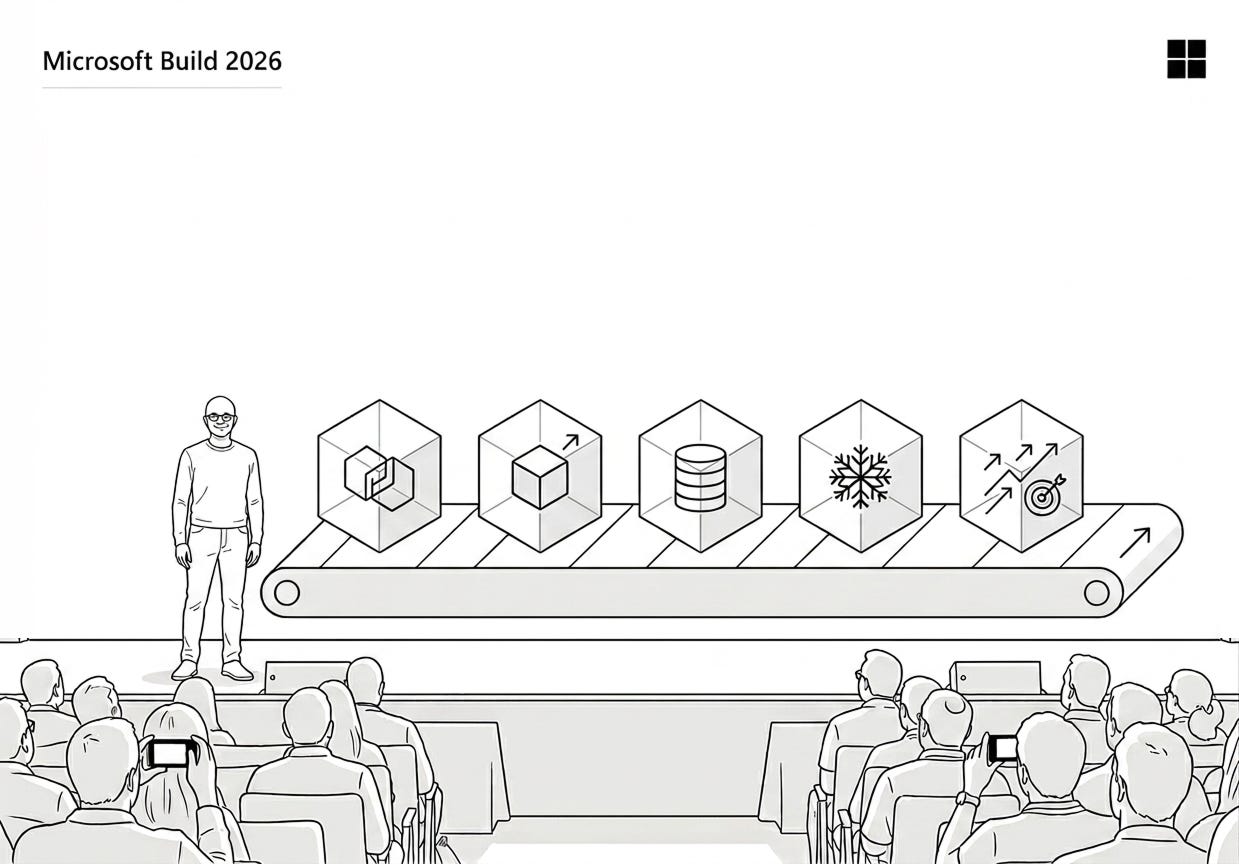
By 2026, leading enterprises such as Nationwide, Comcast, TD Bank, and HPE are aggressively integrating agentic AI workflows to secure competitive advantages amid the intensifying AI-driven software arms race. Events like Microsoft Build 2026 and Google I/O 2026 spotlight breakthroughs in AI agent tooling and multimodal models, enabling smarter, scalable workflows that revolutionize developer productivity and enterprise AI design. However, this rapid adoption brings complex governance, human oversight, and infrastructure challenges, requiring firms to balance innovation with robust operational controls.
Startups and enterprises alike are transforming developer roles into AI conductors who orchestrate autonomous, multi-agent systems that double productivity and accelerate innovation. Companies like Anthropic with their Claude Managed Agents and Snowflake’s AI coding agents demonstrate how modular, hands-on AI agents and structured orchestration slash release times dramatically—from 15 days to just one—while redefining software sovereignty and collaboration. This shift is further supported by open-source projects such as Hermes Agent and platforms like n8n, which bridge fragmented AI tools to empower developers amid soaring token costs and escalating competition.
The integration of AI agents into core collaboration and development platforms like Slack, GitHub, Linear, and Jira is revolutionizing team workflows and project management. Groundcover’s AI agents, operating natively within these tools, and Slack’s dominance as the premier AI-powered collaboration platform illustrate how enterprises are streamlining complex API orchestration and data integration to fuel AI-driven automation. This multiplayer collaboration model is reshaping communication, product alignment, and human oversight, essential for navigating the governance and trust battles defining 2026’s AI arms race.
Amid the surge in AI-driven software innovation, enterprises face mounting challenges in infrastructure management, security, and governance. The brutal industrial scale of AI data centers underscores the massive investments powering these capabilities, while autonomous AI agents operating across platforms demand advanced access control and distributed DevOps knowledge. Companies like Sazabi are pioneering AI-driven self-healing software that autonomously diagnoses and fixes issues, highlighting the dual-edge of productivity gains and cybersecurity risks that enterprises must manage to sustain their edge in the cutthroat 2026 AI arms race.