From coders to conductors: OpenAI codex ushers in the era of AI-first software teams
The gist
OpenAI Codex is turning developers into AI conductors, accelerating software creation with autonomous agents while shifting the challenge from writing code to managing and validating it.
What to know
- Codex's multi-agent AI platform now lets developers supervise persistent, autonomous workflows across mobile, desktop, and cloud—drastically speeding up software projects.
- Enterprise adoption is booming, with Sea Limited seeing 87% weekly developer usage and companies like Cisco slashing AI platform delivery from months to weeks.
- The real bottleneck has moved: validation, code quality, and deployment now demand smarter oversight, as AI-generated code brings both speed and a surge in bugs and review time.
From Gatekeeper to Supervisor
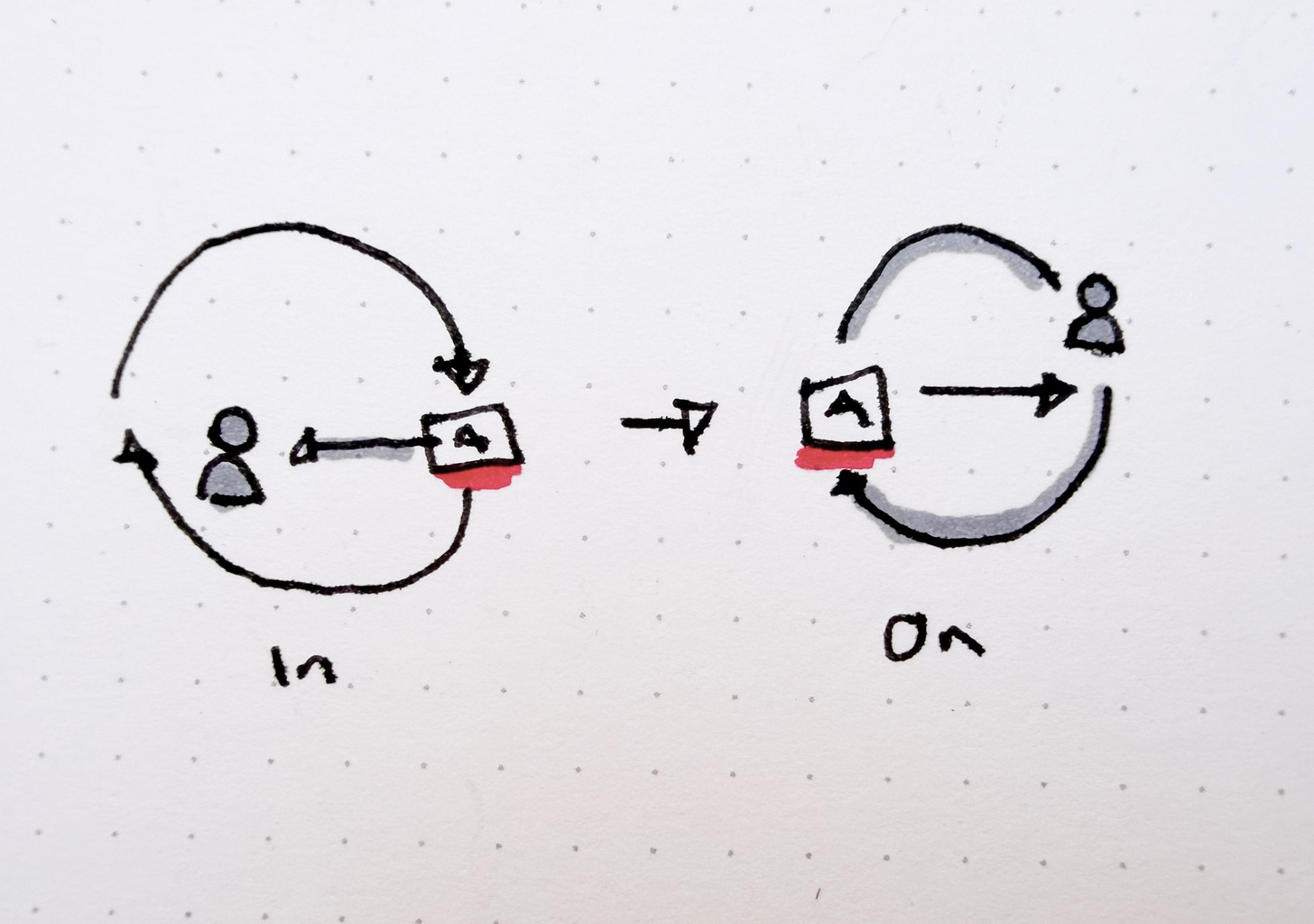
Developers now orchestrate fleets of autonomous AI agents, facing new challenges in coordination, cognitive load, and quality control as approval fatigue and complex merge scenarios reshape the coding workflow.
The transformation from Human-in-the-Loop (HITL) to Human-on-the-Loop (HOTL) paradigms is fundamentally reshaping software development workflows by repositioning developers from gatekeepers who approve every AI action to supervisors who set policies and monitor multiple AI agents operating autonomously. This shift, as analyzed in the 2026 report 'Escape from agentic loop,' enables agents like OpenAI's Codex to co-build software at unprecedented velocity, but also introduces new cognitive demands on developers who must manage coordination, merge outputs, and re-prompt agents, often leading to approval fatigue and the need for enhanced scheduling and tooling strategies.
As Codex AI agents expand their role beyond coding to encompass planning, reviewing, deploying, and operations, the primary bottleneck in software development has shifted from code generation to validation and deployment. Senior developers now act less as builders and more as critical filters and decision-makers, evaluating the necessity, quality, and sustainability of AI-generated code, a role underscored by findings that AI adoption correlates with 9% more bugs and 91% longer code review times, necessitating automated guardrails and integrated lifecycle checks to maintain quality at scale.
The effectiveness of AI-augmented workflows heavily depends on the quality of existing codebases and engineering practices; teams with strong foundations in clean architecture, solid design patterns, and robust CI/CD pipelines—such as those studied in mobile development case studies—are able to leverage Codex and multi-agent systems to accelerate development while maintaining code quality. This architectural discipline facilitates new delegation and monitoring paradigms, where developers oversee AI agents performing tasks like performance profiling and network optimization, as demonstrated by Antoine van der Lee and Jacob Bartlett’s teams, who employ verification chains and stacked diffs to manage AI-driven validation and integration.
Innovations in tooling and process automation are streamlining deployment workflows to address the new bottlenecks in validation and delivery. For example, Donny Wals’ use of FlowDeck CLI to wrap Xcode build and run pipelines exemplifies how AI agents are integrated into end-to-end software delivery lifecycles, reducing manual overhead and enabling overnight deep reviews and morning merges. A critical best practice emerging from these workflows is the deliberate separation of responsibilities—ensuring that the AI model generating code is distinct from the one signing off on it—to maintain rigorous quality control in this evolving AI-driven development landscape.






Codex’s Agentic Leap Forward
Persistent, multi-agent Codex systems now autonomously tackle long-running, cross-platform tasks, demanding a new focus on reliability engineering and dynamic system monitoring over simple code generation.
OpenAI's Codex is rapidly evolving into a multi-agent AI platform characterized by persistent, autonomous agents capable of pursuing complex, indefinite tasks across diverse environments. This evolution is exemplified by the introduction of the /goal mechanism enabling Codex to sustain workflows over hours or days, achieving a 61% success rate on ARC-AGI-3 games after extensive action sequences, and by the integration of advanced multi-agent coordination features such as GPT-Realtime-2 voice agents with companion translation and transcription models. These developments highlight a shift from simple coding assistance to sophisticated agentic loops where agents autonomously observe, act, and recover from errors, fundamentally transforming developer tooling and workflows across mobile, desktop, and cloud platforms.
The expansion of Codex's developer tooling ecosystem is marked by deep integration across platforms and enhanced accessibility, including mobile workflows via the ChatGPT app, browser plugins for parallel tab operation, and remote control capabilities over devices like Raspberry Pi and Mac Minis. GitHub Copilot App and VS Code’s multi-agent Agents window exemplify an 'agent-first' user experience that supports multi-project workflows with improved token efficiency and security features. Third-party extensions and open-source integrations, such as Nous/Hermes and Kimi Web Bridge, further extend Codex’s runtime interoperability, enabling seamless collaboration and real-time developer interaction across devices and environments.
Robust reliability engineering and observability have become foundational to scaling multi-agent AI systems like Codex, with OpenAI implementing sandboxing, approval gates, and telemetry monitoring to ensure safe operation at scale. Collaborative efforts with hardware leaders on Multipath Reliable Connection (MRC) have enhanced distributed AI workload resilience by enabling rapid rerouting of GPU traffic, while tools like LangChain’s SmithDB and LangSmith Engine convert agent trace data into actionable improvements. This focus on system design over mere model accuracy addresses the new failure modes inherent in complex agentic loops, underscoring the critical role of continuous evaluation and dynamic model selection in maintaining developer tooling performance.
The integration of Codex into real-time collaboration platforms and communication tools is revolutionizing developer productivity by enabling parallel multi-agent workflows and rapid iteration cycles. Case studies like Onur Solmaz’s Discord-driven IDE demonstrate how multiple agents can simultaneously manage coding tasks across channels, facilitating side project execution from inspiration to deployment within tight timeframes. Additionally, Codex’s advanced reasoning capabilities, as reported by Ramp engineers, drastically reduce code review times to minutes and support complex incident management through internal multi-agent tools like the On-Call Assistant, signaling a paradigm shift where engineers increasingly direct AI teammates rather than manually authoring code.


AI Productivity Beyond Coding
Codex’s integration with everyday apps and mobile devices is redefining work by automating cross-app workflows and empowering non-technical teams to rapidly synthesize and act on complex information.
OpenAI's Codex is rapidly evolving from a coding-centric AI into a versatile assistant capable of automating complex, cross-application workflows through its plugin ecosystem. By integrating with platforms like Chrome, Gmail, Google Calendar, Slack, and Notion, Codex can intelligently manage tasks such as skimming entire inboxes and responding to emails based on calendar events and personal wiki content, effectively streamlining everyday productivity beyond traditional development environments. This expansion reflects OpenAI's ambition to transform general computer usage, with the company estimating they are about 10% of the way toward realizing AI that supports a broad spectrum of work activities beyond coding.
Recognizing the limitations of tethering AI workflows to desktop setups, OpenAI has extended Codex’s accessibility through mobile integration with the ChatGPT app, enabling developers and knowledge workers to interact with AI coding agents on the go. This untethering addresses real-world challenges highlighted by Business Insider, where AI coders were observed lugging laptops through airports and offices, signaling a shift toward continuous, location-independent collaboration that could redefine how and where AI-assisted work happens.
Beyond coding, Codex is making significant inroads into sales and other non-technical domains by synthesizing fragmented data from diverse sources such as Salesforce, Gong, Slack, and customer emails into actionable sales artifacts like pipeline briefs and account plans. This capability does not replace strategic decision-making but empowers sales teams to rapidly translate complex, multi-platform context into prioritized actions and first drafts, exemplifying Codex’s growing role as a cross-domain productivity enhancer that consolidates and contextualizes data to accelerate preparatory and follow-up tasks.
While coding remains Codex’s most natural and mature domain, OpenAI acknowledges the vast potential for AI to unlock productivity in adjacent areas such as spreadsheets, performance reviews, and general computer interactions. As one expert noted, coding is 'a little bit special,' but the next frontier lies in drastically reducing the time people waste navigating computers, enabling a fundamentally different and more efficient way to spend their workdays through AI-driven automation.



Enterprise Adoption’s Double-Edged Sword
Widespread Codex adoption is driving both explosive productivity and a surge in code complexity, forcing companies to balance speed with rigorous oversight and new governance strategies.
By early 2026, OpenAI's Codex has achieved remarkable enterprise penetration, exemplified by Sea Limited where 87% of developers engage with the tool weekly, reflecting deep integration beyond typical adoption rates. This widespread use is accompanied by strong user advocacy, with 73% of Sea developers rating Codex highly and recommending it to peers, underscoring its transformative impact on engineering workflows and problem-solving approaches within hyper-localized markets like Southeast Asia.
Despite rapid uptake, enterprises like Coinbase and Spotify reveal a nuanced picture where AI agents accelerate development velocity—Coinbase reports over 50% of code AI-generated and multiple simultaneous PRs—while simultaneously confronting challenges of code quality and maintainability. This tension manifests in failed projects such as Darra’s React migration, highlighting that AI-generated code often inherits complexity from vast, inconsistent training data, necessitating vigilant human oversight to uphold engineering standards.
Market dynamics are shifting from debating AI’s coding capabilities to mastering safe, scalable deployment of agentic systems, positioning Codex as a foundational operating layer for enterprise software development. Gartner’s 2026 Magic Quadrant recognition of OpenAI as a Leader underscores Codex’s robust ecosystem—spanning IDE extensions, cloud orchestration, and stringent governance features like RBAC and sandboxing—while strategic partnerships with GSIs such as Accenture and Infosys amplify its enterprise reach and support.
Codex’s continuous innovation, including the rollout of GPT-5.5, enhanced security protocols, HIPAA compliance, and integration with platforms like Amazon Bedrock, is driving accelerating enterprise momentum. Cisco’s dramatic reduction of AI Defense platform delivery from quarters to weeks exemplifies how Codex not only expedites development cycles but also reshapes enterprise software project timelines, cementing its role as a catalyst for operational agility and AI-native innovation.