From crash to comeback: how crypto traders rewrote the playbook after $19b wipeout
The gist
After a $19 billion crypto wipeout in October 2025, traders ditched reckless leverage and rewrote their strategies for a new era of volatility and risk.
What to know
- The October 2025 crash triggered $19B in liquidations, exposing deep vulnerabilities in decentralized exchanges and forcing a market-wide risk reset.
- By late 2025 and into 2026, traders pivoted to tactical frameworks, quantitative signals, and sentiment-driven portfolio moves—ditching old habits for survival.
- Live trading sessions and disciplined, high-conviction setups—often shared on platforms like Discord—became the new norm, enabling traders big and small to adapt and thrive.
Crash Catalyzes Risk Reset
The $19B wipeout shattered high-leverage strategies and exposed the dangers of public liquidations on Dexes, forcing even sophisticated traders into a complete overhaul of risk management.
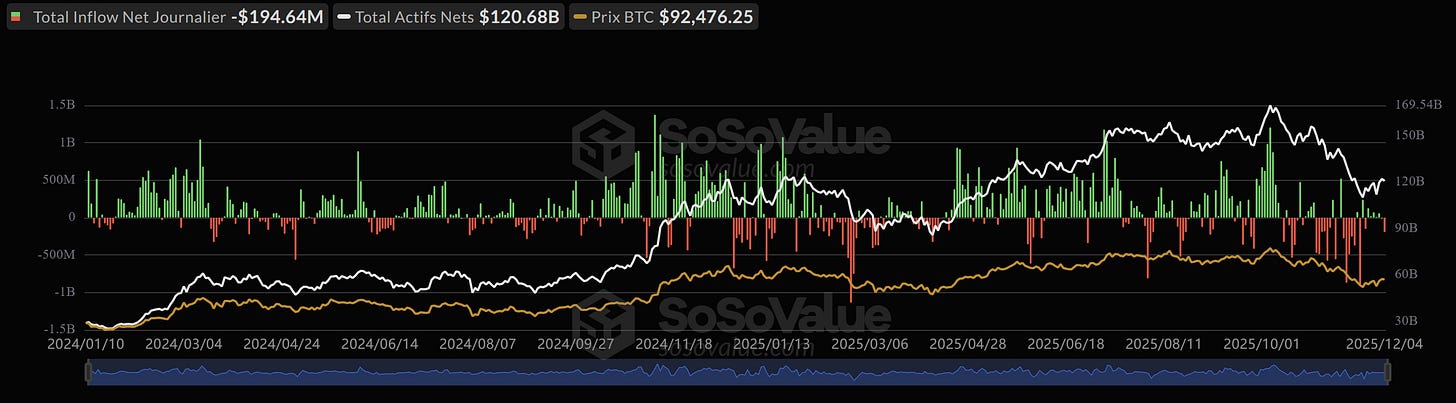
The October 2025 crypto crash served as a stark market reset, obliterating excessive leverage and jolting traders out of complacency. As one analyst reflected, 'It really feels like a reset... All the leverage got wiped out... It’s as if you lived in a casino.' This upheaval exposed heightened counterparty and exchange risks, especially on decentralized exchanges (Dexes), where public liquidation data enabled coordinated liquidations that deepened the downturn. Sophisticated traders, particularly those employing delta neutral strategies on Dexes without spot exposure, were among the hardest hit, prompting a widespread reassessment of risk management practices.
The immediate aftermath saw massive liquidations totaling $19 billion, with Binance stepping in to refund $283 million to affected users and launching incentive programs like the $45 million reload airdrop on the BNB chain to stabilize trader confidence. However, the crash's ripple effects led many funds and sophisticated traders to reduce liquidity provision and rethink leverage use on Dexes, anticipating a future with diminished market liquidity and more cautious trading approaches.
Notably, the pivot to risk-off began days before the crash, with Mike Nadeau's October 10, 2025 portfolio update increasing cash holdings from 26% to 60%. This strategic move was driven by a confluence of weak Bitcoin market structure—characterized by declining long-term holders, influx of newer, less stable investors at elevated prices, and mounting leverage—as well as macroeconomic pressures including repo market tensions, banking liquidity shortages, and fiscal tightening. Nadeau framed this as a maturation of the crypto cycle, signaling a shift toward identifying fair value amid an anticipated longer-term bear market.


Tactical Trading Takes Hold
Traders rebuilt their playbooks with pinpoint level-to-level tactics and quantitative signals, capitalizing on short squeezes and market structure shifts while sidelining trend-chasing strategies.
By late 2025, traders had honed a level-to-level tactical framework for Bitcoin, focusing on key support and resistance zones such as the 200 EMA cluster and the $100,000 to $123,000 range to navigate choppy, non-trending markets. This approach was complemented by phased buying strategies near major support levels, like the 200 EMA and horizontal flip regions, allowing traders to capitalize on relief rallies while tactically exploiting market positioning—such as short trader concentration at mid-range levels—to trigger short squeezes before anticipated downturns.
Incorporating quantitative signals became central to adaptive trading strategies, with daily exchange volume below $75 billion signaling a corrective market environment that discouraged trend-following tactics. By December 2025, traders leveraged capitulation events—like Vanguard’s introduction of Bitcoin ETFs—and RSI levels reminiscent of the 2022 bear market to identify tactical entry points. This data-driven approach was paired with diversified exposure across four crypto assets using shares, options, and margin, allowing portfolio allocations to flexibly increase from 6% to 20% as conditions warranted.
By early 2026, tactical frameworks had evolved to include short positions within defined ranges, employing tight stop losses to mitigate risks amid geopolitical uncertainties and market propaganda. This period also saw a rise in live trading and community engagement, with daily sessions and Discord competitions fostering collective precision and transparency in tactical setups. Such communal interaction underscored the shift toward adaptive, real-time strategy refinement in volatile markets.
Simultaneously, traders managing smaller accounts adopted highly disciplined, tactical approaches to build capital gradually amid market chop. Emphasizing risk management, they selectively traded strong tokens on the upside and weak tokens on the downside, while leveraging funded accounts to maximize capital efficiency—unlocking positions up to 25 times their initial investment. This measured strategy included prudent profit-taking, avoidance of overtrading, and maintaining cash reserves to seize lower price opportunities, reflecting a mature balance between aggression and caution in uncertain conditions.


Sentiment-Driven Portfolio Shifts
Portfolio allocations became a high-stakes game of momentum and sentiment, with traders rapidly rotating positions and sectors in response to real-time options flow and shifting risk appetite.
By early May 2026, the portfolio optimization strategy leveraged elevated QQQ Net Options Sentiment to maintain a bullish stance with a balanced mix of 7 long and 5 short positions. This approach was refined by selectively adding stocks like AXTI to sustain tech exposure while dropping others such as META and ANET due to declining momentum and anticipated earnings volatility. On the short side, the portfolio incorporated names like NWS and MC, chosen for their low net options sentiment and momentum scores, while shedding poorly ranked stocks including CVNA and DELL, demonstrating a disciplined, sentiment-driven sector rotation.
By mid-May, the strategy evolved to dynamically balance long and short positions based on momentum and net options sentiment scores, exemplified by adding BIDU to capture China exposure and ACMR for high upside potential, while dropping NVO to reduce healthcare exposure in favor of tech. Short positions were similarly adjusted by introducing HTZ and GRMN for their weak technical flow and low sentiment, while exiting stocks like EVTC and UPWK whose momentum was recovering after sharp declines. This nuanced calibration underscores a commitment to optimizing returns through continuous sentiment and momentum analysis.
Entering June, the portfolio adopted a more cautious, bearish posture in response to a sharp decline in QQQ Net Options Sentiment, shifting to a configuration of 5 shorts and 3 longs to mitigate risk amid heightened uncertainty. By mid-June, the stance slightly rebounded to a modestly bullish 4 longs and 3 shorts, holding resilient names such as ARGX, RGLD, ASTS, and HOOD for their strong upside and sentiment, while trimming or dropping stocks like ISRG and MKC due to weakening momentum. Short positions continued to be managed with precision, adding high downside risk stocks like BOH and maintaining others with poor sentiment, yet dropping those with improving momentum, reflecting a vigilant, sentiment-responsive portfolio management approach.

Precision and Community in Action
Live trading, technical confluence, and collective discipline transformed Discord communities into hubs of high-conviction setups and measurable gains, redefining what it means to trade together.
By April 2026, the trader had established a rigorous routine of daily live trading sessions, providing real-time scalp entries and fostering a disciplined approach amid market uncertainty. This commitment extended into community engagement through initiatives like the 'Beat the Bear' trading competition, launched with free Discord and app access to live trades, encouraging collaborative learning and high-conviction trading among participants.
Precision trade setups became the cornerstone of the trading strategy, relying heavily on technical confluence such as volume silos, symmetrical wedge breakouts, and pattern compression combined with volume to anticipate expansions. These setups were meticulously crafted with tight stop losses and clearly defined scaling points, as exemplified by trades on assets like TAOUSDT and AERO, enabling traders to navigate volatile markets with exactitude and confidence.
Community engagement evolved into a dynamic ecosystem where shared trade signals, live discussions, and interactive elements like polls and alerts enriched the trading experience. The Chart Hackers community, for instance, saw members realize substantial gains—+53.97% on PYTHUSDT Perp and +22.19% on ETHUSDT Perp—through disciplined adherence to shared strategies, while journaling and educational content reinforced a culture of continuous learning and disciplined execution.
Live trading sessions in mid-2026 showcased high-conviction, leveraged positions managed with strict risk controls, exemplified by a $250,000 Bitcoin trade with unwavering stop-loss discipline. The use of platforms like Ubit, praised for liquidity and minimal fees, supported precision execution, while real-time market responsiveness and alert systems allowed traders to capture explosive moves efficiently, underscoring the blend of technology and strategy in managing volatile crypto markets.