From orbán’s shadow to magyar’s mandate: hungary’s dramatic power shift faces old ghosts and new hopes
The gist
Péter Magyar’s Tisza Party has ended Viktor Orbán’s 16-year regime with a supermajority, but Hungary’s dramatic power shift now faces the mess of corruption, Kremlin meddling, and stubborn populist ghosts.
What to know
- Magyar’s Tisza Party swept the April 2026 election with 138 out of 199 seats, unlocking constitutional reform powers and ousting Orbán’s illiberal rule.
- Orbán’s downfall was fueled by Kremlin-backed interference, a notorious 2024 presidential pardon scandal, and years of oligarchic corruption that soured voters.
- Despite promises of EU alignment and democratic renewal, Magyar inherits a country where clientelist networks and nationalist politics still run deep.
Orbán’s Shadow Games
Russian operatives plotted a staged assassination attempt on Orbán to manipulate Hungary’s 2026 election, exposing the depth of Kremlin interference and the vulnerabilities of Orbán’s Russia-aligned rule.
During Viktor Orbán’s 16-year illiberal rule, Russian intelligence actively sought to manipulate Hungarian politics, even proposing a fake assassination attempt on Orbán to sway voter sentiment by shifting focus from economic woes to national security concerns. This audacious plan, dubbed 'the Gamechanger' by Kremlin operatives, was modeled on the 2024 assassination attempt on Donald Trump, illustrating Moscow’s deep willingness to interfere in Hungary’s electoral landscape and capitalize on Orbán’s close ties with Russia.
Orbán’s tenure was marred by systemic corruption and oligarchic concentration of wealth, with a handful of families controlling half the country’s assets, fueling widespread public discontent. The 2024 presidential pardon scandal, where Katalin Novák absolved a convicted official involved in covering up abuse at a children’s home, starkly exposed the hypocrisy of Orbán’s government, which had long claimed to champion Christian and family values, thereby eroding its moral authority and alienating voters.
Orbán’s governance strategy prioritized foreign alliances with authoritarian regimes like Russia and China, often obstructing EU and NATO policies, while neglecting pressing domestic issues such as economic hardship and corruption that opposition parties like Péter Magyar’s Tisza Party capitalized on. This disconnect culminated in Orbán’s 2026 electoral defeat, as Magyar’s supermajority victory signaled a repudiation of Orbán’s illiberal democracy, which critics like David Presman argue had deeply corroded Hungary’s social fabric and strained its Western alliances.
Orbán’s downfall has drawn historical parallels to Nicolae Ceaușescu’s collapse, highlighting how hubristic leaders who concentrate wealth, indulge in lavish lifestyles, and mismanage the economy can rapidly lose popular support amid scandal and corruption. This comparison underscores the fragility of illiberal regimes when confronted with mounting public outrage and political realignment, as evidenced by the dramatic shift in Hungary’s political landscape by early 2026.




Election Drama and Divergence
Magyar’s pro-EU campaign clashed with Orbán’s Kremlin-backed tactics and nationalist rhetoric, as opposition forces rallied for a break from autocracy despite entrenched loyalists.
In the lead-up to Hungary’s 2026 election, Kremlin-backed tactics aimed to manipulate voter sentiment by shifting focus from economic concerns to national security. Notably, Russian intelligence proposed a fake assassination attempt on Prime Minister Viktor Orbán, dubbed “the Gamechanger,” modeled after the political boost Donald Trump received following his 2024 assassination attempt, intending to generate sympathy votes and consolidate Orbán’s position amid growing domestic and international scrutiny.
The election campaign starkly contrasted Orbán’s Kremlin-friendly, sovereignty-focused messaging with opposition leader Péter Magyar’s pro-EU, anti-corruption platform. While Orbán faced criticism for obstructing EU aid to Ukraine and vetoing sanctions and loans—actions that heightened EU officials’ concerns about external interference—Magyar campaigned vigorously on restoring Hungary’s EU alignment, tackling corruption, and investing in social sectors like healthcare and youth education, signaling a clear ideological and policy divide.
Opposition mobilization extended beyond Magyar’s reformist agenda, encompassing a spectrum of critiques from other candidates such as Toroczkai, who challenged mainstream views on migration and bank nationalization. This diversity within the opposition reflected a broader desire for political realignment, culminating in Magyar’s call for an immediate parliamentary convening to end Orbán’s 16-year rule, reverse autocratic policies, and restore EU relations—though he acknowledged the challenge posed by entrenched loyalists in key institutions requiring voluntary resignations to facilitate a smooth transition.
The 2026 election results marked a pivotal shift in Hungary’s foreign policy trajectory, with Magyar pledging to unfreeze EU funds by meeting reform benchmarks and adopting a more supportive stance toward Ukraine, contrasting sharply with Orbán’s previous Kremlin-aligned approach. This potential realignment underscored the election’s broader geopolitical significance, signaling Hungary’s intent to reengage constructively with the European Union and its partners after years of contentious relations.


Supermajority Shatters Old Order
Magyar’s landslide win not only toppled Orbán but also proved that even a deeply entrenched regime can be peacefully ousted through free elections.
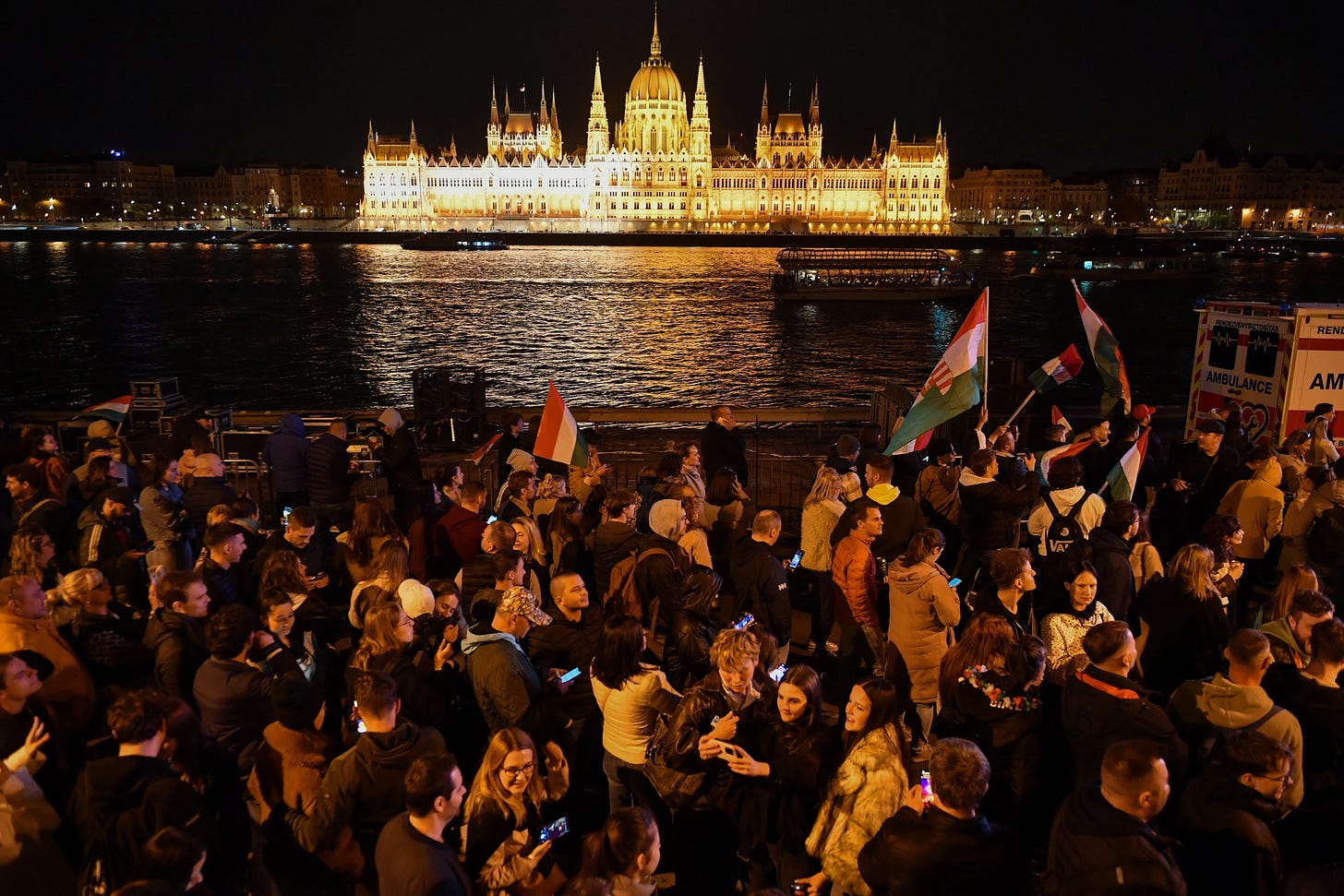
The April 12, 2026 election marked a watershed moment in Hungarian politics as Péter Magyar’s Tisza Party secured a commanding supermajority with 138 out of 199 parliamentary seats, decisively toppling Viktor Orbán’s 16-year illiberal regime. This two-thirds majority not only ended Orbán’s long-standing dominance but also empowered the Tisza Party to pursue constitutional reforms, signaling a profound political realignment in the country.
In a notable departure from the behavior of many contemporary populist leaders, Viktor Orbán promptly conceded defeat on election night, acknowledging the end of his tenure and committing to a peaceful transition of power. This concession, contrasting sharply with figures like Trump who resisted electoral outcomes, was widely seen as a relief and a testament to Hungary’s democratic resilience despite the prior illiberal governance.
The election outcome fundamentally challenged the prevailing narrative that Hungary had ceased to function as a democracy under Orbán’s rule. By demonstrating that even a government with a long-standing supermajority could be peacefully replaced through free elections, the 2026 vote reaffirmed democratic principles and offered a hopeful precedent for political accountability in the region.
Breaking the Clientelist Web
Magyar faces the urgent challenge of dismantling Orbán’s network of loyalists and oligarchs, whose grip on power and wealth threatens Hungary’s democratic renewal.
Péter Magyar’s government confronts the daunting task of dismantling Viktor Orbán’s deeply entrenched network of loyalists, whose wealth and influence have been meticulously cultivated over 16 years of illiberal rule. This clientelist system, where 'a few families own half the country,' as Magyar revealed in a widely viewed 2024 interview, has permeated Hungary’s political and economic fabric, making reform both urgent and complex. Magyar’s call for the voluntary resignation of Orbán-appointed officials, including President Katalin Novák, underscores the immediate need to break these entrenched power structures to pave the way for democratic renewal.
Corruption scandals under Orbán’s regime have deeply eroded public trust and impacted everyday Hungarians, with revelations such as the 2024 presidential pardon of a convicted official involved in a child abuse cover-up exposing the regime’s hypocrisy and moral decay. This pervasive corruption not only alienated former allies but also fueled Magyar’s reform agenda, which centers on combating impunity and restoring integrity. Despite Magyar’s historic electoral victory, he faces significant hurdles in addressing these scandals swiftly enough to meet European Union reform deadlines critical for unfreezing Hungary’s frozen funds and reestablishing international credibility.
Restoring Hungary’s democratic institutions and the rule of law is paramount for Magyar’s government to reverse the economic stagnation and international isolation wrought by Orbán’s autocratic policies. By focusing on domestic issues such as corruption and economic inequality, and engaging directly with voters across the country, Magyar has sought to rebuild public confidence and heal a fractured democracy. However, as analysts like David Presman note, unwinding Orbán’s illiberal political empire—long designed to distract from substantive issues—will require sustained effort and political will to reestablish Hungary’s standing within the European community and beyond.

Hungary’s Westward Pivot
Magyar’s government is reversing Orbán’s Russia-friendly foreign policy, re-aligning Hungary with the EU and NATO and signaling a major geopolitical shift in Eastern Europe.
By early 2026, Hungary’s foreign policy underwent a marked realignment under newly elected Prime Minister Péter Magyar, decisively moving away from Viktor Orbán’s Russia-friendly stance toward a stronger partnership with the EU and NATO. This shift was welcomed by European leaders and signaled a restoration of Hungary’s commitment to collective Western security frameworks, with Magyar pledging to support the 190 billion euro EU loan to Ukraine and to rebuild frozen EU funds by meeting reform benchmarks. While Russia and China remain pragmatic in their engagement, Russia is expected to maintain ties with Orbán’s Fidesz party in opposition, reflecting a nuanced geopolitical recalibration rather than a complete severance of past relations.
This geopolitical pivot carries significant implications for the broader European landscape, as Hungary’s previous obstruction of EU and NATO consensus—particularly in blocking aid to Ukraine and sanctions on Russia—has given way to a more cooperative stance that strengthens the West’s unified front against Russian aggression. The U.S. ambassador highlighted how Orbán had leveraged Hungary’s EU membership to extract financial benefits amid concerns over rule of law and corruption, often at the expense of collective European interests. Magyar’s victory not only signals a rejection of Orbán’s cozy relationships with Vladimir Putin and Xi Jinping but also emboldens EU and NATO efforts to present a cohesive response to geopolitical challenges in Eastern Europe.
Hungary’s political realignment under Magyar may also reverberate across Europe by prompting populist and Eurosceptic parties in countries like France and Germany to moderate their rhetoric, recognizing that European integration remains a popular and resilient idea among voters. This subtle shift suggests that Hungary’s return to the EU fold could catalyze a broader recalibration of nationalist movements, which had previously drawn strength from Orbán’s illiberal example. Consequently, Hungary’s transformation is not only a national story but also a potential inflection point in the evolving dynamics of European political discourse.
Populism’s Lingering Grip
Despite Orbán’s defeat, nationalist and illiberal themes persist under Magyar, whose party opposes weapons for Ukraine and resists major liberal reforms, revealing democracy’s fragility after populist rule.
Hungary’s democratic transition reveals the inherent fragility of democracies under populist pressure, as the opposition’s 2024 victory was propelled more by widespread corruption fatigue than a decisive ideological break from nationalism. Péter Magyar, the opposition leader, embodies this complexity—he is not a liberal reformer but rather a product of Orbán’s own political machine who shares many nationalist views. This continuity is underscored by Magyar’s Tisza party opposing weapons aid to Ukraine and rejecting guest worker programs, signaling that populist and illiberal themes remain deeply entrenched despite the leadership change.
The resilience of Hungary’s populist-authoritarian regime was tested but not entirely undone by Orbán’s downfall, as his long tenure involved systematic manipulation of electoral maps, judiciary appointments, and media control to cement his dominance. The European Union’s designation of Hungary as a 'hybrid regime' reflects this entrenched authoritarian architecture, making Magyar’s supermajority win in 2024 significant yet insufficient for a full democratic reset. This structural entrenchment highlights the persistent risks authoritarianism poses even amid political upheaval.
A critical factor in Hungary’s political shift was the erosion of Orbán’s conservative, family-values image following the 2024 presidential pardon of a convicted official involved in covering up abuse at a children’s home, which starkly exposed regime hypocrisy. Magyar’s campaign capitalized on this scandal and broader economic grievances by engaging authentically with voters across towns and cities, focusing relentlessly on domestic issues like corruption and economic hardship. This grassroots mobilization strategy, targeting predatory billionaires and calling out systemic abuses, illustrates a nuanced pathway to overcoming entrenched populist incumbents beyond simplistic narratives of authoritarian inevitability.