From prompts to power players: agentic AI redraws the enterprise map—and the org chart
The gist
Agentic AI is transforming enterprise workflows and the org chart, shifting human roles from doers to orchestrators as autonomous agents take over specialized tasks—and drive up to 90% cost savings.
What to know
- Enterprises like Box, Rakuten, and Canva are automating complex, domain-specific tasks with AI 'skills,' slashing operational costs by as much as 90%.
- By 2026, 55% of employees are expected to work alongside AI agents, with new disciplines like AI orchestration management redefining team structures and leadership.
- Governance and reliability are now mission-critical, with frameworks like the Model Context Protocol and Agentic Ontology of Work emerging to ensure safe, compliant AI deployment as agentic AI targets the massive $13 trillion U.S. labor market.
The Architecture of Agentic AI
Enterprise AI is shifting from ad hoc prompts to modular, skill-based systems and multi-agent orchestration, enabling scalable, context-efficient automation and persistent collaborative workflows.
The technical foundation of agentic AI is undergoing a profound transformation, moving beyond the era of one-off prompts and ad hoc prompt engineering to embrace reusable, composable skills that encode domain expertise and procedural knowledge. Anthropic’s Claude Skills exemplify this shift, offering organizations a customer-centric, scalable approach to AI customization by packaging specialized workflows—such as applying brand guidelines or automating tasks in JIRA and Asana—into shareable, task-focused modules. This evolution not only enhances consistency and automation across teams but also positions Anthropic as a leader in practical enterprise AI, leveraging smaller, faster models like Claude Haiku 4.5 to deliver both speed and adaptability.
A defining innovation in modern agentic AI is progressive disclosure, a context optimization strategy that loads only minimal skill metadata—such as names and one-line descriptions—at startup, with full instructions and supporting resources pulled in only when a skill is activated. This approach, now standard in platforms like Claude Code, dramatically reduces context window usage—by up to 95% in some cases—while enabling agents to manage hundreds of skills without cognitive overload. As detailed in recent analyses, this three-tier architecture mirrors human cognitive strategies and leverages advanced LLM reasoning to route tasks efficiently, with the quality of skill descriptions directly impacting the agent’s ability to select and execute the right workflow at the right time.
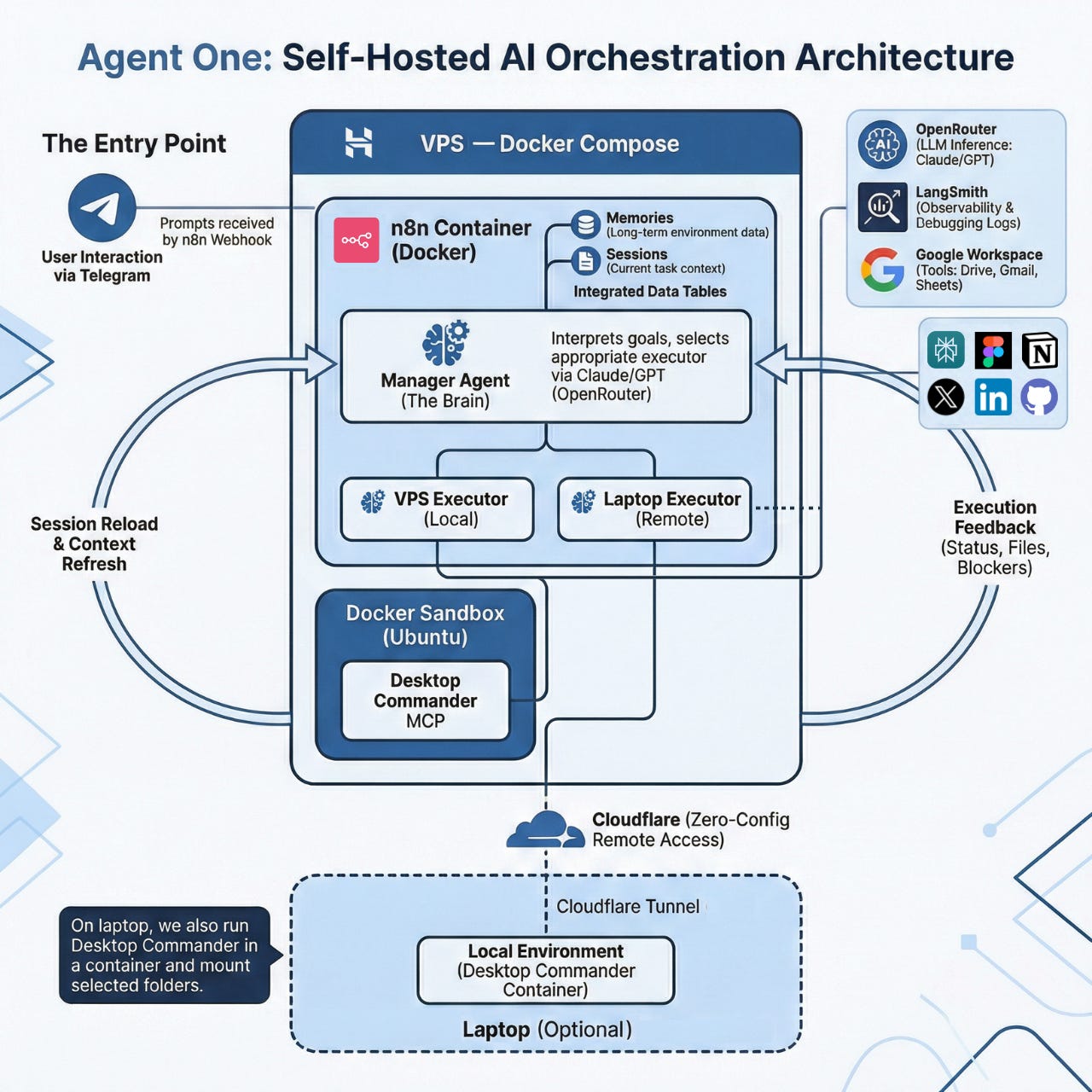
The rise of multi-agent orchestration and subagent architectures marks another leap in agentic AI, enabling complex workflows to be decomposed into specialized, parallelizable tasks handled by isolated subagents. Systems like Claude Code and Perplexity Computer now routinely spawn subagents with distinct context windows, personas, and tool access, allowing for efficient processing of token-heavy operations and long-running projects without polluting the main agent’s context. This architectural separation—where a 'Manager' agent plans and delegates, while 'Executors' autonomously execute—mirrors distributed systems design and supports persistent, collaborative workflows across devices and platforms.
Underlying these advances is the integration of protocols like the Model Context Protocol (MCP), which standardizes how agents access external tools and data sources, and the formalization of concepts such as Skills, Intents, and Contexts through ontologies like Skan AI’s Agentic Ontology of Work (AOW). MCP’s 'lazy loading' and centralized capability management, combined with skill-driven workflow encoding, allow for efficient, secure, and scalable agent deployment across enterprise environments. This layered approach—where MCP acts as the runner, Skills define workflows, and Commands provide explicit control—forms the backbone of modern agentic AI, enabling interoperability, governance, and continuous learning in increasingly complex ecosystems.



Real-World AI in Action
Leading enterprises are embedding custom AI skills to automate specialized, high-value tasks across teams, fundamentally rewiring workflows and gaining compounding operational advantages.
The rise of agentic AI is fundamentally reshaping enterprise workflows by moving beyond ad hoc prompting toward reusable, domain-specific 'skills' that encapsulate organizational expertise. As seen in deployments at companies like Box, Rakuten, and Canva, these custom skills enable automation of specialized processes—ranging from applying brand guidelines and structuring meeting notes to managing tasks in JIRA or Asana and executing company-specific data analysis—allowing AI agents to consistently and efficiently handle repetitive, high-value tasks across entire organizations.
By early 2026, agentic AI had evolved from isolated task automation to orchestrated, multi-agent workflows that operate autonomously and at scale, exemplified by large enterprises such as AT&T, Zapier, and Intercom. AT&T’s deployment of a modular multi-agent stack, for instance, enabled over 100,000 employees to build and manage workflows with up to 90% cost savings, while Zapier orchestrated more than 800 active AI agents to automate everything from scheduling to complex business processes. These real-world deployments underscore a shift where organizations adapt their operations to maximize agent effectiveness, with early adopters like Box reporting compounding competitive advantages as teams rewire their work around AI capabilities.
Agentic AI is not only transforming software engineering but also redefining roles and collaboration across business functions. At Intercom, for example, engineers have shifted from hands-on coding to higher-level planning, research, and decision-making, as AI agents autonomously migrate features, propose solutions, and even diagnose and fix production issues. This mirrors a broader trend where humans move up the organizational chart, focusing on orchestration and strategic oversight, while agents handle the implementation and routine fixes—an evolution that is rapidly being mirrored in customer experience, sales, and product management workflows across industries.
The proliferation of agentic AI has also driven the emergence of new infrastructure and operational paradigms, such as giving agents controlled 'boxes'—secure sandboxes or filesystems—to safely execute tasks, a practice now rapidly adopted by companies like Cursor, Cloudflare, and Perplexity. This infrastructure shift is complemented by the rise of skill directories and modular agent capabilities, making it easier for enterprises to install, deploy, and govern specialized agent functions at scale, while also addressing critical concerns around security, permissions, and safe agentic browsing in production environments.



Human Roles, Redefined
Agentic AI is transforming organizations into agent-first structures, pushing humans into orchestration and oversight roles while democratizing software creation across all job functions.
The rise of agentic AI is fundamentally redefining organizational roles and team structures, shifting human responsibilities from direct execution to high-level orchestration and oversight. By early 2026, companies like Zapier and Box have embedded hundreds of autonomous agents into their workflows, with leaders such as Chris Geoghegan and Aaron Levie emphasizing the need for new disciplines like AI orchestration management and harness engineering to govern these complex systems. This evolution is not just about automating tasks, but about building agent-first organizations where humans act as managers, architects, and gatekeepers—reviewing, planning, and directing fleets of specialized agents, while ensuring accountability, compliance, and alignment with business goals.
Developer and knowledge worker roles are undergoing a dramatic transformation as agentic AI takes over routine and even complex tasks, enabling parallel, autonomous workstreams and shifting human focus toward specification, planning, and critical review. Case studies from Intercom and Peter Steinberger’s workflow illustrate how engineers now spend up to 60% of their time on planning and specification, with AI agents handling the bulk of implementation and code generation—sometimes producing 80-100% of code, as noted by Andrej Karpathy and Boris Cherney. This shift is mirrored across domains, with non-technical staff at companies like Nexar and AT&T building full applications and workflows, democratizing software creation and expanding the scope of what teams can achieve.
New management practices and disciplines are emerging to address the unique challenges of agentic AI, such as verification bottlenecks, abstraction bloat, and the need for robust planning and guardrails. Leaders like Boris Tane and Peter Steinberger stress the importance of separating planning from execution and maintaining human accountability for AI-generated outputs, while organizations like OpenAI and Stripe are reorganizing around harness engineering playbooks to ensure reliability and safety. The proliferation of agent-to-agent workflows introduces complexities in approvals, compliance, and automation, prompting the rise of specialized roles in AI orchestration management and judgment manufacturing to oversee these evolving systems.
The agentic AI revolution is also reshaping team composition and culture, reducing traditional power asymmetries and enabling smaller, more agile teams where leadership conviction and upskilling are critical. As 80% of executives now believe agentic AI is essential for business survival by 2027, and with 55% of the workforce expected to collaborate with AI agents within two years, organizations are investing in programs like Simplilearn’s 'Applied Agentic AI' to prepare product managers and tech leaders for these new realities. However, this transition is not without friction—senior engineers tied to legacy practices may resist, while the most successful teams embrace an abundance mindset, rapid experimentation, and a focus on outcomes over process.




Reliability and Governance Unpacked
Enterprises are tackling agent reliability and risk by simplifying orchestration, embedding traceability, and adopting hybrid architectures that balance LLM flexibility with deterministic control.
Early deployments of agentic AI revealed that reliability suffers when architectures become overly complex, particularly in multi-agent systems where context loss and cascading failures are common after just a few handoffs. As a result, best practices have shifted toward simplifying orchestration by relying on a single large language model (LLM) as the central reasoning engine, while delegating execution to a robust ecosystem of external, verified tools. This approach, seen in financial advisory prototypes and echoed by engineering teams across industries, not only improves reliability and reduces maintenance overhead but also reframes the LLM as a decision-maker surrounded by deterministic, auditable systems—effectively turning the challenge of agent reliability into one of environment and API robustness.
Operational excellence in agentic AI production now hinges on rigorous observability, governance, and cost control frameworks that go far beyond traditional monitoring. By late 2025, leading organizations like OpenAI, Stripe, and Anthropic were embedding reasoning traceability, versioned prompts, and immutable audit trails into their platforms, while adopting progressive deployment strategies such as shadow-mode validation and gradual traffic migration to bridge the gap between prototype and production. These measures, coupled with granular permissions, runtime sandboxing, and semantic governance layers that evaluate an agent’s intent before granting access, have become non-negotiable for meeting escalating legal, regulatory, and reputational demands—especially as analysts predict thousands of AI-related legal claims by 2026.
As agentic AI systems scale, the economic and reliability challenges compound: chaining multiple LLM calls, retries, and operational overhead can push monthly costs into the thousands, while reliability plateaus around 80%—far short of the 'March of Nines' required for enterprise-grade automation. To address this, hybrid architectures blending deterministic logic with LLM-powered flexibility, human-in-the-loop designs, and modular separation of planning and execution have emerged as best practices. Companies now track operational metrics tied directly to business outcomes—such as cost per successful task and human intervention rate—recognizing that the ability to systematically understand, fix, and prevent failures is the true determinant of whether agentic AI systems ship or stall in production.
The maturation of agentic AI has catalyzed the rise of new standards and governance frameworks, such as the Model Context Protocol (MCP), Agent-to-Agent (A2A) communication, and the Agentic Ontology of Work (AOW), which formalize interoperability, traceability, and safe collaboration across complex multi-agent ecosystems. Vendors like Skan AI and New Relic are embedding these standards into their platforms, offering robust RBAC, audit logging, and compliance controls tailored for enterprise needs. This shift from an AI feature race to an infrastructure and governance race is underscored by the fact that 94% of developers would switch vendors for more reliable, observable, and compliant agentic AI infrastructure—signaling that operational excellence is now defined by the rigor of a platform’s reliability engineering, observability, and governance, not just its model capabilities.




The Productivity Race Is On
Agentic AI is fueling a new era of business growth, but success hinges on robust data, observability, and upskilling as companies race to turn automation into a competitive edge.
Agentic AI is fundamentally transforming business productivity and organizational competitiveness by shifting software from passive tools to proactive collaborators that can autonomously execute complex tasks. Companies like Salesforce, Zapier, and Miro are leveraging hundreds of AI agents to automate workflows, collapsing traditional product development cycles and enabling new business models that expand the addressable market from software spend to the $13 trillion U.S. labor market. As Salesforce CEO Marc Benioff predicts a 50% revenue boost within four years by pivoting to agentic AI, the competitive landscape is rapidly evolving, with both established vendors and new entrants racing to build agent layers that sit close to the user and personalize interactions, as seen with platforms like Glean and the rise of AI-native CRMs.
This agentic revolution is not just about automation, but about a profound workforce transformation that redefines roles, skills, and collaboration. By early 2026, 55% of employees are expected to work alongside AI agents, with 60% requiring upskilling—prompting enterprises like Accenture to train 30,000 consultants in Claude code and educational programs like Simplilearn’s 'Applied Agentic AI' to emerge for mid-to-senior leaders. The human role is shifting from task execution to high-level supervision, orchestration, and vision articulation, giving rise to the '100x product manager' and new management paradigms where humans oversee teams of AI agents, as Sam Altman and Andrej Karpathy have both observed.
However, realizing the full potential of agentic AI hinges on robust data foundations, governance, and observability. Up to 60% of AI projects may be abandoned due to poor data quality or lack of AI-ready infrastructure, and the proliferation of autonomous agents introduces new risks in security, compliance, and synthetic data governance. Enterprises are responding with end-to-end observability tools, platform consolidation, and mandatory security layers—evidenced by a tenfold surge in M&A activity around AI agent observability and cybersecurity firms like Palo Alto Networks acquiring AI security startups—while legal and reputational risks mount, with thousands of AI-related claims predicted by 2026.
The rise of agentic AI is also catalyzing the creation of entirely new markets and societal norms. From skills directories like Vercel’s skills.sh to the explosion of AI-powered customer service platforms and the emergence of collaborative human-agent teams in knowledge work, monetization is shifting toward deployment, security, and orchestration rather than mere agent development. At the same time, agentic AI is prompting philosophical and ethical debates, as seen in Anthropic granting a retired model a Substack to express its 'musings,' signaling a societal shift toward recognizing AI agency and the need for new norms around trust, verification, and human-AI relationships.