Gaza peace plan unravels as aid crisis deepens
The gist
Gaza’s fragile peace plan has collapsed, unleashing new waves of violence and plunging humanitarian aid into chaos as diplomatic efforts unravel.
What to know
- Since the October 2025 ceasefire, more than 1,048 Palestinians have been killed and over 3,372 injured as Israeli military strikes escalate, targeting even hospitals and shelters.
- Israel’s rejection of the U.S.-backed disarmament roadmap and Gaza withdrawal has shattered the peace deal, while regional powers like Iran and Hezbollah ramp up influence and alternative diplomacy.
- Humanitarian aid is in crisis after Israeli drone strikes killed seven World Central Kitchen workers, forcing a major suspension of food and shelter relief for tens of thousands in Gaza.
Gaza's Civilian Toll Mounts
Relentless airstrikes and a devastated agricultural sector have left Gaza’s families trapped between violence, hunger, and environmental collapse.
Israeli military operations in Gaza have inflicted a devastating human toll, with repeated drone strikes and air attacks causing significant civilian casualties, including children such as 8-year-old Malik Wael Abu Shaweesh. Since the ceasefire began in October 2025, over 1,048 Palestinians have been killed and more than 3,372 injured, highlighting the persistent breaches of ceasefire agreements and the escalating suffering of non-combatants caught in the crossfire.
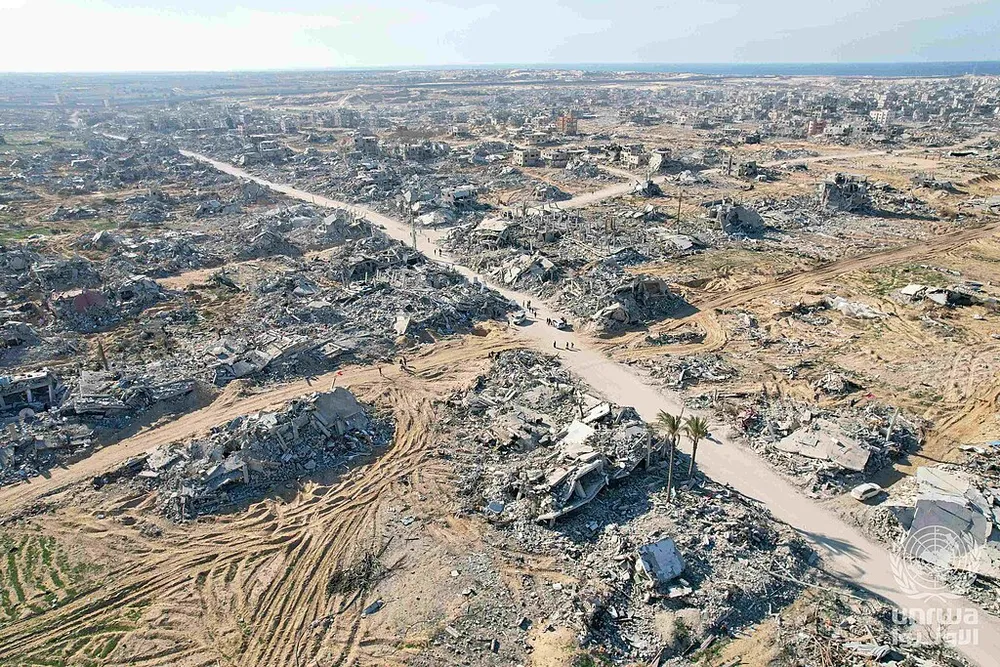
The conflict's relentless escalation throughout 2026 has led to widespread destruction of civilian homes and infrastructure, intensifying the humanitarian crisis with health emergencies and displacement. The siege and continuous bombings have targeted civilian shelters and triggered an environmental crisis, while air strikes near critical facilities like Alamar hospital underscore the grave risks to civilian life and the urgent need for emergency shelters and essential supplies for thousands of households.
Agricultural devastation compounds Gaza’s humanitarian plight, with only 3% of farmland remaining usable due primarily to restricted access imposed by military control zones rather than direct war damage. Farmers like Wajiha Dahdouh describe a dire lack of water, fertilizers, and seeds, while regions such as Rafah face near-total inaccessibility to cropland and greenhouses, confining Gaza’s 2.1 million residents to an ever-shrinking area and deepening food insecurity amid ongoing hostilities.
The humanitarian crisis is further exacerbated by the deadly targeting of aid workers, exemplified by the killing of seven World Central Kitchen personnel in coordinated Israeli drone strikes despite prior coordination and sharing of operational details. These attacks violated Israeli military protocols protecting humanitarian zones, with false claims about threats from aid workers later acknowledged, and the suspension of humanitarian activities alongside Israel’s refusal to investigate reflects a troubling lack of accountability that worsens civilian suffering.
Ceasefire Shattered by Force
Israel’s rapid escalation and tunnel demolition campaign reignited conflict and marked the deadliest period since the failed 2025 ceasefire.
The October 2025 ceasefire, brokered with U.S. backing, quickly unraveled as Israeli military operations resumed aggressive strikes targeting Hamas militants beyond imminent threats. Despite initial promises to limit airstrikes, Prime Minister Benjamin Netanyahu's refusal to accept disarmament or a Palestinian state led to continuous bombings that reignited conflict dynamics and shattered hopes for lasting peace.
Throughout 2026, the Israeli Defense Forces intensified their campaign by systematically demolishing Gaza's tunnel infrastructure, claiming to have destroyed about half of the network, particularly on the Israeli-controlled Rafah side. However, significant tunnel systems remain intact within Hamas-controlled areas, where militants continue to hide, complicating ceasefire enforcement and perpetuating the cycle of violence.
The breakdown of the ceasefire coincided with an escalation in attacks on civilian shelters, contributing to the deadliest period of the conflict and exacerbating an already dire humanitarian crisis. This intensification of hostilities, coupled with environmental degradation from sustained bombardments, deepened the suffering of Gaza’s civilian population and underscored the failure of diplomatic efforts to contain the violence.


Diplomacy Undone by Distrust
Israel’s swift rejection of a rare U.S.-brokered Hamas disarmament plan exposed deep-rooted mistrust and left the region’s power dynamics more fractured than ever.
The U.S.-led peace initiative, prominently driven by Donald Trump’s Board of Peace and figures like Jared Kushner and Tony Blair, achieved a rare breakthrough by securing Hamas’s agreement to a detailed disarmament roadmap involving phased weapon decommissioning and the transfer of arms to U.S.-led international security forces for destruction. However, this progress was immediately undercut by Israel’s outright rejection of the Gaza withdrawal framework, citing unverifiable disarmament steps and the impracticality of withdrawing forces without reliable guarantees, which exposed deep mistrust and political misalignment that have long plagued peace efforts in the region.
Despite Hamas’s conditional willingness to disarm only if Israel ceases military strikes and withdraws from Gaza, ongoing Israeli military actions—including the killing of at least 34 Palestinians and wounding of 134 since the peace announcement—have severely undermined the credibility of the U.S.-backed peace plan. This persistent violence not only erodes U.S. standing in the region but also fuels skepticism among key regional actors like Iran, which increasingly favors diplomatic frameworks excluding U.S. involvement, exemplified by the emerging Iran-Oman initiative.
Benjamin Netanyahu’s swift and unequivocal rejection of the U.S.-backed 15-point Gaza peace deal crystallized a significant diplomatic failure, reflecting Israel’s strategic calculus and broader political goals that diverge sharply from Palestinian aspirations and U.S. proposals. This rejection has not only turned the peace initiative into a diplomatic embarrassment but also complicated future negotiations involving Lebanon, Yemen, Iraq, and Iran, as the failure highlights the entrenched regional power struggles and the fragile nature of U.S. influence amid ongoing violence and humanitarian devastation.
The practical challenges of implementing the peace plan are formidable: limited troop contributions from allied countries like Morocco, the need for U.S. forces to train international security personnel, and Hamas’s historical refusal to disarm absent the establishment of a Palestinian state create a fundamental impasse. Meanwhile, Israeli sources dismiss Hamas’s claims of withheld humanitarian aid as propaganda, with international bodies like the IPC confirming adequate aid delivery, underscoring the complex interplay of mistrust, verification difficulties, and political posturing that continue to stall meaningful progress.


Aid Efforts Undermined by Attacks
Despite heroic relief efforts, deadly strikes on humanitarian workers have crippled aid delivery and triggered global outrage over Israel’s targeting of humanitarian corridors.
By mid-August 2026, humanitarian organizations demonstrated remarkable resilience in Gaza, delivering food assistance to nearly 60,000 households through a network of over 1,000 locations and 100 kitchens. Bread production remained a cornerstone of this effort, with more than 2,000 subsidized bakeries producing around 100,000 bread bundles daily to meet the overwhelming demand. Meanwhile, shelter assistance reached over 3,300 households with emergency provisions, but chronic funding shortages and bureaucratic hurdles for durable materials continue to hamper long-term solutions.
Despite these efforts, the humanitarian landscape in Gaza remains perilous, as recent air strikes near critical infrastructure like Alamar hospital have escalated risks to civilians and aid operations alike. The situation worsened dramatically when seven World Central Kitchen aid workers were killed in coordinated Israeli drone strikes, despite prior coordination and detailed operational sharing with Israeli authorities. These attacks, which violated military protocols within designated humanitarian zones, have not only caused tragic loss of life but also led to the suspension of vital humanitarian activities amid widespread condemnation and calls for accountability.


Regional Power Struggles Deepen
Iran and Hezbollah are leveraging the Gaza crisis to sideline U.S. influence and entrench their own, while international security initiatives falter amid political deadlock.
The Gaza conflict has intensified a fragile security environment across the Middle East, with regional actors like Iran and Hezbollah deeply entangled in the dynamics. Iran’s perception of the U.S. as unable to restrain Israel has prompted a shift toward diplomacy frameworks excluding American involvement, exemplified by the Iran-Oman initiative. Meanwhile, Hezbollah’s infiltration of Lebanese institutions mirrors Hamas’s embedded influence in Gaza, underscoring a broader regional entanglement that complicates peace efforts and security stabilization.
Israeli Prime Minister Benjamin Netanyahu’s outright rejection of the U.S.-backed Gaza peace deal starkly reveals the complex strategic calculations prioritizing Israel’s security concerns over diplomatic progress. While Hamas accepted the 15-point proposal, Israel’s refusal not only unraveled the deal but also highlighted the precarious security landscape that hampers conflict resolution and humanitarian relief. This political impasse reverberates beyond Gaza, affecting regional actors such as Lebanon, Yemen, Iraq, and Iran, and further entrenching instability.
Central to ongoing peace negotiations is the contentious demand for Hamas’s disarmament, with the U.S. and Israel insisting that weapons be surrendered to an international security force before reconstruction can commence. However, this international force faces critical challenges, including insufficient troop contributions from countries like Morocco and limited training capacity, which exacerbates the fragile security environment. Concurrently, Iran’s strategic calculus appears to favor prolonging the conflict to suppress domestic unrest amid economic pressures and dwindling munitions, further complicating prospects for peace.
The escalation of violence, including the arrest of Hamas officials linked to attacks and the killing of militants, reflects heightened security tensions that ripple across the region. U.S. military operations, particularly those causing civilian casualties near urban centers, face mounting international criticism, intensifying political and public scrutiny. These developments not only deepen the humanitarian crisis but also illustrate how civilians increasingly become pawns in a complex geopolitical struggle, further complicating efforts toward conflict resolution.