GOP fractures as trump’s power plays spark democratic backslide and midterm mayhem
The gist
The GOP is splintering as Trump’s second-term power grabs, economic chaos, and open voter suppression push American democracy to the brink ahead of the 2026 midterms.
What to know
- Trump’s approval has cratered to 37% as his aggressive executive actions erode civil rights and fuel democratic backsliding, echoing Orbán-style illiberalism.
- Republicans are openly embracing extreme gerrymandering and voter suppression after the Supreme Court gutted the Voting Rights Act, legalizing electoral manipulation.
- Geopolitical shocks—like the Iran conflict driving gas to 1967 prices—have deepened economic pain and fractured GOP unity, leaving the party scrambling before November’s elections.
Imperial Presidency Unleashed
Trump’s second term has turbocharged executive overreach, politicized institutions, and mirrored global authoritarian trends, signaling a profound unraveling of postwar democratic norms.
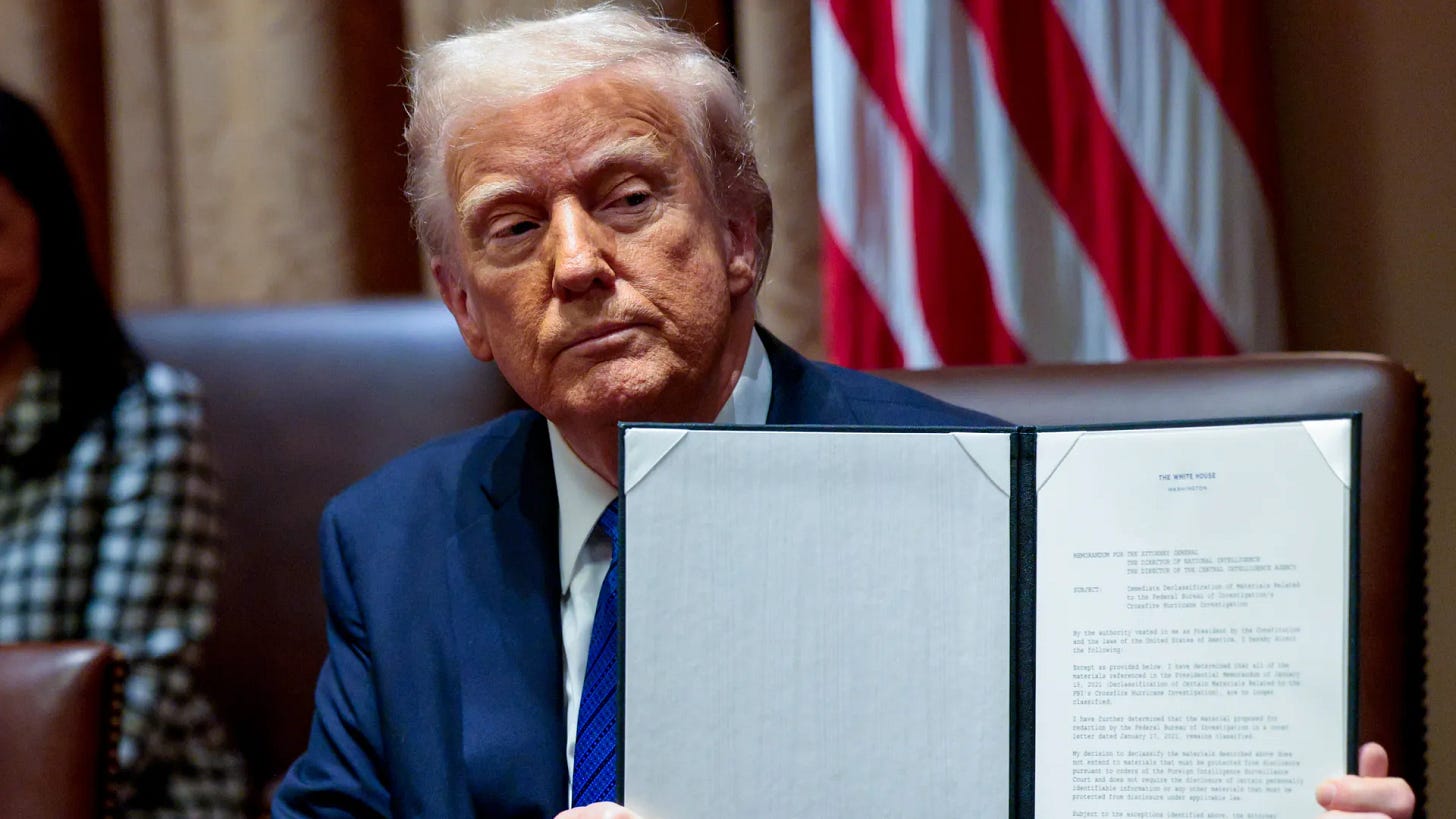
By early 2026, Trump’s return to the presidency marked a stark intensification in the erosion of democratic norms, characterized by his unprecedented willingness to push presidential power with fewer constraints and a more loyal team. This shift not only amplified concerns about the U.S. sliding toward an imperial presidency but also symbolized a broader unraveling of the post–World War II diplomatic order, as evidenced by Trump’s transformation from an anti-globalist firebrand into a guest of honor at Davos, signaling a recalibration of global leadership dynamics.
Ian Bassin’s analysis situates the Trump administration within a global pattern of democratic backsliding marked by politicization of independent institutions such as the civil service, law enforcement, and the military, alongside the spread of disinformation, executive aggrandizement, suppression of dissent, and election corruption. This pattern echoes illiberal trends seen internationally, notably Hungary’s Orbán 2.0, who fortified his political base during time out of power to launch a more devastating assault on democracy upon return, underscoring the systemic challenges facing democratic resilience both in the U.S. and abroad.
The Trump administration’s executive actions in 2026 further strained constitutional norms and institutional integrity, with attempts to curtail birthright citizenship threatening automatic citizenship for roughly 250,000 babies annually and aggressive moves to tighten mail voting and impose a federal eligible-voter list sparking immediate accusations of unconstitutional voter suppression. Concurrently, federal judges pushed back against unlawful immigration enforcement practices, such as the Department of Homeland Security’s stripping of legal status from migrants entering via the Biden-era CBP One system, illustrating ongoing tensions within governance structures and the fragile state of rule of law.
Beyond federal actions, a disturbing pattern of democratic erosion permeates state and local levels, where policies undermine civil rights and democratic protections across multiple fronts. From Mississippi’s Jim Crow-style citizenship checks and Idaho’s criminalization of trans people in public spaces to politicization of homelessness grants by HUD and the hollowing out of CFPB protections, these developments reflect a multi-layered assault on institutional integrity and political accountability, with vulnerable communities bearing the brunt of these regressive measures.


Election Integrity Under Siege
Sweeping federal power grabs, misinformation campaigns, and aggressive legal maneuvers are actively undermining trust in the 2026 midterm process while testing the limits of presidential authority.
By early 2026, former President Trump has aggressively pursued a multi-pronged strategy to undermine the integrity of the upcoming midterm elections, including pushing for nationwide voter ID laws and attempts to outlaw mail-in voting despite lacking constitutional authority. His efforts extend beyond rule changes to rewriting electoral maps and preemptively sowing distrust by amplifying false narratives of widespread fraud, as seen in his repeated claims on Truth Social and attempts to nationalize elections by focusing on winning counties. This approach includes unprecedented federal actions like the FBI raid on Georgia’s Fulton County election warehouse and demands for voter rolls nationwide, which collectively heighten tensions and disrupt election administration.
Despite Trump's public threats and legislative pushes such as the controversial Save America Act—which would require voters to present passports or birth certificates and has narrowly passed the House but stalled in the Senate—legal experts emphasize that the President lacks unilateral authority to change nationwide election rules. These efforts are largely grounded in wildly overstated claims of voter fraud, including debunked allegations of vote flipping in Pennsylvania and the baseless Great Replacement Theory alleging widespread noncitizen voting. Empirical data starkly contradicts these claims, with only 1,546 proven instances of voter fraud out of over a billion votes since 1982, highlighting the disconnect between Trump's rhetoric and reality.
Trump’s persistent dissemination of election misinformation serves a deliberate strategy to erode public trust and justify federal interventions aimed at reshaping election administration to his advantage. This includes institutional actions like Justice Department lawsuits demanding voter lists from dozens of states and executive orders requiring states to provide voter rolls 60 days before elections, alongside recruiting election deniers into government roles and proposing controversial measures such as deploying ICE agents at polling sites. However, structural barriers like the decentralized nature of U.S. elections and ongoing judicial challenges cast doubt on the practical implementation of these interference tactics.
The Trump regime’s explicit policy of denying the 2020 election loss, enforced through loyalty tests for judicial nominees and other sycophants, marks a shift from covert interference to overt election denial. This has transformed elections from contests over policies and candidates into battles over whether Republicans can successfully steal them, creating a perilous cycle of GOP election theft followed by Democratic remediation. Such extreme oscillation threatens the very foundation of American democracy, undermining the legitimacy of electoral outcomes and eroding public confidence in democratic institutions.





GOP Unity Cracks Wide Open
Trump’s collapsing approval and deepening economic woes have fractured the Republican base, eroding his dominance and sparking unprecedented internal resistance ahead of the midterms.
By early 2026, the Republican Party is visibly fracturing under the weight of declining faith in Donald Trump’s leadership, which has eroded the cohesion necessary for coordinated election interference and broader party unity. Charles aptly framed this moment as a departure not just from Trump as a power center but from the Republican Party itself, as belief in Trump’s ability to improve supporters’ lives diminishes even among his loyal base. This weakening faith undermines the institutional mechanisms that once enabled Trump’s influence, with resistance emerging from within GOP ranks, exemplified by pushback against initiatives like the SAVE Act, signaling cracks in what was once a monolithic party front.
The Republican Party’s internal alarm over Trump’s declining approval and unfavorable midterm outlook has prompted multiple high-level strategy summits, such as the one convened by Susie Wiles, Trump’s White House chief of staff, reflecting deep anxiety about electoral prospects. This unease is fueled by a confluence of controversies—from mishandling the Epstein files and immigration crackdowns to economic turbulence driven by tariffs and an unpopular Iran war—that have alienated voters and frayed party cohesion. With Trump’s approval plummeting to 37 percent and two-thirds of voters viewing his second term negatively, GOP leadership is scrambling to recalibrate ahead of a challenging midterm cycle.
Trump’s grip on the Republican base is increasingly bifurcated, with his approval among non-MAGA Republicans dropping sharply by 19 points to 60 percent, while his core MAGA supporters remain staunchly loyal at 96 percent approval. This fracture reflects a critical erosion of party cohesion, as economic dissatisfaction—exacerbated by the Iran conflict and rising living costs—drives down Trump’s overall economic approval to a net negative 21 percent, particularly among independents, Latinos, and white non-college voters. The resulting 'sound of consent withdrawing' from the broader GOP base challenges Trump’s ability to unify the party and maintain electoral viability.
Despite Trump’s waning popularity, his influence remains potent within the GOP due to the outsized power of the smaller, more extreme MAGA faction, which exerts significant pressure in primaries and through intimidation tactics, as former Rep. Peter Meijer’s fear of certifying Biden’s victory illustrates. However, Trump’s control over this faction is not absolute; his endorsement failed to quell MAGA hardliners’ resistance to Kevin McCarthy’s speakership, highlighting internal factionalism. Meanwhile, the GOP’s dysfunction and internal divisions have contributed to electoral setbacks, with Democrats flipping 30 legislative seats since 2025 while Republicans have flipped none. Nevertheless, party leaders like RNC Chair Joe Gruters advocate doubling down on Trump’s agenda, framing loyalty as essential for midterm success despite polling showing 61 percent disapproval of Trump’s economic handling and a historic low 34 percent overall approval.





Iran War Fuels Political Chaos
Geopolitical conflict, economic pain, and MAGA-aligned media consolidation are creating a volatile feedback loop that’s destabilizing both voter sentiment and the 2026 election landscape.
By early 2026, the ongoing Iran conflict has reemerged as a pivotal factor destabilizing both economic conditions and political stability in the U.S., with fuel prices swinging on tensions around the Strait of Hormuz and conflicting ceasefire claims between Tehran and Washington. This geopolitical turmoil has intertwined with domestic political maneuvers, such as Trump's executive orders tightening mail voting and immigration enforcement, which have sparked accusations of unconstitutional voter suppression. Meanwhile, a fragmented media landscape—where national outlets focus on constitutional spectacle and executive actions, and state and specialized outlets track policy impacts on marginalized groups—has shaped a complex public discourse, influencing voter perceptions ahead of the midterms.
The collapse of the Iran ceasefire following U.S. military action in the Gulf of Oman has intensified economic instability, driving gas prices to levels unseen since 1967 and fueling tariff-driven market turbulence that erodes Republican approval ratings. This economic strain is deeply felt by the public, with 64% opposing the Iran conflict due to financial burdens and nearly 80% adjusting spending or relying on credit to cope with rising fuel costs. Such pressures have contributed to a historic low in Trump's approval ratings—dropping to 40% overall and fracturing GOP unity as non-MAGA Republicans' support plummets by 19 points, signaling a critical weakening of the party base just months before the midterms.
Media consolidation under MAGA-aligned billionaires Larry and David Ellison, coupled with FCC threats to broadcasters that do not support the Iran war narrative, has narrowed public access to independent journalism, potentially skewing voter behavior and public opinion during this volatile period. This convergence of geopolitical conflict, economic hardship, and media control creates a feedback loop that complicates the political landscape, as reflected in the Kalshi prediction market's dead heat for Senate control and Bank of America economist Claudio Irigoyen's observation that shifting electoral odds are pressuring policymakers to seek resolution in the Iran war to stabilize domestic politics.
Despite looming midterm elections, economic dissatisfaction remains so entrenched that even potential policy shifts are unlikely to rehabilitate Trump's image as an economic manager, underscoring a broader erosion of public confidence amid geopolitical and financial turmoil. As one Democratic pollster noted, 'It’s hard to imagine a set of policies... that would have a material enough impact... that they would say, ‘Actually this guy is doing pretty good with the economy,’' highlighting the formidable challenge facing the GOP in regaining political stability under current pressures.

Democracy Engineered Away
With Supreme Court backing, Republicans are openly weaponizing gerrymandering and voter suppression to entrench power, shifting U.S. elections toward a performative, illiberal model.
By early May 2026, the GOP, confronted with plummeting poll numbers and an unfavorable economic climate, has openly embraced aggressive tactics such as gerrymandering and voter suppression to secure electoral advantage. The Supreme Court’s landmark Louisiana v. Callais decision, which dismantled key Voting Rights Act protections, has emboldened Republican-controlled legislatures to redraw districts with blatant packing and cracking strategies that dilute Black voters’ influence, often halting elections mid-process to suppress opposition turnout. This systematic manipulation signals a stark rollback of democratic norms, as states no longer need to prove discriminatory intent, effectively legalizing electoral engineering to maintain power.
The GOP’s midterm strategy has evolved from covert interference to an overt repudiation of democratic legitimacy, epitomized by Trump’s refusal to concede the 2020 election and the expectation that his judicial nominees uphold this denial. As articulated in a May 9 opinion piece, elections have devolved into contests over whether Republicans can successfully steal them, reflecting a dangerous departure from democratic norms toward performative, Russia-style elections. This shift underscores an urgent call for Democrats and defenders of democracy to move beyond passive observation and actively defend electoral integrity, with independent journalism playing a critical role in exposing these threats.
Despite facing an unpopular president, economic headwinds, and a string of off-year losses, the GOP remains confident in its midterm prospects by fully embracing Trump’s agenda and capitalizing on economic anxieties. RNC Chair Joe Gruters has emphasized that candidates must run toward the president to secure victory, framing affordability as the paramount voter concern while attributing inflation and gas price spikes to prior administrations and external shocks like the Iran conflict. Bolstered by superior funding and organizational strength, the party believes its clear plan and financial advantages will overcome polling challenges and deliver success in November.