Grassroots push spurs data center bans and moratoriums
The gist
Grassroots activists and wary lawmakers across the U.S. are halting and restricting data centers, demanding real local benefits and environmental accountability from Big Tech’s digital sprawl.
What to know
- Communities from East Tennessee to Garfield Township are winning moratoriums and bans over worries about noise, water use, and minimal economic gains—like Bristol's two-year pause and Monterey Park’s outright ban.
- States such as New York and Texas have hit pause on new data centers to weigh energy, water, and grid impacts, while Oregon is opting for multi-stakeholder collaboration instead of blanket bans.
- Despite job growth in places like Prineville, Oregon, many locals say corporate perks don’t add up, fueling a bipartisan push for stricter rules, infrastructure costs, and true transparency from data giants.
Grassroots Movements Rewrite Rules
Local activists are forcing policy changes and outright bans on data centers by exposing the hidden costs and challenging tech giants’ promises of economic gain.
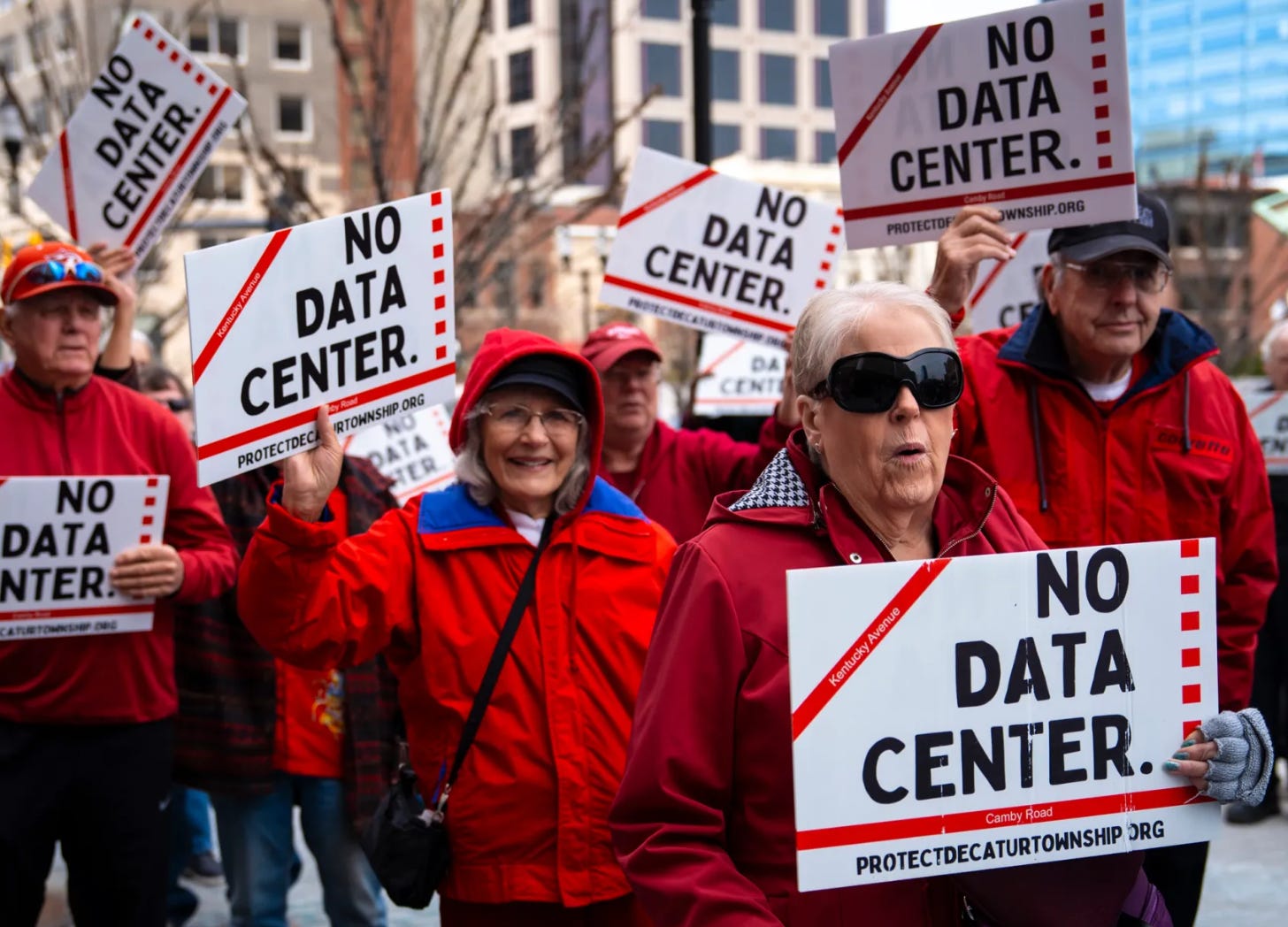
Across diverse regions from East Tennessee to Garfield Township, community activism has emerged as a powerful force shaping local opposition to data center development. Residents and grassroots groups, such as Amber Bright’s 'No data centers Tennessee -- Monroe County chapter,' mobilize to protect rural quality of life, voicing concerns about noise pollution, air quality degradation, and the broader ethical implications of AI technologies. This activism has translated into concrete policy actions including moratoriums, zoning restrictions with noise caps, and setbacks from residential areas, exemplified by Bristol’s two-year moratorium and Kingsport’s 60-decibel noise limit, reflecting a widespread demand for stringent regulatory oversight to safeguard environmental and social well-being.
Community resistance is not only rooted in environmental and quality-of-life concerns but also in skepticism about the economic benefits promised by data center projects. Activists and residents frequently highlight the minimal local gains compared to the scale of corporate investments, with Jordan Schneider noting that community upgrades often amount to 'rounding errors of rounding errors.' This sentiment fuels an 'immune response' to large tech investments, where financial incentives like tax breaks or recreational facility upgrades fail to quell opposition, as Anton Leicht observes, 'You can’t just buy people 100 pickleball courts and expect them to say, “This is great.”' Such resistance underscores a deeper mistrust of corporate motives and a demand for more equitable and transparent community benefits.
Organized, sustained grassroots activism has proven pivotal in shaping local policy outcomes, often through nonviolent public engagement and voter action. In places like Festus, Missouri, residents ousted an entire city council following approval of a $6 billion data center, while Monterey Park, California, enacted the nation’s first voter-approved municipal data center ban with 86% support. These campaigns leverage public meetings and awareness efforts to spotlight hidden costs such as soaring residential electricity bills—up 7.4% nationally in 2025 and as high as 267% near data centers—and demand transparency on resource consumption and public subsidies, exemplified by scrutiny over Google’s $125 million tax cut in Michigan. Political scientist Erica Chenoweth’s research underscores that such organized nonviolent participation dramatically increases the likelihood of successful resistance.
Local opposition also extends into legal and political arenas, where communities defend bans and delay approvals to address noise and environmental concerns. Hawkins County’s court defense of its crypto mining and data center ban highlights fears of constant noise and air pollution, while in Oklahoma, public hearings led to postponing Iron Mountain’s tax abatement amid demands for noise mitigation and referendum rights. Similarly, New York’s 'New York Fights AI Data Centers' tour, led by State Senator Kristen Gonzalez, mobilizes grassroots rallies to pressure lawmakers for moratoriums and stricter regulations, emphasizing the need for transparency and environmental safeguards amid doubts about shifting data center operations. These examples illustrate how community activism shapes regulatory frameworks by insisting on accountability and public participation in decisions affecting local health and resources.


Moratoriums as Strategic Shields
Temporary pauses and legal maneuvers by states and cities are giving communities leverage to craft tougher regulations and demand a seat at the negotiating table.
Local and state governments are increasingly employing moratoriums and regulatory pauses as strategic tools to manage the rapid expansion of data centers, allowing time to develop thoughtful regulations and coordinate state-local partnerships. For example, New York Governor Kathy Hochul's one-year moratorium on large data centers and Texas Governor Greg Abbott's directive to halt new grid connection approvals illustrate a cautious approach balancing economic growth with resource stewardship. These pauses are often temporary and designed to address complex issues such as water use, noise pollution, and grid capacity, rather than to impose outright bans, reflecting a nuanced regulatory stance.
Oregon’s approach, led by Governor Tina Kotek’s advisory committee, exemplifies a preference for enhanced transparency and robust state-local collaboration over moratoriums, emphasizing stewardship of natural resources alongside economic development. The committee, comprising diverse stakeholders including local officials, energy experts, and environmental advocates, aims to produce regulatory recommendations that foster coordinated governance without halting growth, highlighting a multi-stakeholder model that balances industry needs with community and environmental concerns.
At the municipal level, moratoriums serve as tactical pauses to ensure community voices are heard and regulatory frameworks keep pace with the scale and speed of data center projects. Cities like Birmingham, Durham County, and Garfield Township have enacted moratoriums ranging from six months to over a year, often with exemptions for smaller facilities, to research impacts and draft enforceable regulations. Garfield Township’s careful legal crafting of its moratorium to avoid court challenges and its unanimous public support underscore the importance of well-designed, community-backed regulatory measures to manage growth responsibly.
The growing trend of moratoriums reflects broader political and public pressures, with bipartisan concerns over the environmental and infrastructural impacts of massive AI-driven data centers. Regulatory strategies increasingly require data centers to bear the full costs of electrical infrastructure and prioritize local community approval, as Texas Governor Abbott emphasized, 'If you're a data center and you want to operate in Texas, you have to first get the approval of those in local communities.' This shift signals a move toward more accountable and transparent development processes that seek to balance economic benefits with community welfare and resource management.

Environmental Toll Sparks Backlash
Escalating noise, soaring energy demands, and water withdrawals from data centers are igniting fierce local opposition and driving new environmental protections.
Data centers have become focal points of environmental concern due to their substantial energy consumption and noise pollution, which directly affect local communities. In East Tennessee, residents report constant low humming noises disrupting daily life, while local governments like Kingsport and Jonesborough enforce strict regulations on noise levels and proximity to homes to mitigate these impacts. Additionally, fears that data centers strain local power grids and elevate energy costs have prompted communities to push back, especially as some companies plan to prioritize AI data centers even at the expense of regional power availability.
Water usage and power grid capacity are critical environmental and resource management challenges driving moratoriums across multiple states. For example, New York’s Executive Order 62 and the Responsible Data Center Development Act impose temporary halts and require rigorous environmental-impact analyses to protect ratepayers and natural resources like Seneca Lake, where proposed AI data centers threaten to withdraw millions of gallons daily for cooling. Similarly, North Carolina’s pause on new data centers reflects widespread concerns over water, power, and noise, while Texas, despite abundant land and water, enforces careful scrutiny of power draw to avoid grid overloads highlighted by the 2021 winter storm.
Noise pollution remains a persistent and often underestimated environmental issue, especially with bitcoin mining and large-scale data centers generating decibel levels comparable to domestic fans or even reaching 90 decibels. In Oklahoma, projects like the 1600-megawatt, 2,000-acre Iron Mountain site face opposition due to inadequate noise mitigation plans and lack of baseline measurements, prompting some operators, such as Mara, to construct noise walls to shield nearby residents. These concerns underscore the need for comprehensive noise regulation and infrastructure analysis in data center proposals.
Communities like Garfield Township exemplify a proactive and legally cautious approach to managing environmental and resource impacts from data centers by imposing moratoriums that buy time for research and regulatory refinement. Residents have voiced worries about water and energy consumption, noise, and infrastructure strain, leading to considerations of zoning changes and special use permits to better control development. Developers are responding with innovations such as closed-loop cooling systems to minimize municipal water demand, reflecting a growing awareness of the need to balance economic benefits with sustainable resource management.
Economic Boon or Bargain Gone Bad?
While data centers promise jobs and tax revenue, fierce debate rages over whether incentives and corporate perks truly outweigh the long-term costs to communities.
Data centers are widely recognized as powerful engines for local economic revitalization, particularly in rural areas where traditional industries have declined. For instance, Prineville, Oregon, saw unemployment plummet from 20% to 6% following Meta’s data center arrival in 2010, illustrating the sector’s job creation potential. Moreover, companies actively recruit skilled tradeworkers from local educational programs, such as those at Blue Mountain Community College, directly linking data center growth to workforce development and community economic uplift.
Industry and advisory groups advocate for a nuanced approach that balances economic benefits with environmental stewardship, favoring enhanced state-local partnerships and greater transparency over blunt moratoriums. Oregon’s advisers emphasize collaboration to ensure data center development aligns with resource management goals, while Texas Governor Greg Abbott underscores the necessity of securing local community approval and making data centers bear the full costs of infrastructure demands, reflecting a broader push for responsible regulatory oversight.
Economic incentives remain a critical tool in attracting data center investments, with regions like Oregon leveraging no sales tax, generous property tax breaks, and affordable electricity to become hotspots. Similarly, Iron Mountain’s Oklahoma campus highlights the scale of economic impact, promising at least $60 million annually in incremental property taxes over 25 years and positioning itself as a major local employer. However, these incentives often spark debate over fairness and community impact, prompting calls for more creative solutions such as direct payments to residents to address local resistance.
While data centers bring tangible economic gains, industry leaders acknowledge that these benefits sometimes pale in comparison to the scale of the projects and the concerns they raise. Investments in community amenities, like OpenAI’s contributions to a Georgia town or a Michigan data center’s funding of a recreation center, are often described as modest 'rounding errors.' This tension is compounded by broader societal unease with technological change, as noted by experts who observe that opposition to data centers frequently reflects deeper anxieties about AI and the tech sector rather than purely economic considerations.