HawkEye 360’s satellites shrink RF intelligence gaps
The gist
HawkEye 360 is shattering the secrecy barrier by bringing near-military-grade RF intelligence to the commercial and allied world—faster, sharper, and more shareable than ever.
What to know
- By early 2026, HawkEye 360 deployed over 30 satellites in unique clusters, pinpointing RF signals with sub-kilometer accuracy once reserved for classified missions.
- A $100M contract with the Indian Navy and partnerships with NASA and NOAA are fueling rapid growth, tracking 'dark ships' and protecting vital infrastructure worldwide.
- The company’s Series E raise and ISA acquisition turbocharged its AI-powered analytics, slashing revisit times and making near-real-time, unclassified RF data a reality for defense and security.
Clustered Constellation Power
HawkEye 360’s unique three-satellite clusters and AI-fueled analytics deliver sub-kilometer RF geolocation precision once reserved for top-secret missions, transforming commercial and defense intelligence.
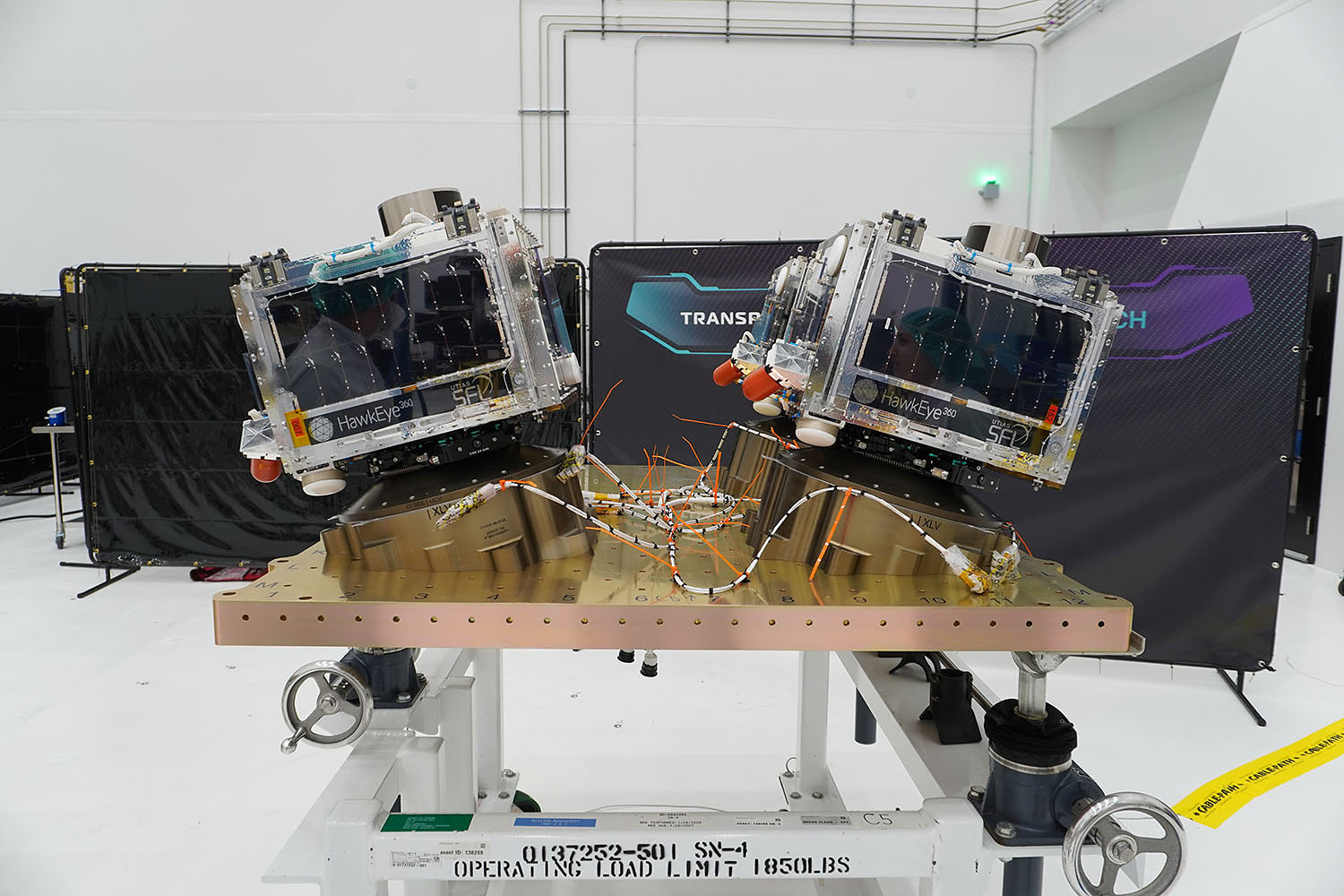
By early 2026, HawkEye 360 had established a pioneering satellite constellation architecture featuring over 30 satellites flying in clusters of three at approximately 550 km altitude. This unique formation—comprising one satellite leading, one trailing by a few hundred kilometers, and a third oscillating cross-track—enables the precise geolocation and tracking of RF signals emitting between 30 MHz and 18 GHz, a capability previously confined to classified domains. As highlighted in multiple briefings, this clustered geometry allows detection of human-generated RF emissions above one watt with sub-kilometer accuracy, offering precision unmatched by traditional imagery satellites and enabling commercial augmentation of U.S. defense and intelligence missions.
The acquisition of Innovative Signal Analysis (ISA) significantly enhanced HawkEye 360’s proprietary data processing and AI-driven analytics pipeline, enabling faster, automated classification and detection of new signal waveforms. This fusion of advanced processing capabilities with the clustered satellite data stream accelerates geolocation rates and supports low-latency, multi-domain situational awareness. As John Serafini of NightDragon emphasized, these innovations empower HawkEye 360 to deliver trusted, actionable intelligence rapidly to demanding defense and national security customers, transforming raw RF data into insights about human behavior and intentions.



AI: The RF Intelligence Engine
AI-driven analytics guarantee trusted, actionable intelligence from raw satellite signals, ensuring mission-critical reliability for warfighters in the world’s most demanding environments.
By 2026, HawkEye 360 has seamlessly integrated AI and advanced data science at the final stage of its RF data pipeline to transform raw satellite-collected signals into highly reliable, actionable intelligence tailored for defense applications. This AI-driven conversion ensures 100% data integrity and trustworthiness, critical for warfighters operating in connectivity-limited, high-stakes battlefield environments where technologies must perform flawlessly every time.
Leveraging a constellation of over 30 satellites flying in unique clusters of three, HawkEye 360 processes vast amounts of RF data—spanning frequencies from 30 MHz to 18 GHz—to achieve sub-kilometer geolocation accuracy. This precise signal detection capability, combined with AI-enabled analytics, allows the company to dominate the entire value chain from space-based collection to real-time, mission-critical intelligence delivery, effectively turning the RF spectrum into a dynamic asset for defense and maritime domain awareness.
HawkEye 360’s AI integration extends beyond accuracy to enable low-latency operations and rapid response capabilities, as demonstrated in collaborations with Lockheed Martin and partnerships with NASA, NOAA, and the Space Rapid Capabilities Office. These AI-enhanced analytics support multi-domain situational awareness by converting complex RF signals into reliable insights that empower spectrum monitoring, maritime domain awareness, and autonomous system applications, underscoring the company’s strategic role in advancing global security through space-based RF intelligence.
Strategic Acquisitions & Alliances
The ISA acquisition and Series E funding supercharged HawkEye 360’s RF data processing, enabling new government partnerships and setting the stage for a pivotal 2026 IPO.
By early 2026, Hawkeye360 executed a meticulously planned acquisition of Innovative Signal Analysis (ISA), a move that significantly bolstered its RF data processing prowess by enhancing signal classification, detection automation, and geolocation accuracy. This acquisition, described as a near-perfect fit after nearly two years of strategic groundwork, exemplifies the company's commitment to advancing its commercial signals intelligence capabilities to better serve government and defense sectors.
To finance the ISA acquisition, Hawkeye360 successfully closed a Series E funding round co-led by newcomer Center 15 and existing investor Night Dragon, supplemented by substantial debt financing from SVB and Hercules. This robust capital infusion not only underpinned the acquisition but also reinforced the company's multi-year growth strategy aimed at expanding its market footprint and technological edge.
Building on its enhanced capabilities, Hawkeye360 strategically forged partnerships with key government agencies such as NASA, NOAA, and the Space Rapid Capabilities Office, alongside defense contractors like Lockheed Martin, to advance space domain awareness and demonstrate low-latency signal intelligence applications. These collaborations, coupled with the company's 2026 IPO, underscore its evolving role as a vital commercial augmentation to U.S. and allied intelligence efforts, marking a pivotal milestone in its growth trajectory.
Cluster 14: Global Reach, Rapid Response
The launch and operationalization of Cluster 14 slashed revisit times and expanded global RF coverage, pushing HawkEye 360 toward near-persistent monitoring and faster intelligence delivery.
The launch of HawkEye 360's Cluster 14 satellites aboard SpaceX's Falcon 9 in March 2026 marked a pivotal expansion of the company's RF signals intelligence constellation, significantly enhancing its global monitoring capabilities. This addition not only increased the constellation's scale to meet rising customer demand but also integrated advanced onboard processing and accelerated data analytics, thereby boosting the speed and effectiveness of intelligence delivery across defense, maritime, and national security sectors.
By June 2026, Cluster 14 had achieved Full Operational Capacity, a milestone that underscored HawkEye 360's commitment to innovation and operational excellence. This achievement expanded the constellation’s global coverage and collection capacity, further improving system performance to support critical missions worldwide. The operational readiness of Cluster 14 solidified HawkEye 360’s position as a leader in space-based RF signals intelligence, delivering mission-critical data with enhanced reliability and speed.
As of early 2026, HawkEye 360 operated a commercial RF geolocation satellite constellation with a revisit rate of 35 to 40 minutes, a significant operational benchmark that enabled more frequent global RF monitoring than previously possible. Looking ahead, the company aims to slash this revisit interval to under 10 minutes within two years, a strategic goal that promises near-persistent global coverage and dramatically faster intelligence delivery, thereby transforming the responsiveness and granularity of RF signal intelligence on a global scale.

From Dark Ships to Civil Safety
HawkEye 360’s satellites not only expose covert maritime threats for clients like the Indian Navy but also safeguard civil infrastructure by pinpointing elusive spectrum interference worldwide.
HawkEye 360 has significantly transformed maritime security and multi-domain situational awareness by leveraging its constellation of over 30 low Earth orbit satellites to track elusive 'dark ships' that disable traditional transponders. Through a landmark $100 million multi-year contract with the Indian Navy, HawkEye 360 integrates its proprietary RFGeo data with the SeaVision maritime situational awareness tool, enabling precise identification and monitoring of vessels—including those operating covertly—thus bolstering Indo-Pacific regional security and countering illicit maritime activities. As COO Todd Probert emphasized, this partnership provides mission-ready intelligence that enhances operational advantage and fosters regional cooperation.
Beyond defense, HawkEye 360 extends its space-based RF intelligence capabilities to critical civil applications, exemplified by its successful pinpointing of a hard-to-locate transmitter interfering with NOAA’s GOES weather system. This intervention restored vital spectrum availability used by over 600 organizations across 42 countries, demonstrating how precise geolocation of fleeting, narrowband signals ensures regulatory compliance and enhances environmental monitoring. Such efforts underscore HawkEye 360’s expanding role in spectrum interference resolution and civil safety, complementing its defense portfolio.
HawkEye 360’s unclassified, fully sharable RF data set revolutionizes global defense intelligence by democratizing access to signals intelligence capabilities previously unavailable to many international customers. By owning and operating a unique satellite constellation capable of geolocating RF signals between 30 MHz and 18 GHz with sub-kilometer accuracy, HawkEye 360 provides an end-to-end solution—from data collection and processing to AI-enabled analytics—that augments U.S. government and coalition partners’ situational awareness. Partnerships with entities like NASA, NOAA, and the Space Rapid Capabilities Office further position HawkEye 360 as a commercial force multiplier in space domain awareness and allied intelligence efforts.