Healthcare AI moves from hype to hard numbers: real-world ROI, workflow wins, and trust take center stage
The gist
Healthcare AI is finally delivering real-world returns, as vertical solutions move from hype to hard, measurable impact across clinical outcomes, operations, and trust.
What to know
- Platforms like Pearl Health and Virta Health are preventing $30,000 hospitalizations and projecting a 2:1 ROI for diabetes care by 2026.
- Deeply integrated AI tools—like Epic’s Agent Factory—have slashed prior authorization times by 42% and achieved over 75% clinician adoption.
- Patient trust and regulatory compliance are rising, but disparities in access and privacy gaps still challenge the AI healthcare revolution.
AI Delivers Value-Based Wins
Vertical AI platforms are driving a shift from fee-for-service to value-based care by aligning financial incentives with patient outcomes and producing verified, quantifiable ROI across the industry.
Vertical AI solutions are moving healthcare beyond theoretical promise to tangible, measurable ROI by directly addressing costly pain points and optimizing clinical workflows. Early examples, such as Pearl Health's AI that prevents $30,000 hospitalizations, demonstrate how targeted applications can justify the industry's massive infrastructure investments. As Sword Health's CEO observes, this is not a 'nice-to-have' but a necessity—AI that aligns incentives with patient outcomes is catalyzing a shift from fee-for-service to value-based care, reducing unnecessary procedures and rewarding high-quality, cost-effective interventions.
By 2026, the economic case for vertical AI in healthcare has become increasingly robust, with companies like Virta Health and Embold Health delivering quantifiable savings and improved outcomes at scale. Virta Health, for instance, reports a 2:1 ROI for clients treating type 2 diabetes, offering a sustainable alternative to expensive GLP1 drugs by leveraging AI-driven care pathways and clinician efficiency. Similarly, Embold Health's AI-powered quality models have enabled employers to cut per-member-per-year costs by up to 5.46% across hundreds of thousands of lives, while external validation from organizations like the Validation Institute reinforces the credibility and impact of these solutions.
The integration of vertical AI platforms is transforming operational and clinical workflows across the healthcare ecosystem, from automating revenue cycle management to enhancing documentation and care coordination. Epic's Agent Factory, for example, has reduced prior authorization submission times by 42% and cut coding-related denials by over 20% at Summit Health, while Innovaccer's suite of AI tools is automating tasks across care coordination, patient access, and population health. These advances are not only freeing clinicians from low-value administrative work but also enabling more precise, data-driven decision-making, which ultimately translates to better patient outcomes and significant cost containment.
Crucially, the financial case for AI adoption in healthcare now hinges on the ability to directly map clinical outcomes to specific budget lines and quality metrics, such as PMPM cost, medical loss ratio, and Stars ratings. As recent analyses emphasize, health plans and employers are demanding ROI scenarios that deliver within the current contract year, with concrete examples—like predictive models that save millions by reducing avoidable admissions—serving as persuasive proof points. This rigorous, outcomes-based approach is driving the next wave of AI adoption, ensuring that investments translate into real-world economic and clinical value.




Workflow Integration Breakthroughs
The leap from pilot projects to deeply embedded, clinician-centric AI has turned messy EHR data and workflow anthropology into the new competitive edge for healthcare platforms.
The evolution of technical integration in healthcare AI has shifted from fragmented, pilot-stage tools to deeply embedded, workflow-centric platforms that deliver measurable operational and clinical value. Early efforts often floundered due to lack of EHR connectivity and generic model outputs, but by 2026, companies like Epic, Innovaccer, and CharmHealth are embedding AI directly into EHRs and core clinical workflows, as seen with Epic’s Agent Factory and CharmHealth’s MCP server. These advances enable seamless automation of documentation, prior authorization, and care coordination, with Summit Health reporting a 42% reduction in prior auth submission time and over 92% acceptance of AI-generated responses, while Stanford’s Chat EHR and Ambience’s platform have moved from pilots to scaled deployments, with over 75% clinician adoption and millions in projected margin gains.
However, the journey from technical feasibility to real-world impact has been fraught with challenges, particularly the 'last mile' of integrating AI into the messy, proprietary, and mutable data structures of EHRs. As highlighted by Ambience and others, success hinges on rethinking data architecture to preserve decision traces and building groomed data layers capable of supporting domain-specific intelligence—an unsolved problem until recently. The maturation of FHIR standards and the rise of agentic AI APIs, championed by athenahealth and adopted by major vendors, are commoditizing much of the integration plumbing, but the true competitive moat now lies in workflow anthropology: capturing the implicit knowledge of how care is actually delivered and encoding it into AI agents that clinicians trust and habitually use.
Personalization and clinician-centric design have emerged as critical differentiators in workflow transformation, with platforms like Abridge and Heidi Health leading the way by adapting documentation and decision support to individual clinician styles and specialty needs. This deep personalization not only enhances efficiency—saving clinicians up to two hours a day—but also builds trust and habitual use, as the technology 'starts to feel like it knows you.' Moreover, AI-driven automation is freeing clinicians from low-value administrative tasks, allowing them to focus on complex decision-making and patient care, a shift echoed by Virta Health and Microsoft’s Dragon Copilot deployments in rural hospitals.
The move from pilot projects to scaled, production-grade deployments is now defined by partnerships, governance, and measurable outcomes. Startups and health systems alike are collaborating with major AI labs and data integrators—such as Microsoft’s partnership with HealthEx and Innovaccer’s alliances with Snowflake and Coforge—to accelerate integration, reduce costs, and ensure regulatory compliance. At HIMSS26, outcomes data is front and center: prior authorization times slashed by 42%, denials reduced by 20%, and billions in prevented claim losses. Yet, as AI agents increasingly operate on PHI and influence clinical and financial decisions, robust governance and regulatory oversight have become non-negotiable, with health systems demanding credible assurances that AI performs as intended before embracing widespread adoption.



Compliance Shapes AI Adoption
Adaptive, jurisdiction-specific compliance strategies and technical safeguards are becoming essential as regulatory ambiguity and liability risks dictate the pace and scale of AI’s clinical deployment.
The regulatory landscape for healthcare AI is rapidly evolving, with organizations like Doctronic and OpenAI exemplifying adaptive compliance strategies that balance innovation with patient safety and legal risk. Doctronic, for instance, restricts its AI doctor to practicing medicine only in Utah, where it is authorized, while elsewhere it acts as a diagnostic support tool, always emphasizing the need for follow-up with licensed professionals and employing disclaimers to clarify its role. This nuanced, jurisdiction-specific approach—supported by legal teams and reinforced by transparent communication of AI limitations—reflects a broader industry trend toward governance frameworks that prioritize liability management, user trust, and regulatory alignment.
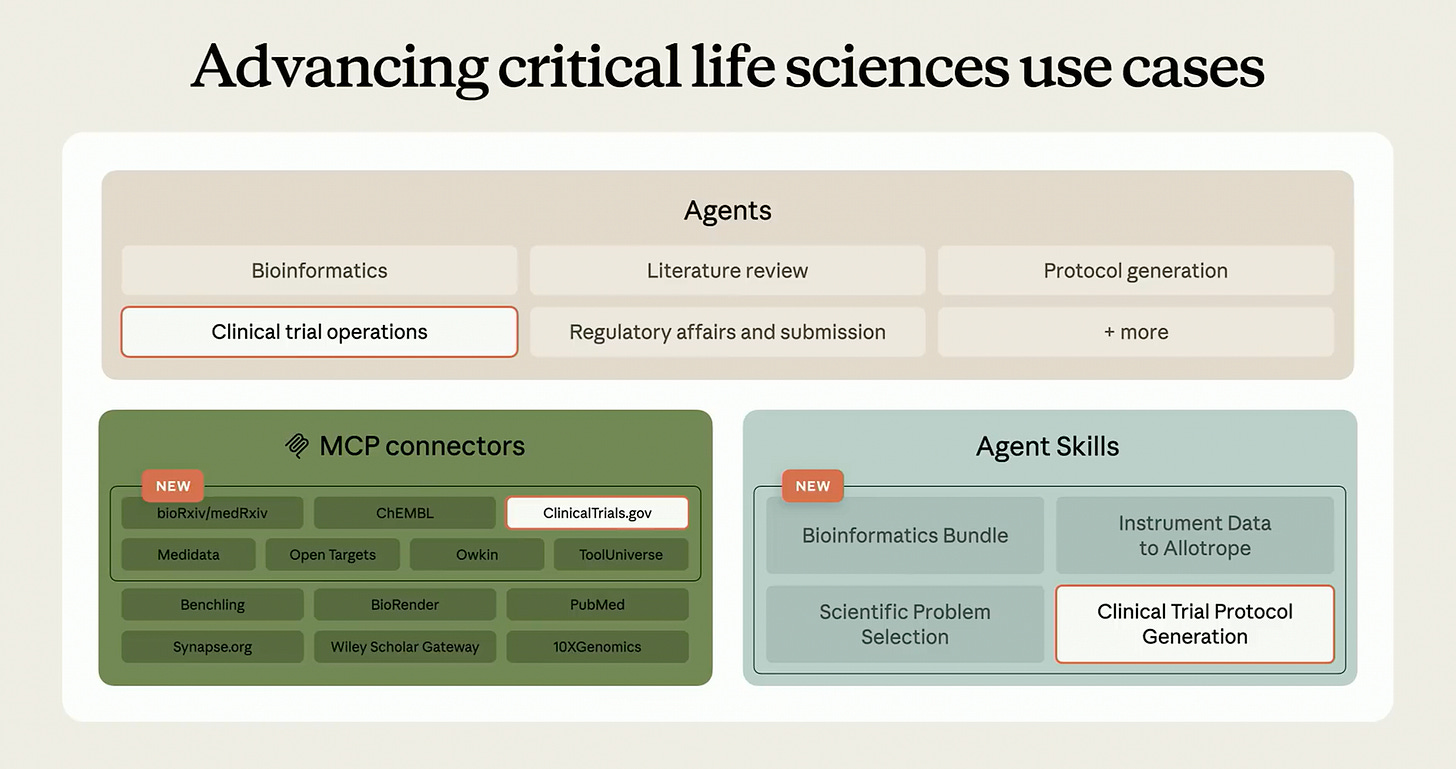
Major AI labs such as Anthropic and OpenAI are embedding compliance and governance into their platforms by integrating with regulatory data sources, developing secure data connectors, and building comprehensive evaluation frameworks like OpenAI’s Healthbench with 49,000 performance criteria. Anthropic’s Claude, for example, supports clinical trial protocol drafting in line with FDA guidelines and enables compliant workflows through secure SSO access to platforms like Medidata and Benchling, while OpenAI’s ChatGPT Health isolates health data, encrypts conversations, and excludes sensitive information from model training. These technical and procedural safeguards are designed to address regulatory ambiguity, streamline compliance, and ensure that AI systems meet the stringent privacy, auditability, and safety standards required for real-world healthcare deployment.
Despite these advances, regulatory ambiguity and liability concerns remain significant barriers to scaling AI beyond pilot phases, as highlighted by the slow progress of general-purpose foundation models in clinical settings. Legal and compliance teams frequently cite unresolved questions around patient safety, data privacy (especially regarding HIPAA applicability), and the need for domain-specific governance frameworks as reasons for caution. Consequently, successful AI adoption increasingly depends on partnerships with domain experts, proactive validation infrastructure, and embedding clinical expertise within product teams—strategies that not only anticipate future regulatory demands but also foster trust among clinicians and patients.
The push for clearer regulatory guidance is mirrored in legislative efforts such as New York State Senate Bill S7263, which targets AI chatbots impersonating licensed professionals and mandates disclosure and accountability, while the UK’s National Commission into the Regulation of AI in Healthcare seeks to address liability and 'shadow AI' use among general practitioners. These developments underscore a global recognition that effective governance must balance the risks of unregulated AI with its potential to improve access and outcomes, particularly for underserved populations. As regulatory frameworks mature, vendors who can demonstrate robust governance, auditability, and intentional bias mitigation—like those participating in the MCP server movement or forming cross-departmental governance groups—will be best positioned to earn the trust of health systems and regulators alike.




Clinician Roles, Redefined by AI
AI is transforming clinicians into tech-empowered collaborators—personalizing workflows, fostering professional pride, and fueling a culture of lifelong learning without threatening job security.
By early 2026, AI-powered tools like Abridge and Heidi Health have begun to fundamentally reshape clinical roles, not by replacing clinicians but by acting as highly personalized digital partners. These platforms learn from individual clinician edits and preferences, allowing documentation to reflect each professional's unique style—what one Abridge leader calls making notes feel like 'your business cards as a doctor in the hospital.' This deep personalization not only streamlines workflows and reduces time spent on administrative tasks, but also taps into clinicians' sense of professional pride and identity, driving enthusiastic adoption and continuous engagement.
The integration of AI in healthcare is catalyzing a shift in workforce skills and organizational culture, with upskilling and lifelong learning becoming essential for adaptation. Organizations like Norton Healthcare and partners such as Innovaccer and Coforge are investing in incubation programs, AI Centers of Excellence, and governance structures to foster innovation and ensure responsible, bias-free implementation. As one Norton leader observes, 'Healthcare is about lifelong learning,' emphasizing the need for clinicians to unlearn outdated practices and embrace new technologies, while also alleviating fears of job displacement by positioning AI as a tool that enhances, rather than replaces, human expertise.
AI's real-world impact is evident in both urban academic centers and rural hospitals, where platforms like Ambience and Microsoft Dragon Copilot are freeing clinicians from low-value administrative work and enabling them to focus on patient care and complex decision-making. Ambience, for example, reports daily usage by over 75% of clinicians in partner hospitals and projects millions in new margin for health systems, while Microsoft's Rural Health Resiliency Program offers discounted AI tools and comprehensive support to rural providers. These efforts underscore that successful AI adoption requires not just technology, but also readiness assessments, workflow optimization, and ongoing education to ensure safe, effective, and widespread workforce adaptation.
As AI becomes more deeply embedded in healthcare, the roles of both clinicians and technical professionals are evolving toward what some call 'workflow anthropology'—a blend of clinical expertise, rapid prototyping, and trust-building. Forward Deployed Engineers (FDEs) and clinician-innovators are now tasked with capturing the implicit decision logic that underpins real-world care, creating proprietary workflow knowledge that is difficult to replicate and forms a durable competitive advantage. This vertical specialization, as seen in companies like Ambience and Abridge, is proving more effective than broad horizontal solutions, as it enables deeper domain expertise and more meaningful organizational change.

Trust and Privacy in the Spotlight
Patient trust in AI hinges on transparent reasoning, robust privacy safeguards, and a delicate balance between personalized care and data security—forcing a new social contract in digital health.
Patient trust in healthcare AI has deepened as leading platforms like Open Evidence and Doctronic have prioritized transparency, regulatory compliance, and clear communication of limitations. By offering not just clinical recommendations but also transparent reasoning and direct citations to trusted medical literature, Open Evidence distinguishes itself from more opaque models like ChatGPT, fostering confidence among both patients and clinicians. Similarly, Doctronic’s careful adherence to state regulations—only practicing medicine in Utah and always urging users to consult licensed physicians—demonstrates a commitment to patient safety and trust, addressing liability concerns while empowering users to engage more frequently and confidently with AI-driven healthcare.
Privacy and data security have become central pillars in the evolution of AI healthcare tools, with companies like Embold Health, OpenAI, and Quest Diagnostics implementing robust safeguards such as HITRUST certification, encrypted isolated environments, and HIPAA-compliant integrations. While OpenAI’s ChatGPT Health and Anthropic’s Claude offer features like private modes and secure access to personal health records, the effectiveness of these protections often hinges on implementation details that remain opaque, leaving patients to weigh the trade-offs between personalization and privacy. This ongoing tension is further complicated by regulatory gaps—such as the lack of HIPAA coverage for some AI platforms—and has prompted both legislative action, like New York State’s Senate Bill S7263, and calls for a new social contract between patients, AI providers, and regulators to ensure trust and data security in an increasingly AI-driven healthcare landscape.
The real-world impact of AI in healthcare is increasingly evident in improved accessibility, reliability, and patient empowerment, particularly as AI tools become more integrated into clinical workflows and patient self-management. Platforms like Embold’s EVA and Virta Health’s real-time segmentation empower patients with personalized guidance and tailored interventions, while ChatGPT and Claude are used by tens of millions globally to access health information—often outside traditional clinic hours and in underserved areas. However, the benefits are not without risks: high-profile cases of both successful self-diagnosis and dangerous misadventures underscore the need for education, professional oversight, and careful integration to ensure that AI augments rather than undermines safe, equitable care.
Despite rapid adoption and growing patient engagement, trust in AI remains nuanced and context-dependent, shaped by factors such as communication style, integration with existing health systems, and the balance between automation and human oversight. Clinicians and patients alike express a desire for AI tools that are seamlessly embedded within platforms like Epic or MyChart, offering personalized, actionable insights without cumbersome data transfers or loss of privacy. Meanwhile, the presence of multiple competing models—from Open Evidence to DeepSeek—broadens the 'Overton window' of user trust, but also highlights persistent disparities in adoption rates and access between wealthier nations and underserved regions, where open-source and free AI tools are helping to bridge the gap.