Home batteries power past gas as AI drives grid revolution
The gist
Home batteries are overtaking gas peaker plants as the backbone of the U.S. power grid, fueled by surging AI data center demand and innovative virtual power plant models.
What to know
- Residential battery installations are forecasted to reach 70 GWh by early 2026—a $25B market led by states like California and Hawaii.
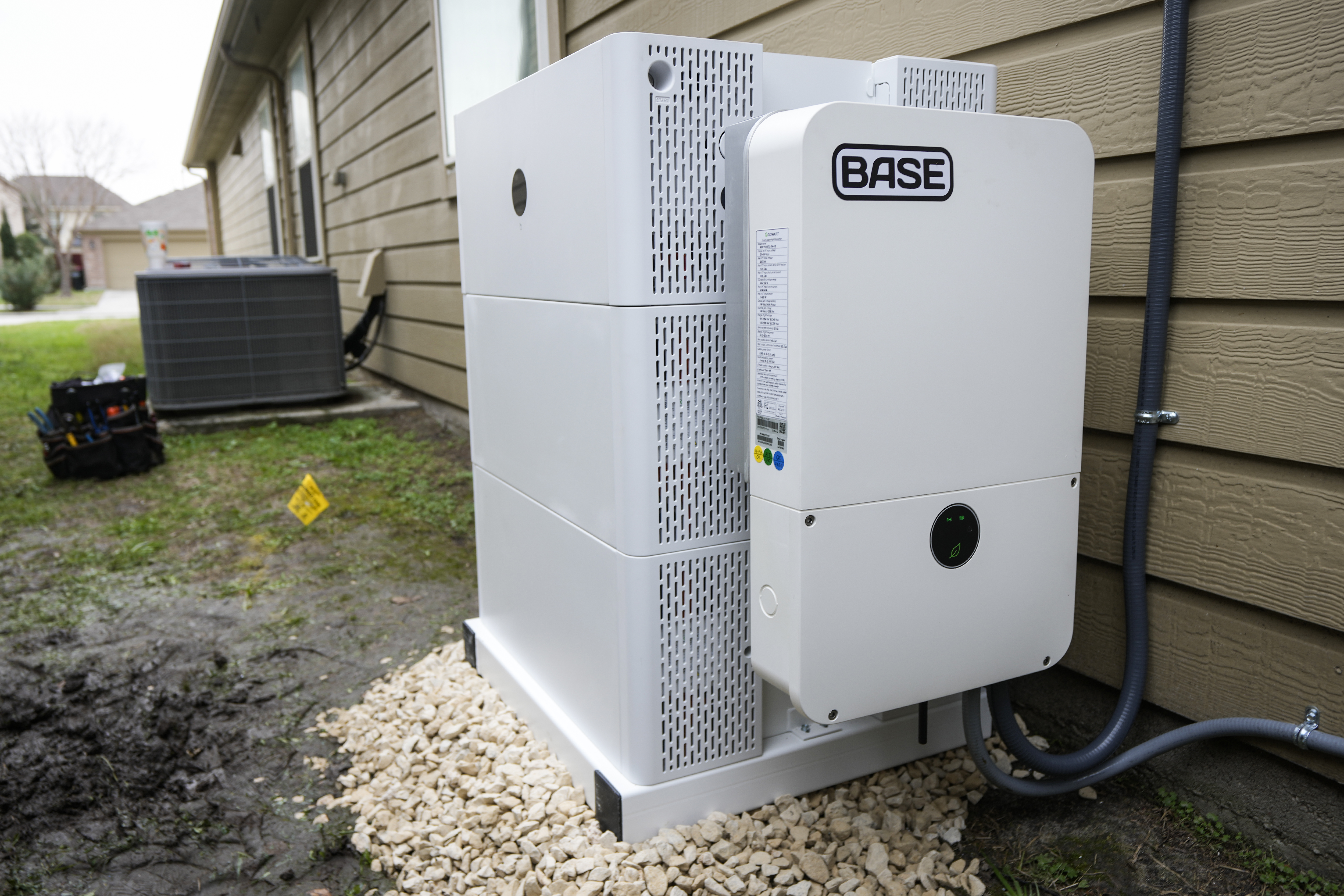
- Leasing giants like Base Power, Lunar Energy, and Sunrun are aggregating millions of home batteries into virtual power plants, outmuscling gas plants and enabling homeowners to profit from grid services.
- AI data centers, especially in Texas, are bypassing years-long grid queues by tapping into these home battery networks, with VPPs targeting 50 GW capacity by 2030.
Batteries Reinvent Grid Stability
State incentives and surging electricity costs have driven record home battery installations, transforming distributed storage into a frontline tool for grid resilience and local market stability.
By early 2026, the US residential battery market had surged dramatically, with installations forecasted to reach around 70 gigawatt hours—equating to a $25 billion investment—underscoring the sector's rapid expansion. This growth was not just a matter of scale; batteries played a critical role in stabilizing power markets, as evidenced by the roughly 19 gigawatts of capacity that have been pivotal in supporting the Texas grid over the preceding two years, highlighting the strategic value of behind-the-meter storage in enhancing grid resilience.
Technological advancements and innovative deployment strategies have transformed home batteries into vital tools for circumventing traditional grid constraints. Rather than costly distribution circuit upgrades, utilities and regulators are increasingly turning to battery storage solutions to manage local grid demands, as seen in debates over models like Minnesota’s spark fund. This shift not only enhances resilience but also introduces a new paradigm where distributed storage becomes a frontline asset in grid management.
The first quarter of 2026 marked a record high for US home battery installations, reaching 673 megawatts, propelled by rising electricity costs and robust state incentives. States like California and Hawaii have been particularly influential, with California offering enhanced pricing for solar exports after sunset and Hawaii providing a $400 per kilowatt one-time incentive, effectively accelerating adoption. These policies have empowered homeowners to store solar energy for nighttime use and peak demand periods, thereby maximizing economic and energy resilience benefits.
Beyond individual households, the burgeoning home battery capacity is fueling the rise of virtual power plants (VPPs), which aggregate distributed storage to dynamically balance supply and demand on the grid. In 2025 alone, the integration of home batteries into VPPs soared by 153 percent, with pilot projects demonstrating that networks of 100,000 batteries can outperform large gas peaker plants in power delivery. This evolution signals a transformative shift toward decentralized, flexible grid architectures powered by residential storage.


Leasing Models Fuel VPP Growth
Residential battery leasing has become the dominant business model, allowing providers to aggregate assets into virtual power plants and enabling homeowners to profit from grid services with no upfront cost.
The home battery market is rapidly evolving from traditional ownership models to innovative leasing frameworks, as exemplified by companies like Base Power and Lunar Energy. These firms sell or lease residential battery systems at minimal upfront cost and then aggregate them into virtual power plants (VPPs), leveraging software integration to enable scalable grid services. Lunar Energy, founded by Tesla veteran Kunal Girotra, emphasizes a seamless consumer experience that allows homeowners to monetize their assets while contributing to grid flexibility, reflecting a broader industry shift driven by experienced leaders applying lessons from Tesla's residential energy business.
Leasing models have become the dominant approach in residential solar and battery deployments, with Sunrun reporting that 99% of their sales are leases, enabling customers to pay less monthly than their previous utility bills while avoiding upfront costs. This ownership retention by providers facilitates the aggregation of distributed batteries into VPPs, which can be leveraged as valuable grid capacity assets. Such arrangements reduce customer incentives to buy out systems post-lease, as providers benefit from participating in grid services and virtual power plants, creating a symbiotic relationship between homeowners, utilities, and leasing companies.
The emergence of virtual power plants aggregating hundreds of thousands of home batteries is transforming grid management, particularly in meeting the surging demand from hyperscale AI data centers. Collaborative efforts by Sunrun, Tesla, and Renew Home have created the largest distributed power plant in the U.S., capable of delivering over 16 GW of power by coordinating batteries and millions of thermostats. This VPP model not only provides a faster and more cost-effective alternative to traditional power plants but also enables homeowners to opt-in for participation and receive cash payments, effectively monetizing their battery assets while supporting grid reliability during peak demand.
Regulatory and contractual frameworks are evolving to support the integration of distributed home batteries into virtual power plants, as seen in programs like Eversource Energy’s ConnectedSolutions and Vermont’s Green Mountain Power. These initiatives offer financial incentives and transparent, automated dispatch control to homeowners, allowing them to monetize their assets while utilities gain flexible grid resources that reduce reliance on carbon-intensive peaker plants. Meanwhile, in markets like the UK, VPPs are transitioning from pilot projects to mainstream adoption, with emerging models such as Hugo Energy’s Hugo Flex aiming to return 100% of generated value directly to households, signaling a maturing ecosystem focused on transparent and equitable homeowner participation.

Industry Titans Accelerate Deployment
Major funding rounds and strategic alliances among Lunar Energy, Base Power, and Sunrun are rapidly scaling home battery networks, blurring the lines between competitors and collaborators in the race to meet AI-driven power demand.
By early 2026, Lunar Energy, led by Tesla residential energy veteran Kunal Girotra, had secured $232 million in funding to scale its tightly integrated home battery and virtual power plant (VPP) ecosystem, aiming to tap into the vast U.S. market of 75 million homes with a consumer-friendly product that seamlessly connects solar panels, EV chargers, and grid resources. Meanwhile, Base Power demonstrated strong investor confidence with a $1 billion raise in late 2025 and forged strategic partnerships with Texas utilities like El Paso and Co-Serve to deploy 100MW of distributed batteries, offering homeowners near-zero-cost backup power while utilities gain flexible grid capacity to reduce peak loads and enhance reliability.
Sunrun has emerged as a dominant force in residential solar and battery leasing, boasting a 73% battery attachment rate among its 1.1 million customers and operating the largest U.S. residential battery fleet. Its Brightbox product, powered primarily by Tesla Powerwall and LG Chem batteries, enables 24-hour solar energy use and feeds into virtual power plants (VPPs) that aggregate distributed assets for grid services. Strategic collaborations with Tesla and Renew Home amplify this reach, with Renew Home piloting a 1 GW VPP in Texas alongside NRG Energy and Google Cloud, and the trio collectively targeting 16 GW of flexible residential capacity to meet surging AI data center power demands, especially in ERCOT’s rapidly growing market.
The evolving industry landscape reveals a complex interplay where Tesla Energy acts as both a competitor in hardware and a strategic partner in grid services with Sunrun, highlighting the collaborative yet competitive dynamics driving VPP scale-up. Sunrun’s solar-as-a-service model benefits from continued federal incentives like the Section 48E tax credit, giving it an edge over peers facing residential credit expirations, while the company’s shift toward direct sales and innovative pilots such as distributed compute initiatives signal a strategic pivot to deepen asset utilization and diversify revenue amid regulatory and market headwinds.
Recent multi-year partnerships, notably between Sunrun and Voltus, mark a milestone in channeling thousands of residential solar-plus-storage systems into wholesale capacity resources explicitly for AI hyperscale data centers, offering a faster, more flexible alternative to traditional grid upgrades. This collaboration, alongside ongoing discussions between VPP operators and hyperscalers, exemplifies a new financial and operational model where data centers co-fund residential battery deployments, accelerating grid capacity expansion while compensating homeowners, and leveraging regulatory frameworks like FERC Order 2222 to enable behind-the-meter assets to participate directly in wholesale markets under aggregator management.

Policy Unlocks Market Access
Federal and regional regulations like FERC Order 2222 are enabling aggregated home batteries to participate directly in wholesale markets, streamlining grid integration and making distributed energy a core utility resource.
The rapid implementation of FERC Order 2222 has been pivotal in unlocking the potential of behind-the-meter assets like home batteries to participate directly in wholesale energy markets, though its adoption varies across ISOs, with California ISO leading but not fully exploiting its capabilities. This regulatory evolution supports a layered market structure where local distribution system operators (DSOs) manage distribution-level impacts more efficiently, interfacing with wholesale markets to optimize grid operations and resource integration.
Virtual Power Plants (VPPs) have emerged as essential market enablers by aggregating distributed home batteries, thereby simplifying wholesale market participation and alleviating concerns about managing millions of individual household assets. This aggregation approach ensures that ISOs interact with a manageable number of aggregated capacities rather than countless individual homes, streamlining computational and operational demands while automating homeowner involvement.
Regional utility programs like Eversource Energy’s ConnectedSolutions in New England exemplify how policy frameworks and performance-based incentives drive rapid deployment and aggregation of distributed batteries for grid demand response. By offering residential customers up to $1,000 annually for utility-controlled battery discharge during peak periods, Eversource integrates these assets into a virtual power plant that reduces peak load, defers infrastructure upgrades, and lowers capacity and transmission costs, all while aligning utility incentives with clean energy goals to ensure program longevity beyond pilot phases.
Green Mountain Power’s virtual power plant in Vermont, now the state’s largest energy source with 110 MW capacity, showcases the transformative impact of regulatory support and innovative tariffed home battery lease programs. By enabling customers to lease Powerwall batteries affordably, GMP has cut $6 million from peak electricity costs during heat waves and retired carbon-intensive peaker plants, illustrating how policy and market incentives can accelerate the transition from fossil fuel reliance to a resilient, distributed battery-powered grid.
AI Data Centers Rely on VPPs
Facing years-long grid connection delays, hyperscale AI operators are turning to distributed home batteries and VPPs for immediate, scalable backup and peak load management, bypassing traditional infrastructure bottlenecks.
Facing grid interconnection queues that now average 5 to 8 years and total planned capacity exceeding existing U.S. installed capacity, AI data center operators are increasingly turning to behind-the-meter (BTM) battery storage as a nimble solution. By deploying private microgrids with BTM batteries, these operators can rapidly enhance grid reliability and shave peak loads, effectively creating 'virtual capacity' that smooths volatile AI power demands without waiting for slow utility upgrades. This approach acts as a critical safeguard for multi-billion dollar GPU assets, providing immediate backup during grid instability and circumventing the traditional bottlenecks that have become untenable in the AI arms race.
Utility partnerships with companies like Base Power and Sunrun have catalyzed the rapid deployment of distributed home batteries aggregated into virtual power plants (VPPs), offering scalable, cost-effective grid capacity enhancements amid rising AI data center loads. For example, Base Power’s 100 MW deal with Texas utilities El Paso and Co-Serve provides homeowners with near-cost-free batteries that utilities can dispatch to reduce peak demand, while Sunrun’s collaboration with Tesla and Renew Home has seen VPP enrollments surge over 400% year-over-year, reaching 106,000 customers and nearly 80 MW of instantaneous capacity. These initiatives exemplify how distributed batteries empower utilities to quickly and affordably stabilize grids facing transmission delays and surging demand.
Texas has emerged as a critical proving ground for distributed battery VPPs due to its flexible retail energy market and explosive data center growth, with projects like Renew Home’s pilot aiming for roughly 1 GW of capacity and ambitious targets of 50 GW residential VPP capacity by 2030. This regional momentum reflects a broader national trend where utilities leverage VPPs to manage extreme weather events and record energy demands, enabling thousands of homeowners to collectively shave thousands of megawatts off peak loads. Such distributed energy resource adoption not only enhances grid reliability but also offers a scalable alternative to costly infrastructure upgrades, fostering a cultural shift toward customer participation in load flexibility.
Amid transmission buildout delays that can stretch up to 15 years and grid interconnection queues ballooning to over 2,200 GW by mid-2026, data center developers are increasingly embracing on-site solar, storage, and VPPs to bridge the gap and meet soaring electricity demand. Approximately 56 GW of behind-the-meter capacity was planned as of early 2026, representing 30% of all U.S. data center builds, while regional grid operators like SPP have introduced fast-track interconnection policies such as the HILLGA framework to incentivize data centers that bring their own generation. Strategic partnerships—like Sunrun and Voltus’s multi-year agreement to aggregate thousands of residential solar-plus-storage systems for AI hyperscaler support—highlight how distributed batteries are becoming a frontline solution to transmission bottlenecks, extreme weather challenges, and the relentless growth of AI data center loads.

Emerging Challenges and Next Steps
The rapid rise of home batteries and VPPs brings new technical, regulatory, and market hurdles, from cyber risk and interconnection limits to evolving compensation models for homeowners and utilities.
The rapid rise of home batteries and VPPs brings new technical, regulatory, and market hurdles, from cyber risk and interconnection limits to evolving compensation models for homeowners and utilities.