Homeschool hackers: parents mix AI, montessori, and e ink to reinvent family life
The gist
A new wave of tech-savvy parents like Jesse Jana are fusing AI, Montessori, and minimalist gadgets to reinvent homeschooling—and rethink what hands-on parenting means in the age of automation.
What to know
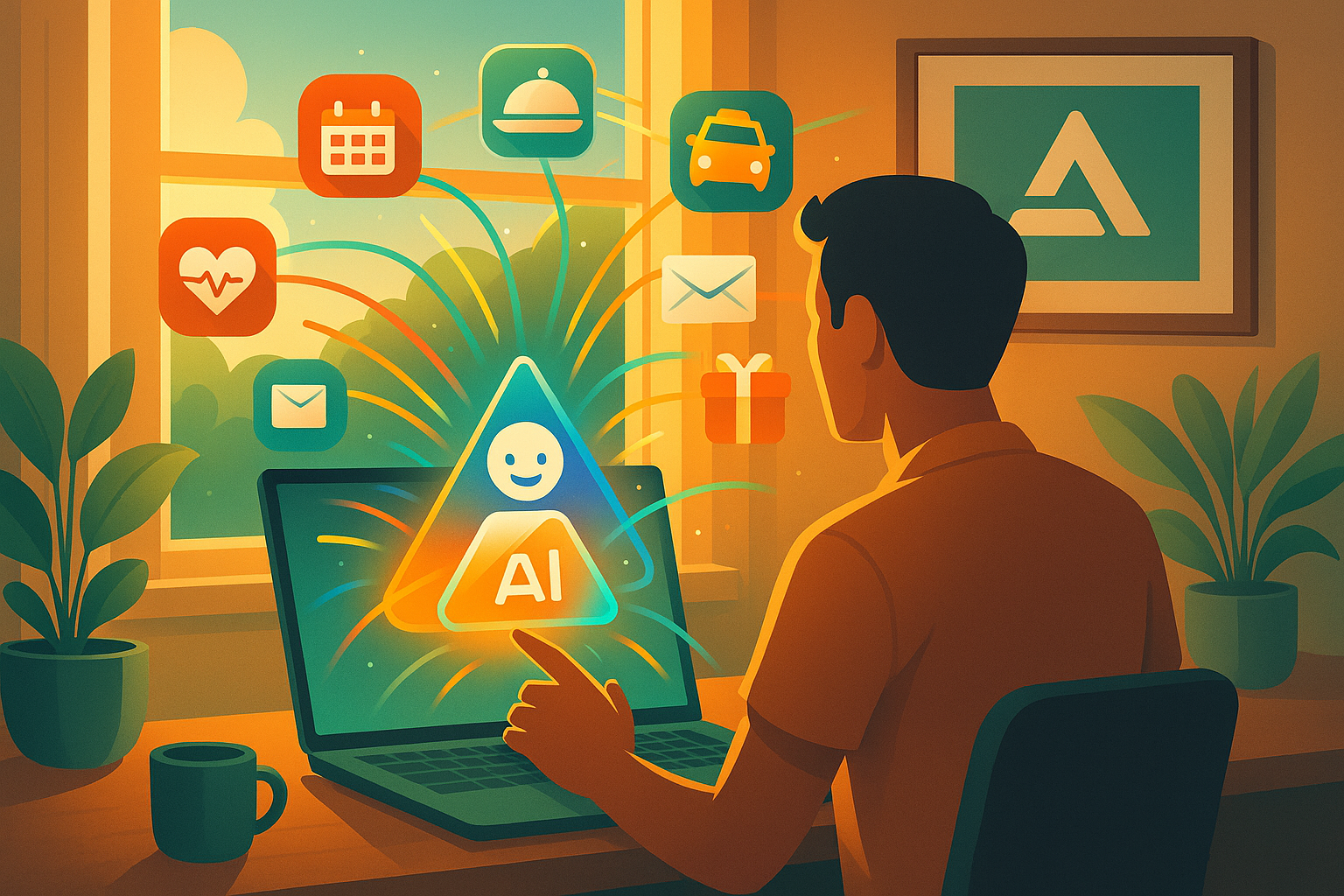
- Jesse Jana built an ecosystem of 11 custom AI agents that handle everything from lesson planning to grocery orders, freeing up intentional parenting time.
- Parents are demanding transparent, customizable AI systems—layering in their own values and pedagogy—while grappling with tech hurdles like unreliable voice recognition for young kids.
- AI-powered childcare is set to automate routine tasks and lighten the load for work-from-home parents, with innovations like E Ink devices and grassroots parent-led AI development leading the charge.
Custom AI, Montessori Style
Jesse Jana’s homegrown network of AI agents blends Montessori values with quirky, personalized automation, letting her scale intentional parenting while minimizing daily drudgery.
Jesse Jana has engineered a sophisticated ecosystem of 11 AI agents, each meticulously assigned roles ranging from lesson planning to grocery ordering and progress logging, which collectively streamline homeschooling and household management. This architecture not only automates routine tasks but also empowers Jesse to intentionally carve out uninterrupted parenting time, reflecting her educational philosophy that values boredom as a developmental skill. By enabling autonomous creation of new agents, her system scales dynamically, reducing friction and allowing her to focus on meaningful family interactions rather than administrative chores.
Leveraging her background as a former YC founder and a recent intensive exploration of natural language AI, Jesse customizes her agents by feeding them comprehensive homeschool curricula and a foundational document articulating her Montessori-inspired pedagogy. This deep personalization extends to embedding personality and quirkiness into the agents by training them on books she finds fascinating, which imbues the AI with a distinctive identity and enhances its ability to generate tailored lesson plans complete with photos of the family's physical educational materials. Such customization ensures the AI aligns closely with her educational values while maintaining practical usability.
Jesse’s AI agents serve as versatile household aides beyond education, autonomously managing complex logistics like ordering supplies for children’s activities without requiring her to sift through emails or details manually. This delegation of administrative burdens exemplifies her goal of crafting a 'literally perfect day' where time spent on unwanted chores is minimized, thereby freeing her to engage more fully in parenting and creative work. The sophistication of these agents is influenced by the choice of underlying language models, which affects their ability to handle nuanced tasks such as gift selection or curriculum adaptation, highlighting the importance of technical customization in achieving seamless integration.
Through the integration of agent architecture and mobile-friendly logging systems that convert voice notes and photos into empathetic progress reports, Jesse exemplifies how AI can be tailored to complement specific parenting styles—what she terms 'benevolent neglect'—and educational philosophies. This approach not only enhances productivity but also enriches family dynamics by balancing automation with intentional human parenting, illustrating a nuanced model for how AI agents can support work-from-home parenthood and childcare automation without supplanting the parental role.


Tech Hurdles and Parental Control
Parents confront unreliable voice tech for kids and sidestep closed-source AI, insisting on transparent, value-driven systems that keep them in the driver’s seat.
A significant technical hurdle in integrating AI agents into child education lies in the current limitations of voice recognition technology, which struggles to accurately detect and interpret children's voices. As noted in analyses from April 2026, while large language models (LLMs) can handle adult voices with various accents, they often fail to pick up five-year-olds' speech effectively, prompting parents like Jesse Jana to experiment with multiple devices in search of better interfaces that can bridge this gap.
Beyond technical constraints, parents are increasingly demanding transparency and customization in AI training to ensure alignment with their unique educational philosophies and family values. This includes avoiding closed-source AI systems with prescriptive biases and instead layering curated personalities and ideologies onto AI agents, as Jesse Jana exemplifies by programming agents directly with specific educational identities to maintain control over the content children receive.
To foster healthy interactions and appropriate expectations, parents maintain clear transparency with their children about the nature of AI agents, explicitly communicating that these are not human beings. This approach, coupled with active parental presence during AI use, helps mitigate risks of miscommunication or unintended influences, ensuring that AI remains a supportive tool rather than a substitute for human parenting.
Human Touch Over AI Reliance
Families set strict boundaries on AI and screens, positioning technology as a supervised learning aid while safeguarding creativity and critical thinking through active parental presence.
Parents like Jesse Jana actively customize AI agents to reflect their own educational philosophies, such as Montessori, to ensure that AI interactions align with family values and avoid prescriptive or opaque ideologies embedded in closed-source systems. However, technical limitations, especially in voice recognition for children’s distinct speech patterns, require ongoing parental mediation and interface refinement to maintain effective and meaningful AI engagement.
A prevailing parental concern centers on balancing AI use with a strong human presence to prevent over-reliance on technology that could stifle creativity and critical development. As one parent cautions, the real danger lies not in adding AI conversations but in assuming AI can replace human guidance, underscoring the necessity of supervised AI interaction where children understand they are engaging with a tool rather than a human.
Parents adopt a nuanced stance toward technology, selectively permitting certain media like linear television while restricting unsupervised AI-driven or interactive screen time to protect developmental priorities. This careful approach reflects a broader educational imperative to introduce AI intentionally—as a scaffold to mastery rather than mere production—ensuring children develop critical thinking skills and understand AI’s limitations rather than blindly trusting its outputs.


E Ink, Robots, and Grassroots AI
Work-from-home parents are fueling a movement of DIY AI tools—like E Ink-powered assistants and collaborative educational platforms—that promise to reshape childcare and family routines without sacrificing control or affordability.
By early 2026, the integration of AI into childcare is poised to transform family dynamics and work-from-home parenthood profoundly. Humanoid robots and AI tutors are expected within a decade to automate routine and labor-intensive childcare tasks—ranging from cooking and laundry to personalized educational support—thereby reducing parental stress and making childcare more affordable and manageable. As one analyst notes, parents will be empowered to selectively outsource activities like school pickups and meal preparation, freeing time and mental bandwidth for more meaningful family engagement.
The rise of AI-powered family assistants promises to streamline complex household logistics such as managing food supplies, health records, vaccinations, and social calendars, significantly lowering the cognitive load and cost associated with raising children. This evolution aligns with research showing that work-from-home policies have already increased birth rates by enabling parents to balance career and family life more effectively. Thus, AI and automation tools not only support remote work but also potentially influence demographic trends by creating a more parent-friendly environment.
Parents like Jesse Jana are pioneering the use of alternative device form factors, such as E Ink screens, to introduce AI tools into homeschooling and family routines while mitigating concerns about screen addiction and usability. E Ink’s less addictive, more manageable interface offers a promising platform for child-friendly AI hardware, addressing parental hesitations around handing kids traditional tablets or laptops. Moreover, the democratization of AI development—where work-from-home parents can collaboratively build and share educational tools remotely—signals a grassroots innovation movement that could reshape how families integrate technology into daily life.