Hong kong’s bank-led stablecoin push splinters the market
The gist
Hong Kong’s ambitious stablecoin regime has sparked a bank-led boom—but only a handful of players have survived, and the market is splitting fast.
What to know
- Just 2 of 36 applicants—bank-backed Anchorpoint and HSBC—remain active nearly a year after Hong Kong’s ‘most comprehensive’ stablecoin licensing regime began.
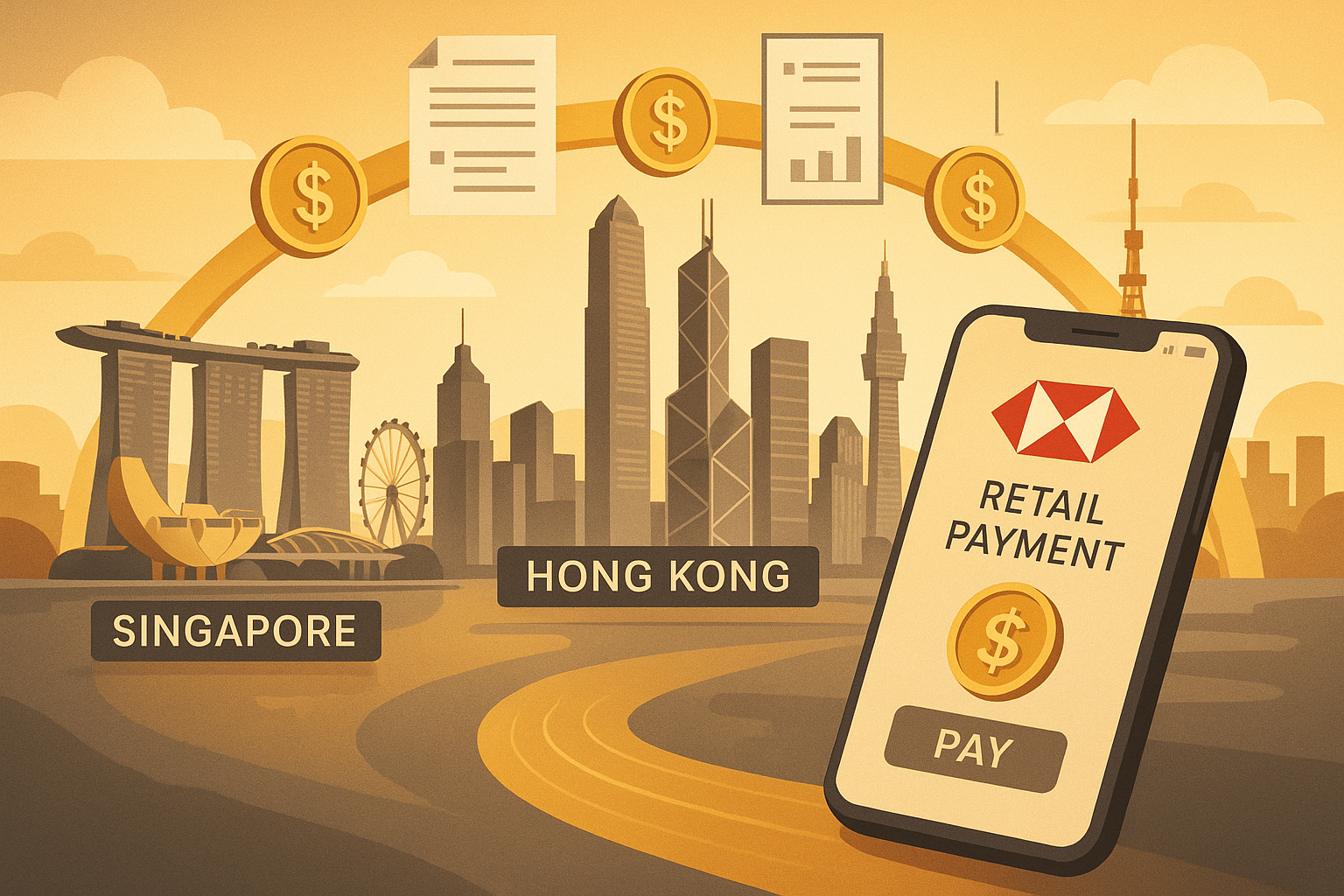
- Anchorpoint targets institutions with an Ethereum-based stablecoin via Standard Chartered, while HSBC plays it safe with a retail stablecoin inside its PayMe app.
- Asia’s proactive regulators are pushing banks to adopt stablecoins, but fragmented payment rails and tough compliance hurdles mean integration is slow and complex.
Legal Gaps Stall Progress
Hong Kong’s lack of stablecoin legal recognition and a framework for US dollar-backed tokens is stalling seamless on-chain cash movement and sidelining innovative non-bank players despite a world-leading regulatory regime.
Hong Kong currently faces a significant legal recognition gap for US dollar-backed stablecoins, lacking an equivalence framework that would allow even the most rigorously regulated stablecoins to fully operate within its jurisdiction. While the city has made strides in tokenising bonds to accelerate settlement processes, the absence of a stablecoin recognition framework hampers the seamless on-chain movement of cash, a critical component for the future of financial markets and efficient settlement.
The licensing regime for fiat-backed stablecoins in Hong Kong, established through a dedicated ordinance enacted in 2025, is among the most comprehensive globally, detailing reserve backing, redemption rights, capital requirements, and disclosure obligations. However, this framework appears to favor traditional financial institutions like HSBC and Standard Chartered, whose differing strategic postures—HSBC's passive promotion of tokenised deposits versus Standard Chartered's proactive stablecoin initiatives—have led to a fragmented market with only these two players remaining active nearly a year after the initial 36 applications.
Despite Hong Kong’s advanced licensing framework aligning it with other proactive Asian markets such as Singapore and Japan, challenges persist in cross-border interoperability and integration with existing payment infrastructures. Notably, highly motivated and innovative players like Ant Group and JD Technology have been marginalized by regulatory requirements, underscoring a tension between regulatory rigor and market dynamism in the region’s fragmented financial ecosystem.
Hong Kong’s regulatory approach reflects a broader regional trend in Asia, where countries including Singapore, Japan, and South Korea are rapidly formalizing stablecoin legislation and actively instructing banks to prepare for stablecoin adoption ahead of full legal implementation. This proactive stance contrasts with more cautious approaches elsewhere, positioning Hong Kong as a key player in the evolving Asian stablecoin landscape, even as it navigates the complexities of integrating these digital assets into a diverse and fragmented financial infrastructure.
Banks’ Diverging Stablecoin Paths
Stringent rules have forced HSBC and Anchorpoint into opposing models—one cautious and retail, the other aggressive and institutional—highlighting how regulation shapes not just who survives but how they operate.
Hong Kong's regulatory framework has catalyzed a clear bifurcation in stablecoin models, with Anchorpoint Financial and HSBC embodying two distinct operational philosophies shaped by licensing and compliance demands. Anchorpoint’s HKDAP, launched on the Ethereum mainnet and fully backed by high-quality liquid assets, targets institutional users through a business-to-business-to-consumer distribution model facilitated by authorized distributors like Standard Chartered, which also acts as majority shareholder and integrates the stablecoin into treasury and settlement operations. In contrast, HSBC pursues a more cautious, retail-focused approach by embedding its stablecoin within its PayMe app, prioritizing digitizing peer-to-peer payments and merchant settlements within a closed ecosystem, reflecting its legacy as a note-issuing bank and a reluctance to disrupt its core deposit-loan business.
The divergent strategies of these institutions underscore how Hong Kong’s stringent regulatory requirements—such as 100% backing in high-quality liquid assets, prohibition on paying interest, and rigorous governance standards—shape stablecoin issuance and distribution. While Standard Chartered and Anchorpoint adopt a proactive, innovation-driven stance aligned with a global stablecoin strategy and partnerships like Circle’s USDC access, HSBC remains relatively passive, engaging only under regulatory pressure. This regulatory environment, which granted licenses to just two issuers out of 36 applicants, prioritizes stability and institutional pedigree, fostering a market where distribution efficiency and integration with existing financial infrastructure are critical to success.
Asia’s Stablecoin Power Play
Asian regulators are pushing banks into stablecoin adoption by mandate, creating a unique, top-down market dynamic that’s attracting global stablecoin giants and fueling a shift toward local currency tokens.
Asia, led by Hong Kong, is transitioning from pilot stages to full-scale implementation of compliant stablecoin ecosystems, exemplified by Standard Chartered-backed Anchorpoint's launch of the HKDAP stablecoin with OSL as a key distributor. This momentum is bolstered by significant investment activity, such as Dow Protocol's $10.5 million seed round and Rain's acquisition of Ansa, signaling growing institutional confidence and infrastructure maturation in the region.
Regulators across Asia are uniquely proactive, directly instructing banks to prepare for stablecoin integration—a directive absent in the US—catalyzing a wave of bank-led stablecoin projects driven more by regulatory pressure than organic demand. This top-down approach contrasts sharply with the EU’s cautious MiCA revisions and the UK’s phased digital pound experiments, positioning Asia as a dynamic testing ground for stablecoin adoption.
Asia’s fragmented financial infrastructure presents a vast 'blue ocean' opportunity that major stablecoin issuers like Tether and Circle are aggressively targeting to scale their presence. While US dollar stablecoins currently dominate, there is a growing push toward local currency stablecoins to ease foreign exchange friction and encourage local currency use, as evidenced by the $1.2 billion non-dollar stablecoin market emerging in the region.
Despite the enthusiasm and investment surge, stablecoin integration in Asia does not guarantee immediate cost savings due to expensive on-ramps and foreign exchange premiums. As industry voices like Cho caution, the assumption that stablecoin rails will automatically reduce costs is a misconception, underscoring the nuanced challenges that accompany rapid market adoption.
Payments Integration Faces Hurdles
Stablecoins are being woven into Asia’s legacy payment systems, but operational complexity and regulatory trade-offs mean they will enhance—not replace—existing rails, raising new questions about financial sovereignty.
Integrating stablecoins into Asia's fragmented and traditionally siloed payments infrastructure presents significant operational and compliance challenges, as every transaction must still undergo identity verification, sanctions screening, AML checks, currency conversion, and settlement processes despite blockchain settlement. Firms like Stripe, which acquired Bridge in 2024 to enable stablecoin payments across 100+ countries without requiring merchants to interact directly with blockchain technology, exemplify how success hinges on embedding stablecoin settlement within existing payment rails and compliance frameworks rather than launching standalone products.
Asia’s national retail payment systems, initially designed without interoperability, are now being linked through government initiatives that pilot faster cross-border settlement mechanisms, with stablecoins expected to be integrated into these projects rather than replacing existing rails. This approach reflects a pragmatic recognition that stablecoins will complement rather than supplant traditional payment infrastructures, facilitating incremental innovation within a complex regulatory and operational environment.
While dollar-linked stablecoins promise faster and cheaper cross-border payments, especially in regions with limited banking access or costly remittances, their decentralized and cross-border nature complicates regulatory oversight, liquidity management, and dollar demand monitoring. This creates a trade-off between payment openness, financial stability, and regulatory autonomy, as broader stablecoin adoption risks ceding control to foreign jurisdictions and embedding dollar dependence deeper into private payment networks outside domestic banking supervision.
Innovative infrastructure providers like Sabre, which has processed over $3 billion in transactions across 40 countries, and products like Circle’s upcoming StableFX platform illustrate how the industry is evolving toward 24/7 forex settlement and multi-currency stablecoin liquidity. However, liquidity risks, redemption friction, and the need for robust compliance frameworks remain significant hurdles, as market makers must manage local stablecoin inventories and hedge fiat exposures to enable continuous quoting and potentially shift forex order flows away from traditional banking desks.
