Hospital CEO turnover surges as regional models rise
The gist
Hospital CEO turnover is soaring in 2026 as for-profit systems accelerate leadership shakeups and shift toward regional, efficiency-driven models.
What to know
- By mid-2026, for-profit hospital systems have already seen 219 CEO appointments—91% of last year’s total—in just seven months.
- A record 31% of new CEOs are being promoted internally from COO roles, signaling a push for operational continuity and insider expertise.
- Health systems like Memorial and Sharp are consolidating CEO roles across multiple hospitals, streamlining leadership as first-quarter CEO exits jump 32% year over year.
Leadership Overhaul Sweeps Hospitals
A sweeping wave of executive reshuffling is redefining hospital leadership, as top for-profit systems overhaul C-suites beyond just CEO roles to drive sector-wide transformation.
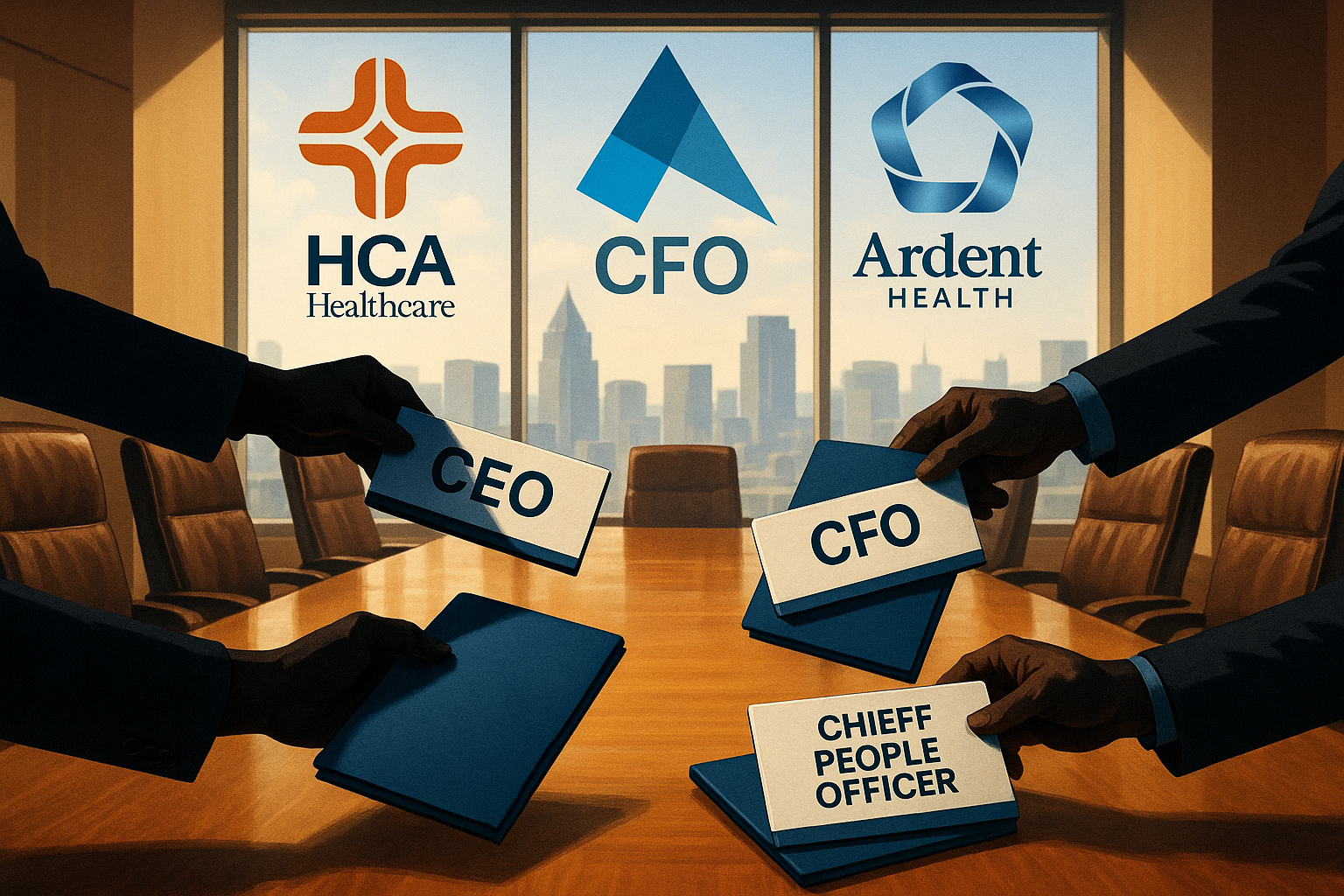
By mid-2026, for-profit hospital operators have undergone an unprecedented wave of executive leadership changes, with at least 176 moves announced or completed across the sector. This surge in turnover spans a wide array of roles, from CEO appointments and retirements to strategic hires such as chief people officers and CFOs, reflecting a broad restructuring effort. Key players like Ardent Health, Community Health Systems, and HCA Healthcare exemplify this trend, with notable appointments including Dave Caspers as CEO of Ardent Health and Blake Hubbard taking the helm at Carlsbad Medical Center, signaling a dynamic reshaping of leadership at multiple organizational levels.
COO Pipeline Powers CEO Ranks
Hospital boards are fast-tracking COOs into CEO seats at record rates, betting on operational insiders to steer organizations through relentless executive churn and market volatility.
By early 2026, CEO turnover in for-profit hospital systems has surged dramatically, with 219 new appointments recorded in just over seven months—already reaching 91% of the total for all of 2025. This rapid churn underscores a dynamic leadership landscape where strategic repositioning remains a key driver, as evidenced by lateral CEO-to-CEO moves comprising about a quarter of all changes, mirroring the previous year's pattern. Such frequent transitions suggest hospital systems are actively recalibrating their executive ranks to adapt to evolving operational and market demands.
Internal promotions from COO to CEO have become a prominent trend in 2026, reflecting a strategic preference for operational continuity amid widespread leadership shifts. COOs now represent roughly 31% of new CEO appointments, a significant increase from about 20% in 2025, signaling that hospital systems are increasingly valuing deep operational expertise when selecting their top executives. This shift not only highlights the growing importance of operational leadership in navigating complex healthcare environments but also suggests a pipeline strengthening from within, as organizations seek to balance fresh perspectives with institutional knowledge.
Regional CEOs Take the Helm
Hospitals are consolidating power under regional CEOs, streamlining decision-making and customizing care across entire markets instead of individual facilities.
In 2026, health systems are strategically consolidating CEO roles across multiple hospitals to foster greater operational efficiency and standardization, moving away from the traditional model of individual hospital CEOs. This shift is exemplified by Memorial Healthcare System’s decision to fold the Joe DiMaggio Children’s Hospital CEO role into the broader Memorial Regional Hospital CEO position held by Paul Gaden, as well as Sharp HealthCare’s reduction from five hospital-specific CEOs to two market CEOs, reflecting a clear industry trend toward regional leadership models.
The acceleration of CEO turnover in early 2026 has provided health systems with a unique opportunity to expand the scope of existing CEOs rather than simply replacing departing leaders, with hospital CEO appointments reaching 91% of the previous year’s total within just seven months and first-quarter exits rising 32% year over year. This dynamic has enabled organizations to consolidate leadership roles more aggressively, streamlining C-suite structures while maintaining continuity and strategic oversight across multiple facilities.
Consolidated regional leadership not only drives efficiency but also enhances the ability of CEOs to tailor operations to the specific needs of diverse patient populations across their hospital networks. Scott Evans, PharmD, senior VP and market CEO at Sharp HealthCare, highlights that this model empowers leaders to customize care delivery more effectively while benefiting from the operational synergies of overseeing multiple hospitals under a unified management structure.
Succession Planning Makes or Breaks Stability
Thoughtful, planned leadership transitions preserve culture and direction, while abrupt changes leave organizations and stakeholders adrift in uncertainty.
The contrast between Meditech's carefully orchestrated internal promotions and Cerner's abrupt leadership change following Neil Patterson's passing underscores the critical importance of planned succession in maintaining organizational stability. Meditech's approach, which included early succession planning and retaining former leader Howard Messine on the board, ensured cultural continuity and steady strategic guidance, whereas Cerner's sudden shift left the company feeling 'rudderless' and uncertain about its future direction. This case study highlights how thoughtful transitions can safeguard a company's culture and strategic coherence during potentially disruptive leadership changes.
Leadership transitions without clear succession plans often trigger anxiety among customers, partners, and longtime allies, who fear abrupt shifts in company strategy and culture. The observation that 'when there is a change in leadership, there often is a change in strategy' captures the inherent uncertainty such changes bring, emphasizing the need for transparent and deliberate succession processes to reassure stakeholders and maintain confidence during periods of executive turnover.