Huawei’s ultra-fast EV charging push faces EU roadblocks
The gist
Huawei’s ultra-fast FusionCharge platform promises to electrify fleets at record speeds, but faces a wall of EU regulatory pushback and fierce competition from next-gen Chinese battery tech.
What to know
- FusionCharge delivers 125 miles of range in five minutes using modular, liquid-cooled hardware and operates with as little as 50 kW grid input, slashing deployment timelines to just one week.
- The EU Investment Bank’s 2026 funding freeze on Chinese solar inverters threatens Huawei’s expansion, forcing the company to navigate tough European compliance hurdles.
- Chinese automakers like FAW’s Hongqi are showcasing prototype batteries that hit 12C charging rates—10% to 70% in under four minutes—but these game-changing cells aren’t commercially available yet.
Integrated Energy, Rapid Rollout
Huawei’s modular FusionCharge system combines solar, storage, and advanced digital controls to slash grid reliance and enable flexible, week-long deployment of high-power charging hubs for fleets.
Huawei's FusionCharge platform pioneers an integrated DC-coupled system that unites photovoltaic generation, battery energy storage, and EV charging to drastically reduce energy conversion losses and grid dependency. This architecture supports modular scaling from 720 kW units tailored for passenger and heavy goods vehicles to megawatt-class systems exceeding 1,500 kW for large logistics hubs, enabling flexible fleet electrification solutions that can operate with minimal grid connection—just 50 kW for clusters of up to 12 chargers—thereby accelerating deployment timelines.
Achieving a round-trip efficiency of 92.1%, FusionCharge leverages dynamic power management to optimize charging schedules, ensuring vehicles with tight turnaround times receive maximum power while overnight charging trucks draw less from both grid and battery resources. This intelligent orchestration exemplifies how digital energy management acts as the critical 'glue' connecting on-site generation, storage, and electrical distribution, enabling predictive maintenance, peak shaving, and operational visibility essential for reliable fleet electrification.
By integrating on-site solar generation, energy storage, and advanced digital load management, Huawei’s FusionCharge platform addresses Europe's grid capacity constraints head-on, enabling new charging station deployments in as little as one week—a stark contrast to the months-long timelines typical of conventional grid upgrades. This shift toward integrated energy systems not only reduces infrastructure footprints but also facilitates scalable, cost-effective fleet electrification without the need for extensive and expensive grid enhancements.
Hardware Limits, Battery Race
Ultra-fast 125-mile, five-minute charging hinges on next-gen battery chemistries that remain prototypes, while Huawei’s liquid-cooled, high-current hardware sets the stage for future commercial breakthroughs.
Huawei’s FusionCharge platform exemplifies a leap in ultra-fast EV charging by delivering 125 miles of range in just five minutes, leveraging a modular, liquid-cooled design that supports currents up to 500 A per connector and up to 800 A in some configurations. This system’s DC-coupled battery architecture eliminates a conversion stage, boosting round-trip efficiency to approximately 92.1% and allowing peak power bursts while maintaining a minimal 50 kW grid connection, which drastically reduces infrastructure demands and permit timelines. The enclosed liquid-cooling system not only ensures thermal stability and noise levels below 55 dB but also extends hardware lifespan toward a decade, making it particularly attractive for fleet operators focused on durability and cost efficiency.
The headline ultra-fast charging capability of 125 miles in five minutes hinges on vehicle batteries capable of exceptionally high charge rates, such as FAW’s Hongqi prototype developed with Lishen Battery, which achieves a blistering 12C peak charging rate—far surpassing typical 4C to 5.5C rates seen in competitors like Zeekr and Li Auto. Hongqi’s battery combines advanced chemistry with an adaptive liquid-cooling thermal management system that keeps temperature variance under 3°C during full-throttle charging, enabling a 10% to 70% charge in just 3 minutes and 41 seconds. However, despite these promising technical breakthroughs, such batteries remain in prototype stages without commercial production schedules, highlighting that this ultra-fast charging performance is an emerging target rather than a current market reality.
Huawei is pushing the boundaries of ultra-fast charging beyond passenger vehicles by field-testing a 1,500 kW megawatt-class charger aimed at logistics hubs and heavy trucks, signaling a strategic focus on fleet electrification and scalability in commercial vehicle markets. This next-generation charger variant builds on the FusionCharge platform’s modular and liquid-cooled architecture, promising to meet the demanding power requirements of heavy-duty fleets while maintaining efficiency and operational longevity. Such developments underscore Huawei’s commitment to integrated EV infrastructure that supports diverse vehicle types and evolving grid constraints.

EU Red Tape and Grid Strain
European regulatory crackdowns on Chinese tech and persistent grid bottlenecks force Huawei to pivot toward modular, intelligent energy ecosystems that bypass traditional infrastructure hurdles.
Huawei's FusionCharge platform confronts significant regulatory hurdles in Europe, notably due to the EU Investment Bank's 2026 freeze on funding projects using Chinese solar inverters, which are integral to its integrated PV+ESS+EV design. This regulatory stance stems from concerns over potential destabilization of European energy infrastructure and blackout risks, compelling Huawei to navigate a complex compliance landscape while advancing its innovative charging solutions.
Grid capacity constraints remain a critical bottleneck for ultra-fast and megawatt charging deployments across Europe and the UK, where operators face long lead times and competition for limited power resources. Huawei’s DC-coupled battery energy storage system (BESS) mitigates these challenges by enabling clusters of up to 12 connectors to operate with minimal grid connections—sometimes as low as 50 kW—accelerating deployment timelines from months to just one week and reducing peak grid load through dynamic power allocation.
The evolution of EV infrastructure is shifting from focusing solely on peak charger output to embracing intelligent, modular energy ecosystems that integrate dynamic load balancing, energy storage, and renewable generation. Huawei’s platform exemplifies this trend by incorporating flexible DC bus architectures and modular DC/DC converters, allowing scalable configurations tailored to site-specific grid capacities, while also supporting on-site PV integration to optimize energy flows and reduce infrastructure footprint.
Scaling ultra-fast 'flash' charging sustainably demands a system-level transformation involving collaboration among charge point operators, utilities, vehicle manufacturers, and technology providers to create interoperable and secure ecosystems. Given the high-intensity, short-duration power bursts characteristic of flash charging, intelligent, digitally enabled load management and real-time optimization of existing grid capacity are essential to balance demand, reduce grid stress, and enable rapid scaling without prohibitive infrastructure upgrades.
China’s Megawatt Charging Surge
Chinese automakers and energy giants are leapfrogging legacy infrastructure by converting fuel stations into megawatt EV hubs, deploying buffered flash chargers and next-gen batteries that outpace global rivals.
Chinese automakers are pushing the boundaries of ultra-fast EV charging with innovations like Hongqi’s prototype battery that charges from 10% to 70% in just 3 minutes and 41 seconds, surpassing BYD’s Blade Battery benchmark. This leap is enabled by advanced battery chemistry—including a custom low-desolvation electrolyte and composite carbon-coated anode reducing internal resistance by 15%—and an adaptive liquid-cooling system that dynamically manages thermal conditions to maintain battery health during rapid charging.
The megawatt charging arena for heavy-duty vehicles is rapidly evolving beyond the Megawatt Charging System (MCS) standard, which currently supports up to 3.75 MW with cross-manufacturer interoperability. Emerging technologies from startups like akroVA, demonstrating manual plugs rated for 6 MW, and Fraunhofer IVI’s automated underbody chargers delivering up to 4.5 MW, highlight a competitive landscape focused on exceeding power thresholds and integrating automation to meet diverse operational needs across public hubs, depots, and autonomous logistics environments.
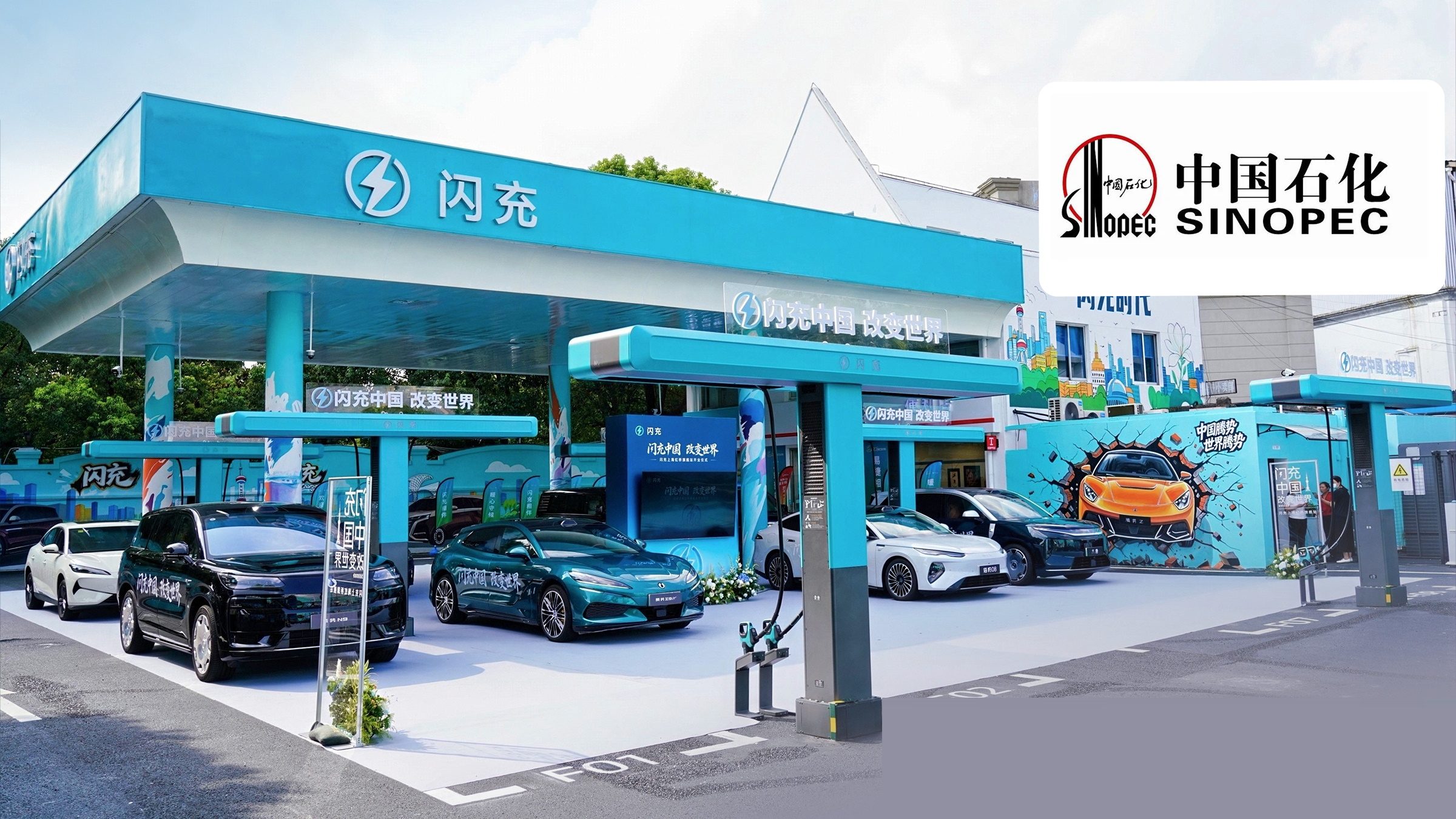
Chinese industry leaders are aggressively scaling ultra-fast charging infrastructure by converting legacy fuel stations into megawatt EV hubs, exemplified by BYD and Sinopec’s partnership deploying 1,500 kW 'flash chargers' supported by Blade LFP battery buffers. This buffered approach circumvents costly grid upgrades by drawing minimal continuous power while delivering megawatt bursts, enabling rapid, large-scale deployment across Sinopec’s extensive network of over 30,000 service stations and aligning with BYD’s ambitious target of 20,000 flash charging stations by the end of 2026.
Fraunhofer ISE’s HV-MELA-BAT program showcases how integrating second-life battery storage with modular, high-efficiency DC/DC converters can deliver over 1 MW charging power from a modest 500 kW grid connection. Their architecture, featuring a common DC bus linking grid, storage, and charging output, not only reduces peak grid load but also enables dynamic power management and seamless integration of on-site PV generation, supporting scalable, flexible ultra-fast charging solutions compatible with both CCS and MCS standards.