Human-AI teams blur boundaries at work

The gist
Human-AI teams are smashing traditional job boundaries, turning AI from an automation engine into a creativity amplifier—and the secret sauce is keeping people in the loop.
What to know
- By mid-2026, companies like Netflix, LinkedIn, and AI-native startups are thriving with intentional human-AI co-development, blending roles and boosting creative output.
- Scaling AI adoption hinges on culture and leadership—Microsoft, Mercedes-Benz, and Gusto succeed by fostering psychological safety, hands-on experimentation, and clear AI competence ladders.
- Responsible AI means humans still call the shots: industries like fintech enforce human-in-the-loop governance, while orchestration hubs like n8n bridge AI automation with human judgment for over 1,400 enterprises.
Human Agency by Design
Keeping humans central in AI workflows is a deliberate strategy to foster creativity, trust, and innovation—countering the isolating effects of full automation.
From as early as late 2025, experts emphasized that intentionally keeping humans integral to AI workflows is a deliberate design choice essential for fostering creativity, agency, and trust, countering the prevalent push toward full automation for scalability. This approach not only preserves human judgment but also expands innovation potential by empowering people to push AI capabilities into novel, out-of-distribution areas, as highlighted in analyses from October 2025. The risk of fully autonomous AI operating without human oversight was noted to diminish human agency and understanding, leading to less meaningful innovation and a sense of detachment from the creative process.
User confidence emerged as a critical factor in AI adoption, surpassing the allure of raw technological sophistication. Research from November 2025 revealed that AI products succeed when they foster user self-efficacy through clarity, competence, and emotional warmth rather than overwhelming users with intelligence that feels alien or inscrutable. This nuanced understanding of user experience underscores the importance of designing AI systems that make users feel capable, supported, and in control, thereby reinforcing trust and collaborative engagement.
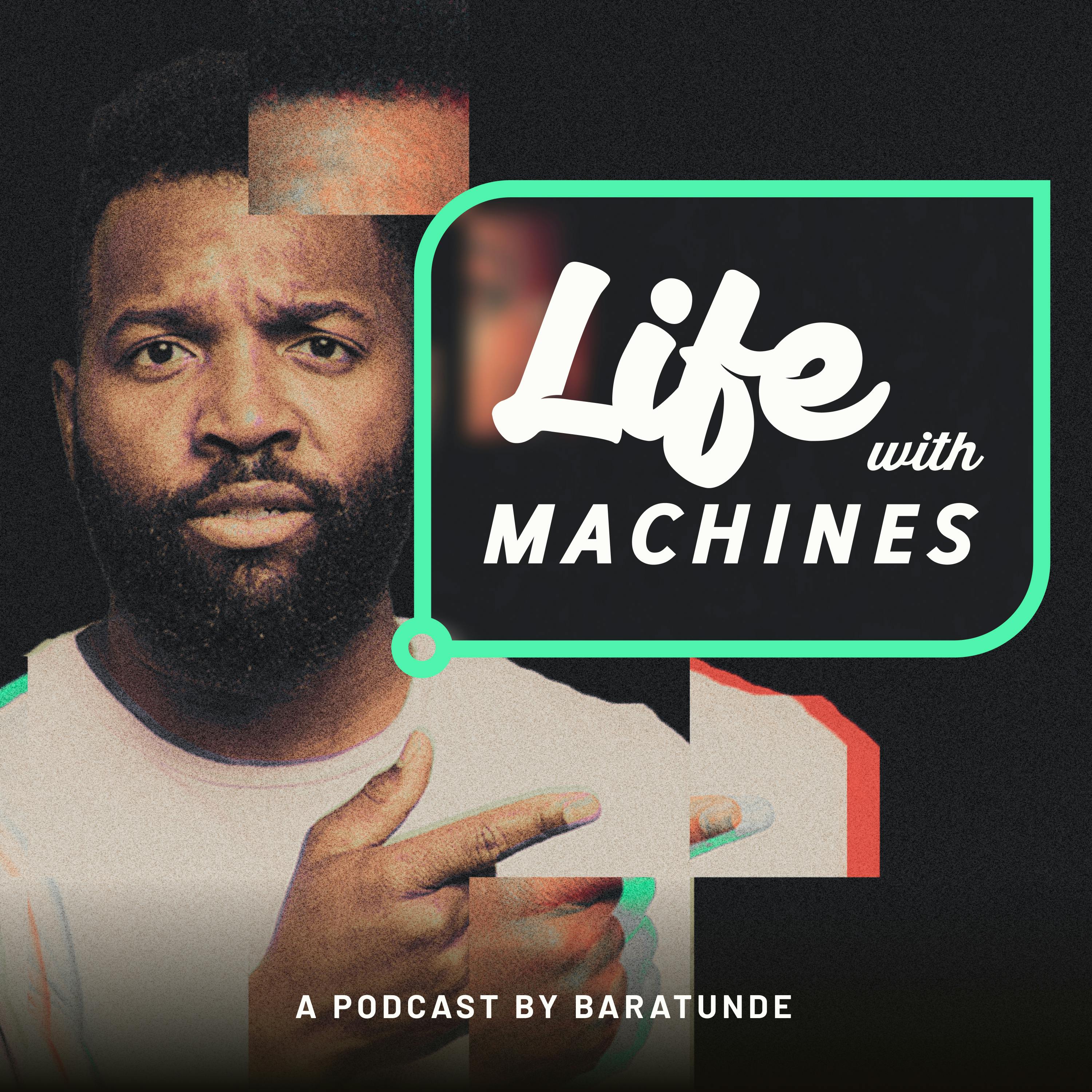
The evolution of AI from a mere tool to a collaborative teammate was vividly illustrated by a podcast team’s experience with their AI co-producer Blair in late 2025. While Blair's limitations—such as hallucinations and sycophancy—highlighted the risks of full automation, the team’s practice of conducting 360-degree AI performance reviews and enabling Blair to self-update based on feedback exemplified a novel human-AI partnership model. Crucially, the human hosts retained control over emotional nuance and judgment, emphasizing that AI complements rather than replaces human insight, especially in complex, creative workflows.
By early 2026, empirical studies and real-world case examples, including Netflix’s staged scriptwriting process, demonstrated that human-AI collaboration enhances creativity only when there is intentional co-development and clear guidance. This shift from AI as a passive assistant to an active creative partner requires organizations to foster cultures of experimentation and shared learning, where humans and AI iteratively refine ideas together. Such partnerships not only preserve but amplify human agency, enabling practitioners to leverage AI as a superpower that removes repetitive tasks and unlocks deeper problem-solving capabilities, as reflected in multiple analyses and case studies through mid-2026.




Hybrid Roles, Faster Cycles
AI-native teams are dissolving traditional job boundaries, enabling every member to code, iterate, and own products from idea to launch at unprecedented speed.
By late 2025, AI-native startups like Roo Code were already pioneering a radical redefinition of traditional roles, where every team member—from designers to community managers—actively contributes code, dissolving conventional boundaries between product management, engineering, and design. James Dillard’s experience highlights how AI-enabled workflows accelerate iteration cycles through more frequent, cheaper pull requests, enabling rapid prototyping that challenges core product management principles such as 'sell before you build.' This foundational shift fosters hybrid roles where discovery, design, and coding become a seamless, collaborative language, signaling a new paradigm of AI-empowered co-creation.
Traditional product management roles have evolved into AI-augmented hybrid positions exemplified by leaders like Dennis Yang at Chime, who leverages AI tools such as Cursor to automate PRD creation, Jira ticketing, and stakeholder communication without writing code. This integration of AI-powered IDEs with collaboration platforms like Confluence and Notion enables PMs to prototype rapidly and bridge gaps between engineering and product teams. By early 2026, companies like Luxury Presence demonstrated the practical impact of this evolution by producing up to eight prototypes in two-week sprints, dramatically accelerating user-validated product iteration and reducing risk.
LinkedIn’s Full Stack Builder program, launched by late 2025, epitomizes the emergence of AI-native teams where individuals from any function—be it design, product, or engineering—are empowered to own the entire product lifecycle from ideation to launch. This model replaces traditional silos with small, cross-functional pods that leverage specialized AI agents and tools, fostering agility and resilience akin to Navy SEAL teams. Tomer Cohen, LinkedIn’s CPO, emphasizes that success hinges not just on technology but on culture, incentives, and change management, with a new career ladder formalizing the hybrid 'Full Stack Builder' role and training programs like the Associate Product Builder to cultivate AI fluency across disciplines.
By mid-2026, the convergence of product, design, and engineering roles into hybrid AI-empowered builders became widespread, with companies like Meta and MongoDB dissolving traditional organizational boundaries to foster tighter collaboration and shared ownership. AI tools enable non-technical PMs like Zevi Arnovitz at Meta to ship products without coding, while engineers and designers increasingly cross-train to understand each other's domains, enhancing empathy and accelerating innovation. This evolution is reflected in the rise of AI Product Engineers—multidisciplinary creators blending strategic thinking, technical skills, and design instincts—as well as the broader cultural shift toward flexible, AI-native teams that prioritize judgment, creativity, and rapid prototyping over rigid specialization.




Culture Drives AI Mastery
Hands-on experimentation, psychological safety, and leadership modeling are the secret weapons accelerating AI adoption and fluency across organizations.
Scaling AI adoption thrives on cultivating a culture that treats AI as a collaborative team member and encourages hands-on experimentation. For instance, the podcast team’s innovative use of AI 360 performance reviews for their AI co-producer Blair exemplifies how immersive engagement deepens understanding and integration. Companies like Microsoft and Zapier emphasize voluntary adoption, where leadership models AI use natively and fosters psychological safety, enabling employees to experiment openly without fear of failure. This approach aligns with LinkedIn’s Full Stack Builder program and Gusto’s recurring hackathons, which create structured yet flexible environments for continuous AI learning and innovation across all organizational levels.
Leadership plays a pivotal role in accelerating AI integration by actively modeling AI adoption and embedding it into organizational frameworks. LinkedIn’s top product executives lead by piloting AI-powered full stack building experiences, while Webflow rewrites career ladders to incentivize AI fluency, ensuring adoption translates into better outcomes rather than checkbox compliance. Similarly, HomeLight’s executive hackathon and Mercedes-Benz’s clear AI competence levels—Takers, Makers, and Builders—demonstrate how leadership scaffolds psychological safety and cross-functional collaboration, encouraging employees to shape AI workflows proactively.
Immersive, problem-focused experiential learning events such as hackathons, Builder Days, and innovation pods are critical levers for scaling AI adoption. These initiatives, as seen at Gusto, Ramp, and Medbridge, provide dedicated, uninterrupted time for employees to build real AI solutions, boosting confidence from as low as 11% to over 80% in some teams. By pairing nontechnical participants with AI mentors and encouraging rapid prototyping across roles, organizations foster psychological safety and accelerate fluency, transforming AI from a theoretical tool into an everyday collaborator.
Recognizing diverse adoption curves within organizations, successful AI scaling strategies accommodate varying paces and skill sets by fostering role blending and cross-functional fluency. LinkedIn’s Full Stack Builder program and HomeLight’s AI Product Builder role exemplify this by empowering product managers to code and engineers to engage in product thinking, breaking down silos and accelerating integration. This inclusive mindset respects specialization while encouraging growth, enabling employees to transition between roles more easily and collectively adapt to evolving AI-augmented workflows.


Humans Guard the Decision Gate
Regulated industries are embedding human-in-the-loop governance to ensure accountability, trust, and compliance amid rising AI automation.
By late 2025, industries like fintech and customs brokerage faced increasing government mandates requiring human-in-the-loop oversight to manage liability and regulatory compliance, as AI systems were prohibited from making final decisions such as loan approvals or customs clearances. Despite AI’s growing role in automating error-prone tasks—like JAM’s AI spell checker distinguishing country codes or AI-generated detailed bug reports—humans remained indispensable for relational and interpretive functions, reflecting a persistent preference for human interaction in regulated workflows.
The evolution toward AI-centric processes positions humans as decision makers responsible for accountability and maintaining trust, with companies like Nobel implementing 'driverless steering' systems that generate proposals requiring leadership review and approval. This human-in-the-loop governance is critical to prevent errors seen in cases like Michigan’s MiDAS fraud system, where unclear accountability and treating AI outputs as final decisions led to widespread harm, underscoring the necessity of explicitly mapping decision rights and embedding human checkpoints to preserve quality and trust.
Effective human-centered AI workflows hinge on clearly defining roles that leverage AI’s strengths—such as infinite patience for repetitive tasks—while reserving creative, strategic, and accountability functions for humans. This balance requires deliberate design of judgment flows with human override authority, pauses, and friction points to maintain trust, as emphasized by 2026 best practices that embed human review for data accuracy, craft, and long-term impact, treating AI as an assistive 'Clippy' rather than an autonomous agent.
By mid-2026, embedding human-in-the-loop patterns became recognized not as a failure mode but as a deliberate feature enhancing AI reliability, exemplified by Amazon’s seamless escalation of uncertain queries to human agents and continuous feedback loops that improve AI performance while reducing human workload over time. Successful AI deployment also depends on narrowly scoping AI tasks, routing edge cases to humans, engaging early organizational advocates for feedback, and fundamentally rethinking workflows to develop new skills and mindsets that transcend mere automation of existing processes.





n8n: The AI Workflow Backbone
n8n’s modular platform is powering secure, scalable AI orchestration for enterprises, blending automation with essential human judgment.
By mid-2026, n8n had firmly established itself as a pivotal AI orchestration platform bridging the gap between simple no-code tools and complex enterprise systems, enabling scalable AI-powered workflows that blend deterministic tasks like compliance checks with non-deterministic ones requiring human judgment. Jan Oberhauser highlighted this unique positioning, noting n8n’s ability to integrate code, rules, and AI agents within the same workflow, thus addressing the production challenges faced when simpler tools hit an 80% solution ceiling.
n8n’s rapid growth to over 1,400 enterprise customers and a community of 1.7 million monthly active builders by 2026 underscores its significance as the connective tissue for integrating diverse AI tools and data sources. Its hybrid revenue model—55% cloud subscriptions, 30% enterprise licenses, and 15% embedded partnerships—reflects broad adoption, while its $5.2 billion valuation and $100 million ARR, fueled by partnerships with giants like SAP and investment from Nvidia, demonstrate its enterprise impact and market confidence.
The platform’s emphasis on secure, auditable, and self-hosted workflows resonates strongly with enterprises, allowing full control over data and compliance. This is exemplified by Mercedes-Benz’s global AI automation rollout, which leverages n8n’s low-code, modular platform to empower employees at multiple competence levels to create AI-supported workflows within a secure environment that preserves digital sovereignty. Their approach integrates AI agents across development, production, sales, and more, simplifying complex processes and accelerating data-driven decision-making.
n8n’s community-driven innovation and advanced AI capabilities enable users to build complex, AI-augmented workflows with human-in-the-loop oversight, balancing automation with necessary manual approvals for sensitive actions. Features like an AI assistant that translates natural language into workflows, flexible AI model integration with fallback options, and over 10,000 community templates lower technical barriers and foster iterative development. This combination of power, flexibility, and transparency has been central to n8n’s success in delivering production-ready AI automation that enterprises trust and scale.



AI Fluency Becomes Table Stakes
Companies are formalizing AI competence ladders and upskilling programs, making AI literacy a core requirement for career growth and cross-functional impact.
Companies are formalizing AI competence ladders and upskilling programs, making AI literacy a core requirement for career growth and cross-functional impact.