Hungary’s orbán ousted: magyar’s supermajority spurs democratic reset and EU pivot
The gist
Hungary just hit the reset button: Viktor Orbán’s 16-year illiberal reign is over, as Péter Magyar’s Tisza party storms to a supermajority and promises a democratic and European revival.
What to know
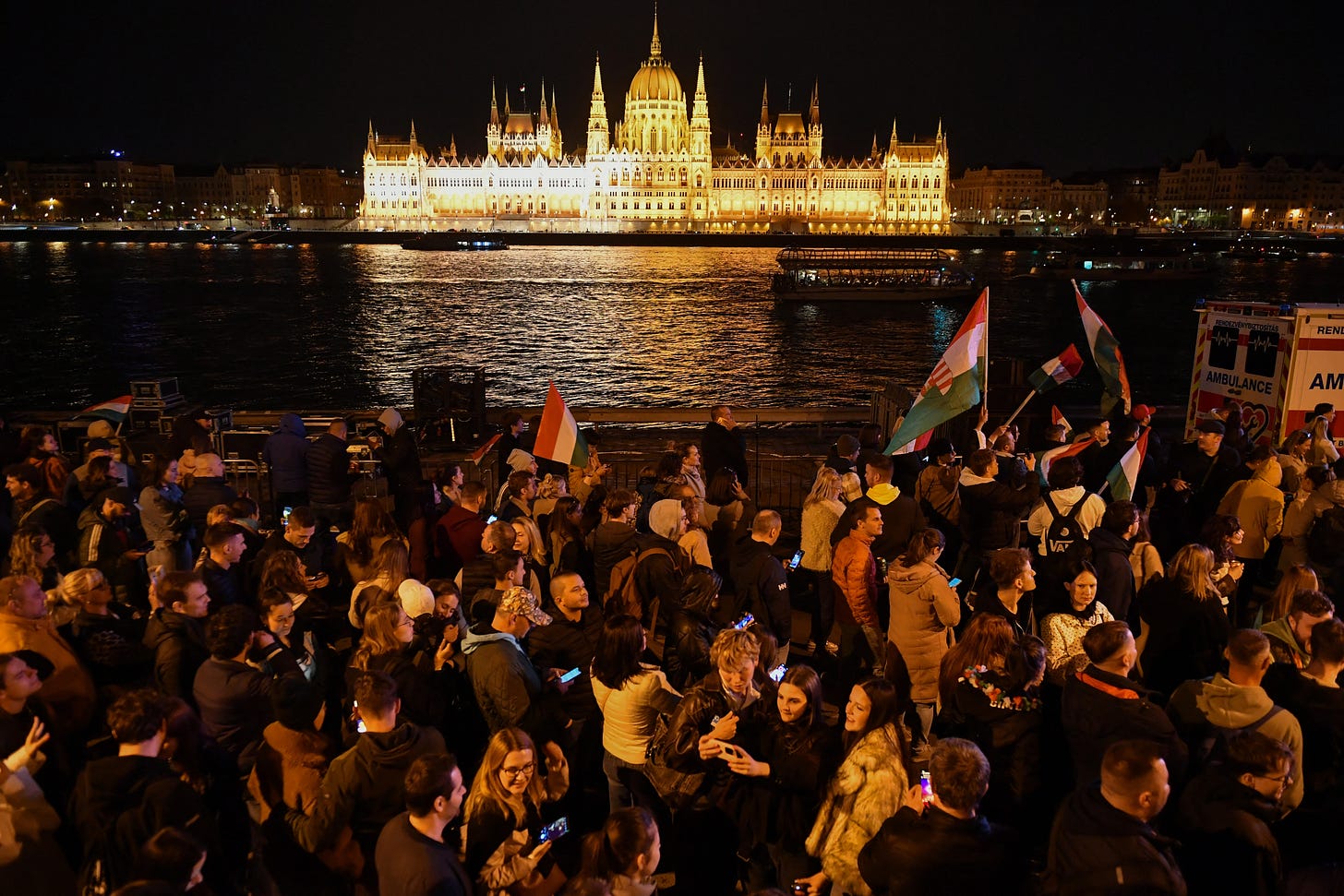
- In April 2026, Péter Magyar’s Tisza party won 138 of 199 seats, toppling Orbán and unlocking the power to rewrite Hungary’s constitution.
- Orbán conceded quickly, setting up an orderly transition and giving Magyar a mandate to tackle corruption and untangle Fidesz’s grip on the country’s institutions.
- Hungary is pivoting away from Moscow and Beijing toward the EU and NATO, signaling a dramatic course correction for both domestic democracy and European security.
Orbán’s Illiberal Legacy Unraveled
Orbán’s 16-year rule fused Hungary to Russia and China through corruption and election manipulation, but Magyar’s supermajority signals a dramatic break from this entrenched system.
Throughout his 16-year tenure, Viktor Orbán entrenched an illiberal democracy in Hungary characterized by pervasive corruption and a strategic alignment with Russia and far-right allies. This alliance was so deep that the Kremlin reportedly contemplated extreme election interference tactics, including a fabricated assassination attempt dubbed “the Gamechanger,” modeled after the 2024 assassination attempt on Donald Trump, aiming to shift voter focus from economic woes to national security concerns. Orbán’s government also actively obstructed EU aid to Ukraine, positioning Hungary as Russia’s closest ally within the European Union and simultaneously courting China, thereby isolating the country from broader European democratic norms and alliances.
By April 2026, Orbán’s long-standing grip on power crumbled when Péter Magyar’s Tisza party secured a supermajority, signaling a decisive rejection of Orbán’s illiberal system and its Kremlin ties. This political upheaval not only ended Orbán’s rule but also opened the door for Hungary to begin repairing its fractured relationship with the European Union under Magyar’s leadership. Despite Orbán’s move into opposition with the Fidesz party, Russia and China are expected to pragmatically engage with the new government, though Russia will likely maintain informal ties with Orbán himself. As former US ambassador David Presman observed, Orbán’s political empire thrived on distracting the public from substantive issues, but the electorate’s verdict offers hope for Hungary’s democratic renewal and restored alliances.



Magyar’s Pro-EU Uprising
Péter Magyar’s campaign united a fractured opposition by targeting Orbán’s EU obstruction and corruption, positioning Hungary for democratic restoration and renewed European ties.
By early April 2026, Péter Magyar, leader of the pro-European Tisza Party, spearheaded a unified opposition campaign that directly challenged Viktor Orbán’s entrenched illiberal governance. Magyar’s platform centered on addressing Hungary’s persistent economic stagnation and systemic corruption, while promising to restore the country’s alignment with the European Union—a stark contrast to Orbán’s increasingly disruptive tactics, such as vetoing EU sanctions and loan packages. This strategic focus aimed to mobilize voters disillusioned by Orbán’s manipulation of EU mechanisms, positioning Magyar as the credible alternative committed to democratic renewal and economic revitalization.
Historic Turnout, Sweeping Mandate
A record-high voter turnout empowered Magyar’s Tisza party with the constitutional power to dismantle Orbán’s illiberal regime and proved that entrenched populists can be ousted democratically.
The April 12, 2026 election marked a historic watershed in Hungary as Péter Magyar’s moderate-conservative Tisza party secured a commanding supermajority with 138 out of 199 parliamentary seats, surpassing the crucial two-thirds threshold needed to rewrite the constitution. This landslide victory, achieved amid a record voter turnout approaching 80%—the highest since 1989—effectively ended Viktor Orbán’s 16-year illiberal regime, disproving narratives that Hungary’s democracy was irreversibly compromised and demonstrating that entrenched populist incumbents remain vulnerable to democratic change.
Orbán Viktor’s prompt concession of defeat and announcement that Fidesz would move into opposition stood in stark contrast to other populist leaders who refuse to accept electoral losses, signaling a rare moment of statesmanship. This transition opened the door for Magyar’s Tisza party to wield its supermajority mandate responsibly, with the constitutional authority to dismantle Orbán’s entrenched illiberal system—though analysts caution against repeating past mistakes of abusing such power, emphasizing the need for careful institutional renewal after sixteen years of centralized control.
Magyar’s victory was not merely a repudiation of Orbán’s rule but the culmination of a strategic campaign focused on domestic issues like corruption and economic stagnation, coupled with building direct voter relationships through extensive grassroots engagement. The opposition capitalized on scandals such as the controversial presidential pardon of an official convicted of covering up abuse, which severely damaged Fidesz’s image as defenders of Christian and family values, thereby exposing the hypocrisy of Orbán’s government and galvanizing public demand for a new political era centered on transparency, economic revival, and reintegration with Europe.
This decisive electoral outcome represents a profound rejection of Orbán’s illiberal democracy, characterized by free but unfair elections and pervasive government control over information and propaganda. The Tisza party’s supermajority not only signals a break from sixteen years of authoritarian-tinged governance but also offers a potential blueprint for defeating entrenched populist incumbents elsewhere, highlighting the power of sustained grassroots mobilization and issue-based campaigning to restore democratic norms and institutional integrity.


Dismantling Orbán’s Oligarchy
Magyar faces the daunting task of rooting out Orbán’s loyalist networks and entrenched corruption, as Hungary’s institutions remain packed with allies who prospered under the old regime.
Following the landmark 2026 election, Péter Magyar confronts the formidable task of dismantling the entrenched loyalist networks that Viktor Orbán cultivated over his 16-year illiberal reign. Many key institutions—from the courts to the central bank—remain politicized and staffed by Orbán’s clients whose wealth and influence depended on his goodwill, creating a deeply rooted oligarchic structure that Magyar himself once navigated as a former loyalist. This legacy of concentrated power and corruption, exemplified by Magyar’s 2024 revelation that “a few families own half the country,” presents a critical hurdle to genuine democratic renewal and economic revitalization.
Magyar’s administration prioritizes rebuilding politicized institutions and combating systemic corruption to restore public trust and ensure a peaceful transfer of power. Orbán’s allies previously enjoyed near-impunity despite serious legal breaches, a factor that fractured even his inner circle and contributed to his downfall. Magyar’s call for swift parliamentary action and voluntary resignations from Orbán-appointed officials underscores the urgency of institutional reform, while his pledge to reverse autocratic policies and meet EU reform benchmarks signals a commitment to regaining frozen funds and aligning Hungary with European democratic norms.
The peaceful transfer of power marked a rare and significant moment in the region’s populist landscape, with Orbán promptly conceding defeat and retreating to opposition—a stark contrast to figures like Trump who contested election results. This concession provides Magyar a crucial window to initiate reforms without immediate destabilization, yet vigilance remains essential. Magyar himself emphasized the need for independent politicians and civil society to hold his Tisza Party accountable, warning against the misuse of their new two-thirds parliamentary majority and echoing concerns that Hungary must avoid repeating past abuses of power.
Beyond domestic institutional challenges, Magyar’s rise signals a strategic pivot in Hungary’s international alignments, particularly its relations with the European Union and stance on Russia. Orbán’s government had long obstructed European aid to Ukraine amid the ongoing conflict with Russia, but his departure opens the door for Hungary to rebuild trust with EU partners and support broader European security objectives. This geopolitical shift complements Magyar’s domestic agenda of democratic renewal, positioning Hungary to reintegrate with Western alliances after years of illiberal isolation.


Hungary’s Westward Pivot Begins
Magyar’s victory ends Hungary’s Kremlin alliance, revives EU and NATO cooperation, and challenges Russia’s lingering influence as the country reorients its foreign policy toward the West.
The 2026 electoral defeat of Viktor Orbán marks a decisive pivot in Hungary’s foreign policy, as the incoming Prime Minister Péter Magyar commits to severing the country’s longstanding Kremlin ties and restoring robust cooperation with the European Union and NATO. This realignment is underscored by Magyar’s pledge to reverse Orbán’s obstructionist stance, notably Hungary’s prior blocking of a €190 billion EU loan to Ukraine, signaling renewed Hungarian support for European security initiatives and a unified Western front against Russian aggression. As David Presman, former US ambassador to Hungary, observes, this shift moves Hungary away from personalized, illiberal governance towards a fact-based, sovereign approach aligned with broader European and transatlantic interests.
While Russia and China are expected to pragmatically engage with Hungary’s new government, Russia is likely to maintain its alliance with Orbán’s Fidesz party now in opposition, reflecting a nuanced diplomatic landscape. This dynamic suggests that although Hungary’s foreign policy is reorienting westward under Magyar, Moscow’s influence persists indirectly, complicating the transition and underscoring the challenges ahead for the new leadership in fully disentangling from Kremlin ties.
Hungary’s political transformation reverberates beyond its borders, potentially moderating Eurosceptic rhetoric among populist parties across Europe as Magyar’s pro-EU mandate reaffirms the popularity of European integration among voters. This shift not only signals a recalibration of Hungary’s role within the EU but also strengthens transatlantic relations, with experts like Christopher Smart highlighting the imperative for Magyar to address institutional damage domestically to restore democratic norms and thereby bolster European security frameworks.

Populism’s Limits Exposed
Orbán’s fall deals a blow to global far-right movements, but Hungary’s shift reflects corruption fatigue—not a full rejection of nationalist populism—highlighting the complexity of true democratic renewal.
Orbán’s defeat in 2026 marks a profound setback for global far-right movements and underscores the resilience of democratic institutions in the face of entrenched authoritarianism. This symbolic loss reverberates beyond Hungary’s borders, delivering a humiliating blow to American conservatives who had championed Orbán’s illiberal model as a political ideal. As Christopher Smart observed, Hungary had been "digging a deep hole for itself for the last 16 years," and the current political shift signals the country’s arduous process of democratic renewal and economic recovery.
While Orbán’s fall ends a 16-year illiberal regime, it does not represent a wholesale ideological repudiation of nationalist populism. Opposition leader Péter Magyar, despite defeating Orbán, shares many nationalist and conservative views and emerged from within Orbán’s own political elite, breaking away primarily due to a child abuse pardon scandal rather than fundamental policy differences. This nuanced political transition reflects widespread corruption fatigue rather than a clear-cut rejection of Orbánism’s core nationalist and illiberal tenets, cautioning against simplistic narratives that frame Hungary’s shift as a defeat of populism itself.
The political upheaval in Hungary highlights the power of authentic voter engagement centered on domestic issues like corruption and economic hardship, rather than foreign policy or ideological grandstanding. Opposition leader Péter Márki-Zay’s grassroots campaign, which involved visiting numerous towns and directly addressing systemic abuses and the concentration of wealth—where "a few families own half the country"—resonated deeply with voters disillusioned by scandals such as the 2024 presidential pardon covering up abuse. This dynamic illustrates how democratic institutions can be revitalized through confronting entrenched elite interests and exposing authoritarian hypocrisy.
Orbán’s removal also carries significant geopolitical implications, particularly for Ukraine, as his government had repeatedly blocked European aid efforts to counter Russia’s invasion. With Orbán out of power, there is potential for stronger European support to flow to Ukraine, signaling a shift in regional diplomacy that aligns with democratic resilience and collective security interests. However, as Christopher Smart cautioned, Prime Minister Péter Magyar faces the formidable task of addressing the "institutional dam" of corruption and governance failures, underscoring that Hungary’s democratic renewal will require sustained and complex institutional repair.