Hybrid AI-human support wins on customer trust
The gist
Hybrid AI-human customer service is winning not because of tech wizardry, but because customers trust people—especially when things get messy.
What to know
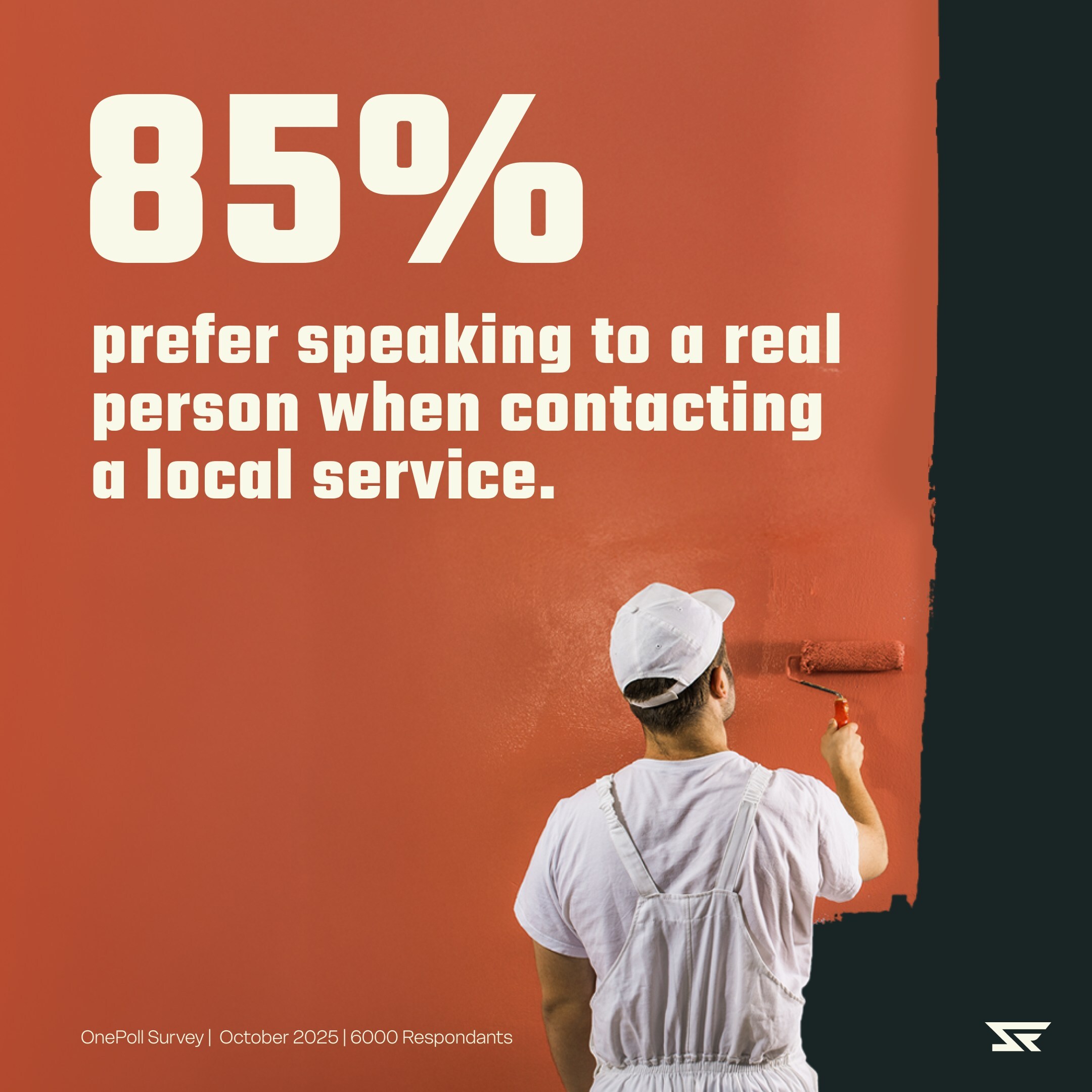
- By early 2026, 85% of consumers still preferred human interaction, forcing companies like Cresta, LinkedIn, and Zendesk to adopt hybrid AI-human models for complex, empathy-driven support.
- Trust hinges on transparency and accountability, with 95% of customers expecting clear explanations for AI decisions and seamless escalation to humans.
- Outcome-focused governance—like Salesforce’s Agentic Work Units—now measures AI performance on quality and resolution, not just volume, while ongoing integration challenges mean 83% of customers still have to repeat themselves after AI-human handoffs.
Humans and AI: A New Division
AI now handles low-emotion, repetitive inquiries while human agents are redeployed as trusted advisors for complex, high-stakes situations, redefining the customer service workforce.
By early 2026, it became clear that AI and human agents play distinctly complementary roles in customer service: AI excels at handling discovery, repetitive, and low-emotion tasks such as password resets or tracking shipments, while humans remain indispensable for empathy-driven, complex problem-solving and high-stress interactions. Companies like Cresta and LinkedIn exemplify this hybrid approach, with AI automating routine workflows to free human agents to act as trusted advisors who build relationships and manage nuanced, high-stakes decisions, especially in industries like healthcare or airlines where complexity demands human oversight.
Customer preferences strongly favor hybrid AI-human models that balance efficiency with trust and emotional connection. Research from Liveops and consumer surveys reveal that while 45% of customers welcome AI for simple tasks, a majority demand human involvement for refunds, complaints, or device repairs, with younger generations notably less tolerant of AI-only support. Moreover, transparency about AI’s role and easy access to human agents are critical to prevent customers from feeling 'hidden behind automation,' as 50% blame company leadership—not AI itself—when automated support fails, underscoring the importance of clear accountability and seamless AI-human handoffs.
Technological advances in agentic AI have elevated the capabilities of AI agents from scripted bots to sophisticated digital coworkers that autonomously interpret context, integrate multiple systems, and complete end-to-end tasks, boosting resolution rates from traditional chatbot levels of 40-50% up to 65-70%. Despite these gains, human agents remain essential for the 25-35% of interactions requiring empathy, nuanced judgment, or complex negotiation, highlighting that the hybrid model is not about replacement but about empowering humans with AI tools that provide real-time coaching, sentiment analysis, and consolidated customer insights, as seen in Bespin Global’s generative AI assistant deployed in regulated environments.
Leading enterprises are evolving their customer service strategies to integrate AI and human agents into seamless, context-aware workflows that prioritize resolution over mere deflection. LinkedIn’s proactive AI chat agents engage customers at decision points to provide timely, consultative support, while orchestration layers ensure smooth transitions between AI and human agents, preserving intent and context. This approach transforms support from a reactive cost center into a proactive growth function, emphasizing experience and trust, as Abhinav Arora of EOSGlobe notes, shifting the differentiator from speed alone to a richer, hybrid customer experience.





Trust Hinges on Accountability
Clear role boundaries, transparent AI decisions, and seamless escalation to humans have become non-negotiable pillars for customer trust in hybrid support models.
Building trust in hybrid AI-human customer service fundamentally depends on establishing clear accountability frameworks that define distinct roles for AI and human agents. Early insights from 2026 emphasize that customers and employees alike need clarity on what AI handles versus what humans own, especially during high-stress interactions, to prevent the frustration of being 'left hanging.' This role clarity is echoed by ServiceForge's report revealing that 85% of consumers prefer human interaction and 83% actively request human representatives, underscoring that transparent escalation paths to humans are not optional but foundational for trust across industries like healthcare, real estate, and law.
Transparency in AI decision-making has emerged as a critical pillar for trust, with studies showing that 95% of consumers expect explanations when AI makes decisions—meaning a simple 'system says no' no longer suffices. Companies like Zendesk and KODIF illustrate how deep integration with ecommerce systems and AI analysis of call transcripts for compliance and sentiment can enhance transparency, enabling AI to handle complex workflows while ensuring human agents receive full context during seamless escalations. This transparency not only mitigates consumer frustration—given that one in three would hang up immediately on encountering an AI bot—but also supports continuous improvement through audit trails and coaching loops.
Seamless escalation paths to human agents are the linchpin of customer loyalty in hybrid models, with the quality of AI-to-human handoffs often outweighing the initial AI interaction. Research from Five9 and Crescendo AI highlights that customers overwhelmingly prefer human involvement for complex or emotional issues, with 83% reporting they sometimes must repeat themselves after transfers, signaling persistent challenges in context preservation. Leading CX operators now emphasize governance layers and real-time control rooms—like IBM’s Enterprise Advantage and Talkdesk’s CXA Operations Center—that monitor AI actions and enable swift human intervention, ensuring escalation is timely, transparent, and preserves customer context to maintain trust.
Accountability frameworks must evolve beyond mere speed or call deflection metrics to focus on outcome-based measures such as resolution quality, frictionless customer experience, and proactive engagement. Companies like Crescendo AI exemplify this shift by charging only for resolved issues, aligning incentives around positive outcomes rather than volume. This approach is critical as automation scales, since as Hans van Dam warns, 'automation does not just scale execution. It scales mistakes.' Consequently, organizations are urged to implement clear 'stop rules' for sensitive interactions, continuous quality reviews, and human-in-the-loop models to prevent trust erosion and ensure AI agents meet or exceed human reliability standards.

Outcome Metrics Over Volume
Agentic Work Units and real-time oversight are redefining AI performance by tracking quality, escalation, and rework, ensuring automation aligns with business outcomes.
By early 2026, the emergence of outcome-driven metrics like Salesforce’s Agentic Work Units (AWUs) marked a pivotal shift in managing AI agents as accountable labor rather than mere features. AWUs quantify discrete tasks completed by AI, enabling organizations to track automation safety, escalation spikes, and rework, thus preventing runaway costs and silent customer experience damage. This approach transforms AI from a project into a measurable line item with clear operational maturity, fostering governance and quality control that align AI output with business outcomes rather than vague interaction counts.
Continuous governance and real-time oversight have become indispensable as AI workflows evolve rapidly, demanding that quality assurance criteria adapt to detect new failure modes. Industry leaders like LinkedIn and Zoom emphasize integrating AI analytics into quality management workflows, scoring AI and human agents by the same standards to ensure reliable, auditable, and ethical service. This includes defining clear escalation thresholds, preserving context during AI-human handoffs, and employing weekly reviews of flagged calls and resolution metrics to maintain trust and proactively improve customer experience.
The scaling of agentic AI in customer service outpaces the establishment of robust governance frameworks, with 78% of organizations expecting AI to handle half of support interactions within 18 months, yet only a minority possessing adequate measurement infrastructures. Experts like Dave Rennyson and IBM advocate for unified performance management that treats AI and human agents equally, supported by real-time monitoring, audit trails, and clear ownership of AI oversight. Governed autonomy—combining AI independence with structured human supervision—is now the critical frontier, ensuring accountability, minimizing risks such as hallucinated policies, and enabling rapid intervention before errors proliferate.
Outcome-based pricing models and integrated operational views further embed accountability into AI-powered customer experience. HubSpot’s shift to charging per resolved conversation rather than interaction volume exemplifies this trend, underscoring the necessity of precise definitions of ‘resolution’ to avoid misleading metrics. Moreover, comprehensive operational dashboards that unify human capacity, AI performance, escalation quality, and coaching enable leaders to discern when automation genuinely aids customers versus merely shifting workload onto them. This holistic governance approach is vital to maintaining consumer trust, especially as research reveals that over half of customers disengage from unresolved AI interactions within minutes.
Voice, Multichannel, and AI Memory
AI agents are now managing live calls and complex multichannel workflows, but success depends on emotional intelligence, robust handoff protocols, and continual integration of new memory techniques.
By early 2026, agentic AI had evolved beyond handling chat and email to managing live voice calls, with companies like Zendesk enabling AI agents to conduct end-to-end phone interactions that include greeting customers, understanding their needs, resolving issues, and seamlessly handing off to human agents with full context transfer. This transition addresses the emotional complexity of voice interactions, where confidence and accuracy are critical to maintaining customer trust, prompting organizations to implement 'stop rules' for sensitive topics and track handoff quality rather than merely bot deflection rates. Simultaneously, customers' expectations for 24/7 service and rapid responses have surged—74% expect round-the-clock availability and 88% demand faster replies—while 95% insist on transparent explanations for AI decisions, underscoring the need for integrated workflows that balance speed with clarity to avoid perceptions of opacity or distrust.
Agentic AI’s ability to autonomously handle routine customer requests, as highlighted by Craig Walker of Dialpad, is complemented by integrated platforms that provide real-time coaching for agents and actionable insights for managers, fostering a continuously improving support ecosystem. Operationalizing this at scale requires strategic groundwork such as cleaning knowledge bases, analyzing ticket patterns, and piloting controlled deployments, while emerging AI memory techniques—like mimicking codebase structures—offer promising but still imperfect solutions for context management across diverse data sources. These innovations enable AI to not only assist but proactively engage in workflows, enhancing efficiency and resolution rates from traditional chatbot levels of 40-50% up to 65-70%, thereby reducing costs and elevating customer service quality.
The integration of agentic AI into multichannel customer service is increasingly sophisticated, with platforms like Medallia leveraging generative AI to analyze customer feedback in real time, blending automated pattern detection with human oversight to ensure accuracy and governance. Bespin Global’s deployment of generative AI assistants on private cloud infrastructures for AIA Life exemplifies how secure, regulated environments can support advanced AI functionalities such as answer recommendations, script generation, and post-interaction automation, while planning to extend AI support across training, quality assurance, and voice of the customer analysis. This trend toward comprehensive multichannel and workflow integration reflects a broader industry movement, as PwC and OpenAI’s collaboration demonstrates through their 'agentic front office' model that unifies marketing, sales, commerce, and service under a seamless AI-enabled operating system to enhance speed, intelligence, and continuity across the customer journey.
Despite the rapid maturation of enterprise-grade voice AI—validated by early adopters like Parloa who have demonstrated successful deployments since 2025—many organizations still grapple with integrating AI smoothly into customer journeys and employee workflows. Five9’s 2026 research reveals that while 92% of companies have adopted AI in CX, challenges persist in seamless AI-to-human handoffs, with 83% of consumers reporting repeated explanations despite organizational claims of context preservation. Additionally, the ongoing migration from on-premises to cloud-based infrastructure (84% in transition) underscores that AI’s effectiveness hinges on robust underlying systems and flexible strategies that combine end-to-end platforms, hybrid models, and best-of-breed tools tailored to specific use cases. Importantly, voice remains the dominant channel—especially among older generations—with 66% of the Silent Generation preferring phone support, emphasizing the critical role of voice AI within multichannel strategies that prioritize transparency, as 71% of consumers want to know when they are interacting with AI agents.


Hybrid CX Demands Leadership Overhaul
Operational redesign, agent upskilling, and agile change management are essential as leaders shift from viewing AI as a bolt-on tool to a foundational workforce transformation.
By early 2026, leaders like Cresta CEO Ping Wu and Vinod Muthukrishnan emphasized that adopting hybrid AI-human customer service demands a fundamental operational redesign rather than superficial automation. This involves treating AI as a foundational workforce participant that reshapes routing, workforce design, and data architecture to sustainably scale without agent burnout, while addressing conversation complexity and customer demographics. As Vinod put it, "If you treat AI like a tool, you’ll bolt it on. If you treat it like a foundational rebuild, you’ll rethink routing, workforce design, insights, quality, data architecture. Everything."
Leadership must pivot from viewing AI as a mere deflection or cost-cutting tool to embracing it as an enabler of intelligent engagement that elevates human agents to focus on complex, empathetic interactions. Vinod Muthukrishnan highlights this shift: "No more ‘containment.’ No more ‘deflection.’ Customers want intelligent engagement." This transition raises the bar for agent skills, demanding continuous upskilling in empathy, reasoning, and judgment to handle high-stakes emotional calls that AI escalates. Cresta’s Training Simulator exemplifies this approach by providing ongoing, data-driven practice with AI-powered simulated customers, addressing the gap where agents previously lacked preparation for critical conversations.
Adaptive leadership and agile change management are crucial to keep pace with rapid AI advancements and to orchestrate seamless AI-human workflows. Experts like Vinod and Craig Walker advocate moving away from traditional year-long pilots toward small, empirical experiments that prove value and scale iteratively. This includes cleaning knowledge bases, analyzing ticket patterns, and integrating AI-driven real-time coaching and analytics to empower agents with personalized improvement plans. As Vinod stresses, "Security and CX can’t live in different conference rooms anymore," underscoring the need for transparency and collaboration across domains to build trust and ensure compliance is more than just theater.
A customer moment-first strategy, rather than a technology-first mindset, is essential for successful AI-driven CX transformation. Leaders must focus on empowering frontline agents with AI that consolidates multiple systems into unified platforms delivering real-time context, sentiment analysis, and next-best-action recommendations. This approach not only improves resolution speed and quality but also ensures smooth transitions between AI and human agents, maintaining a high-quality customer experience. As noted in July 2026 analyses, balancing automation with human empathy hinges on leadership’s commitment to continuous agent development and orchestrating AI-human interactions seamlessly.



Guardrails Against Automation Backlash
Unchecked AI rollouts risk eroding trust and amplifying errors, making rigorous guardrails, phased deployment, and continuous journey testing mission-critical for sustainable hybrid support.
By early 2026, consumer resistance to AI-driven customer service was unmistakable, with reports like ServiceForge revealing that 85% of consumers prefer human interaction, especially in sensitive sectors such as healthcare, real estate, and law. This widespread preference underscores the risk of alienating customers through blind automation, as one in three would hang up immediately on encountering an AI bot, emphasizing that trust and genuine human connection remain critical competitive differentiators.
Sustainable hybrid AI-human customer service demands a nuanced, strategic approach that categorizes interactions by complexity and emotional weight. As highlighted by KODIF AI’s specialized AI CX Teams and the three-bucket model of automation, routine, low-emotion tasks can be fully automated, while high-emotion or complex conversations require human experts augmented by AI. This balance prevents customer frustration from incomplete automation and ensures human intervention occurs precisely when needed to resolve issues seamlessly, preserving loyalty and trust.
The rapid scaling of AI automation introduces significant risks, as automation magnifies mistakes and erodes trust if not managed with rigorous guardrails. Experts like Hans van Dam warn that agent reliability must surpass human reliability, and phased rollouts with easy escalation paths are essential to contain the 'blast radius' of AI errors. Real-world failures, such as DPD’s chatbot losing its guardrails, illustrate the dangers of untested customer journeys and alignment drift, making continuous monitoring and end-to-end journey testing indispensable best practices.
Accountability frameworks and outcome-based metrics are pivotal to shifting hybrid AI-human service from volume-driven efficiency to genuine problem resolution. Companies like Crescendo AI and HubSpot exemplify this by charging only for resolved issues, thereby aligning incentives with customer satisfaction rather than mere interaction counts. Additionally, seamless AI-to-human handoffs, continuous AI tuning by human agents, and ethical guardrails around AI listening tools are critical to maintaining trust and preventing customer frustration, especially as privacy concerns and perceived manipulative AI behaviors increasingly influence loyalty.