Kodiak AI supercharges driverless fleet with AMD EPYC power
The gist
Kodiak AI is turbocharging the world’s largest driverless triple-trailer fleet with AMD EPYC muscle, aiming to hit 100 fully autonomous big rigs in the Permian Basin by 2027.
What to know
- Kodiak AI and Atlas Energy are scaling their driverless Class 8 truck fleet from 28 to 100 by 2027, adding a second loading point for greater reach.
- A 91% revenue spike in Q2 2026 is supercharging Kodiak’s push to launch long-haul, human-free trucking services by year-end.
- The latest Gen7 trucks harness AMD EPYC processors for a 25% clock speed boost, making real-time, no-human-onboard autonomy a commercial reality.
Permian Basin’s Driverless Surge
Kodiak and Atlas Energy’s quadrupling of their autonomous fleet is rewriting logistics for oil and gas, setting new operational records and expanding infrastructure with a second major loading point.
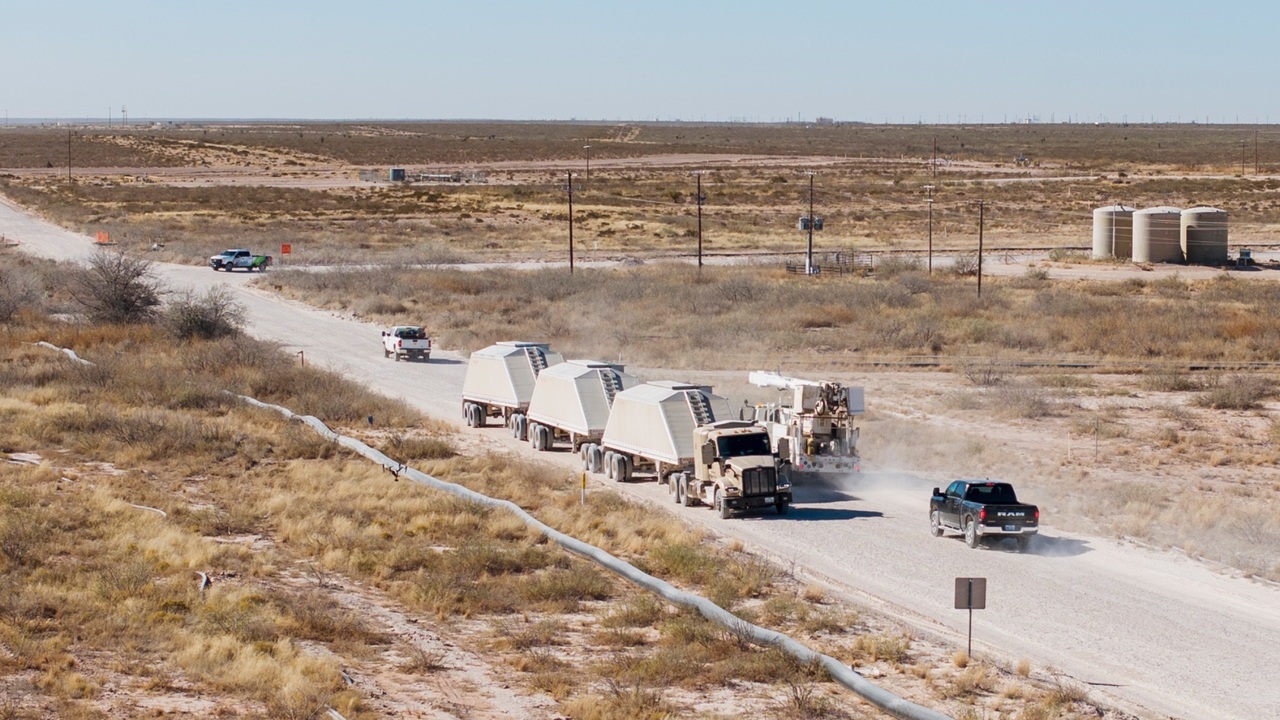
Kodiak AI and Atlas Energy are embarking on an ambitious expansion to quadruple the largest driverless triple-trailer truck fleet in the Permian Basin by 2027, scaling from 28 to 100 autonomous Class 8 trucks. This partnership not only underscores Atlas’s commitment to pioneering autonomous logistics in oil and gas operations but also marks a significant enhancement in operational capacity and geographic reach, including the addition of a second loading point to support increased throughput. By early 2026, their collaboration had already achieved what is likely the nation’s first driverless Class 8 vehicle haul, setting a strong foundation for this transformative growth.
Revenue Rocket Fueled by Autonomy
A 91% Q2 revenue jump cements Kodiak AI’s dominance, as rapid Gen7 fleet growth transforms industry economics and accelerates the race to nationwide driverless trucking.
Kodiak AI's revenue surged by 91% in Q2 2026, a leap largely fueled by the strategic deployment of its advanced Gen7 driverless trucks. This impressive financial growth underscores the company's successful scaling of autonomous operations, as it edges closer to launching long-haul services by year-end. The rapid expansion of its fleet not only boosts revenue but also solidifies Kodiak AI's position as a frontrunner in the autonomous trucking industry.

AMD EPYC Powers Real-Time Autonomy
Cutting-edge AMD processors slash latency and boost sensor data crunching, enabling Kodiak’s trucks to operate human-free at scale and paving the way for advanced AI-driven logistics.
Kodiak AI has pioneered the integration of AMD EPYC Series processors into its seventh-generation autonomous truck platform, marking a significant leap in computing power for driverless trucking. This collaboration with AMD delivers a 25% increase in clock speed over previous generations, with base frequencies of 3.15 GHz and boosts up to 4.4 GHz, all while reducing power consumption. Such enhancements enable Kodiak’s trucks to rapidly aggregate and preprocess the massive streams of sensor data from LiDARs, cameras, and radars, which is critical for real-time autonomous functions like localization and path planning.
The adoption of AMD EPYC processors addresses the latency-sensitive demands inherent in autonomous driving by providing high I/O throughput and clock speeds rather than merely increasing core counts. As Kodiak CEO Don Burnette emphasizes, AMD’s best-in-class CPU technology offers the performance, scalability, and efficiency essential for advancing the Kodiak Driver’s AI workloads. This technological upgrade not only accelerates sensor data processing but also supports increasingly sophisticated AI tasks, positioning Kodiak to scale its commercial autonomous trucking operations effectively.
Leveraging commercially available AMD EPYC hardware allows Kodiak AI to strategically focus its engineering resources on rapidly building scalable, production-ready autonomous trucks. This approach underpins Kodiak’s expansion of its driverless fleet in the Permian Basin, which already operates with no humans in the cab, and supports the company’s ambitious plans to launch driverless trucks on public highways later in 2026. With over 40,000 cumulative paid driverless hours and seven additional trucks deployed in Q2 2026, the EPYC integration is a timely enabler of Kodiak’s operational scalability and market growth.