Legal AI agents take over tasks, but errors escalate
The gist
AI-powered legal 'twins' are rapidly taking over real lawyer tasks—but as errors multiply, human oversight is buckling under the strain.
What to know
- Twin One AI is now being sold to law firms like Linklaters, Orrick, and Dechert as a digital stand-in for lawyers, handling emails, calendars, and coordination.
- Prosus has built over 60,000 AI agents—including 298 just for its legal team—while firms push lawyers to design workflows instead of just doing legal work.
- The New York State Bar Association warns that AI-generated legal work can be incomplete, biased, or simply wrong, increasing the risk of malpractice before lawyers even see it.
AI Agents Reshape Legal Routines
Law firms are embedding AI agents directly into daily operations, shifting lawyers from hands-on work to architecting automated workflows.
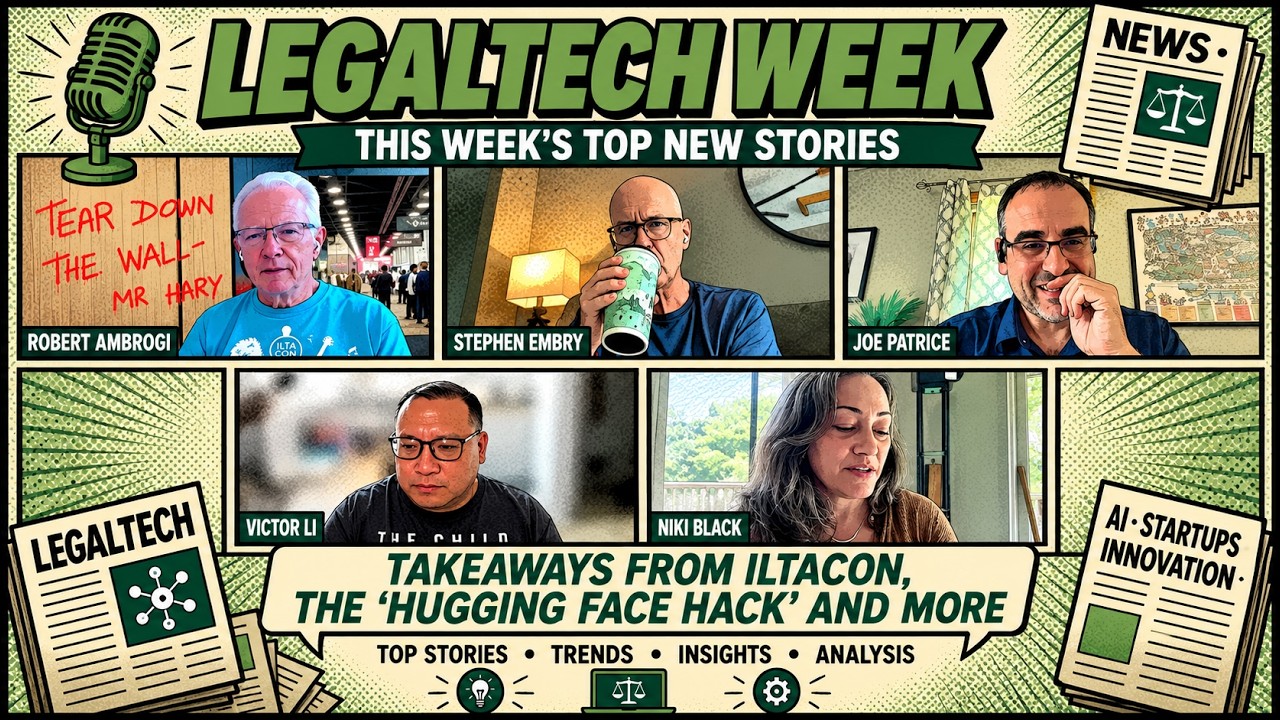
This mechanism is already being sold as a stand-in for a lawyer’s daily workflow, not as a speculative future capability. Legaltech Week described Twin One AI as a product “specifically targeted at lawyers” that would use “your emails and your calendar and your meetings and your documents” to create a “digital version of you” able to answer emails, bring people together, and coordinate work, and it said at least three firms — Linklaters, Orrick, and Dechert — had already bought in, showing that delegated legal action is being operationalized inside firms now.
The same pattern appears in how legal teams are redesigning work around agents that decompose tasks and execute steps a human lawyer would once have handled directly. The Financial Times reported that Prosus set a target late last year of building 30,000 AI agents and said in May 2026 it had developed more than 60,000, with its legal team building 298 agents on Toqan, while Repsol general counsel Pablo Blanco Pérez required his almost-200-lawyer team to spend 100 hours a year on programming and AI so they could design workflows rather than just perform them.


Manual Checks Can't Keep Up
Lawyers struggle to catch AI-generated mistakes as error-prone outputs slip past outdated human review processes, raising the risk of undetected malpractice.
The control model in law and enterprise still assumes a human is the final checkpoint, but the reporting shows that checkpoint is becoming a bottleneck and a weak link. Artificial Lawyer describes lawyers who “still rely on a tool introduced five decades ago: the clipboard (Ctrl + C / Ctrl + V)” and spend “ten minutes manually pasting paragraphs into Word… filing documents in the document management system and entering deadlines into the calendar by hand,” a workaround that exists because write access to the real record remains tightly human-bounded even as AI drafting becomes routine.
That strain is growing because the systems are no longer just rough drafting aids: Artificial Lawyer says the friction comes from “a structural divide… the gap between individual intelligence and process intelligence,” with generative AI already “firmly established” while more agentic systems remain early. New York State Bar Association warns that AI output can look competent while being “incomplete, outdated, biased, jurisdictionally incorrect, or simply fabricated,” and that once a mistake is accepted it can propagate into later documents, exposing firms to malpractice, client harm, and transactional errors before human review catches up.