Lyft faces legal hurdles as big funds double down
The gist
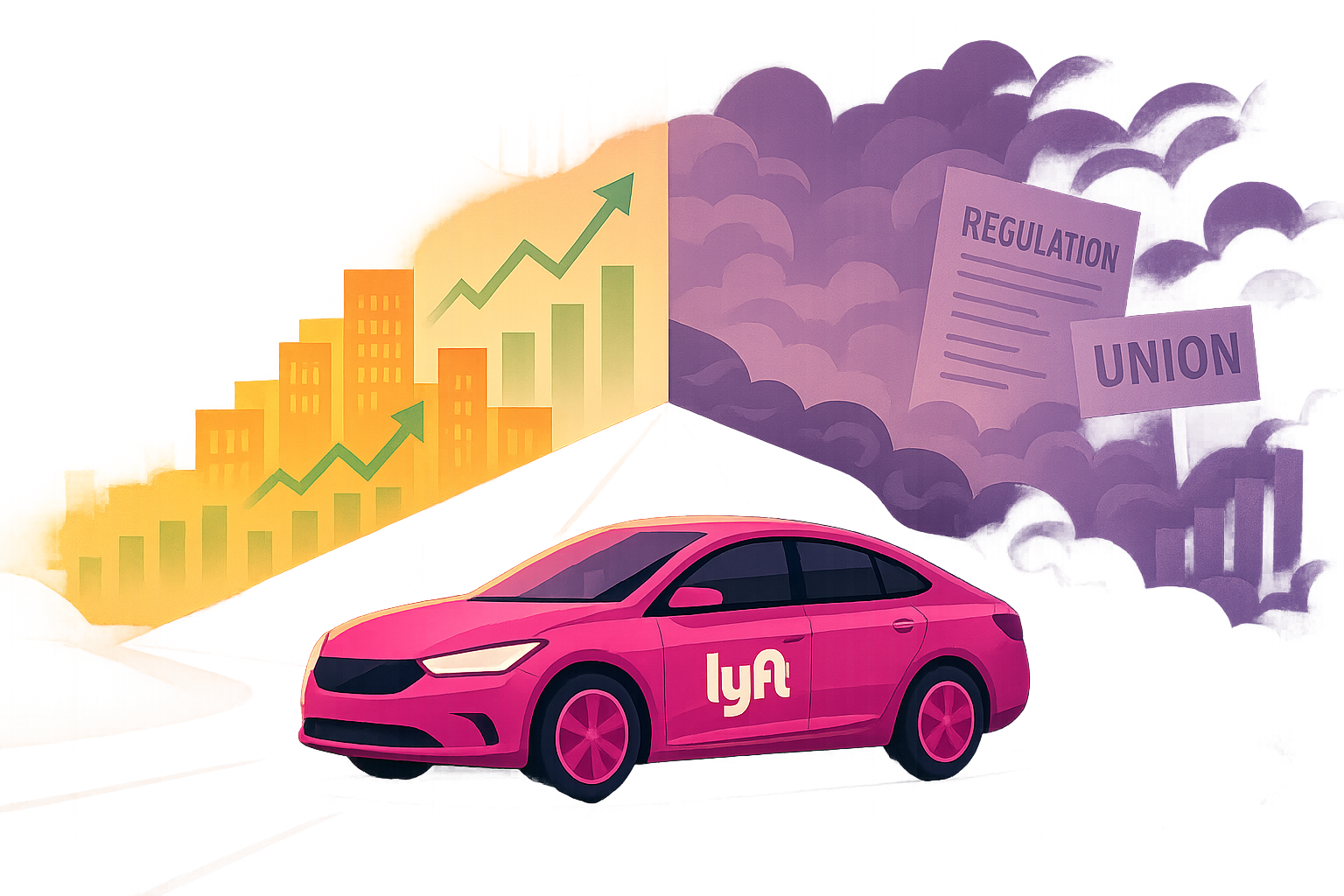
Lyft is attracting big-money bets from institutional investors even as insider sales and a stinging legal setback muddy the road ahead.
What to know
- California State Teachers Retirement System and Pacer Advisors have boosted their Lyft stakes, signaling long-term confidence despite missed earnings.
- Director Janey Whiteside and CFO Erin Brewer have sold thousands of shares under 10b5-1 plans, but Brewer still holds over 1.7 million shares.
- A July 2026 court ruling found Lyft acted with malice in a worker classification case, hitting the company with a $66,735 sanction and escalating legal risks.
Institutional Bets Defy Volatility
Major funds are doubling down on Lyft, signaling strategic faith in its long-term turnaround despite recent financial turbulence.
Despite Lyft's mixed earnings results, major institutional investors like Pacer Advisors Inc. and the California State Teachers Retirement System have notably increased their stakes in the company. This uptick in ownership underscores a nuanced confidence in Lyft's long-term prospects, suggesting that these investors see value beyond the immediate financial fluctuations. Their moves signal a strategic bet on Lyft's potential to navigate current challenges and capitalize on future growth opportunities.
Insider Sales, Enduring Stakes
Lyft executives are cashing out millions in shares through pre-set plans, yet retain sizable holdings that signal ongoing belief in the company’s future.
Lyft insiders have engaged in notable stock sales under Rule 10b5-1 trading plans, reflecting a methodical and compliant approach to liquidity amidst evolving market conditions. Director Janey Whiteside sold over 14,000 shares for approximately $241,740 in recent months and plans to offload an additional 5,480 shares tied to restricted stock units vesting later in 2026, signaling ongoing insider monetization while adhering to structured schedules. Similarly, CFO Erin Brewer executed a sale of 15,000 shares at an average price of $17.63 per share under a plan adopted in March 2026, demonstrating a consistent strategy for managing equity stakes without signaling opportunistic timing.
Despite these significant insider sales, key executives like Erin Brewer maintain substantial equity positions in Lyft, underscoring continued confidence and vested interest in the company's long-term prospects. Post-transaction, Brewer holds over 1.7 million shares both directly and indirectly through a trust, including restricted stock units yet to vest, which suggests that while liquidity needs are addressed through 10b5-1 plans, insider commitment to Lyft's future remains robust.
Legal Risks Escalate for Lyft
A court’s finding of malice in a gig worker dispute intensifies legal and reputational threats, casting uncertainty over Lyft’s labor model and cost structure.
A recent judicial ruling in July 2026 found Lyft acted with malice in a worker classification dispute involving driver Mark Nahvi, resulting in a $66,735 sanction for willfully delaying discovery and disobeying orders. While the direct financial penalty is relatively minor, this finding significantly heightens Lyft's legal and reputational risks, casting a shadow over its labor model and cost structure. Such legal challenges around gig worker classification have intensified investor concerns, reinforcing more cautious earnings forecasts and contributing to a mixed sentiment that weighs these operational risks more heavily than competitive or partnership dynamics.
The Nahvi case underscores a broader pattern of repeated worker classification disputes that pose a substantial near-term threat to Lyft’s business model, potentially reshaping its cost base and investor outlook more profoundly than market competition or strategic alliances. This evolving legal landscape introduces a layer of uncertainty that investors are increasingly factoring into their valuation models, as similar adverse rulings elsewhere could amplify Lyft’s financial and reputational exposure, thereby complicating the investment thesis amid an already volatile gig economy environment.
