Magyar’s landslide opens hungary’s democratic reset
The gist
Hungary just toppled Viktor Orbán’s 16-year rule in a democratic landslide, ushering in a pro-EU era and dealing a seismic blow to illiberal populism in Europe.
What to know
- Péter Magyar’s Tisza Party swept over two-thirds of parliament in Hungary’s 2026 election, ousting Orbán with record-high 80% turnout.
- The peaceful transition promises to restore media freedom, crack down on judicial corruption, and rebuild Hungary’s democratic institutions.
- Magyar’s win ends Hungary’s pro-Russian stance, unlocks €17 billion in EU funds, and shakes far-right alliances across Europe.
How Orbán Was Unseated
A unified opposition, record youth turnout, and rural campaigning shattered Orbán’s grip, proving entrenched autocrats can be ousted at the ballot box.
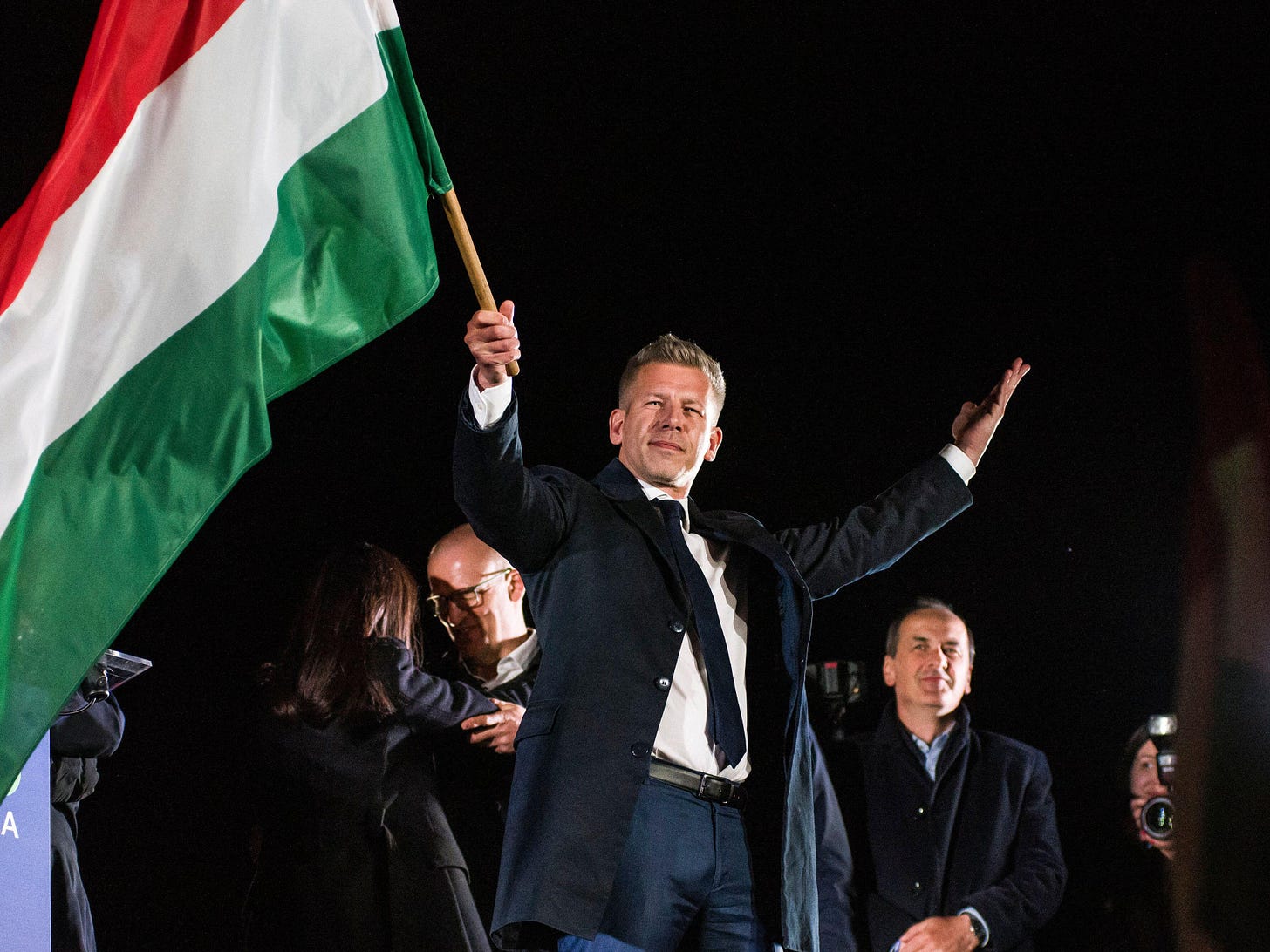
The 2026 Hungarian election marked a historic and unequivocal defeat of Viktor Orbán after 16 years of far-right rule, with Péter Magyar's pro-EU Tisza Party securing over two-thirds of the National Assembly seats amid a record-breaking voter turnout nearing 80%, the highest since the fall of communism. Orbán conceded defeat promptly, signaling a peaceful transfer of power and underscoring the resilience of Hungary’s democratic institutions despite years of illiberal governance and electoral manipulation. This election shattered the long-held narrative that Hungary was no longer a functioning democracy, demonstrating that even entrenched autocrats can be peacefully unseated through democratic means.
Péter Magyar’s rise from a former Fidesz loyalist who broke with Orbán in 2024 to a unifying center-right figure was pivotal in orchestrating this democratic transition. By relentlessly campaigning across rural Hungary—areas traditionally neglected by the opposition—and building a broad coalition including Christian Democratic parties like Friedrich Merz’s CDU, Magyar successfully appealed to Orbán’s core electorate with a conservative platform emphasizing integrity, skepticism toward Brussels, and strong immigration control. This strategic realignment not only eroded Orbán’s base by about 500,000 votes but also mobilized a critical youth vote, with nearly two-thirds of voters under 30 supporting Magyar, reflecting a generational shift in political allegiance.
The opposition’s unprecedented unity and proactive election defense infrastructure were crucial in overcoming systemic disadvantages such as gerrymandering and media control by Fidesz. Six opposition parties withdrew to consolidate votes behind Magyar, while the Tisza Party deployed 50,000 election monitors nationwide and implemented real-time fraud reporting systems supported by Transparency International Hungary. These efforts ensured electoral integrity and public trust, culminating in a peaceful concession by Orbán and reinforcing democratic norms in Hungary’s political culture, a stark contrast to other autocratic regimes where leaders refuse to accept defeat.
Looking ahead, Magyar’s victory speech emphasized accountability and reconciliation, signaling a commitment to responsible governance and democratic renewal. Despite holding a commanding two-thirds majority, Magyar acknowledged the need for vigilance from civil society and independent politicians to prevent abuses of power reminiscent of the Fidesz era. This cautious optimism reflects Hungary’s fragile but hopeful democratic resilience, as the nation embarks on reintegrating with the European mainstream and healing political divisions after nearly two decades of polarized far-right rule.



Undoing the Media Machine
Magyar’s government is dismantling years of state media control and purging loyalist officials, aiming to restore independent journalism and public trust.
Viktor Orbán's authoritarian grip on Hungary's media landscape was a cornerstone of his 16-year rule, with over 80% of traditional media outlets consolidated under the government-aligned KESMA holding by 2019, exempted from competition law as a 'national strategic interest.' This media empire was fortified through tactics such as packing the Media Council with loyalists who wielded the power to fine outlets for vague violations, deny licenses, and steer state advertising to friendly outlets, while purging over 1,600 journalists from public broadcaster MTVA to transform it into a government mouthpiece. The closure of the opposition daily Népszabadság following its investigative reporting on corruption linked to Orbán associates, and the firing of editors at independent sites like Index.hu after pro-Orbán businessmen seized advertising arms, exemplify the systematic dismantling of media independence and suppression of dissenting voices.
Orbán’s media bubble, while extensive, ultimately contributed to his downfall by isolating him from the public’s economic hardships and corruption concerns, creating a 'Truman Show'-like parallel reality that failed to reflect voter discontent. Péter Magyar’s opposition campaign capitalized on this disconnect by leveraging alternative platforms such as social media and podcasts to bypass state-controlled propaganda, mobilizing massive crowds even in rural Fidesz strongholds. His authentic engagement—visiting scores of towns and cities and spending hours meeting locals—contrasted sharply with Orbán’s foreign policy focus, signaling a strategic shift towards rebuilding trust in independent institutions and democratic governance.
The new Tisza Party government under Péter Magyar has committed to dismantling Orbán’s authoritarian media control by suspending the state television channel M1’s news service, which Magyar denounced as 'the factory of lies,' and establishing independent, impartial journalism to restore truth in public discourse. Concurrently, Magyar is targeting entrenched corruption by demanding the resignation of key judicial and prosecutorial officials deemed loyal to Orbán, describing Hungary’s chief prosecutor, president, and heads of the highest courts as 'puppets' of the former regime and threatening constitutional amendments to remove them if necessary. This comprehensive approach also includes plans to nationalize assets corruptly transferred to business interests and hold accountable those who 'plundered, looted, betrayed, indebted and ruined' Hungary since 2010, signaling a robust effort to rebuild democratic institutions and accountability.
Orbán’s authoritarian project was further undermined by high-profile scandals that shattered Fidesz’s conservative family-values image, most notably the 2024 presidential pardon by then-President Katalin Novák of a convicted official involved in covering up child abuse at a children’s home. This scandal exposed the 'hypocrisy' of Orbán’s narrative and fueled public outrage, which Péter Magyar harnessed by focusing relentlessly on domestic issues like corruption and economic predation by a few wealthy families controlling half the country. Magyar’s campaign, viewed nearly 3 million times in a pivotal video interview, emphasized dismantling oligarchic control and restoring democratic accountability, resonating deeply with voters disillusioned by years of authoritarian misrule.




Hungary’s Geopolitical U-Turn
Orbán’s fall removes Moscow’s key EU ally, unlocks billions in frozen funds, and weakens far-right populist momentum across Europe and beyond.
The electoral defeat of Viktor Orbán and the rise of Péter Magyar's pro-EU Tisza Party mark a decisive realignment of Hungary’s foreign policy away from Moscow and Beijing, ending Orbán’s 16-year role as Russia’s closest ally within the European Union. Orbán’s government had repeatedly blocked EU sanctions and aid packages for Ukraine, including a €90 billion loan, effectively stalling unified European responses to Russian aggression. Magyar’s leadership promises to unlock €17 billion in frozen EU cohesion funds and restore Hungary as a cooperative partner in EU and NATO affairs, signaling a broader strategic shift toward Western integration and support for Ukraine’s defense efforts. As David Presman, former US ambassador to Hungary, noted, this change offers hope for overcoming the corrosive influence of Orbán’s illiberal democracy on Hungary’s alliances.
Orbán’s departure dismantles a critical veto power within the EU that had been leveraged to obstruct cohesive foreign policy, particularly regarding sanctions on Russia and support for Ukraine. This shift not only enables the EU to propose qualified-majority voting on foreign policy decisions—potentially ending the unanimity rule exploited by Orbán—but also strengthens NATO unity by removing a key source of internal division. Péter Magyar’s administration has already begun exposing Russia-linked networks entrenched during Orbán’s tenure, signaling a comprehensive geopolitical recalibration away from Moscow’s influence in Central Europe.
The fall of Orbán reverberates beyond Hungary’s borders, undermining the momentum of far-right populist movements across Europe and weakening transatlantic authoritarian alliances. Orbán, hailed by the Heritage Foundation’s Kevin Roberts as “the model” for conservative statecraft, was central to forging a far-right alliance in the European Parliament alongside figures like Marine Le Pen and Geert Wilders, and influenced US initiatives such as Project 2025 aimed at 'Orbánising' American governance. His defeat signals a potential retreat for these movements, as populist parties in France, Germany, and elsewhere recalibrate their rhetoric to avoid alienating voters who favor stronger European integration.
While Russia and China are expected to pragmatically engage with Hungary’s new government, they will likely maintain ties with Orbán’s Fidesz party now relegated to opposition, reflecting a nuanced geopolitical landscape. Orbán’s personalized use of Hungary’s EU and NATO memberships for party gain is set to end, replaced by Magyar’s approach centered on sovereign interests and fact-based diplomacy. This transition promises to restore Hungary’s role as a reliable ally within Western institutions, improving relations with the US and EU and enhancing cooperation on shared security challenges.