Mercedes doubles down on hungary with EV push, job surge
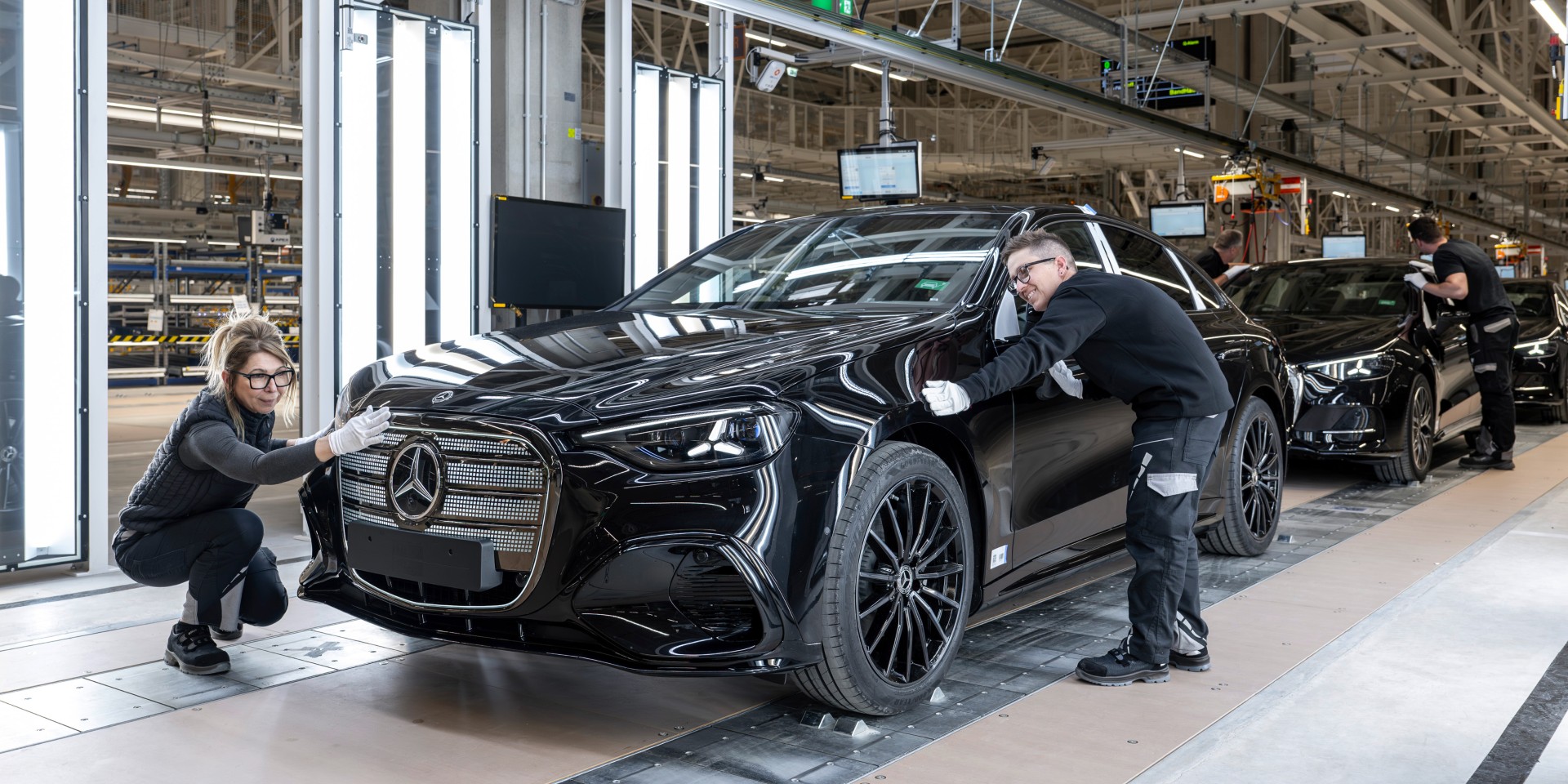
The gist
Mercedes-Benz is supercharging its Hungarian operations with a €1 billion investment, doubling factory capacity and shifting more EV production from Germany to Hungary to cut costs and accelerate its electric future.
What to know
- The Kecskemét plant will double output to 400,000 vehicles per year by 2027 and add 3,000 jobs, as Mercedes relocates compact G-Class 'Baby G' SUV production from Germany to Hungary.
- The expanded facility features high-tech digital manufacturing, onsite battery assembly, and a solar-powered paint shop, supporting both electric and combustion models sustainably.
- With the all-electric C-Class boasting up to 762 km of range and blazing 0-60 mph in under 4 seconds, Mercedes is ramping up EV momentum while slashing production costs by 10%.
Hungary Becomes Mercedes’ Powerhouse
Mercedes-Benz’s €1 billion Kecskemét expansion will shift iconic SUV production from Germany, double output, and slash costs, making Hungary central to the brand’s European strategy.
Mercedes-Benz is undertaking a transformative €1 billion investment to double the capacity of its Kecskemét plant in Hungary, aiming to ramp up production to 400,000 vehicles annually by 2027. Central to this expansion is the strategic relocation of the compact G-Class 'Baby G' SUV production from Germany to Hungary, a move designed to slash production costs by 10% over 2024–2027 by leveraging Hungary’s lower labor rates and boosting Kecskemét’s share of European output from 15% to 30%. This shift not only aligns with Mercedes’ broader cost-cutting and capacity goals but also anticipates the launch of the new compact G-Class built on the versatile MMA platform, which supports both electric and combustion powertrains and targets a more accessible price point.
The expansion of the Kecskemét facility, now Hungary’s largest automotive manufacturing site, encompasses a doubled footprint of 440 hectares and includes state-of-the-art infrastructure such as new bodywork and assembly halls, a second press shop, and an energy-efficient paint shop powered by 42.3 MW of solar capacity. Employing over 5,000 people—soon to grow by an additional 3,000 with the new production lines—the plant integrates advanced digital manufacturing systems and embraces Mercedes-Benz’s 'local-for-local' supply chain strategy by producing key components like body parts and drive batteries onsite. This holistic upgrade not only supports the production of the all-electric C-Class and future compact G-Class models but also underscores Mercedes’ commitment to sustainability and operational resilience amid global market pressures and internal labor dynamics.
This strategic production realignment reflects Mercedes-Benz’s response to intensifying global competition and internal challenges, including opposition from German labor unions, as the company seeks to maintain profitability and adapt to evolving market demands. By shifting significant production capacity to Hungary, Mercedes aims to optimize its global EV and luxury SUV manufacturing footprint, balancing cost efficiency with innovation, and positioning the Kecskemét plant as a pivotal hub in its electrification and growth strategy.
Electric C-Class Sets New Bar
With a 762 km range, rapid charging, and luxury tech features, the new all-electric C-Class redefines performance and comfort in the premium EV segment.
Mercedes-Benz launched the all-electric C-Class with the sporty C 400 4MATIC edition, featuring an advanced 800-volt, 94 kWh battery pack that delivers a WLTP range between 592 and 762 kilometers (up to 474 miles WLTP). This model boasts a powerful 360 kW dual-motor all-wheel-drive system producing 483 horsepower and 590 lb-ft of torque, enabling acceleration from 0 to 60 mph in under 4 seconds, outperforming the AMG C43. The battery supports rapid charging at up to 330 kW, replenishing from 10 to 80% in just 22 minutes, underscoring Mercedes-Benz’s commitment to combining performance with long-range capability.
The electric C-Class integrates advanced driving dynamics with rear-wheel steering, a feature borrowed from the electric S-Class, enhancing maneuverability and driving precision. Mercedes-Benz has strategically set differentiated pricing for business and private customers across Europe and plans to broaden the lineup with rear-wheel-drive variants and additional market launches, signaling a phased rollout designed to capture diverse customer segments.
Inside, the C-Class blends luxury and cutting-edge technology, offering a striking 39.1-inch MBUX Hyperscreen that spans the dashboard’s full width and a sky control panoramic roof illuminated by 162 ambient light stars, creating a unique ambiance. However, early reviews note that the Hyperscreen’s nearly vertical positioning can feel awkward and somewhat claustrophobic despite the spacious cabin. Additionally, Mercedes-Benz caters to ethical consumers by providing fully vegan upholstery options, reinforcing its commitment to sustainability and cruelty-free luxury.

Digital Factory, Greener Footprint
Kecskemét’s digital twin technology and solar-powered operations enable agile, sustainable manufacturing while preparing employees for the EV future.
Mercedes-Benz’s Kecskemét plant exemplifies a cutting-edge fusion of digital innovation and sustainability, leveraging advanced digital manufacturing systems including a Digital Factory Twin for virtual planning and simulation. This technology enables the plant to minimize downtime and enhance production flexibility by allowing processes to be tested and optimized before physical implementation, as highlighted by plant officials who note that much of the equipment and processes are planned virtually prior to construction. Complementing this digital transformation, the facility boasts a substantial 42.3 MW solar power capacity and an energy-efficient paint shop designed to conserve water, reduce energy consumption, and eliminate fossil fuel use, underscoring Mercedes-Benz’s commitment to environmental stewardship.
Central to Kecskemét’s strategic evolution is the integration of local battery assembly and component production, which fortifies Mercedes-Benz’s 'local-for-local' supply chain approach. By manufacturing key elements such as drive batteries and body parts onsite, the plant enhances responsiveness to market fluctuations and supports the production of electric models including the electric C-Class, GLC, and a compact G-Class. This localized production not only streamlines operations but also aligns with sustainability goals by reducing logistical emissions and fostering a more resilient manufacturing ecosystem.
The plant’s adoption of flexible production axes embodies a dynamic manufacturing philosophy that allows Mercedes-Benz to swiftly adjust production volumes and model mixes in response to shifting customer demands. This 'breathing' production network, as described by plant leadership, is empowered by AI-driven smart factory upgrades and is critical for managing the complexities of EV volume ramp-up without sacrificing efficiency. Moreover, the successful integration of these advanced technologies hinges on comprehensive employee qualification and training programs, which ensure that workforce capabilities evolve in tandem with technological advancements, thereby safeguarding uninterrupted operations during ongoing production transitions.
Job Surge Reshapes Mercedes’ Map
Mercedes’ workforce in Hungary will swell to 7,500 as it shifts production from Germany, cutting costs and solidifying its lead in Europe’s EV race.
By shifting the production of the compact 'Baby G' SUV to its Kecskemét plant in Hungary, Mercedes-Benz is strategically enhancing its operational efficiency and cost competitiveness within Europe. This €1 billion investment not only aims to cut production costs by 10% between 2024 and 2027 but also doubles the plant's capacity to 400,000 vehicles annually, effectively increasing its share of European production from 15% to 30%. Leveraging the versatile MMA platform to build the compact G-Class, which supports both electric and combustion powertrains, aligns with Mercedes-Benz’s broader ambition to lead sustainable mobility in Europe by offering iconic styling at a more accessible price point.
Expanding the workforce at Kecskemét by 3,000 employees to a total of 7,500 underscores Mercedes-Benz’s commitment to strengthening its European manufacturing footprint amid a competitive and evolving market. This strategic realignment, which includes reducing output by about 100,000 units at German plants, positions the company to optimize production locations and better compete across both electric and combustion vehicle segments. By consolidating production in Hungary, Mercedes-Benz not only taps into lower labor costs but also reinforces its capacity to meet growing demand for electric vehicles, thereby solidifying its leadership in Europe’s transition to sustainable automotive mobility.