Microsoft's quantum leap sparks fierce debate: majorana 2 chip faces peer-reviewed skepticism
The gist
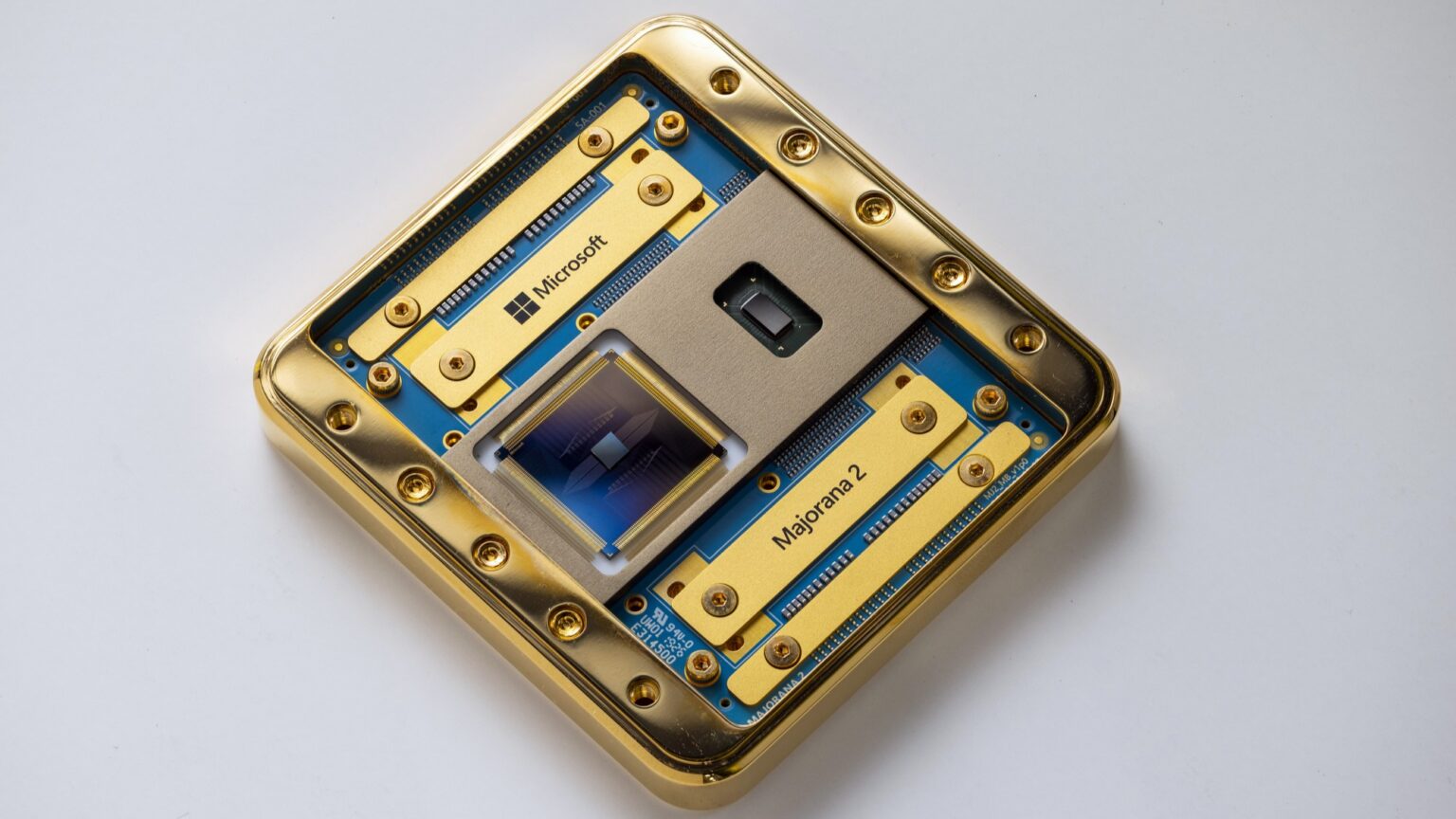
Microsoft’s Majorana 2 chip promises a quantum revolution with record-breaking qubit stability, but fierce peer-reviewed skepticism is putting its claims to the test.
What to know
- Microsoft unveiled the Majorana 2 chip in June 2026, boasting a 1000-fold leap in qubit coherence—up to 20 seconds on average—by moving from aluminum to lead superconductors.
- Physicist Henry Legg’s peer-reviewed critique accuses Microsoft of coding errors and selective data, arguing their evidence falls short of proving true topological qubits.
- Microsoft is doubling down on incremental progress and independent verification, weaving both topological and conventional quantum technologies into its Azure Quantum Cloud.
Material Science Breakthrough
Microsoft’s leap in qubit stability stems from a risky switch to lead superconductors and AI-driven materials discovery, revealing that quantum progress is rooted in inventive engineering, not just theoretical advances.
By mid-2026, Microsoft unveiled its Majorana 2 chip, marking a monumental 1000-fold improvement in qubit stability, with quantum states lasting on average 20 seconds and some reaching a full minute—an achievement Chetan Nayak described as a 'giant leap' from microseconds to whole seconds. This breakthrough was primarily driven by a strategic material shift from aluminum to lead superconductors, which provide superior shielding against cosmic disturbances and stray radiation, thereby significantly extending qubit coherence times. The transition to lead, despite its water solubility and fabrication challenges, was mastered through a specialized manufacturing process, underscoring that revolutionary progress can stem from smart refinements in fundamental materials rather than flashy inventions.
Microsoft's Majorana 2 chip also exemplifies the integration of cutting-edge AI, as internally developed agentic AI tools accelerated materials discovery and device architecture optimization, enabling the refinement of a novel materials stack that bolstered qubit stability. This AI-driven approach, combined with the use of topological qubits based on Majorana quasiparticles—exotic states theorized to store information nonlocally along superconducting wires—positions Microsoft on a trajectory toward scalable quantum computing, with CEO Satya Nadella projecting a commercially viable quantum system by 2029, aligning with competitors like IBM.
Despite these advances, Microsoft's claims remain contentious within the scientific community, as skepticism persists regarding the experimental verification of Majorana quasiparticles and the true topological nature of the qubits. Critics like physicist Henry Legg highlight the lack of comprehensive qubit measurement data, noting that only Z measurements were presented, while functioning qubits require both X and Z data, and recent peer-reviewed critiques have accused Microsoft of coding errors and selective data presentation. Microsoft, however, defends its findings as sound physics and trivial errors, emphasizing steady incremental progress over singular breakthroughs in pursuit of a quantum computer with massive commercial and societal value.

Peer Review Sparks Controversy
Physicists challenge Microsoft’s claims, arguing that missing measurements and alleged coding errors leave the existence of true topological qubits unproven despite headline-grabbing milestones.
Despite Microsoft's announcement in June 2026 of a 1000-fold increase in parity lifetime for their Majorana 2 chip—achieved by swapping aluminum for lead as the superconductor—skepticism remains entrenched within the quantum computing community. Physicist Henry Legg of the University of St Andrews emphasized that the data presented, primarily Z measurements, fall short of conclusively demonstrating a functioning topological qubit, which requires both X and Z measurements to validate. Independent experts like Kartiek Agarwal acknowledged the progress in probing nonlocal Majorana properties but stopped short of confirming the existence of topological qubits, underscoring the cautious stance many researchers maintain.
By late June 2026, the debate intensified as Henry Legg published a peer-reviewed critique in Nature challenging Microsoft's 2025 claims, accusing the company of flawed tune-up procedures, coding errors, and selective data omission that undermine the assertion of having demonstrated even a single topological qubit. Legg argued that signals Microsoft attributed to topological superconductivity could instead arise from experimental noise or trivial quantum dot effects, highlighting the notorious difficulty in distinguishing genuine topological states. Microsoft acknowledged coding errors but dismissed them as trivial, defending the robustness of their underlying physics and standing firmly by their results and roadmap.
The timing of Legg's critique, published alongside Microsoft's promotion of a successor chip and an accelerated timeline aiming for a commercially viable quantum computer by 2029, amplified scrutiny on the tech giant's claims. Microsoft's 2025 paper, which CEO Satya Nadella touted as paving the way toward a million-qubit processor within years, hinges entirely on the contested topological nature of their device—an indium arsenide nanowire coupled to aluminum and cooled near absolute zero. This fundamental dispute over the device's topology remains unresolved, with software corrections unable to settle the core question of whether the qubit is truly topological.
By early July 2026, skepticism among physicists and independent researchers had solidified, fueled by a history of disputed testing methods—including a retracted 2018 paper—and a lack of publicly available data. Critics accused Microsoft of overstating progress and misrepresenting the elusive Majorana particle, which remains theoretical and unobserved despite claims that their new processor is a thousand times more reliable than its predecessor. The polarized debate frames Microsoft's breakthrough as either a revolutionary advance or an extraordinarily costly exercise in wishful thinking, pending independent verification that the community continues to demand.

Quantum Race Intensifies
Microsoft’s topological qubit push faces fierce competition and skepticism, as industry players balance ambitious innovation with the need for steady, incremental progress to secure funding and credibility.
By mid-2026, the quantum computing landscape is marked by a vibrant mix of incremental progress from a wide array of players, ranging from startups like Atom Computing to tech giants such as Microsoft. This competitive yet collaborative environment fosters steady advancements as companies race to find viable paths to practical quantum utility, with Microsoft notably persisting in its unique topological qubit approach despite early skepticism and technical challenges. Their innovations in material science have significantly extended parity state stability—from under 10 milliseconds to over 20 seconds—highlighting the promise of their Majorana 2 project amid a crowded field.
Microsoft’s strategy exemplifies the broader industry’s balancing act between pioneering novel quantum paradigms and hedging bets on more conventional qubit technologies. While pushing forward with its topological Majorana qubits, the company simultaneously collaborates with competitors like Atom Computing, integrating diverse hardware solutions into its Azure Quantum Cloud ecosystem. This dual-track approach reflects the sector’s pragmatic response to economic and market pressures that favor incremental, verifiable progress over headline-grabbing breakthroughs, as firms navigate uncertain funding landscapes and the imperative to demonstrate tangible advancements.
The competitive and uncertain nature of topological quantum computing is underscored by the intense scrutiny Microsoft’s Majorana qubit claims have attracted. A critical peer-reviewed article published in Nature in June 2026 challenged the validity of Microsoft’s 2025 results, alleging coding errors and selective data presentation, though Microsoft maintains these issues are trivial and the underlying physics sound. The timing of this critique—coinciding with Microsoft’s accelerated commercial quantum computing target of 2029 and the unveiling of a successor chip—reveals how economic and market pressures are driving rapid innovation cycles and heightened public promotion within the quantum sector.

Verification Demands Grow
With Microsoft under scrutiny, the quantum community insists on independent validation and transparency to separate genuine breakthroughs from hype and maintain trust in the field’s future.
The ongoing debate surrounding Microsoft's Majorana 2 chip has spotlighted the indispensable role of independent verification in the topological quantum computing arena. Physicist Henry Legg emphasized that no amount of material innovation, such as the lead-based design, can substitute for reproducible scientific results, underscoring a broader demand for transparency and data sharing within the field. This insistence on reproducibility is critical not only for validating Microsoft's claims but also for maintaining confidence across the quantum computing community and setting realistic expectations for commercial viability.
Amidst skepticism, Microsoft maintains a stance of cautious optimism, focusing on incremental advancements rather than heralding a singular breakthrough. As Chetan Nayak articulated, the company aims for steady yearly improvements to inch closer to scalable quantum computing with significant commercial and societal impact. This pragmatic approach, reinforced by Jason Zander’s confidence in the underlying physics despite limited public data disclosure, reflects a strategic balance between innovation and measured progress in a field fraught with hype and uncertainty.