Modular AI agents gain speed, cut costs in 2026
The gist
Modular AI agent frameworks are doubling developer productivity and slashing costs, igniting a high-stakes arms race for smarter, self-improving enterprise AI in 2026.
What to know
- NVIDIA’s ENPIRE and open-source frameworks like Prime Intellect’s Verifiers let AI agents self-optimize with minimal human input, boosting accuracy from 18% to 83%.
- Universal RL environments and plug-and-play toolchains are turbocharging workflow iteration and benchmarking, making scalable autonomous agents the new industry norm.
- Enterprise deployments demand rigorous human-in-the-loop oversight and semantic context layers to combat hallucinations, with Gartner projecting up to 80% accuracy gains and 60% lower costs by 2027.
Modular Agents Redefine AI
Agentic RL frameworks and modular toolchains are setting new industry standards by enabling scalable, risk-aware AI architectures that double productivity and enforce strict safety controls.
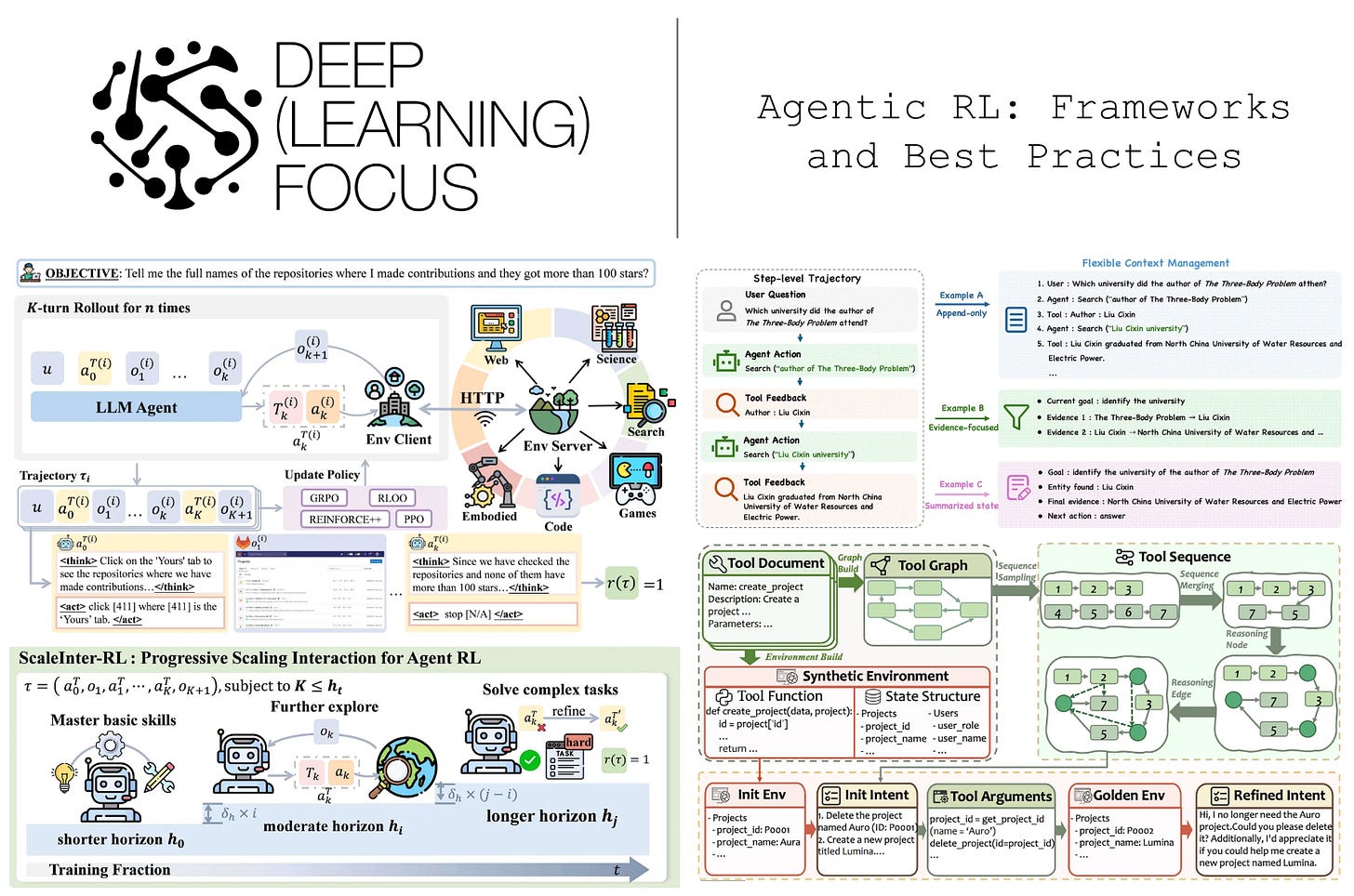
By 2026, modular agentic reinforcement learning frameworks have fundamentally transformed AI system design and orchestration, enabling scalable, stable architectures that turbocharge decision reliability and performance optimization across industries such as legal tech and cloud security. These frameworks integrate tool-based reasoning and precise, verifiable reward feedback loops, which not only double developer productivity but also set new standards for enterprise AI workflows and large language model architectures. This modularity facilitates distributed model sharding and slashes code bloat, empowering developers to build adaptable, cost-efficient AI agents that excel in complex, risk-aware environments.
In the fiercely competitive AI software arms race of 2026, mastering agentic RL frameworks and orchestration layers has become critical for enterprises striving to deploy smarter, grounded, and highly controllable AI workflows at scale. These frameworks play a pivotal role in managing hallucination crises by embedding risk-aware workflows that enhance system stability and reliability, thereby reshaping AI oversight and efficiency battles. Their modular design not only improves orchestration but also ensures that AI agents operate within strict performance and safety parameters, a necessity as organizations push the boundaries of AI agent orchestration and reinforcement learning.




Self-Improving Agents Surge Ahead
Autonomous AI agents are now outperforming human-optimized systems by rapidly iterating on their own code and strategies, driving a leap in adaptability and efficiency across robotics and data science.
NVIDIA’s ENPIRE framework, alongside its LoopWM models, is spearheading a transformative leap in autonomous robot adaptability and multi-robot coordination by enabling AI agents to self-optimize policies with minimal human oversight. This synergy not only turbocharges simulation efficiency but also embodies the 2026 surge in agentic AI systems that learn and adapt dynamically in complex environments, setting a new standard for autonomous robotic performance.
AutoAgent exemplifies the power of iterative self-improvement in AI agents, autonomously refining system code, prompts, and tools to boost accuracy from a modest 18% to an impressive 83% within just ten iterations. Remarkably, it also surpasses human-optimized production agents by discovering novel enhancements, underscoring a paradigm where AI agents independently elevate their capabilities beyond human expertise.
Open-source data science agents are leveraging autonomous self-improvement feedback loops to rival top-tier models like GPT-4, achieving comparable performance with significantly smaller architectures of 4 to 8 billion parameters. This approach not only drives efficiency and cost reduction but also enhances transparency for practitioners, marking a practical and democratizing shift in agentic AI development.
The Red Queen Gödel Machine (RQGM) framework introduces a novel recursive self-improvement mechanism where agents co-evolve with their evaluators through controlled utility evolution, adapting evaluation criteria across epochs. This dynamic interplay yields substantial efficiency gains—reducing token usage by up to 1.72×—while boosting performance metrics by 9%, exemplified in Olympiad-level proof writing and grading tasks, and highlighting a sophisticated path toward autonomous adaptability in agentic AI.



RL Environments Fuel Productivity Boom
Universal, open-source reinforcement learning platforms are accelerating developer workflows and benchmarking, making rapid iteration and cross-domain deployment the new norm in the AI arms race.
In 2026, reinforcement learning environments have become pivotal in turbocharging developer productivity by streamlining model training, fine-tuning, and evaluation workflows. Platforms like Lightning AI Studio provide ready-to-use codebases coupled with GPU resources, enabling developers to rapidly build custom RL environments, while emerging model-agnostic interfaces with robust retry logic further accelerate AI evaluation pipelines. This synergy of tools not only reduces iteration cycles but also enhances benchmarking efficiency, positioning RL environments as foundational to the ongoing AI software arms race.
The democratization of reinforcement learning environments through open-source frameworks such as Prime Intellect’s Verifiers and Speechmatics’ voice agent stack is reshaping the AI development landscape by broadening access and boosting productivity across the board. This open ecosystem fosters innovation and rapid iteration, yet it simultaneously raises the stakes for human oversight amid the intensifying 2026 AI arms race, underscoring the delicate balance between automation and responsible governance.
A universal reinforcement learning environment blueprint is emerging as a game-changer, empowering developers to swiftly adapt agentic workflows across diverse domains and fueling a surge in AI software productivity. By enabling continuous iteration and cross-domain flexibility, this blueprint is reinforcing best practices in AI systems engineering and accelerating the pace at which enterprises can deploy robust, scalable RL-driven solutions.
Human Oversight Anchors Reliability
Enterprise AI's future depends on robust context engineering and outcome-driven review processes, as legacy tech and fragmented data demand bespoke solutions to combat hallucinations and ensure trustworthy automation.
Addressing the 2026 hallucination crisis in enterprise AI workflows demands rigorous testing combined with nuanced human oversight, as highlighted by industry experts emphasizing that resilient AI agents cannot operate reliably without continuous human-in-the-loop governance. Guillaume de Saint Marc illustrates that multi-agent coordination failures stem not merely from connectivity issues but from deeper infrastructural deficiencies such as lack of shared semantic grounding and persistent memory, necessitating robust security and observability frameworks embedded from the outset to ensure accountable and trustworthy workflows.
Effective enterprise AI deployment hinges on engineers defining clear, outcome-based goals rather than vague task instructions, enabling AI agents to iteratively refine code and solutions until they meet rigorous standards. Katelyn’s team at Claude Managed Agents exemplifies this with their 'Outcomes' feature, where a secondary AI agent evaluates outputs against expectations, fostering continuous improvement. This paradigm elevates reviewing AI-generated work to a critical engineering skill, underscoring the indispensable role of human oversight in maintaining quality and reliability within complex AI-driven workflows.
Legacy enterprise software stacks, often decades old, pose significant challenges for AI integration due to fragmented data workflows and governance gaps that hinder true transformation. Gartner stresses that a robust context layer—integrating semantics, operational state, and provenance—is foundational for scalable, reliable AI agents, with organizations prioritizing AI-ready semantic data projected to boost accuracy by up to 80% and reduce costs by 60% by 2027. However, this context engineering requires bespoke internal development alongside commercial technologies, as no out-of-the-box solution currently suffices to overcome these entrenched complexities.
Optimizing enterprise AI workflows involves systemic engineering solutions to common agent failures such as runaway loops, tool misuse, memory rot, and weak grounding, rather than relying solely on model improvements. Continuous evaluation pipelines leveraging LLMs as judges have become standard practice in 2026, enabling early detection of hallucinations, tool-call fidelity issues, and handoff latency in multi-agent systems. Furthermore, runtime constraints like step limits and token budgets, combined with aggressive summarization and single sources of truth for memory, are critical to maintaining reliability and scalability in complex, multi-agent enterprise environments.