Musk bets big on gas power for AI and chip empire
The gist
Elon Musk is betting big on natural gas to power his AI and chip empire, prioritizing speed and reliability over his own green energy ambitions.
What to know
- SpaceX’s Terafab chip megafactory and Musk’s AI data centers are powered by on-site natural gas plants and massive Tesla Megapack batteries, sidelining Tesla solar panels.
- Musk has spent over $2.8 billion on gas turbines and acquired APR Energy for $1 billion, rapidly consolidating his own fossil-fueled energy supply chain for tech growth.
- Despite this fossil-first push, Musk’s companies plan to ramp up solar and battery solutions—especially in sun-rich regions—as AI compute demand is set to skyrocket past 100 GW by 2030.
Gas Turbines Trump Solar
Musk’s AI centers favor natural gas for its rapid, reliable power—even as complex, slow-to-scale turbine manufacturing limits how fast fossil energy can expand.
Elon Musk’s AI data centers currently prioritize natural gas for power due to its unmatched reliability, low cost, and the ability to be rapidly deployed within a compact footprint, which is essential for dense urban environments where space is at a premium. Unlike solar panels, whose manufacturing is highly automated and scalable, gas turbines require complex, labor-intensive production processes that can take one to two years, limiting their scalability and cost reduction despite their operational advantages.
While natural gas dominates the current energy mix for Musk’s AI compute facilities, there is a clear trajectory toward integrating more solar and battery solutions as AI compute demand scales dramatically—expected to surpass 100 gigawatts annually by 2030. This transition is particularly promising in geographically favorable regions like the U.S. Southwest deserts, where solar combined with battery storage and supplemental gas generation offers a fast and cost-effective power solution, although challenges in infrastructure development and skilled workforce availability remain significant hurdles.

Terafab’s Power Paradox
SpaceX’s chip megafactory relies on gas plants over Tesla solar, driven by the unforgiving power needs of semiconductor production and a race to start chip output by 2027.
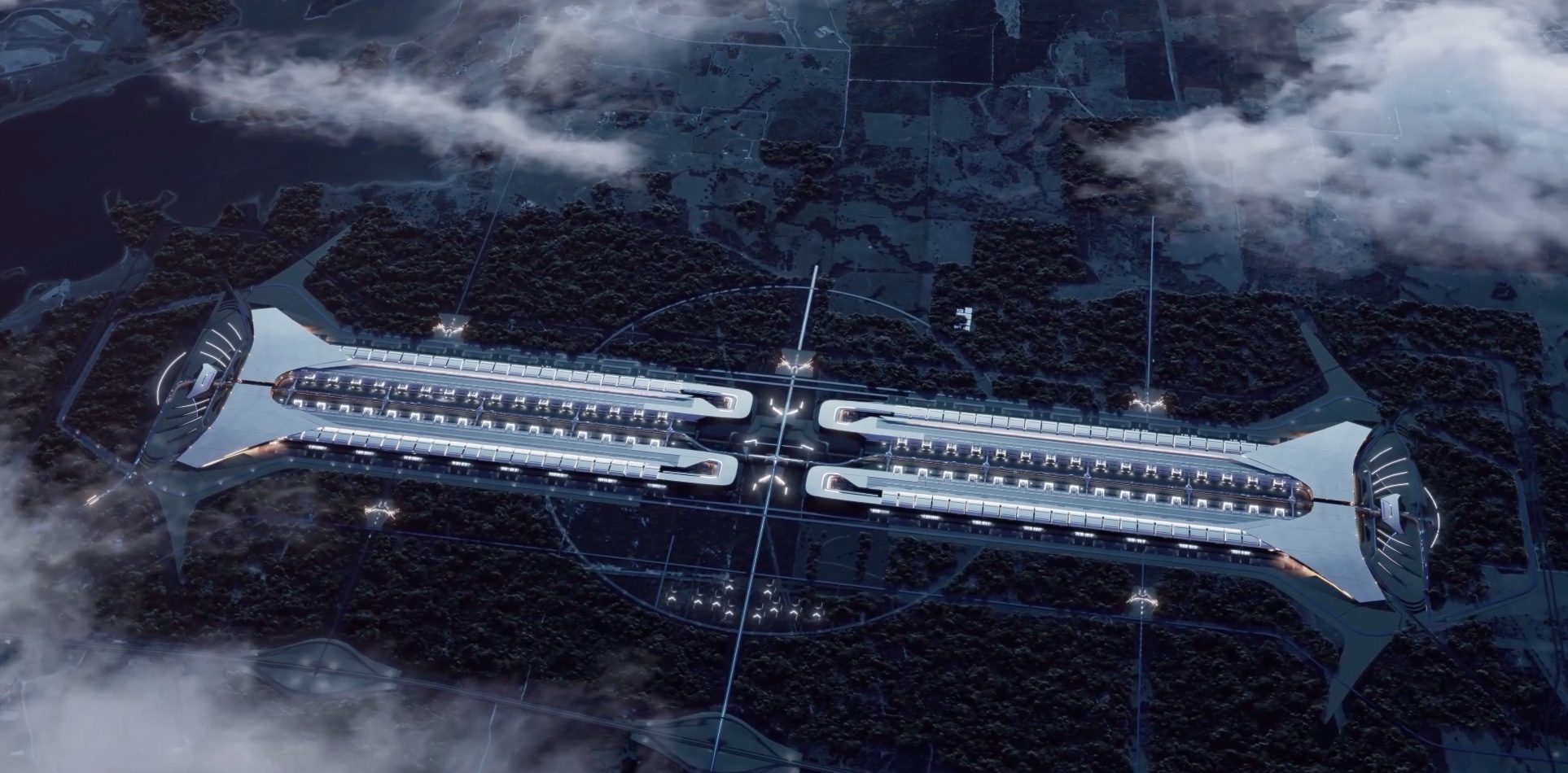
Terafab is envisioned as a colossal, vertically integrated semiconductor megafactory designed to consolidate advanced logic and memory manufacturing, packaging, and testing under one roof. This facility aims to bridge the widening gap between current global chip supply and the surging compute demands of the future, particularly supporting Musk’s AI and space ventures by producing chips optimized for Tesla’s Optimus robots, Cybercabs, and SpaceX’s space-based data centers. By internalizing chip production, SpaceX seeks to exert unprecedented control over its supply chain, mirroring Musk’s broader strategy to reduce dependency on external suppliers and drive down costs.
In a striking departure from Musk’s long-term vision of a solar-powered economy, Terafab’s energy infrastructure is anchored in on-site natural gas power plants complemented by very large battery arrays, explicitly excluding Tesla’s solar panels despite Tesla’s involvement in the project. This gas-first approach is driven by the semiconductor fab’s stringent power quality requirements—where even an eight-millisecond voltage fluctuation can ruin entire production batches—and the inherent advantages of gas turbines in delivering synchronized AC power with minimal harmonic distortion, unlike solar-plus-battery systems that require complex conditioning and introduce power signal distortion.
The decision to prioritize natural gas over Tesla solar also reflects pragmatic considerations of speed and reliability: gas turbines can be deployed and operational within months, aligning with SpaceX’s aggressive timeline to commence chip production by late 2027, whereas utility-scale solar installations typically require three to five years. This urgency is underscored by Musk’s recent $1 billion acquisition of APR Energy, a gas turbine company, and over $2.8 billion committed to gas turbines for SpaceX data centers, signaling a strategic consolidation of gas turbine assets to power his semiconductor and data infrastructure efficiently and swiftly.
Situated on the site of a former coal-fired power plant in Grimes County, Texas, Terafab symbolizes a transition from coal to natural gas rather than a leap to renewable energy, embodying Musk’s immediate operational priorities over his aspirational solar-electric economy. While Tesla’s Megapack battery storage is likely integrated to stabilize the power supply, the exclusion of Tesla solar panels highlights a deliberate strategic separation within Musk’s energy ecosystem, emphasizing self-sufficient, on-site generation and storage solutions tailored to the demanding and time-sensitive needs of semiconductor manufacturing.



Tesla Megapacks Fuel Growth
SpaceX is pouring hundreds of millions into Tesla’s battery storage and vehicles, while vertically integrating gas production to secure energy for AI and rocket operations.
By early 2026, Tesla’s Megapack battery storage systems had become indispensable to SpaceX’s AI data center operations, with SpaceX spending $329 million in the first half of the year alone to support its AI infrastructure following the xAI acquisition. This deep integration highlights Tesla’s expanding role beyond automotive sales into energy storage, as Megapacks help manage the volatile power demands of AI computing, smoothing fluctuations and reducing costs. Additionally, Tesla’s vehicles, such as the $131 million worth of Cybertrucks acquired by SpaceX, further illustrate the growing internal commercial ecosystem Musk is cultivating across his companies.
Despite Tesla’s renewable energy offerings, SpaceX’s Terafab semiconductor megafactory in Texas is powered primarily by natural gas plants and large battery arrays, explicitly excluding Tesla solar solutions. This choice reflects Musk’s strategic preference for rapid deployment and cost efficiency through his $1 billion acquisition of APR Energy, which provides over a gigawatt of turbine capacity. The decision underscores a pragmatic divergence between Musk’s public promotion of a solar-powered economy and the fossil fuel-heavy energy sourcing that currently underpins his AI and chip manufacturing ventures.
SpaceX is aggressively expanding into natural gas trading and production to secure energy self-sufficiency for its semiconductor manufacturing and space exploration activities. By building its own gas-fired power plants, pipelines, and drilling operations, SpaceX aims to tightly control fuel supply, particularly for its Starship rocket, which relies on super-chilled methane derived from natural gas. The establishment of a natural gas trading team based at key operational hubs like Cape Canaveral and Starbase reflects a highly integrated energy strategy that aligns closely with the company’s manufacturing and launch facilities.

Solar Surge on the Horizon
Tesla is gearing up to mass-produce solar panels as Musk’s empire pivots toward renewable energy for AI compute, leveraging solar’s rapid, automated scalability over gas.
While Elon Musk’s xAI currently relies on gas generation for AI data centers due to its reliability and compact footprint suitable for urban settings, the anticipated surge in AI compute demand to over 100 GW annually by 2030 is driving a strategic pivot toward solar and battery solutions. This transition is especially viable for terrestrial compute in sun-rich desert regions, where Musk’s companies plan to leverage abundant solar resources to meet escalating energy needs sustainably. Tesla has been tasked with ramping up solar panel production to 100 GW, signaling a major commitment to scaling renewable infrastructure in tandem with AI growth.
The economics and scalability of energy infrastructure are also shaping this shift; solar panel manufacturing benefits from rapid, automatable processes like lamination and cutting, enabling faster cost reductions and production scale compared to the slow, labor-intensive, and less automatable gas turbine manufacturing. This manufacturing advantage positions solar as the increasingly preferred energy source for large-scale AI data centers, prompting Musk’s companies, including Tesla and SpaceX, to explore new manufacturing ventures such as turbine blade production to complement the evolving energy mix.