NATO's missile makeover: lockheed martin and Europe race to plug defense gaps amid rising threats
The gist
Lockheed Martin and NATO allies are turbocharging European missile production and partnerships, aiming to plug urgent defense gaps as threats surge across the continent.
What to know
- Lockheed Martin is expanding PAC-3 sustainment and ATACMS production in Europe by mid-2026, teaming up with Rheinmetall to localize manufacturing.
- Despite NATO's push, countries like Spain still lag on defense spending goals—just 2.1% of GDP versus the alliance’s 5% target—fueling continued reliance on U.S. missile tech.
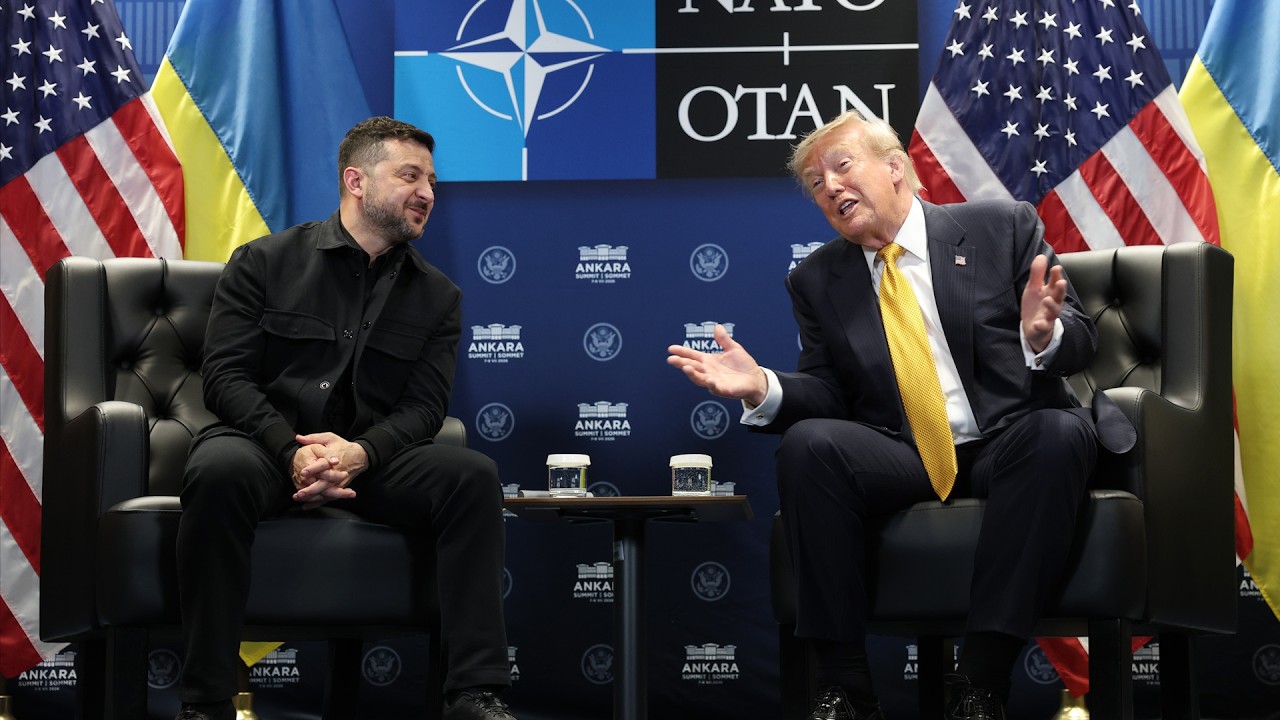
- NATO’s Ankara summit signaled a strategic shift to more European defense responsibility, sparking a wave of industrial scaling and multinational collaboration to close munitions shortfalls exposed by the Ukraine war.
Missile Industry Goes Local
Lockheed Martin’s European expansion with Rheinmetall marks a new era of allied missile manufacturing, forging deeper defense ties and rapidly scaling NATO’s industrial capacity in direct response to rising security threats.
Lockheed Martin's strategic expansion of PAC-3 missile sustainment and ATACMS production facilities across Europe is a direct response to NATO's renewed and deepening defense commitments. CEO Jim Taiclet has emphasized that these developments not only reflect the alliance's growing focus on missile defense capabilities but also underscore an unprecedented level of allied collaboration, exemplified by Lockheed Martin's partnership with Rheinmetall to localize ATACMS production in Europe. This move enhances regional defense ties and signals a significant scaling of industrial capacity to meet evolving geopolitical challenges.
The expansion of Lockheed Martin’s missile sustainment and production in Europe aligns closely with broader European rearmament efforts and NATO’s strategic priorities amid heightened geopolitical tensions. By mid-2026, these efforts are set to deliver a major boost to allied missile defense capabilities, reflecting a concerted push towards integrated defense readiness and industrial resilience. As Jim Taiclet notes, this growth is not merely about capacity but also about fostering deeper defense collaboration among NATO members to address the evolving security landscape.



Europe’s Missile Balancing Act
Despite ambitious rearmament and joint procurement projects, European nations remain tethered to U.S. missile tech as capability gaps and industrial shortfalls complicate the quest for true defense autonomy.
European defense capability gaps persist despite ambitious spending targets, with countries like Spain lagging at just 2.1% of GDP against the Hague commitment of 5% by 2035. This shortfall underscores the ongoing reliance on U.S. technology, as exemplified by Germany’s pursuit of licenses to co-produce Tomahawk and Patriot missiles, even in the face of competitive European alternatives from companies like MBDA. The situation reflects a complex balance between striving for greater self-sufficiency and the practical necessity of leveraging established U.S. systems within NATO frameworks.
Multinational industrial collaboration has emerged as a strategic response to these capability gaps, with pooling and sharing initiatives such as the Airbus A400M project involving Belgium, Croatia, France, Poland, Spain, Turkey, and the UK. This approach extends to advanced procurement efforts, including contracts for Saab GlobalEye AEW&C aircraft and MQ-4C Triton drones valued at around $50 billion, aimed at replacing aging platforms and enhancing surveillance capabilities. Such collaboration not only maximizes resource efficiency but also fosters interoperability and collective resilience across European NATO members.
Licensing agreements and industrial scaling efforts are reshaping missile production within Europe and allied nations, with the U.S. expanding Patriot missile production licenses to Germany, Japan, and now Ukraine. This diversification signals a strategic industrial scaling designed to meet growing air defense demands, despite common supply chain constraints like the global scarcity of solid rocket motors. As multiple nations engage in production, there is an expectation that each will innovate, potentially accelerating capability improvements and fostering a competitive yet collaborative defense industrial base.
While Europe is committed to increasing defense spending and industrial self-reliance, underlying political tensions, such as the Greenland dispute, continue to influence perceptions of the U.S. within the alliance and shape procurement decisions. Leaders emphasize the necessity of well-spent funds through enhanced collaboration, with initiatives like the next-generation fighter programs FCAS and GCAP embodying multinational partnerships and integrated systems such as the combat cloud. Airbus CEO highlights that Europe’s rearmament efforts are not about excluding the U.S. but rather about complementing allied capabilities, reflecting a nuanced balance between dependence and autonomy within NATO.

Allied Resolve Faces Real-World Tests
NATO’s strategic pivot toward European self-reliance is colliding with the operational realities of munitions shortages and escalating conflicts, forcing both the U.S. and its allies to rethink industrial and nuclear commitments amid mounting global threats.
Despite political rhetoric and transatlantic tensions, the United States has reaffirmed its unwavering commitment to NATO and European security, as underscored by General a. D. Ben Hodges’ reflection on the Ankara summit where he felt "the USA are still a reliable ally." This steadfastness includes maintaining the U.S. nuclear umbrella, which remains a cornerstone of European deterrence strategy, with NATO members explicitly rejecting any need for independent European nuclear arsenals to avoid what Hodges termed a "huge strategic failure of the United States."
The Ankara NATO summit marked a strategic transition emphasizing Europe's growing responsibility for its conventional defense capabilities, driven by potential U.S. troop reductions and the imperative for greater European self-reliance. This shift is reflected in accelerated European defense spending—Germany alone plans to borrow over €800 billion by 2030—and a push to close longstanding capability gaps through industrial scaling and innovation, including missile defense and drone production, as NATO adapts to the complex demands of modern warfare.
Regional conflicts, particularly the war in Ukraine and tensions in the Middle East involving Iran, have profoundly influenced NATO’s defense posture by highlighting urgent munitions shortages and the need for robust allied collaboration. Ukraine’s evolution from aid recipient to a key security producer—manufacturing licensed Patriot missiles and advancing drone and electronic warfare technologies—exemplifies this dynamic, while the depletion of critical U.S. missile inventories amid intensified Iranian attacks underscores the operational constraints facing NATO and the urgency of industrial sustainment efforts.
Heightened geopolitical tensions extending from the Middle East to global flashpoints like Taiwan have exposed strategic vulnerabilities due to mismatches in missile production and replenishment timelines, creating potential windows of opportunity for adversaries. As retired RAF Air Marshal Greg Bagwell highlights, NATO faces a critical need for a generational transformation in defense strategy—integrating a high-low mix of advanced and cost-effective systems and rapidly adapting to technological advancements—to maintain strategic advantage and avoid being judged as the generation that failed to meet evolving security challenges.