NYC health + hospitals breach sparks alarm over lifelong patient risks as biometric data goes irrevocably public
The gist
A massive breach at NYC Health + Hospitals has unleashed irreversible biometric data of 1.8 million patients, igniting alarms over lifelong identity and medical fraud risks.
What to know
- Hackers exploited a third-party vendor, exposing fingerprints, palm prints, and sensitive medical info from November 2025 to February 2026 before detection.
- This breach highlights deep-rooted cybersecurity flaws in U.S. healthcare, with nearly 74% of compromised devices leaking electronic health record credentials.
- Experts are demanding urgent overhauls to healthcare cybersecurity by mid-2026, warning that outdated systems and lax partner risk management leave patients perpetually vulnerable.
Biometric Breach Fallout
The exposure of 1.8 million patients’ unchangeable biometric data at NYC’s largest public hospital system marks a watershed moment in healthcare privacy failures and erodes public trust in sprawling health networks.
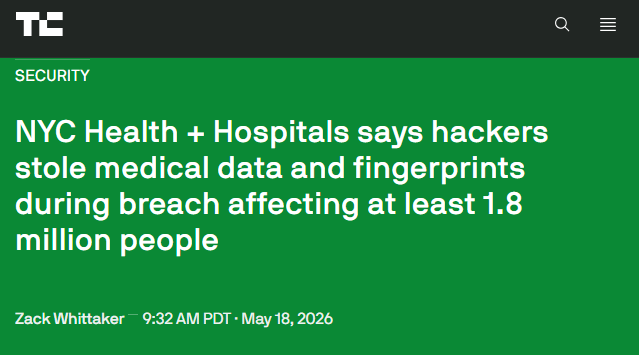
The NYC Health + Hospitals data breach, disclosed in early 2026, exposed sensitive information of approximately 1.8 million patients, marking one of the largest cybersecurity failures within a U.S. public health system. As the nation’s largest public healthcare provider, the scale of this breach underscores the vulnerabilities inherent in sprawling, complex health networks and the devastating impact such breaches can have on patient privacy and trust.
This breach, which unfolded over several months from November 2025 to February 2026, was traced back to a compromised third-party vendor, highlighting a critical weak link in healthcare cybersecurity: external partners. The prolonged exposure period before detection on February 2, 2026, illustrates how attackers exploit vendor relationships to infiltrate major systems, emphasizing the urgent need for rigorous third-party risk management in healthcare IT ecosystems.
What sets this breach apart is the theft of highly sensitive and immutable biometric data, including fingerprints and palm prints, alongside precise geolocation metadata extracted from user-uploaded identity documents. Unlike passwords or credit card numbers, biometric identifiers are permanent and cannot be changed, raising profound concerns about long-term misuse and identity theft. This unprecedented compromise of biometric and geolocation data signals a new frontier in cybersecurity threats facing healthcare institutions.

Credential Chaos in Healthcare
Nearly three-quarters of compromised healthcare devices leak electronic health record credentials, fueling a surge in targeted attacks due to outdated infrastructure and poor credential management.
By early 2026, the US healthcare sector's cybersecurity landscape revealed deep systemic vulnerabilities rooted in outdated infrastructure and pervasive third-party risks, which collectively facilitated a surge in ransomware and unauthorized access incidents. Flare's 2026 report underscores this fragility, showing that nearly three-quarters of compromised healthcare devices expose credentials tied to electronic health records, thereby leaking sensitive patient information and amplifying breach impacts. This widespread credential exposure is not incidental but a direct consequence of insufficient device security and lax credential management practices across healthcare organizations.
Credential-driven attacks on clinical systems have escalated sharply, with a 33% year-over-year rise fueled by infostealer malware that harvests and disseminates stolen access data on cybercrime forums. This alarming trend spotlights a critical weakness in how healthcare entities manage and protect credentials, making devices and systems increasingly vulnerable to exploitation. The US, as the most targeted country accounting for 48% of exposed logs, exemplifies how systemic infrastructure gaps and third-party vulnerabilities converge to create a fertile ground for these sophisticated attacks.
Recognizing these systemic cybersecurity frailties, Flare's report calls for urgent enhancements in monitoring credential exposure and accelerating breach detection mechanisms within healthcare organizations. Without such proactive measures, the sector risks catastrophic consequences not only to patient data confidentiality but also to the operational integrity of hospital infrastructure, underscoring that addressing these vulnerabilities is paramount to safeguarding the future of healthcare delivery.

Lifelong Risk for Victims
Patients now face permanent identity threats as hackers possess both immutable biometrics and detailed medical records, creating unprecedented opportunities for medical fraud and long-term exploitation.
The 2026 breach of NYC Health + Hospitals exposed immutable biometric data—including fingerprints and palm prints—of 1.8 million patients, underscoring a uniquely severe privacy risk since such identifiers cannot be changed or reissued like passwords or credit cards. This permanence means victims face lifelong vulnerability, as hackers can exploit these biometrics indefinitely, amplifying concerns beyond typical data theft scenarios.
Compounding the threat, the hackers also accessed extensive sensitive medical information—ranging from diagnoses and medications to billing and insurance details—dramatically increasing the risk of medical identity fraud. This fusion of biometric and medical data creates a potent vector for fraudsters to impersonate patients, manipulate healthcare services, and inflict long-term financial and privacy damages, as evidenced by the scale of the NYC Health + Hospitals breach.
The breach also highlighted systemic vulnerabilities stemming from third-party vendor relationships, which served as the initial attack vector allowing unauthorized access to this trove of biometric and medical data. This incident illustrates how interconnected healthcare ecosystems can inadvertently expand the attack surface, emphasizing the urgent need for robust vendor risk management and cybersecurity protocols across all partners handling sensitive patient information.
Adding another layer of concern, the exposure of precise geolocation metadata linked to identity documents in the NYC Health + Hospitals hack enables detailed tracking and profiling of affected individuals. This not only exacerbates privacy violations but also facilitates sophisticated social engineering and targeted attacks, further endangering patients’ security and highlighting the multifaceted nature of risks when biometric and medical data are compromised simultaneously.

Overhaul or Catastrophe Looms
With credential-driven attacks up 33% and millions of records exposed, experts warn that only urgent, sector-wide cybersecurity reforms can prevent future breaches from crippling patient care and hospital operations.
By mid-2026, the healthcare sector faces an urgent imperative to overhaul cybersecurity frameworks, as multiple data breaches have exposed millions of patient records. Experts underscore that outdated infrastructure and vulnerabilities in third-party systems are primary enablers of ransomware attacks and unauthorized access, necessitating not only enhanced access controls and robust data encryption but also comprehensive monitoring protocols. Flare's 2026 report starkly reveals that nearly 74% of compromised healthcare devices expose credentials tied to electronic health records, contributing to a 33% year-over-year surge in credential-driven attacks, thereby amplifying the critical need for accelerated detection and prevention strategies to safeguard patient data and hospital operations.