OpenAI’s $42 billion ‘hypertithe’ to uncle sam sparks fierce debate over AI ownership and oversight
The gist
OpenAI’s $42 billion offer to hand Uncle Sam a 5% equity stake is igniting a fierce showdown over who should own—and oversee—the future of artificial intelligence.
What to know
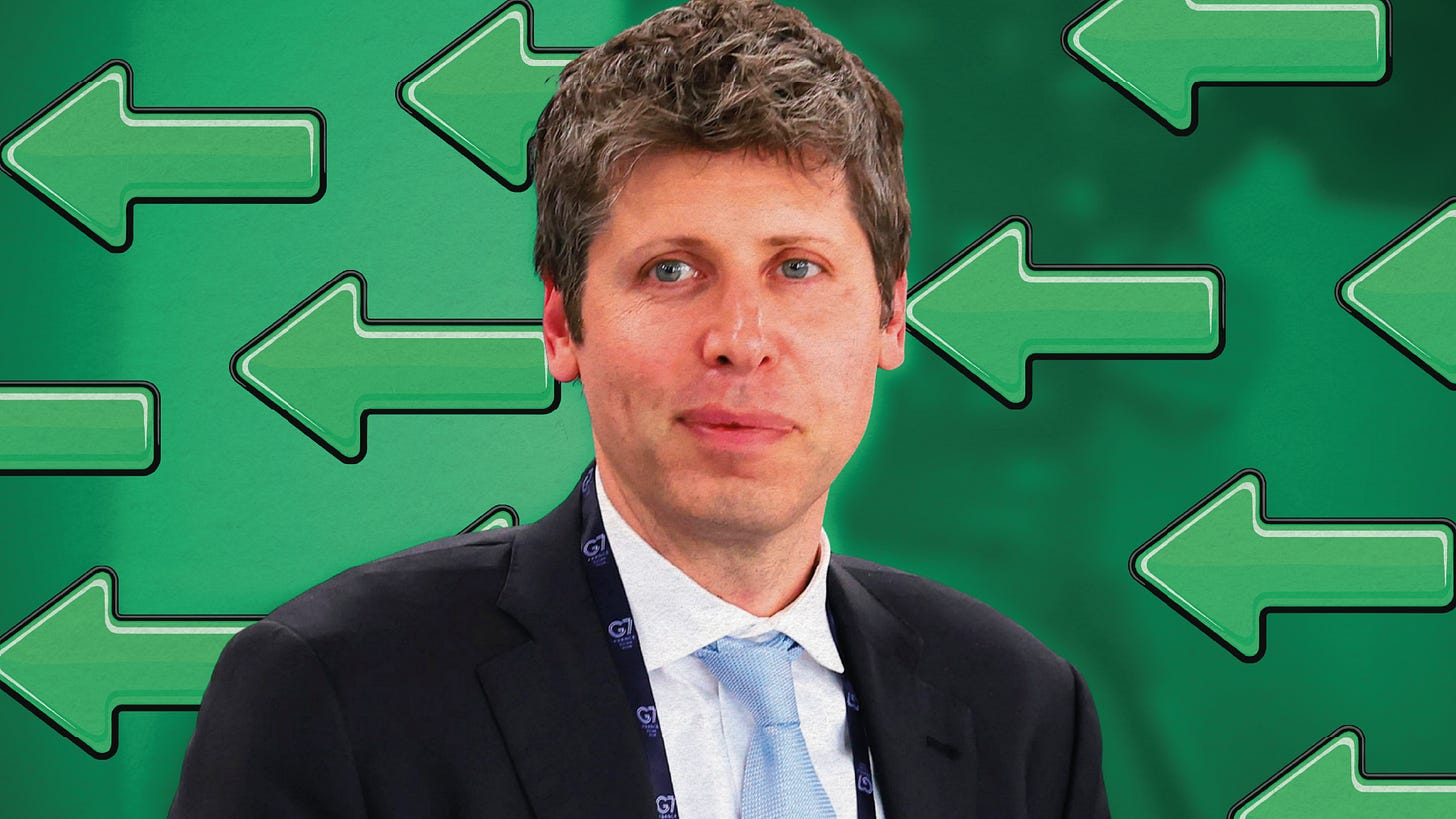
- CEO Sam Altman proposes giving the U.S. government a $42.6 billion, 5% stake in OpenAI to curry regulatory favor and set a precedent for other AI giants.
- Critics warn that government shareholding risks regulatory capture, conflicts of interest, and murky oversight—complicating accountability more than traditional taxation.
- If enacted, the stake is valued at roughly $320 per American household, but skeptics see it as more symbolic gesture than genuine wealth redistribution.
Altman’s Regulatory Gambit
Sam Altman’s $42.6 billion equity offer is a calculated move to embed OpenAI in Washington’s policy circles, aiming to shape AI regulation from within while nudging rivals to join a sweeping industry pact.
OpenAI's proposal to grant the U.S. government a 5% equity stake valued at $42.6 billion represents a calculated strategic move by CEO Sam Altman to proactively align with regulators and ease potential government pressures. By offering a modest but meaningful stake without board seats or voting rights, OpenAI aims to embed itself within policy discussions and signal cooperation amid growing public skepticism and the threat of stricter regulations, contrasting sharply with earlier tech eras that resisted government involvement.
This equity stake initiative is not just about OpenAI; it is part of a broader industry-wide vision to collectively influence AI governance. Altman has pressed major players like Google, Meta, and Anthropic to join in granting similar stakes, envisioning a 'grand bargain' or 'hypertithe'—a fixed equity contribution funneled into a sovereign wealth fund that could redistribute AI’s economic gains to the American people while fostering regulatory leniency and national ownership.
Altman’s approach reflects a savvy communication and regulatory playbook, anchoring the 5% figure as a moderate, pragmatic offer to preempt more radical government demands such as Senator Bernie Sanders’ proposal for a 50% stake with voting rights. This move is designed to regain relevance with the White House and position OpenAI as the cooperative 'good guy' in Washington, managing political expectations through early, thoughtful messaging that invites regulation rather than evades it.
While some critics view the 5% stake as symbolic or insufficient to guarantee alignment—citing Microsoft’s 30% stake in OpenAI without perfect harmony—investors and strategists acknowledge it as a necessary gesture given AI’s transformative risks. The U.S. government’s dual role as regulator and passive investor aims to secure regulatory clarity and share in AI’s economic upside without ceding control, marking a novel model of public-private partnership in frontier technology governance.





Governance on a Knife-Edge
Letting the government own part of OpenAI blurs the line between regulator and stakeholder, raising fears of regulatory capture, political interference, and a governance quagmire with no clear path to public accountability.
Granting the U.S. government a 5% equity stake in OpenAI raises profound governance challenges by blurring the lines between regulator and stakeholder, which risks regulatory capture and political interference. As Dean Ball warned, "It will never stop at 5%. It will go on and on. The governance will become a nightmare," highlighting fears that ongoing political involvement could erode public trust and complicate fair oversight. Moreover, ambiguity about who exactly would hold the shares—whether a sovereign AI fund or directly the White House—intensifies concerns over transparency and conflicts of interest, as direct government ownership could exacerbate governance risks.
Critics argue that equity stakes are a problematic mechanism for government involvement compared to traditional taxation, which could regulate AI companies without entangling the state in ownership conflicts. Commentators like Joe Wiesenthal and Kevin Bankston advocate for imposing a 20% tax on pre-tax income rather than government shareholding, emphasizing that taxation avoids the pitfalls of regulatory capture and government overreach. This perspective underscores skepticism about the government’s ability to manage equity stakes effectively, with some viewing the 5% stake as symbolic political theater that offers limited public benefit while risking governance complications.
The dual role of the government as both regulator and shareholder creates inherent conflicts of interest, as the state must balance protecting citizens from AI risks with promoting a national champion in the AI race. This tension could lead to compromised safety enforcement if regulatory actions threaten the government’s financial stake, raising questions about impartiality and the integrity of oversight. As noted, "If a safety review could reduce OpenAI’s value, does the government still act aggressively?" illustrating the precarious governance position created by such equity arrangements.
Beyond governance risks, the proposal to grant the government equity stakes in AI companies like OpenAI has sparked debate over its broader implications, including fears of fostering collusion among AI firms to appease regulators rather than prioritize consumer interests. Critics describe the move as a "shakedown" and caution that transforming OpenAI into a strategic asset of the U.S. government could prompt rival nations to demand similar arrangements, complicating global AI competition and regulatory dynamics. This shift toward semi-public institutionalization of frontier AI labs introduces bureaucratic conflicts and raises doubts about whether such ownership truly advances public benefit or merely entrenches government influence.





Symbolic Wealth, Real Tensions
OpenAI’s public stake pitch channels Alaska-style wealth sharing but serves more as a trust-building narrative than a concrete plan for redistributing AI’s riches to Americans.
OpenAI's proposal to allocate a 5% equity stake to the U.S. government aims to transform AI-generated wealth into a tangible public asset, potentially redistributing approximately $42.6 billion based on the company's $852 billion valuation. This stake could translate to about $320 per American household, echoing models like Alaska's Permanent Fund that share resource wealth with citizens, though the scale remains modest compared to Alaska's $1,000 to $3,000 annual dividends. The initiative reflects a strategic effort to address economic inequality and labor market anxieties by embedding public benefit directly into the AI industry's financial success.
While the equity stake proposal symbolizes a commitment to public benefit, it also reveals tensions between OpenAI's mission and its private valuation ambitions. The plan functions more as a narrative device to regain public trust amid widespread skepticism—61% of Americans hold negative views of AI—than as a fully fleshed-out policy guaranteeing direct payouts. Moreover, the proposal hints at a broader industry approach, with leaders like Sam Altman envisioning other AI giants such as Anthropic, Google, and Meta contributing equity to a universal basic equity fund, potentially scaling wealth redistribution if these companies grow exponentially.
The concept of a 'hypertithe,' a fixed equity contribution from companies building the singularity stack into a sovereign wealth fund, encapsulates a visionary model to convert private exponential AI gains into national ownership and public benefit. Although the current economic scale of a 5% stake may not suffice for meaningful universal basic equity, the aggregation of stakes from multiple AI firms could create a new paradigm of wealth sharing and regulatory cooperation. This approach also serves as political insurance, aligning government interests with corporate success to mitigate regulatory risks and embed the public as stakeholders in AI’s future.
OpenAI’s proposal aligns with precedents like Singapore’s government investment model, where public pensions and savings are supported through stakes in strategically critical companies. By granting the U.S. government equity, OpenAI not only concretizes its public-benefit mission but also acknowledges the government's existing gatekeeper role in AI regulation, from model releases to export controls. This blend of regulatory oversight and financial ownership suggests a novel framework where the public both governs and benefits from frontier AI technologies, potentially preventing a 'permanent underclass' amid rapid technological change.

AI Power Plays and Alliances
OpenAI’s government stake proposal mirrors startup strategies for powerful alliances, but in a volatile global landscape, tech giants, regulators, and nations are jockeying for control of the AI frontier.
OpenAI’s proposal to grant the U.S. government a 5% equity stake represents a novel strategic alignment between AI frontier labs and regulators, echoing startup tactics of selling minor stakes to powerful partners for protection and influence. This move could set a precedent for similar arrangements across the AI industry, potentially reshaping competitive dynamics by intertwining government interests with corporate governance, though skepticism remains about whether such stakes truly yield alignment, especially given Microsoft’s 30% stake in OpenAI has not guaranteed harmonious collaboration.
The AI industry is navigating a complex and rapidly evolving market landscape marked by intense competition and ecosystem diversification. Major players like Meta and Softbank are entering the AI cloud services arena, while companies such as Anthropic and DeepSeek are developing proprietary chips, reflecting attempts to control more of the value chain amid fierce rivalry. Meanwhile, the AI model layer faces a 'no moat' commodity trap, pushing labs to migrate value capture toward hardware and implementation layers, supported by strategic coalitions like Microsoft-OpenAI and Amazon-Anthropic that create lock-in despite accelerating market growth and shifting shares.
Geopolitical and regulatory pressures are increasingly shaping AI market dynamics, as the U.S. struggles with unclear and evolving rules that contrast with China’s rapid, less-restricted AI advancements, exemplified by Chinese dominance on platforms like OpenRouter and ambitious model development timelines. Concurrently, global regulatory frameworks such as the EU AI Act and China’s strict content labeling are establishing safety baselines that could harmonize international standards, transforming the AI race into a national security standoff where access to frontier technologies may be restricted, thereby influencing competitive strategies and innovation pathways worldwide.
The AI industry faces significant ecosystem challenges amid rapid expansion, including fears that dominant platform owners might stifle third-party innovation by monitoring and competing against developers building on their tokens, exacerbating market distress despite substantial revenue growth. This tension highlights a broader economic paradox where AI’s capital intensity and high CapEx forecasts complicate traditional incentives, potentially limiting broad-based wealth participation as AI firms prioritize high-margin, proprietary offerings over open accessibility, raising concerns about monopolistic behavior and the politicization of AI markets through government equity stakes.