OpenAI’s $42.6b U.S. stake offer sparks clash
The gist
OpenAI’s $42.6B offer to give the U.S. government a stake in its future ignites a fierce battle over who should own—and profit from—America’s AI boom.
What to know
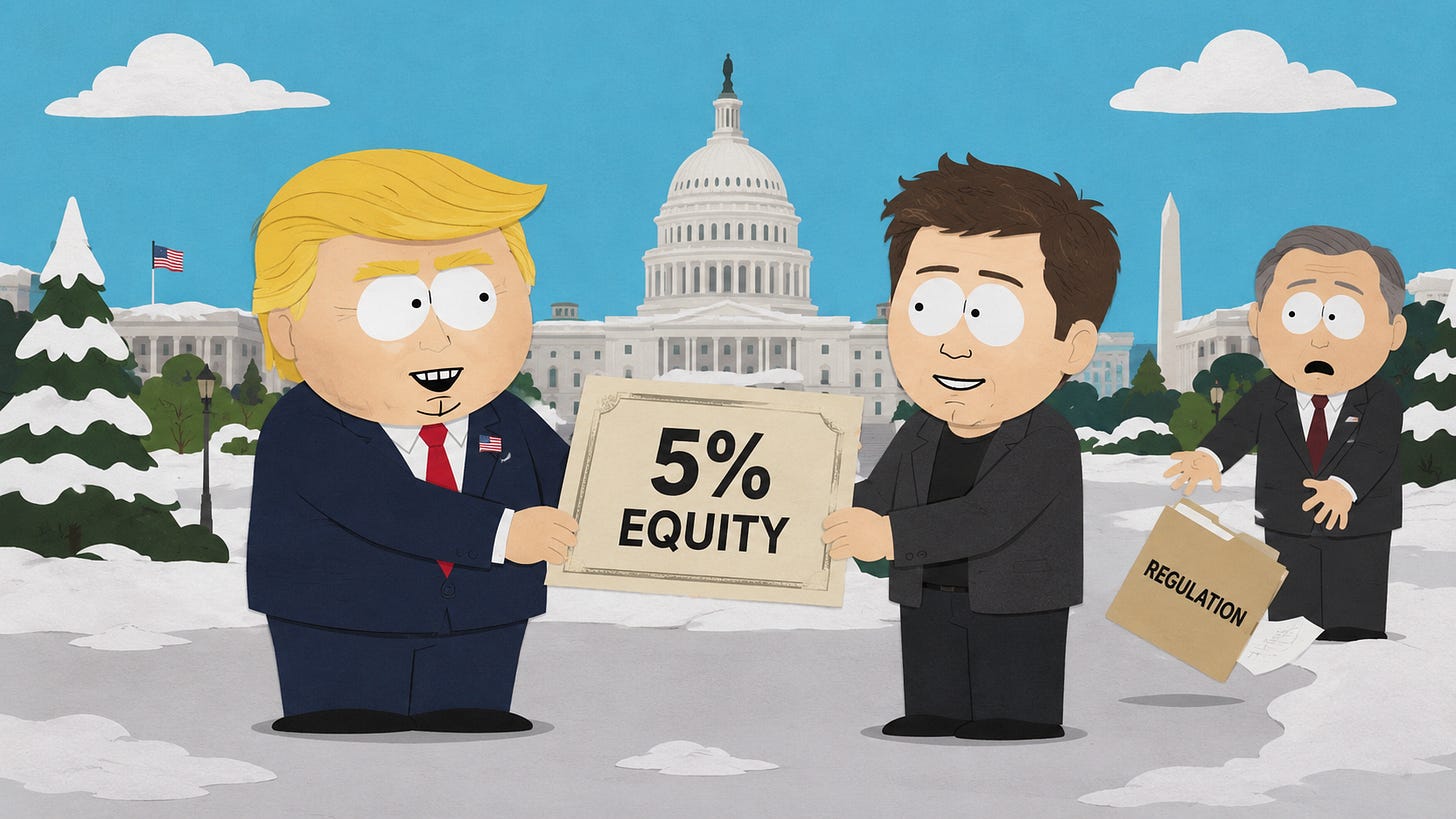
- OpenAI is proposing a 5% equity stake for the U.S. government, valued at $42.6 billion by 2026, but without voting rights or board seats.
- Senator Bernie Sanders wants to go much further, pushing for a 50% government stake in AI firms to fund a $1,000 annual dividend for every American.
- Critics warn these moves blur the line between regulator and investor, risking conflicts of interest and political meddling as the U.S.-China AI race heats up.
Government as Shareholder: Risks & Rifts
OpenAI’s equity offer blurs the line between regulator and investor, igniting fierce debate over conflicts of interest, governance dilemmas, and fears of creeping state control in America’s AI sector.
OpenAI’s unprecedented offer to grant the US government a 5% equity stake, valued at approximately $42.6 billion in mid-2026, marks a seismic shift in AI governance by merging government investment with regulatory oversight. This novel approach, championed by CEO Sam Altman as a strategic alignment move to foster cooperation and preempt stricter regulation, effectively brings the government into the AI boardroom without granting voting rights or board seats, signaling a carefully calibrated balance between influence and non-intrusiveness. However, this model blurs traditional boundaries, as the government simultaneously assumes roles as both investor and regulator in a sector critical to national security and economic dominance amid an intensifying global AI arms race.
The dual role of the government as both shareholder and regulator introduces profound governance conflicts and tensions, complicating policy decisions and market dynamics. Critics like Dean Ball warn that government equity stakes risk political capture and governance nightmares, with fears that initial minority stakes could expand, undermining fair regulation and fueling public distrust. This conflict is exemplified by the dilemma of enforcing safety reviews that might reduce the value of government-owned AI firms, raising questions about whether the state can impartially regulate entities in which it holds financial interests. Moreover, concerns about transparency and conflicts of interest are heightened by proposals for direct government ownership rather than distributing equity to citizens, which some describe as inviting systemic risks akin to 'rats living in the walls.'
The debate over government equity stakes in AI firms extends beyond OpenAI’s 5% offer, with figures like Senator Bernie Sanders advocating for a far more interventionist model involving a 50% government stake complete with board representation and voting rights. This stark contrast underscores the growing discourse on public ownership’s scope in AI, reflecting broader concerns about sovereignty, market control, and techno-nationalism amid escalating geopolitical tensions. While OpenAI’s proposal aims to align interests without provoking political backlash, Sanders’ approach signals a push toward direct government influence over corporate decisions, highlighting divergent visions for AI governance in the United States.
Alternative governance models challenge the equity stake approach, with critics like Kevin Bankston and Joe Weisenthal arguing for straightforward taxation of AI firms rather than government ownership, which they warn could devolve into regulatory appeasement or a 'shakedown' dynamic. The creation of a sovereign wealth fund to manage government-held AI equity raises additional concerns about conflicts of interest and public trust, especially given the nation’s substantial debt and the government’s taxing power. Furthermore, government stakes could complicate AI firms’ IPO processes and investor relations, influencing share structures and capital strategies, thereby adding layers of complexity to an already turbulent AI regulatory landscape.






AI Wealth: Public Stakes or Private Profits?
Proposals for government equity in AI firms spark a battle over who benefits from AI’s riches, as visions range from modest public stakes to sweeping sovereign wealth funds and universal dividends.
OpenAI's proposal to allocate a 5% equity stake to the U.S. government represents a tangible effort to share AI-generated wealth with the American public, potentially addressing economic inequality and labor market disruptions caused by AI. Valued at approximately $42.6 billion based on OpenAI's $852 billion valuation, this stake could translate to about $320 per American household, concretizing OpenAI's public-benefit mission by ensuring the public holds a direct slice of the company's future value rather than merely observing private investors profit. This approach echoes sovereign wealth fund models, such as Singapore's Temasek and GIC, where government ownership in strategic companies supports broad public financial interests.
More ambitious proposals, notably Senator Bernie Sanders' American AI Sovereign Wealth Fund Act, seek to secure a 50% government ownership stake in major U.S. AI firms, aiming to fund a $1,000 annual dividend for every American and prevent wealth concentration among billionaires. This bipartisan-backed initiative reflects growing public support—surveys show nearly 70% of Americans favor such redistributive measures—as a response to rising tech layoffs and fears of AI-driven labor displacement. However, while the Alaska Permanent Fund analogy helps frame the politics, the global, multifaceted nature of AI wealth and international techno-nationalism complicate implementation and raise questions about jurisdiction and strategic competition.
These public wealth sharing proposals serve dual purposes: they act as political narratives to build public trust amid skepticism about AI’s societal impact and as potential safeguards for AI firms by aligning government interests with corporate success. OpenAI’s 5% equity offer, while symbolically significant, is viewed by some as insufficient compared to calls for more substantial public stakes, highlighting tensions between fairness, regulatory protection, and market realities. Moreover, policymakers and experts acknowledge that distributing AI’s economic gains will require rethinking social safety nets and balancing financial returns with strategic national interests, especially as AI’s rapid adoption reshapes labor markets and economic structures.



AI Arms Race Fuels State Capitalism
America’s push for government equity in AI firms signals a new era of techno-nationalism, as escalating U.S.-China tensions drive unprecedented public-private entanglements and reshape global technology power.
OpenAI's unprecedented offer to grant the U.S. government a 5% equity stake marks a pivotal evolution in the global AI arms race, intertwining national security with techno-nationalism and exposing the fraught balance between government roles as both regulator and investor. This move, echoed by Senator Bernie Sanders' proposal for a 50% stake, reflects a radical new model of public-private AI wealth sharing amid chaotic governance and escalating geopolitical tensions, particularly between the U.S. and China, where export controls and sovereignty concerns dominate discourse. As Palantir CTO Shyam Sankar highlights, such equity strategies serve as flexible tools to bolster U.S. competitiveness and national security, signaling a shift toward what Jordan Schneider terms 'American state capitalism' with unique characteristics in the AI sector.
The intensifying U.S.-China AI rivalry underscores the geopolitical stakes driving government intervention in AI firms, as China rapidly advances with fewer regulatory guardrails—owning the top six models on OpenRouter—while the U.S. grapples with uncertain, evolving rules and structured pre-approval processes that some argue stifle innovation. This techno-nationalist competition fuels massive investments in AI infrastructure globally, exemplified by South Korea’s $584 billion chip manufacturing initiative and Anthropic’s collaboration with Samsung on custom AI chips, reflecting national security imperatives and the race for technological supremacy.
The U.S. government's dual role as regulator and investor in AI firms creates complex tensions, as equity stakes risk increasing government control reminiscent of past interventions like TARP, while also raising concerns about governance and market control amid escalating geopolitical and industry pressures. This dynamic is further complicated by the migration of top policy talent to AI companies offering significantly higher salaries, potentially skewing national security and AI governance strategies toward corporate interests and away from independent oversight, a challenge highlighted by experts like Matt Sheehan.