Rice revolution: $36m methane credit project tackles climate trade-offs in Indian fields
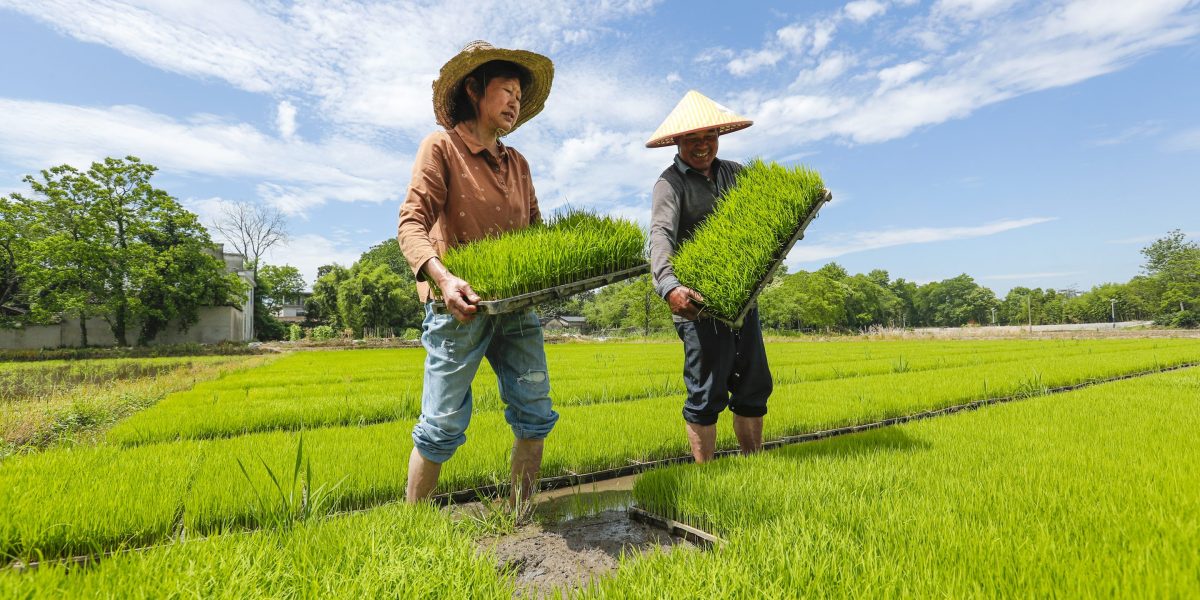
The gist
A $36 million project is revolutionizing Indian rice farming by using smart irrigation and AI to transform methane-spewing paddies into powerful climate protectors.
What to know
- Cool Effect and Mitti Labs are rolling out Alternate Wetting and Drying (AWD) across India’s rice fields, aiming for 2 million methane credits a year by 2028.
- Rice farming pumps out about 1.1 billion tons of CO2-equivalent annually—on par with 239 million cars—thanks to expanded fields and fertilizer-heavy practices.
- AWD slashes methane but requires careful, region-specific tweaks to avoid trade-offs like increased nitrous oxide, with Mitti Labs’ satellite and AI tech ensuring accurate emissions tracking.
India's $36M Methane Bet
A landmark $36 million partnership is turning Indian rice fields into a testbed for large-scale, credit-generating climate solutions with the Alternate Wetting and Drying method.
Cool Effect and Mitti Labs have collaboratively launched an ambitious $36 million project aimed at curbing methane emissions from rice cultivation in India by adopting the innovative Alternate Wetting and Drying (AWD) irrigation technique. This initiative is designed to generate 2 million methane credits annually by 2028, signaling a transformative approach to sustainable rice farming that not only addresses a major source of greenhouse gases but also sets a scalable model for emission reduction in agriculture.
Rice: A Hidden Climate Giant
Decades of intensifying rice farming—from fertilizer surges to residue management—have quietly doubled methane emissions, making rice cultivation a top global greenhouse gas source.
Rice cultivation is a major contributor to global greenhouse gas emissions, producing about 1.1 billion tons of CO2-equivalent annually—comparable to the emissions of 239 million cars. This significant climate impact stems from both the expansion of rice-growing areas, such as Africa's doubling of rice fields since the 1960s, and intensified farming practices that have nearly doubled methane emissions worldwide since that time.
The intensification of rice farming, including increased use of synthetic fertilizers and organic amendments like rice stalks plowed back into the soil, has substantially driven up methane emissions. For instance, leaving rice residues in fields contributes roughly 18% of the rise in net emissions since the 1960s, while synthetic nitrogen fertilizer use surged 76% after 2000, boosting nitrous oxide emissions and accounting for about 9% of the total increase in global emissions from human activities.
Traditional continuous flooding of rice paddies creates ideal anaerobic conditions for methane-producing microbes, making rice fields a potent source of methane. While the adoption of intermittent flooding practices has helped reduce methane emissions by periodically draining fields, this shift can slightly increase nitrous oxide emissions due to soil wet-dry cycling, illustrating the complex trade-offs in managing greenhouse gases in rice agriculture.
Rising global temperatures exacerbate the climate impact of rice cultivation by accelerating microbial activity in flooded soils, thereby increasing methane emissions. This warming effect compounds the challenges of mitigating emissions from rice paddies, underscoring the urgency of adopting sustainable farming practices to curb the sector’s growing contribution to climate change.


Tech-Driven Climate Farming
AI-powered satellite monitoring and region-specific tweaks are redefining how India balances methane cuts with soil health, ensuring sustainable rice production doesn't come at a hidden environmental cost.
Alternate Wetting and Drying (AWD), championed by innovators like Mitti Labs, stands out as a promising sustainable farming practice by intermittently drying rice paddies instead of keeping them continuously flooded, thereby significantly reducing methane emissions. However, as no single method offers a complete solution, these practices must be carefully tailored to regional conditions to avoid unintended consequences such as increased emissions or soil carbon depletion, underscoring the complexity of mitigating methane from rice cultivation.
Complementing water management strategies, reducing fertilizer use and managing crop residues—such as limiting straw left in fields or converting it into biochar before soil incorporation—offer additional pathways to curb methane emissions. These approaches, while effective, require nuanced regional adaptation to balance emission reductions with soil health, reflecting the intricate interplay of agricultural inputs and environmental outcomes in rice-growing regions.
Mitti Labs leverages cutting-edge technologies like satellite imagery, radar, and AI models trained on extensive field data to accurately measure and verify methane emissions reductions from rice paddies, enabling data-driven optimization of sustainable farming practices. This integration of advanced monitoring tools is crucial for validating the impact of interventions such as AWD and residue management, ensuring transparency and efficacy in climate-smart agriculture initiatives.