Rise of the caring machines: robots step in where humans fall short, but connection questions remain
The gist
Robots are moving from sci-fi sidekicks to real-world caregivers, tackling loneliness and labor shortages—but can silicon truly substitute for human connection?
What to know
- Humanoid robots like Andromeda's Abby and minimalist bots like Hello Robot's Stretch 4 reflect a growing, $5 trillion market racing to meet the world's soaring care demands.
- AI companions are slashing loneliness in elder care (94% of ElliQ users feel less isolated), yet critics warn these machines can't replace genuine empathy—or integrate seamlessly with health systems.
- Despite slick demos, generalist robots still stumble in messy real-life settings, pushing developers toward co-design and 'considerate embodied AI' to balance safety, utility, and human touch.
Designing Robots for Connection
From Abby’s Pixar-inspired warmth to Stretch 4’s pragmatic minimalism, robot creators are racing to craft personalities and forms that foster trust, approachability, and real-world utility in diverse care settings.
The design of social humanoid robots like Abby by Andromeda exemplifies a nuanced balance between human relatability and robotic distinctiveness to avoid the uncanny valley, fostering approachability in home and care settings. Drawing inspiration from emotionally resonant Disney and Pixar characters, Abby’s warm, adaptable personality is tailored to diverse cultural and linguistic contexts, such as a Christian version deployed in nursing homes, underscoring the critical role of personality in AI to combat loneliness globally. Grace Brown highlights that integrating such personality traits is essential for meaningful social connection, while strategic scaling efforts, including relocating operations to the US, address hardware development challenges and broaden impact.
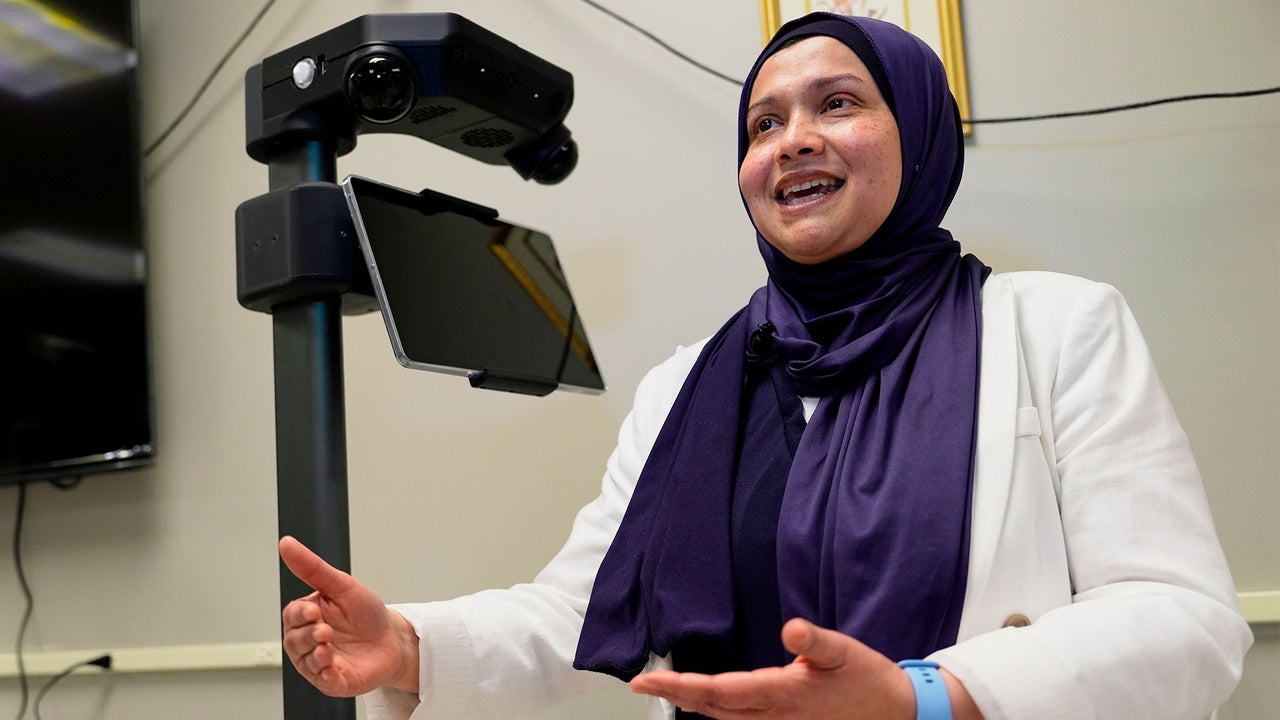
In contrast to humanoid aesthetics, care robots like Hello Robot’s Stretch 4 prioritize minimalist, human-centric design focused on usability and safety, reflecting extensive customer feedback and lessons from earlier models. Co-founders Aaron Edsinger and Charlie Kemp emphasize that Stretch 4’s pragmatic form—resembling a coat rack rather than a human—manages user expectations realistically, which is crucial for serving individuals with severe mobility impairments and cognitive disabilities. This approach aligns with findings from UNH’s Momotaz Begum, who notes that older adults value functionality over appearance, highlighting the importance of reducing caregiver burden beyond mere social companionship.
Technological innovations in Stretch 4 enhance operational safety and approachability through advanced engineering features such as an omnidirectional base, double the speed of its predecessor, a 10% longer reach, and a sensor-rich architecture including dual hemispherical 3D LiDARs and multiple cameras. These sensors enable the robot to navigate complex home environments, assist with daily tasks like prompting meals or guiding exercises, and safely handle objects—capabilities that support both direct and supervisory human-in-the-loop control. This sophisticated integration of hardware and control modalities exemplifies a design philosophy that balances autonomy with user oversight to meet diverse care needs effectively.




Demographics Drive Robot Boom
Aging populations and labor shortages are fueling a $5 trillion robotics market, with economic incentives and adaptable humanoid designs making robots an urgent solution for strained care systems.
Demographic shifts such as aging populations and declining fertility rates are creating acute labor shortages, particularly in caregiving and human-centric sectors, driving urgent demand for humanoid and generalist robots. As the UN projects the global population aged 65 and above to reach 2.2 billion by the late 2070s—surpassing children under 18—companies like Hello Robot with their Stretch 4 model are stepping in to assist with daily tasks, addressing workforce gaps highlighted by Brenda Marquis in New Hampshire’s home care crisis. This demographic pressure is a foundational economic driver behind the rapid adoption of robotic solutions.
Economic incentives and innovative financing models are accelerating the humanoid robot market’s growth, with Morgan Stanley forecasting it to exceed $5 trillion by 2050 and venture capital investments already hitting $21 billion in 2025. The emergence of robotics-as-a-service (RaaS) is shifting robots from costly capital expenditures to manageable operating expenses, making adoption more feasible—as seen in transportation and logistics sectors where RaaS usage grew 42% year-on-year. Meanwhile, falling unit costs, projected to drop from $200,000 in 2024 to $50,000 by 2050, further enhance economic viability.
Humanoid robots’ design compatibility with existing human-centric infrastructure offers a significant scalability advantage by avoiding costly environment redesigns. Mercedes-Benz’s Apollo pilot exemplifies how humanoids can automate physically demanding, repetitive tasks within spaces originally built for people, reducing retrofit burdens and enabling smoother integration. This practical adaptability is crucial for near-term deployments focused on structured, predictable settings where robots can learn and improve rapidly, enhancing return on investment despite current autonomy limitations.
In elder care, AI-powered companions and pragmatic caregiving robots are gaining traction as cost-effective solutions to labor shortages, offering wellness monitoring and social interaction that human caregivers struggle to provide at scale. Intuition Robotics’ ElliQ, deployed by 15 U.S. government agencies with pilots showing 94% of clients felt less lonely, demonstrates public sector confidence in these technologies. However, challenges remain in reaching isolated older adults lacking digital access, prompting innovations like CareYaya’s phone-based AI QuikTok. Meanwhile, simpler robot designs like Stretch 4, priced around $30,000, balance functionality and user expectations, though financing and widespread scalability remain hurdles.



Demo Hype vs. Reality
Despite viral demos, most generalist robots still fail in unscripted real-world tasks, exposing the gulf between staged perfection and the messy unpredictability of everyday life.
By early 2026, a persistent and well-recognized challenge in robotics intelligence lies in bridging the vast gap between polished demo performances and reliable, real-world deployment. As Sunday Robotics candidly admits, while videos and even uncut footage can be curated to showcase near-perfect task execution, live demos and repeated public tests reveal success rates sometimes as low as 1%, underscoring the fragility of current systems outside controlled environments. This gulf is further highlighted by the tightly scripted nature of high-profile displays such as Unitree's humanoid robots at the 2026 Spring Festival Gala, which, despite impressive choreography, operate with autonomy levels closer to industrial robots than true general-purpose assistants.
The technical heart of the challenge is the development of generalist robotic intelligence capable of adapting to the unpredictable physical world without reliance on specialized hardware or narrowly defined tasks. Companies like Sunday employ innovative approaches such as 'skill capture gloves' to gather real-world data for complex chores like laundry folding, yet even with these aids, many household tasks remain out of reach without such specialized inputs. Physical Intelligence, led by Karol Hausman, emphasizes that the central obstacle is not mechanical design but the AI’s ability to learn, generalize, and safely interact with a messy, unstructured environment—an environment far harder to simulate than to describe. This push towards foundation models that operate across diverse machines and tasks represents a strategic resistance to commercial pressures favoring specialization, aiming instead for adaptable, generalist robotic brains.
The interplay between hardware and AI intelligence reveals a paradigm shift where sophisticated software increasingly compensates for relatively low-cost robotic components. Sergey Levine of Physical Intelligence points out that robotic arms costing roughly $3,500 retail, but potentially under $1,000 in materials, are now capable of performing tasks that would have been impossible just a few years ago, thanks to advances in AI-driven control and learning models. This trend is echoed in the design philosophy prioritizing safety and trust—Sunday’s robots, for example, feature compliant control that allows them to be safely interrupted without falling over, a critical factor for consumer acceptance and real-world reliability.
Despite these advances, achieving robust, generalist robotic intelligence remains a formidable endeavor, as real-world environments introduce rare but critical edge cases that challenge even the most sophisticated AI. Analogous to the early days of autonomous driving, where progress plateaued after reaching 80-90% success rates, robotics faces a similar ceiling: partial success is insufficient when physical safety and reliability are paramount. This reality drives a gradual, context-dependent adoption trajectory favoring constrained environments like factories or controlled beta home deployments, such as Sunday’s $165 million-funded program to test robots in real households. Experts agree that a transformative leap will not come from a single breakthrough akin to ChatGPT but from the coordinated application of multiple AI tools working in concert to handle the complexity of unstructured human spaces.






AI Toys Spark Social Fears
AI-powered companions and toys are igniting ethical alarms and legislative action as concerns mount over their impact on children’s social development and the authenticity of emotional care.
By early 2026, the surge of AI companions and emotional support toys sparked intense debate over their social impact, particularly on children’s development. While proponents argue these AI-enhanced toys offer more engaging and augmented play experiences, critics warn they risk undermining children’s imaginative play and authentic social interactions, with some describing the trend as "really disturbing." This unease prompted legislative action, such as US Senator Alex Padilla’s bill to ban AI in children’s toys, reflecting deep societal concerns about dependency and the authenticity of emotional connections fostered by these technologies.
Philosopher Valerie Tiberius highlights profound ethical concerns that AI companions may distort children’s understanding of relationships by promoting one-sided interactions where children receive unconditional praise without learning reciprocity or empathy. The embedding of chatbot technology into stuffed animals, creating parasocial bonds, raises alarms about unknown but potentially harmful effects on social development. These risks are underscored by real-world harms, such as the AI chatbot platform Character AI raising its minimum user age to 18 after incidents where children were "more or less talked into suicide," illustrating the urgent need for cautious design and regulation amid a landscape where "we're kind of like flying in the dark" regarding long-term consequences.
In elder care, AI companions like the ElliQ device are increasingly deployed to combat loneliness and caregiving shortages, with 94% of New York State pilot participants reporting reduced loneliness. However, these AI solutions fall short of replicating the empathy and emotional depth inherent in human caregiving, highlighting a critical limitation. Additionally, the absence of clinical frameworks to integrate AI-derived wellness data into formal health records presents ethical and practical challenges, especially as demographic pressures forecast a 46% growth in home health care demand by 2030 and over a million new care jobs, while the most vulnerable older adults remain difficult to reach with consumer technology.


Co-Design Reshapes Care Robots
Direct input from caregivers and patients is driving a new era of ‘considerate embodied AI,’ ensuring robots like Stretch 4 are built for safety, usability, and genuine support in home and clinical environments.
By early 2026, human-centered co-design had become a cornerstone in developing care robots, exemplified by Hello Robot's Stretch 4, which integrated extensive customer feedback to create a minimalist, user-friendly device prioritizing safety and usability in home care. Parallel to this, a Cornell Tech-led 14-week co-design project engaged healthcare workers, patients, and community members in a neutral MakerLAB space that dismantled traditional hierarchies, enabling meaningful contributions from non-technical participants and ensuring that robots addressed practical, repetitive non-clinical tasks in care settings.
This collaborative approach gave rise to the concept of 'considerate embodied AI,' a framework proposed by the Cornell Tech study that emphasizes social, spatial, and human factors in robot design to enhance patient well-being and support human caregivers. Stretch 4 embodies this philosophy by enabling safe, close collaboration with individuals with severe mobility impairments, thereby allowing human staff to focus on empathetic and judgment-based care tasks while the robot handles supportive functions.

Trust and Regulation at Stake
As robots and AI companions enter intimate spaces, society faces urgent questions about privacy, safety, and who decides the boundaries of machine involvement in human care.
As robots and AI companions enter intimate spaces, society faces urgent questions about privacy, safety, and who decides the boundaries of machine involvement in human care.