Robot ban sparks U.S. innovation clash amid China tensions
The gist
The FCC has slammed the gates on Chinese robots, igniting a fierce clash over national security, tech supremacy, and the future of affordable innovation in America’s robotics industry.
What to know
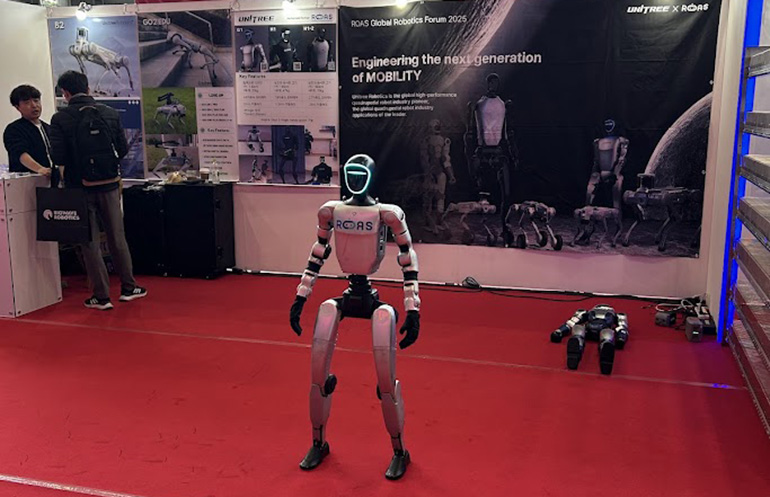
- The U.S. FCC banned imports and new certifications of Chinese humanoid and quadruped robots like Unitree, citing hacking and surveillance risks after 2,000 devices were found vulnerable on U.S. campuses.
- The decision exposes America’s critical supply chain dependence—China controls 85% of the robot market and 90% of the world’s permanent magnets—forcing urgent calls for domestic manufacturing.
- While industry giants welcome the crackdown, startups warn that losing access to $3,000 Chinese robots could stifle homegrown innovation and leave the U.S. scrambling to catch up.
Security Risks Go Physical
Chinese humanoid and quadruped robots combine advanced sensors with mobility, creating new threats of persistent surveillance, data theft, and even sabotage—prompting the FCC to act after backdoors were found on thousands of U.S. campuses.
Chinese humanoid and quadruped robots pose significant national security threats due to their advanced sensing capabilities combined with network connectivity and physical mobility, enabling persistent surveillance, data exfiltration, and even potential kinetic sabotage. Companies like Unitree have come under scrutiny for their ties to Chinese military applications, with the FCC banning their robots after discovering backdoors that allowed remote takeover of approximately 2,000 machines on U.S. campuses, underscoring the tangible cybersecurity vulnerabilities these devices present. As Congressman John Moolenaar emphasized, the risk of backdoors sharing sensitive data with the Chinese Communist Party necessitates proactive measures to prevent these robots from infiltrating American homes and critical infrastructure.
The U.S. government's approach leverages existing national security frameworks, such as the FCC’s Covered List, to swiftly ban Chinese robotics deemed unacceptable risks, reflecting a coordinated interagency effort grounded in longstanding concerns about embedded vulnerabilities in foreign hardware and software. This regulatory mechanism, established through bipartisan legislation in 2020 and 2021, allows for rapid inclusion of advanced robotic devices on the Covered List, effectively prohibiting their import and sale to mitigate threats like remote hacking and covert surveillance before these technologies become entrenched in critical sectors.
Beyond software vulnerabilities, the U.S. faces supply chain challenges due to China's dominance in critical robot components, such as permanent magnets that constitute around 90% of the global supply, creating a dependency that could be exploited for espionage or sabotage. Experts like John Koetsier highlight that while sourcing alternatives is complex and global, this reliance amplifies national security concerns, prompting calls for domestic production capabilities to reduce exposure and ensure control over the robotics technologies vital to future military and industrial applications.
While some critics argue that blanket bans on Chinese humanoid robots may be overly broad and advocate for targeted measures against specific high-risk models, proponents maintain that the origin of these products alone constitutes a national security challenge too costly to manage through individual inspections. Alan Tonelson encapsulates this stance, noting the impracticality of vetting every device and emphasizing that the risk of electronic surveillance embedded in Chinese hardware and software justifies a preventive, comprehensive approach to safeguard American interests.





How the FCC Pulled the Plug
A rapid, three-tier ban on foreign robots—anchored in recent national security laws—now blocks most Chinese-made models from the U.S. market, forcing companies to prove domestic manufacturing or face exclusion.
The FCC has aggressively expanded its Covered List to include advanced humanoid and quadruped robots, along with power inverters, effectively banning the import and certification of new foreign-made models primarily targeting Chinese robotics technology, which dominates 80-90% of the humanoid robot market. This regulatory move, grounded in national security determinations coordinated by an interagency body including the Department of War and Homeland Security, treats these robots as connected computing devices with persistent sensing, wireless communications, and physical mobility that pose unacceptable cybersecurity risks to critical U.S. infrastructure. While the FCC maintains the ban is country-neutral, industry insiders widely acknowledge its focus on China due to the country’s dominant market share and state influence over manufacturers like Unitree and Roborock.
The FCC’s regulatory framework employs a nuanced three-tier enforcement approach: a core ban on new certifications for foreign-produced advanced robots, a grandfathering provision allowing previously authorized devices to remain in use, and a conditional waiver process enabling exemptions for manufacturers who commit to domestic production meeting Buy American Act thresholds. This conditional approval requires detailed, time-bound plans for U.S. manufacturing expansion and rigorous security assessments, including source-code audits and on-site inspections, effectively excluding most Chinese-made robots from future market entry. As FCC media relations director Katie Gorscak confirmed, even common household devices like robot vacuums fall under these rules, underscoring the broad scope and industrial policy ambitions behind the measures.
The FCC’s authority to regulate these robotic devices stems from legislation passed in 2020 and 2021, notably the Secure and Trusted Communications Networks Act and the Secure Equipment Act, which established the Covered List mechanism requiring FCC authorization for any radio frequency-emitting device before import or sale. This regulatory tool has been previously applied to drones and consumer routers, and now extends to advanced robotics, reflecting a strategic, fast-moving approach to emerging technology threats. The FCC has institutionalized national security coordination internally via a dedicated Council on National Security, enabling rapid policy updates and enforcement actions that send a strong market signal while avoiding protracted rulemaking delays.
Implementation challenges persist due to the complexity of global supply chains, where robots integrate components and software from multiple countries, complicating risk attribution and exemption criteria. Regulators must balance national security concerns with industrial policy goals, encouraging domestic or allied production while preventing loopholes such as minimal assembly in the U.S. to circumvent restrictions. The FCC’s early intervention aims to minimize future costs by providing market certainty that fosters domestic supply chain development before Chinese robotics technology becomes deeply entrenched, recognizing that data localization alone is insufficient to mitigate risks like data exfiltration, remote deactivation, or kinetic attacks.
U.S. Robotics Faces a Crossroads
The ban ignites fierce debate as startups warn that losing access to cheap Chinese robots could cripple American innovation, while supply chain realities reveal deep industry dependence on Chinese components.
The ban on Chinese humanoid and quadruped robots has sparked a complex debate within the U.S. robotics industry, as companies and startups grapple with losing access to affordable and widely used hardware from dominant Chinese manufacturers like Unitree and Agibot, who shipped roughly 15,000 humanoid robots globally in 2025 compared to just a few hundred from U.S. firms such as Tesla and Figure. While some domestic manufacturers welcome the protection from subsidized Chinese competition, others, including startups like Y Combinator-backed Miru, warn that cutting off access to cost-effective hardware platforms—where Chinese quadrupeds retail for as low as $3,000 versus Tesla’s projected $20,000–$25,000 humanoid—could severely hamper innovation and market growth. This tension underscores a broader industry divide between safeguarding national security and maintaining competitive technological development.
Industry voices remain sharply divided on whether the ban will ultimately catalyze domestic innovation by leveling the playing field or stifle it through supply chain constraints and increased costs. Proponents like FCC Chair Brendan Carr argue the measure is essential to secure critical supply chains and protect foundational technologies, with Boston Dynamics’ Brendan Schulman endorsing the ban as a defining policy for the sector’s future. Conversely, critics such as AJ Meyer of Pickle Robot advocate for targeted solutions like product labeling and security certifications over blanket bans, emphasizing that nuanced approaches—akin to Waymo’s strategy of sourcing Chinese parts but maintaining domestic software control—could better balance innovation with security. This debate highlights the challenge of threading the needle between industrial protectionism and fostering a vibrant, competitive robotics ecosystem.
The ban exposes the practical difficulties of disentangling the U.S. robotics industry from Chinese supply chains, especially given China’s dominant share—approximately 90%—in critical components like permanent magnets essential for actuators. Despite lobbying for restrictions on Chinese-made robots, many U.S. firms remain dependent on Chinese parts, underscoring the tension between national security imperatives and supply chain realities. However, some Western companies leverage advantages in high-end AI chips and proprietary AI models, such as Nvidia’s offerings, to offset vulnerabilities and drive domestic innovation. This complex supply chain landscape suggests that while vertical integration and reshoring efforts may gain momentum, complete decoupling remains a costly and challenging endeavor.
Despite regulatory hurdles, there is cautious optimism about the emergence of a robust indigenous robotics supply chain, with companies like Oneax and Sunday Robotics attracting significant investment—ranging from hundreds of millions to billions of dollars—and established players such as Boston Dynamics scaling up U.S.-based manufacturing under Hyundai’s ownership. The FCC’s requirement for foreign manufacturers to establish or expand U.S. production facilities as a condition for market access may accelerate reshoring and nationalization debates, though some experts caution nationalization should only occur if companies seek public infrastructure support. This evolving landscape reflects a strategic pivot toward domestic capability-building amid the broader U.S.-China technology rivalry, where maintaining leadership in AI and robotics is seen as critical to economic and national security.




Decoupling Amid Geopolitical Tensions
The U.S. robot ban is part of a larger strategy to curb China’s tech influence, but also disrupts global supply chains and research as American labs rely on affordable Chinese hardware.
The U.S. ban on Chinese humanoid and quadruped robots is a strategic move embedded within the broader U.S.-China geopolitical rivalry, aiming to curb China's advances in physical AI and maintain American technological and national security dominance. As David remarked, robotics represents the 'next frontier after the LLM,' and the Trump administration views this ban as part of a comprehensive package to negotiate from a position of strength, balancing innovation control with security concerns against potential threats like 'terminator style attacks.'
China’s overwhelming dominance in the global humanoid robotics market—controlling approximately 85% of supply with companies like Unitree and AGIbot shipping 5,000 units each in 2025—exposes significant supply chain vulnerabilities that the U.S. aims to address through nearshoring and import restrictions. Despite this, U.S. researchers heavily rely on affordable Chinese robots, with 90% of recent robotics papers using Unitree’s models priced at $4,600 compared to Boston Dynamics’ $278,000, illustrating the complex trade-offs between security and innovation.
The ban reflects a broader strategic push to reduce reliance on Chinese technology in critical infrastructure and government sectors, as articulated in a phased '4-tier decoupling' plan prioritizing defense and essential services. The FCC’s policy not only targets China but also affects other major trade partners like Japan, Germany, and South Korea, signaling a wider geopolitical recalibration that complicates international supply chains but aims to incentivize domestic production and foreign suppliers’ investment in U.S.-based supply chains.
Underlying the robotics ban is the recognition of a multifaceted technology rivalry where China leads in physical robot design and components—such as rare earth permanent magnets where it holds 90% market share—while Western firms maintain advantages in AI chips and foundational models, exemplified by Unitree’s partnership with Nvidia. This dynamic fuels calls from industry groups like the Association for Advancing Automation for a national robotics strategy featuring subsidies and tax incentives to bolster U.S. competitiveness amid intensifying trade and technology tensions.