Robotic arms revolutionize satellite repairs in orbit
The gist
Northrop Grumman’s Mission Robotic Vehicle is set to turn aging satellites into serviceable, upgradeable assets—kicking off a new era of sustainable space infrastructure and orbital repairs.
What to know
- Launching aboard a SpaceX Falcon 9 in mid-2026, the MRV uses dual seven-jointed robotic arms to autonomously inspect, repair, refuel, and upgrade geosynchronous satellites, extending their lifespans by up to eight years.
- Backed by a $420 million public-private partnership with DARPA, MRV will perform complex in-orbit tasks—even on satellites not originally designed for maintenance—reducing costly replacements and space debris.
- The mission’s phased rollout includes installing the first Space Force-approved Passive Refueling Module and servicing satellites like Optus D3 under Project Aurora, signaling a broader industry shift toward routine orbital servicing.
Autonomous Arms in Action
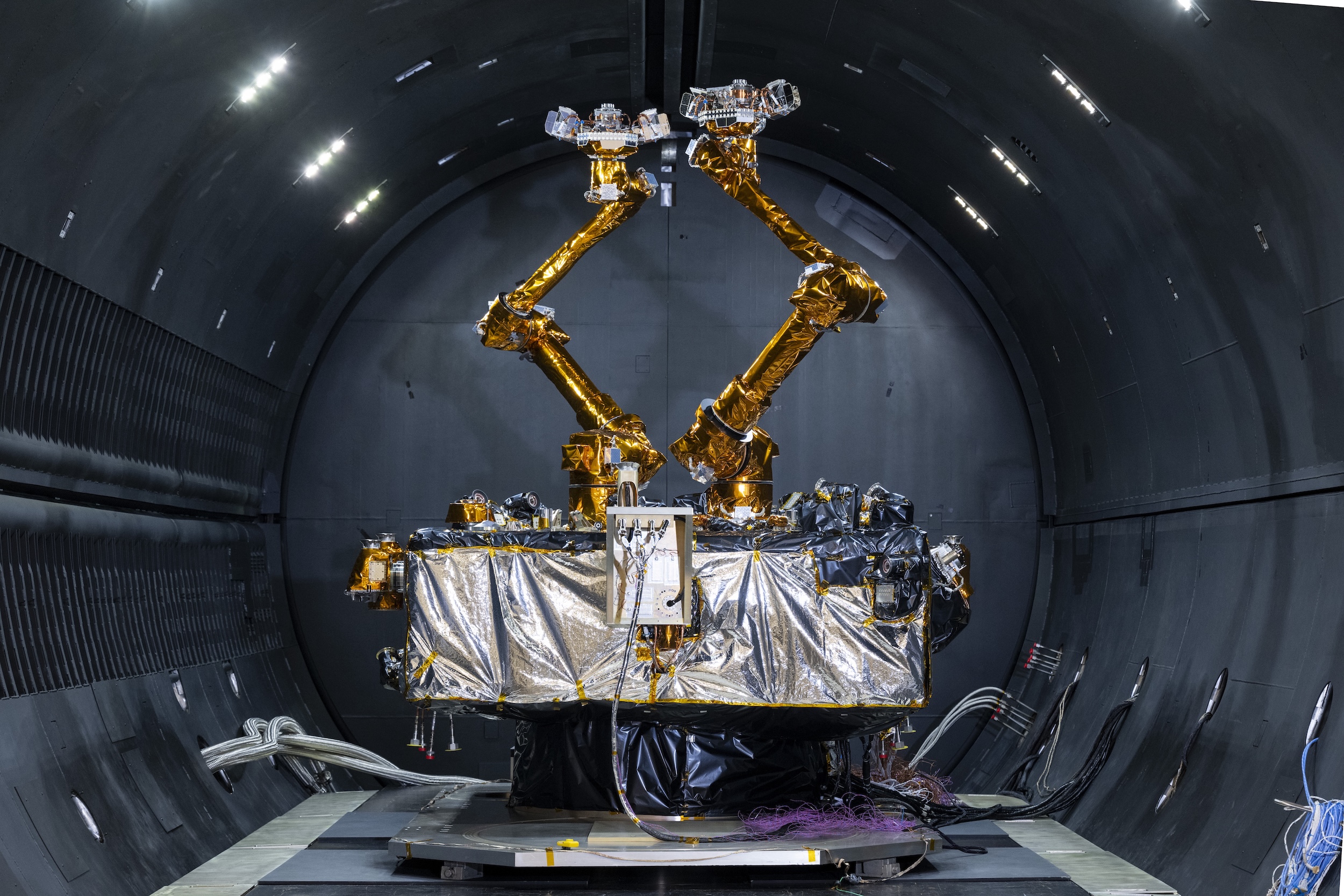
Northrop Grumman’s MRV uses dual seven-jointed robotic arms to perform complex repairs, upgrades, and refueling on satellites never designed for maintenance, marking a fundamental shift toward serviceable, modular space infrastructure.
Northrop Grumman’s Mission Robotic Vehicle (MRV) represents a groundbreaking leap in robotic satellite servicing by integrating two seven-jointed, articulated robotic arms with modular payloads such as the Mission Extension Pods (MEPs). This design enables the MRV to perform complex in-orbit tasks—including inspection, repair, refueling, and propulsion upgrades—on multiple geosynchronous satellites without being committed to a single client. As the first privately owned operational servicing vehicle in GEO, MRV’s capabilities mark a shift from the traditional 'launch-and-abandon' satellite model toward routine, autonomous maintenance that can extend satellite lifespans by up to eight years and reduce space debris.
The MRV’s technological sophistication addresses the formidable challenges of servicing satellites not originally designed for maintenance, requiring precise autonomous docking and robotic manipulation at orbital velocities of thousands of miles per hour. Unlike previous servicing missions that only provided external propulsion, MRV’s dexterous arms can open panels, replace components, and install modular upgrades, demonstrating a new paradigm of spacecraft as serviceable infrastructure. This capability is underpinned by a public-private partnership between Northrop Grumman and DARPA, which invested over $420 million to develop the advanced robotics payload, blending commercial satellite servicing expertise with cutting-edge autonomous control software.
Complementing Northrop Grumman’s MRV, ORBES’ Exo-ORB spacecraft introduces a compact, modular approach to robotic satellite servicing focused on cost-effective external inspections and future maintenance tasks. Designed to launch alongside customer infrastructure, Exo-ORB minimizes fuel and operational costs while planning to incorporate robotic arms capable of repairs and component replacements, reducing reliance on astronaut spacewalks. ORBES is actively validating these robotic technologies through upcoming missions, including an internal robot test aboard the ISS and a demonstration with Symphony Space’s Adagio Platform, signaling a broader industry trend toward integrated, scalable servicing solutions.




Phased Upgrades for Longevity
A meticulously staged rollout lets the MRV extend satellite lifespans through sequential hardware installations—like the first Space Force-approved Passive Refueling Module—while operators retain long-term control over critical upgrades.
Northrop Grumman’s Mission Robotic Vehicle (MRV) mission is pioneering the installation of Mission Extension Pods (MEPs) on aging SES and Optus geosynchronous satellites, aiming to extend their operational lifespans by up to eight years. This initiative marks the first privately owned, operational in-space servicing capability in GEO, designed to transform traditionally one-life satellites into serviceable infrastructure, thereby saving operators millions in replacement costs and mitigating space debris. The MRV employs dual seven-jointed robotic arms to perform complex tasks such as inspection, anomaly resolution, relocation, and hardware upgrades on satellites not originally designed for robotic servicing, signaling a significant evolution beyond prior servicing missions that only docked and supplied propulsion.
The mission follows a carefully phased operational strategy, with MRV taking approximately a year to reach its geosynchronous orbit before commencing proximity servicing demonstrations. This approach includes installing MEPs, demonstrating the first Passive Refueling Module approved by the U.S. Space Force, and showcasing capabilities like repair, relocation, and debris removal. A notable example is the phased servicing of Optus D3 under Project Aurora, where after an initial phase providing propulsion and attitude support, the MRV and MEP are scheduled for installation in late 2027 to extend the satellite’s life by up to six years, with Optus retaining control of the extension pod to support long-term network resilience.

Satellite Lifespans Redefined
Mission Extension Pods installed by MRV can add up to eight years to satellites’ lives, transforming aging assets into revenue-generating, upgradeable platforms and reducing the need for costly replacements.
Northrop Grumman’s Mission Robotic Vehicle (MRV) and Mission Extension Pods (MEPs) represent a transformative leap in extending satellite operational lifespans, with the MRV capable of adding up to eight additional years to aging geosynchronous satellites like those operated by SES and Optus. By installing propulsion and control modules, these robotic servicing missions not only delay costly satellite replacements but also enable satellites launched as early as 2009 with a 15-year design life to generate revenue well beyond their original timelines. This modular servicing approach, where operators permanently own the MEPs, allows a single MRV to service multiple satellites, significantly lowering costs and enhancing fleet resilience.
Beyond lifespan extension, Northrop Grumman’s MRV ushers in a paradigm shift from the traditional launch-and-abandon satellite model to a sustainable, upgradeable space infrastructure. Equipped with dual seven-jointed robotic arms and the first Passive Refueling Module approved by the Space Force, MRV enables on-orbit inspection, repair, relocation, and debris removal—even for satellites not originally designed for servicing. This capability not only mitigates the accumulation of space debris by preserving functional hardware worth hundreds of millions of dollars but also lays the groundwork for future autonomous servicing, refueling, and upgrades, as exemplified by NASA’s push for 'prepared' spacecraft with standardized grapple points and interfaces.
The commercialization of in-orbit servicing, highlighted by the MRV’s launch aboard a SpaceX Falcon 9 in mid-2026, marks a milestone in U.S. space infrastructure resilience and sustainability. By offering routine, autonomous satellite maintenance for both government and commercial clients, Northrop Grumman’s MRV paves the way for a more resilient space ecosystem where satellites can be maintained, upgraded, and controlled in orbit rather than replaced. This shift not only enhances long-term fleet sustainability and network capacity—as seen in Optus’s retention of control over extension pods—but also signals a broader industry move toward sustainable space operations that prioritize debris mitigation and cost efficiency.
Space Servicing Goes Commercial
Routine, autonomous servicing via MRV signals the dawn of commercial in-orbit maintenance, enabling both government and private operators to prioritize sustainability, resilience, and debris reduction in geosynchronous orbit.
Routine, autonomous servicing via MRV signals the dawn of commercial in-orbit maintenance, enabling both government and private operators to prioritize sustainability, resilience, and debris reduction in geosynchronous orbit.