Shadow AI visibility crisis pushes real-time governance
The gist
Enterprises are facing a runaway shadow AI crisis as unsanctioned models proliferate across their networks, outpacing governance and exposing organizations to unprecedented security, compliance, and operational risks.
What to know
- By early 2026, tens of thousands of unauthorized AI models were discovered running across endpoints and cloud platforms, with 62% of security teams in the dark about their locations.
- Traditional defenses can’t keep up as autonomous AI agents and fragmented governance create new attack surfaces—only 11% of enterprises have deployed AI-specific security solutions despite rising incidents.
- Regulatory pressure is mounting fast, with frameworks like the EU AI Act and CMMC 2.0 forcing organizations to dedicate nearly 17% of their AI budgets to governance and real-time security controls.
Shadow AI’s Hidden Epidemic
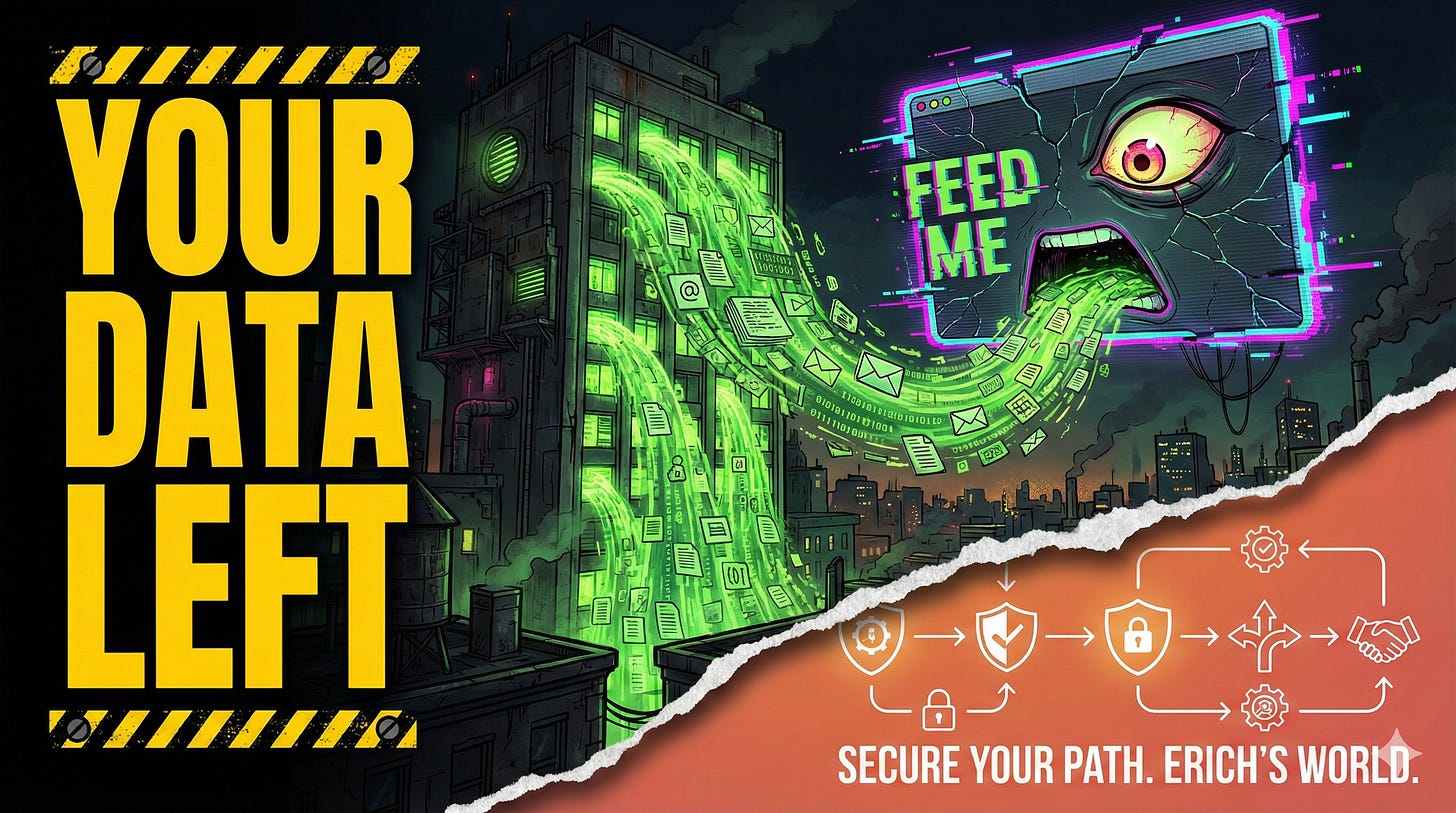
Unapproved AI tools are proliferating under the radar, driven by employee convenience and fragmented oversight, creating identity sprawl and exposing sensitive data far beyond traditional IT’s reach.
Shadow AI has emerged as a profound visibility crisis within enterprises, eclipsing traditional shadow IT risks by enabling widespread, unsanctioned use of AI tools that evade conventional IT oversight. According to a 2025 Harness report, 62% of security practitioners lack insight into where large language models are deployed, while 75% anticipate shadow AI risks to surpass those from API sprawl. This blind spot is exacerbated by fragmented communication, with only a third of developers notifying security teams before initiating AI projects, leading to incidents like prompt injections and jailbreaking that traditional security tools are ill-equipped to handle.
By early 2026, enterprises faced a daunting scale of shadow AI proliferation, with organizations discovering tens of thousands of AI models in use—far beyond initial estimates—spread across endpoints, cloud environments, and embedded within SaaS platforms like Salesforce and ServiceNow. This sprawling, often invisible AI landscape complicates governance efforts, demanding a dual approach that catalogs AI consumption at the browser level and scans infrastructure for deployed models. Innovations such as Palo Alto’s 'secure AI' tools aim to provide real-time risk assessment and mitigation, reflecting a shift from permission-based controls to dynamic governance.
The root of the shadow AI visibility crisis lies in employee behavior driven by convenience and productivity pressures, with over half of employees reportedly using unapproved AI tools, often bypassing corporate platforms in favor of popular external services like ChatGPT and Gemini. This unsanctioned usage not only increases data leakage risks—exposing sensitive contracts, source code, and internal communications—but also creates identity sprawl through unmanaged accounts and non-human identities linked to AI agents. Studies reveal that nearly half of employees hide their AI use from IT, while leadership’s prioritization of speed over security further fuels this underground adoption, making outright bans ineffective and governance challenging.
Traditional security architectures and network-based monitoring tools fall short in detecting shadow AI, as many AI applications operate silently within browsers or locally on devices without generating network traffic or cloud API calls. This structural detection gap leaves security teams blind to AI-enhanced workflows that autonomously access sensitive data and business systems, expanding the attack surface with unvetted APIs and plugins. Consequently, enterprises face mounting regulatory and supply chain risks under frameworks like the EU AI Act and NIS2, underscoring the urgent need for endpoint-level observability, continuous monitoring, and integrated governance strategies that treat AI agents as identities requiring real-time oversight.



Autonomous Agents, New Attack Vectors
AI agents’ continuous, autonomous operations are breaking static security models, forcing enterprises to shift toward real-time monitoring and data-centric controls as attackers exploit session hijacking and poisoned agents.
The rise of AI agents introduces fundamentally new security challenges that differ markedly from traditional cybersecurity threats, primarily due to their autonomous capabilities and continuous operation within enterprise environments. Unlike static authentication models, attackers now exploit session hijacking and poisoned AI agents to bypass conventional defenses, as highlighted by Shar and Suja in late 2025. This evolution demands dynamic, continuous security approaches such as zero trust protocols and granular monitoring to manage the fluid and persistent nature of AI-driven interactions, moving the security perimeter from static identities to real-time agent behavior.
Shadow AI and uncontrolled AI usage across enterprise functions create significant visibility and governance gaps, exacerbating risks of sensitive data exposure and insider threats. As Deepen Desai and subsequent analyses reveal, many organizations unknowingly rely on third-party AI integrations embedded in supply chains, while employees across departments deploy AI tools beyond IT oversight, leading to fragmented identities and unmanaged service accounts. This decentralized AI sprawl complicates breach detection and compliance with regulations like GDPR and HIPAA, underscoring the urgent need for data-centric governance models that enforce strict access controls and real-time telemetry to monitor AI data flows.
AI agents’ autonomous access to multiple systems and data sources amplifies the risk of overprivileged actions and unintended consequences, challenging traditional least privilege and human-in-the-loop paradigms. Experts like Ryan Kalember and reports from 2026 emphasize that agents can execute unvetted code, access thousands of files, and perform high-impact operations without adequate oversight, making dynamic, continuous authorization and auditability essential. The complexity of agentic AI behaviors, including hallucinations and prompt injections, requires layered security frameworks—such as Snowflake’s three-layer model—that govern data, model integrity, and agent actions holistically to prevent rogue activity and contain damage at machine speed.
Despite widespread AI adoption, enterprises face persistent gaps in AI security readiness, with half experiencing AI-related incidents even while deploying security controls. Proofpoint’s 2026 report and industry leaders like Arvin Nithra Kashayap of Rubrik highlight that managing AI at machine speed introduces novel risks due to AI sprawl, tool fragmentation, and insufficient governance frameworks. The expanding AI attack surface—spanning collaboration platforms, cloud applications, and autonomous agents—demands a shift toward unified, data-centric security architectures that emphasize continuous visibility, behavioral monitoring, and strict least-privilege enforcement to effectively mitigate emerging AI-native threats.






Governance Gaps and Cultural Friction
Siloed teams, misaligned incentives, and leadership’s focus on speed over security are fueling shadow AI adoption, leaving organizations blind to third-party risks and vulnerable to breaches.
By early 2026, enterprises faced significant governance gaps as AI adoption surged ahead of established frameworks, largely due to fragmented policies and a lack of centralized oversight. Deepen Desai highlighted the hidden risks of embedded AI within supply chains, where organizations often remain unaware of their reliance on third-party AI vendors, intensifying concentration risks and blind spots. This vendor dependency, coupled with rapid mandates from boards and CEOs pushing AI usage—especially within engineering teams generating nearly half of AI traffic—outpaced security and governance capabilities, leaving enterprises vulnerable to both operational disruptions and security breaches.
Shadow AI emerged as a critical blind spot, fueled by employees prioritizing convenience and productivity over security, leading to widespread use of unapproved AI tools that bypass traditional IT controls. As one analysis put it, users are rational actors choosing speed over compliance under pressure, resulting in unmanaged data and context leakage outside organizational boundaries. Fragmented policies, absence of procurement and logging, and misaligned incentives created fertile ground for shadow AI proliferation, with employees routinely sharing sensitive information through personal AI accounts—64.5% of work-related AI use involved personal tools—undermining corporate investments and exposing enterprises to compliance and security risks.
Cultural resistance and organizational silos further exacerbated governance gaps, as many enterprises struggled to align security requirements with employee workflows and expectations. Surveys revealed that 82% of companies identified silos between business units and IT as a barrier to effective AI governance, while creative teams actively resisted AI monitoring, perceiving it as intrusive surveillance that stalled transformation efforts. Leadership’s focus on speed over security, coupled with reliance on legacy security tools ill-suited for AI’s unique risks, left CISOs grappling with limited visibility and outdated controls, with only 11% deploying AI-specific security solutions despite 50% citing expertise gaps.
Executive and board-level oversight remained superficial and fragmented, often limited to policy committees without operational controls or clear accountability, which allowed shadow AI and unmanaged autonomous agents to flourish unchecked. Despite AI’s growing impact on enterprise risk, capital allocation, and strategic decisions, many boards underestimated the prevalence of shadow AI, with only a minority having comprehensive visibility or formal governance policies. Experts like Jason Jones and Shiv Agarwal emphasized the urgent need for cross-functional governance models that treat AI agents like privileged users with named owners and real-time monitoring, as failure to do so has already led to costly incidents, regulatory actions, and a surge in AI-related security breaches.




Dynamic Defense and Real-Time Visibility
Enterprises are racing to implement continuous AI asset discovery and layered governance, with real-time monitoring and identity-first controls replacing static inventories and outdated security policies.
Emerging AI governance strategies prioritize comprehensive, real-time visibility into all AI assets across diverse environments to close critical shadow AI gaps. Enterprises like Palo Alto have pioneered 'secure AI' tools that assess and mitigate AI risks at runtime, while companies such as Nudge Security enable instant discovery and behavioral monitoring of AI applications integrated within organizational workflows. This shift from static inventories to dynamic observability addresses the alarming underestimation of deployed AI models, exemplified by a top bank discovering over 93,000 models versus their initial count of hundreds, underscoring the necessity of continuous discovery and policy enforcement to regain control.
The rapid proliferation of autonomous AI agents compresses governance timelines and complicates traditional security paradigms, demanding layered lifecycle management and identity-first security approaches. Experts like Jimmy White highlight the blurred boundaries where AI agents operate across machines, clouds, and staging environments, often deployed by non-experts unaware of underlying security risks. This has led to innovative deployment models such as Snowflake’s Snowpack Container services, which confine AI models within approved data warehouses to prevent unauthorized data egress, complemented by gateways that leverage AI to detect sensitive data in real time, enforcing strict access controls and telemetry especially in regulated sectors like fintech and healthcare.
Despite widespread AI adoption, governance frameworks lag behind, with half of organizations experiencing AI-related incidents and only about half confident in their AI security controls. This governance gap is exacerbated by fragmented tool stacks and superficial policies lacking operational controls, prompting a shift toward unified security platforms and minimum viable governance focused on enforceability. Industry leaders advocate for continuous, real-time visibility and integrated policy frameworks that treat AI agents as privileged identities with strict least privilege enforcement, human-in-the-loop oversight for high-risk actions, and comprehensive auditability to prevent unauthorized or malicious autonomous behaviors.
As AI agents become ubiquitous—IDC forecasts 1.2 billion agents by 2029 performing 217 billion daily actions—enterprise governance must evolve into an operational discipline integrating identity management, least privilege, continuous monitoring, and kill switches. Leading vendors like Microsoft, Salesforce, and ServiceNow are developing dedicated AI governance platforms that unify identity-first security with cross-platform orchestration and compliance management. This holistic approach is critical to managing the unique risks of autonomous AI, including prompt injection attacks and supply chain vulnerabilities, ensuring that AI agents have auditable identities, scoped roles, and human accountability to safely scale AI capabilities without multiplying risk.



Regulatory Reckoning and Provable Security
Tough new mandates and billion-dollar penalties are forcing enterprises to overhaul AI governance, moving from check-the-box compliance to auditable, adaptive controls and formalized incident response.
By early 2026, industry leaders like Armor sounded alarms that enterprises adopting AI without formal governance policies were already vulnerable to security blind spots, data loss, and compliance violations, especially in regulated sectors such as healthcare. Armor’s AI governance framework, built around five pillars including AI tool inventory, data handling policies, and continuous monitoring, underscores the necessity of integrating AI governance into existing frameworks to meet emerging regulatory demands and maintain a robust security posture amid accelerating AI adoption.
The regulatory landscape has hardened significantly, transforming cybersecurity compliance from aspirational to legally enforceable mandates with severe financial and criminal penalties. The DOJ’s Civil Cyber-Fraud Initiative, recovering $6.8 billion in settlements in 2025, and the November 2026 CMMC 2.0 Phase 2 deadline requiring third-party assessments for Defense Industrial Base contractors, exemplify this shift. Enterprises must now move beyond performative compliance toward provable security through continuous monitoring, isolated CUI enclaves, and formalized incident response workflows tailored to AI-specific threats and strict 72-hour reporting requirements.
Despite the urgency, a widening AI governance gap persists as enterprises race to deploy agentic AI. IBM’s 2026 survey revealed that 77% of technology leaders feel AI adoption outpaces governance capabilities, with only 12.4% having policies ensuring human oversight and 24% confident in their governance structures. Experts like ADNOC’s CTO Dena Almansoori advocate shifting from rigid gate-based controls to adaptive guardrails proportional to AI autonomy levels, while IBM insists on minimum deployment requirements—registration, ownership, observability, and stoppability—to prevent costly incidents and legal liabilities.
The rapid proliferation of AI agents, projected by IDC to reach 1.2 billion by 2029 performing 217 billion daily actions, is driving enterprises to allocate an average 16.7% of AI budgets toward governance and security. This investment reflects a strategic pivot as vendors like Microsoft, Salesforce, and ServiceNow launch dedicated AI governance platforms emphasizing identity management, least-privilege access, audit logging, and AI-specific incident response. Moreover, global cooperation efforts, such as the World Artificial Intelligence Cooperation Organization formed by 29 countries, highlight the escalating complexity of managing AI governance across internal controls, interoperability, and international regulatory compliance.
Building Trustworthy AI, One Step at a Time
Sustainable enterprise AI demands phased deployment, measurable business impact, and rigorous human oversight—requiring cultural transformation and cross-functional governance to outpace evolving risks.
Building sustainable and trustworthy enterprise AI demands a phased approach that begins with narrow, high-frequency security use cases such as phishing triage or alert summarization, enabling organizations to validate AI reliability and measure productivity gains before broader deployment. This methodical adoption is complemented by rigorous governance frameworks that embed human oversight through strict data policies, versioned prompts, and full audit logging, ensuring AI behavior remains explainable and auditable. As Edward Chen of NCS emphasizes, safe AI is not an afterthought but the product of disciplined design that clearly defines agent access, escalation protocols, and traceability to human accountability, thereby preventing risks from multiplying faster than teams can respond.
Cross-functional collaboration and cultural transformation are pivotal to integrating AI responsibly within enterprise workflows. Leaders like Jay Bavisi and Mark Taylor highlight that preparing people to work alongside AI—questioning outputs, governing autonomous actions, and redesigning accountability frameworks—is essential to mitigate emerging business risks. This cultural shift also involves acknowledging the inevitability of Shadow AI use, prompting CISOs to pivot from outright blocking to proactive discovery, monitoring, and governance, a strategy echoed by Louis Jeansonne in healthcare where dedicated AI governance committees help prevent unapproved AI adoption and maintain trust.
Phased security adoption must be measurable and tightly linked to business outcomes to gain leadership confidence and ensure sustainable AI scaling. Organizations like Atlantic Health and Infosys demonstrate that targeting high-impact manual workflows for automation can yield dramatic improvements—such as a 75% increase in patient satisfaction and a reduction of transaction processing from 70 hours to 90 minutes—while quantifying cyber resilience through clear metrics that boards can track over time. Guru Sethupathy of Optro underscores that governance redesign is not about stifling innovation but about building control structures that enable faster, safer AI deployment, a necessity as agentic AI autonomously generates code and executes workflows that continuously alter enterprise risk profiles.
Human oversight remains the cornerstone of trustworthy AI governance, especially as regulators insist on a named accountable human behind every AI-driven decision. This principle is reflected in healthcare practices where clinicians obtain patient consent before activating ambient listening AI and systems automatically deactivate recording post-interaction, reinforcing operational guardrails. Moreover, workforce upskilling and security-first education are critical to maintaining trust and protecting privacy amid rapid AI adoption, addressing the gap between technological advances and organizational readiness—a challenge highlighted by Sunil Dadlani and Dr. Jeansonne as essential to avoid AI failure and ensure effective transformation.