Silicon valley and the surveillance state: tech titans, ICE raids, and the erosion of privacy fuel national backlash
The gist
Silicon Valley’s tech titans have morphed into full-fledged surveillance enablers, fueling state crackdowns, eroding privacy, and sparking a national backlash as legal safeguards struggle to keep up.
What to know
- By early 2026, companies like Palantir, OpenAI, and X were actively profiting from Trump-era ICE raids and amplifying authoritarian government narratives.
- Legal loopholes and outdated regulations have allowed rapid deployment of surveillance tech—like hundreds of Flock cameras—without proper oversight, targeting watchdogs such as Imran Ahmed.
- Grassroots resistance is rising nationwide, with lawsuits, local activism, and calls for open-source AI aiming to counter the unchecked power of the surveillance-industrial complex.
Power, Profit, and Peril
Silicon Valley’s alliance with government agencies has turned watchdogs into targets and blurred the boundaries between private enterprise, state surveillance, and political retribution.
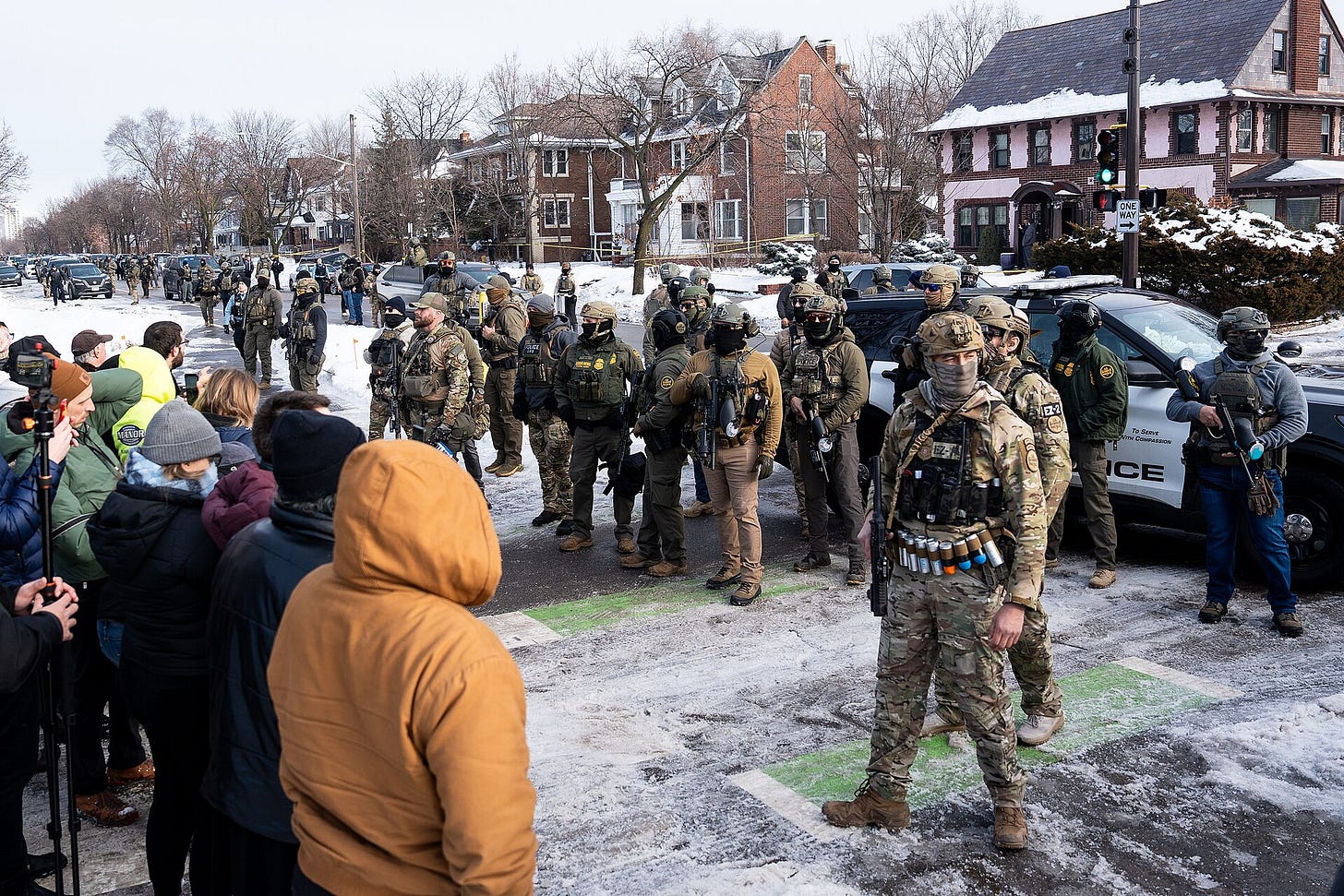
The new surveillance state is defined by a complex interplay between government power, tech firms, and those seeking accountability. Researchers like Imran Ahmed, founder of the Center for Countering Digital Hate, have become targets for both political figures and tech executives—highlighted by the Trump administration's efforts to deport Ahmed and bar other European regulators under the pretext of 'foreign censorship.' This tension underscores how the expanding reach of state power, bolstered by Palantir-backed surveillance and the militarization of agencies like ICE, increasingly collides with attempts to regulate digital speech and hold Silicon Valley accountable.
By early 2026, Silicon Valley giants such as Palantir, OpenAI, and X were not just passive providers of technology but active enablers of government surveillance and enforcement, profiting from their roles in Trump-era ICE raids. These companies' platforms also became conduits for amplifying authoritarian narratives, shaping public discourse in ways that support expanded surveillance and enforcement policies. This convergence of profit motives and political agendas blurs the line between private innovation and state power, embedding surveillance deeper into the digital and social fabric.
Meanwhile, the proliferation of cheap, network-connected hardware—particularly KVM devices from Chinese manufacturers—has opened a Pandora’s box of security and surveillance risks. These vulnerable, potentially backdoored devices flood the global market, introducing new avenues for both state and non-state actors to exploit digital infrastructure. The resulting geopolitical and security concerns highlight how the surveillance state is not just built on software and policy, but also on the physical vulnerabilities embedded in the very hardware that powers our connected world.



Laws Outpaced by Surveillance
Rapidly evolving surveillance tech has left outdated legal frameworks in the dust, enabling unchecked data collection and exposing the vulnerability of constitutional protections.
By early 2026, the accelerating pace of surveillance technology has left US legal frameworks scrambling to keep up, with Fourth Amendment precedents proving woefully outdated in the face of innovations like Flock's automated license plate readers and facial recognition systems. As Michael Soifer of the Institute for Justice observes, 'decades old legal precedents struggled to keep up with modern technology,' a reality underscored by lawsuits such as the one against Norfolk, Virginia, where 172 Flock cameras now track vehicle movements with minimal oversight. This regulatory lag not only exposes deep constitutional questions about privacy and accountability but also highlights the urgent need for anticipatory legislation that can address the expanding reach of digital surveillance.
The US regulatory landscape is further complicated by political interference and the influence of powerful tech CEOs, as illustrated by the Trump administration's attempts to deport Imran Ahmed, a prominent researcher on online hate and disinformation. Ahmed's legal battle—sparked by accusations of 'foreign censorship' and reportedly encouraged by Elon Musk—exposes how efforts to hold digital platforms accountable can be undermined by political pressures. This clash between regulatory initiatives and entrenched corporate interests reveals not just gaps in oversight, but also the fragility of mechanisms designed to protect the public from unchecked digital power.
Unlike the European Union's GDPR, which imposes strict regulations on private data collection, US law enforcement activities remain largely exempt from such oversight, creating a significant regulatory blind spot. This gap is exacerbated by the lack of robust safeguards—such as mandatory multi-factor authentication for surveillance systems like those provided by Flock—and by the fact that local police departments often operate under vague internal policies rather than clear state laws. As Senator Ron Wyden recently highlighted in a letter to the FTC, these lax standards leave sensitive data vulnerable, while the use of external grant funds allows police to sidestep emerging city council oversight, further eroding democratic accountability.
Despite these challenges, legal pushback is gaining momentum, with cases like the Norfolk lawsuit advancing through the courts and entering the discovery phase by late 2025. These ongoing legal challenges demonstrate that, while Supreme Court action may be slow, there are multiple avenues for contesting unchecked surveillance and pressing for reform. The persistence of such lawsuits signals a growing recognition among advocates and some local governments of the urgent need to modernize privacy protections and close the widening gap between technological capability and legal restraint.

Watchdogs Under Fire
Community activists and researchers face escalating retaliation as they challenge tech-driven surveillance, forcing a reckoning over transparency, local oversight, and the cost of dissent.
Advocacy groups and researchers like Imran Ahmed, founder of the Center for Countering Digital Hate, have become central figures in the fight to hold social media and AI companies accountable for the proliferation of hate speech and disinformation. Ahmed’s efforts to expose digital harms have not only driven public awareness but also placed him at personal risk, as seen in his legal battle to block removal from the U.S. after being targeted by the Trump administration. His case underscores how the intersection of immigration, free speech, and digital advocacy is increasingly fraught, with watchdogs facing both legal and political retaliation for challenging powerful tech platforms.
At the local level, the deployment of surveillance technologies often occurs with minimal oversight, as illustrated by Norfolk’s two-year lapse in auditing surveillance data usage. This lack of transparency has fueled public backlash and empowered communities to demand answers from city officials about access controls, data retention, and oversight mechanisms. As more residents become aware of the extent to which camera networks can reconstruct individual movements—sometimes tracking nearly entire routes—community resistance and advocacy have grown, pushing for reforms and greater accountability in municipal surveillance practices.
The unchecked expansion of militarized surveillance infrastructure by tech giants like Palantir, coupled with the complicity of executives such as OpenAI’s Greg Brockman and Palantir’s Alex Karp, has made accountability an uphill battle. Advocacy efforts now target these companies directly, promoting open-source AI and ethical oversight as countermeasures to the erosion of public trust and the rise of authoritarian practices. As platforms like X (formerly Twitter) amplify disinformation and secure lucrative government contracts, the vacuum left by weakened institutions is increasingly filled by narratives crafted by those in power, complicating efforts for transparency and reform.
Resistance to federal surveillance overreach has found critical footing at the state and local levels, with leaders like Minneapolis city council president likening ICE operations to a 'military occupation' and Minnesota Governor Tim Walz urging citizens to film ICE activities for future legal action. However, this resistance unfolds in an environment of escalating repression, as seen in FBI raids on journalists and mounting risks for whistleblowers and advocacy groups. These developments highlight both the urgency for robust protections and reforms, and the pivotal role of community and state-level action in challenging the expanding reach of digital surveillance.


Surveillance and the Human Mind
The normalization of all-seeing technology is fueling collective anxiety, eroding trust in reality, and quietly transforming the psychological landscape of modern society.
The psychological toll of pervasive surveillance has deepened as technologies like DARPA's LifeLog project, once an 'all-remembering cyber diary,' have set a precedent for the kind of continuous behavioral monitoring now embedded in everyday consumer devices. While LifeLog's public demise led many to believe such projects went underground, by early 2026, the reality is that modern smartphones already carry the hardware to enable similar, if not more advanced, forms of data collection—effectively making mass surveillance a routine part of daily life. This seamless integration of monitoring technology not only heightens feelings of paranoia but also blurs the boundaries between private and public existence, leaving individuals perpetually uncertain about when, how, and by whom they are being watched.
The voluntary veneer of contemporary data collection further complicates the erosion of civil liberties and public trust, as individuals unwittingly participate in their own surveillance. Projects like LifeLog promised users control, yet the reality was a system capable of inferring routines, habits, and social connections, all under the guise of consent. As these practices become normalized, the line between willing participation and covert intrusion fades, fueling skepticism about the intentions behind such technologies and undermining the foundational trust necessary for a healthy civil society.
Beyond individual paranoia, the omnipresence of surveillance technologies has triggered broader psychological phenomena, including memory unreliability and collective delusion. As referenced in headlines linking LifeLog, mass surveillance, and existential dread, the constant challenge to what is real and what is recorded destabilizes public confidence in shared reality. This erosion of trust not only affects personal well-being but also threatens the social fabric, as communities grapple with the implications of living under an ever-watchful digital gaze.

Empire by Algorithm
The fusion of executive power and tech industry ambition is driving America toward empire, as surveillance tools concentrate control, undermine democracy, and set the stage for global governance by digital elites.
The unchecked expansion of executive power—epitomized by the Trump administration’s embrace of Palantir-backed surveillance and the militarization of ICE—has catalyzed a dramatic shift in American governance, steering it from a republic toward what critics call an 'empire.' This consolidation of surveillance power not only undermines democratic norms but also threatens individual autonomy, as the state’s ability to monitor and control its citizens grows ever more pervasive. In response, advocates are pushing for open-source AI and robust ethical oversight, arguing that democratizing technology is essential to counterbalance the surveillance-industrial complex and restore accountability.
By early 2026, the complicity of tech giants like Palantir, OpenAI, and X in enabling and profiting from state surveillance has become impossible to ignore, with these firms supplying the digital backbone for Trump-era ICE raids and amplifying authoritarian narratives. The entanglement of Silicon Valley elites with political power—underscored by Greg Brockman’s record donation to MAGA Inc. and lucrative government contracts for Alex Karp and Elon Musk—demonstrates how surveillance technology is being weaponized to suppress dissent and facilitate state violence. As tech platforms erode public trust and fill the resulting vacuum with their own narratives, the very foundations of democratic accountability and truth are left dangerously exposed.
Looking beyond the U.S., the convergence of central banks, digital currencies, and global surveillance infrastructure signals a new era in which power and control are increasingly concentrated in the hands of a transnational elite. This scenario, eerily foreshadowed by dystopian fiction like 'Metropolis,' raises profound questions about the future of privacy and autonomy in a world where financial and informational flows are tightly monitored and regulated. The risks to democratic norms are no longer hypothetical—they are rapidly materializing as surveillance technologies become ever more entwined with the levers of global governance.
Despite these alarming trends, a growing movement is taking direct aim at the surveillance-industrial complex by advocating for open-source AI infrastructure and ethical oversight. Newsletters and activists are targeting firms like Palantir, seeking to democratize technology and challenge the unchecked spread of militarized AI. This pushback represents a crucial counterforce, highlighting the possibility of reform and technological democratization as a means to reclaim power from entrenched interests and restore the balance between security and civil liberties.
