Silicon valley’s $100m power play: tech titans, super PACs, and the battle to control america’s AI laws
The gist
Silicon Valley titans are pouring over $100 million into super PACs and lobbying to rewrite America’s AI laws in their favor, igniting a political brawl over who gets to control the future of artificial intelligence.
What to know
- Tech giants like Andreessen Horowitz, Meta, and OpenAI are backing super PACs to push for minimal AI oversight and override state laws with federal preemption.
- States like California and New York are fighting back with tough new AI safety bills, while the Trump administration and tech allies threaten to cut off broadband funding to states that regulate.
- With the 2026 election looming, partisan divides and Big Tech money have turned AI regulation into a political flashpoint—where votes against oversight could be as toxic as backing the Iraq War.
Super PACs Rewrite the Rules
Tech billionaires are weaponizing $100M super PACs and campaign machinery to override state AI laws, fueling fears of regulatory capture and a democracy swayed by Silicon Valley money.
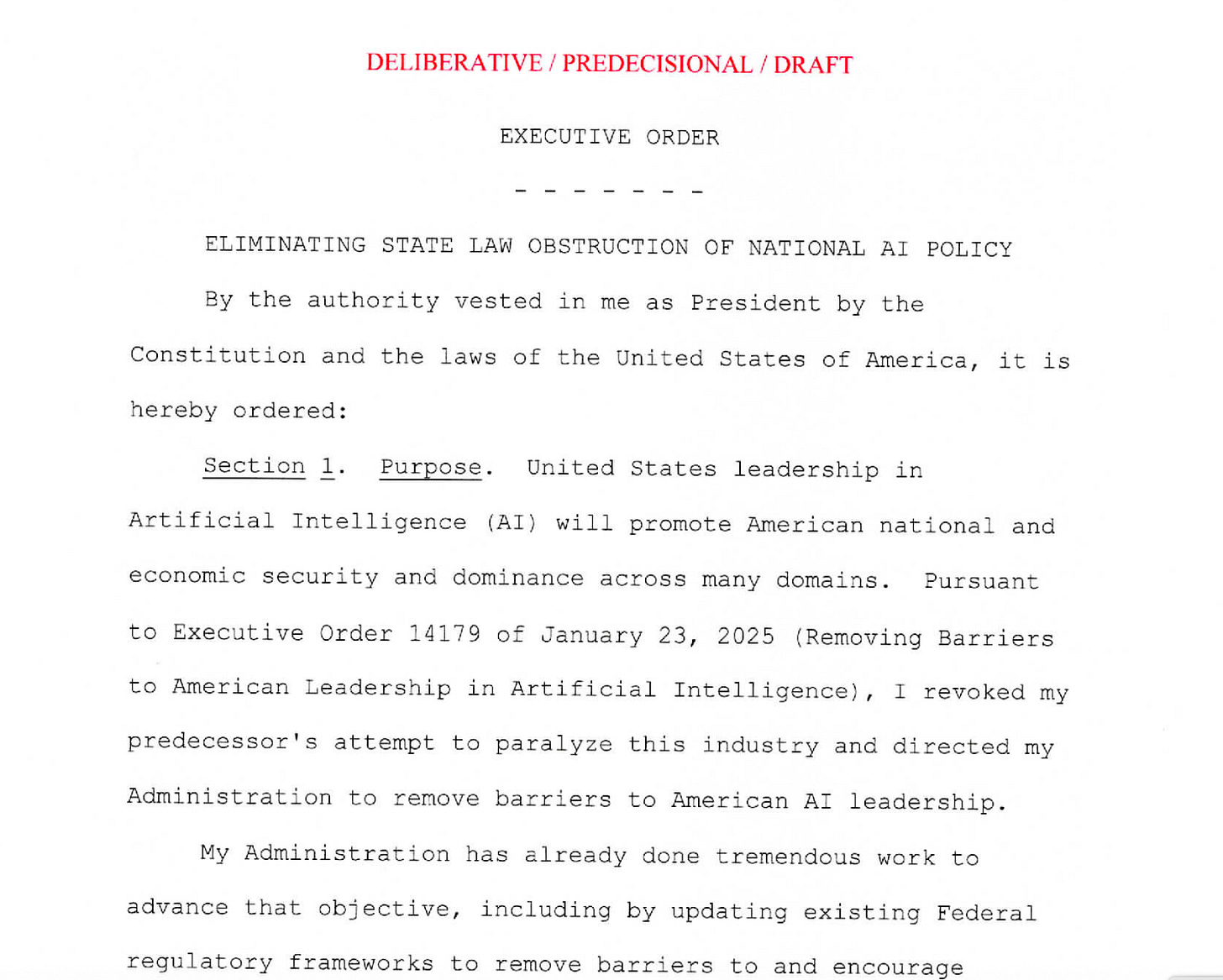
Silicon Valley’s campaign for industry-friendly AI policy has reached unprecedented scale and sophistication, with super PACs like 'Leading the Future'—backed by over $100 million from Andreessen Horowitz, OpenAI’s Greg Brockman, Meta, and other tech titans—aggressively lobbying for minimal oversight at both federal and state levels. Mirroring tactics from the crypto sector, these coalitions deploy campaign donations, digital ads, and candidate scorecards to elect pro-innovation politicians, oppose bills like California’s SB 53 and New York’s RAISE Act, and push for federal preemption of state regulations, often tying compliance to access to broadband funding. This strategy, orchestrated by seasoned political consultants, is designed to ensure U.S. leadership in AI and economic growth, but has sparked growing concerns about regulatory capture, the influence of billionaire money on democracy, and the sidelining of public safety in favor of industry interests.
By late 2025, the industry’s lobbying efforts had become both more targeted and more contentious, with Meta launching its own super PAC to influence California state races and OpenAI lobbying to weaken state-level bills by advocating for voluntary federal or EU frameworks over enforceable local rules. This escalation has triggered a backlash from policymakers and AI safety advocates, who accuse tech leaders of bad faith, regulatory capture, and attempts to drown out opposition with billionaire funding. While the tech sector frames regulation as an existential threat to innovation—Peter Thiel likening it to 'the Antichrist'—critics highlight the contradiction between public calls for responsible AI governance and behind-the-scenes financial support for anti-regulation groups, warning that such tactics risk political blowback and undermine public trust.
The push for federal preemption of state AI laws has become a flashpoint, with Silicon Valley and its allies in the Trump administration seeking to insert preemption language into major federal bills and even threatening states with loss of broadband funding for enacting their own regulations. Major donors like Marc Andreessen, Joe Lonsdale, and Greg Brockman have poured millions into pro-Trump and pro-AI super PACs, while influential figures like David Sacks work to bridge the cultural divide between Silicon Valley’s disruption ethos and Washington’s bureaucratic mindset. However, this centralization effort faces resistance from both Democrats—who increasingly see running against Big Tech as a winning strategy—and some Republicans, who object on federalism grounds, underscoring the deep partisan and philosophical divides shaping the future of U.S. AI policy.





States Strike Back on AI
California and New York are crafting aggressive AI safety laws to fill the federal vacuum, even as tech-backed lobbying and federal threats escalate a bitter preemption war.
California and New York have emerged as the nation’s most assertive laboratories for AI regulation, with lawmakers in both states pushing forward ambitious bills like California’s SB 53 and New York’s RAISE Act in the wake of federal inaction. These state-level initiatives focus on labor rights, developer transparency, and frontier AI safety, requiring developers of large models to publish safety protocols and report critical incidents—despite setbacks such as Governor Newsom’s 2024 veto of SB 1047. By targeting catastrophic risks and mandating transparency, these laws aim to fill the regulatory vacuum left by Washington, even as they risk creating a patchwork of standards and path dependencies that may not address the most immediate public harms.
The push for state-led AI regulation has ignited a fierce preemption battle, as the Trump administration—backed by Silicon Valley giants like Google, Meta, and OpenAI, as well as GOP donors Marc Andreessen and Ben Horowitz—seeks to override state authority through federal legislation and executive orders. Proposals include embedding preemption language in unrelated bills such as the national defense authorization act, and threatening states with litigation or loss of federal broadband funds if they pass AI laws. This centralizing drive, orchestrated by figures like Trump’s AI and Crypto Czar David Sacks, has drawn sharp criticism from labor groups and even some Republicans, who view it as an antidemocratic effort to stifle local governance and public oversight.
Industry influence looms large over the preemption debate, with aggressive lobbying campaigns targeting state legislators and public opinion to block or water down AI safety bills. In California, tech industry groups like TechNet and the Chamber of Progress spent hundreds of thousands of dollars lobbying against stricter measures such as AB 1064, while a super PAC backed by Andreessen Horowitz and OpenAI’s Greg Brockman has targeted New York lawmakers supporting the RAISE Act. This opposition underscores the broader struggle between industry interests prioritizing innovation and access, and advocates—including labor unions like the California AFL-CIO—demanding meaningful guardrails and worker protections in the face of rapid AI deployment.
At the heart of the preemption fight lies a fundamental question of democratic governance: who should set the rules for AI in America? State leaders like California’s Senator Scott Wiener argue for local leadership and tailored protections, while federal proposals emphasize uniformity and political restraint, often sidelining urgent concerns about worker rights and public safety. The resulting standoff not only reflects the fragmented and evolving nature of U.S. AI policy, but also exposes the high stakes for democratic accountability as industry and political factions vie for control over the nation’s technological future.



Regulatory Capture in Real Time
AI giants are shaping oversight in their favor by bankrolling anti-regulation PACs, pushing voluntary codes, and watering down state bills—often leaving public safety and democracy as afterthoughts.
The specter of regulatory capture looms large over U.S. AI policy, as tech giants like OpenAI and Meta deploy unprecedented sums through Super PACs and direct lobbying to shape legislation in their favor. OpenAI’s Christopher Lehane, for instance, lobbied Governor Newsom to gut California’s SB 53 by advocating for voluntary compliance with federal or EU frameworks, a move critics say is tantamount to arguing for no meaningful state oversight at all. This strategy, echoed by industry-wide campaigns warning of stifled innovation and burdens on small developers—even when bills like SB 53 target only the largest players—reflects a broader pattern of tech companies using their political and financial clout to dilute or derail substantive regulation, often at the expense of public safety and democratic accountability.
This corporate influence is not just a matter of campaign contributions or ad blitzes; it extends to the very framing of the regulatory debate and the mechanisms of oversight. Tech leaders like OpenAI’s Greg Brockman publicly espouse responsible AI governance while simultaneously bankrolling anti-regulation Super PACs such as 'Leading the Future,' a contradiction that has fueled public distrust and sharp critiques from economists and civil society advocates. The resulting legislation often bears the fingerprints of industry lobbying—California’s AB 1064, a strong AI child safety bill, was vetoed after intense opposition, while weaker alternatives passed, leaving maximum penalties so low that they are dwarfed by the average OpenAI employee’s salary. As one observer put it, this approach 'will backfire,' undermining both democratic legitimacy and the public’s demand for meaningful oversight.
The risk of regulatory capture is compounded by a push for pre-approval regimes and voluntary codes that entrench incumbents and stifle new entrants, threatening Silicon Valley’s tradition of 'permissionless innovation.' Jack Clark of Anthropic openly acknowledged that industry strategies often involve stoking fear to justify Washington pre-approval systems, a move that favors well-resourced giants over startups and mirrors the Biden administration’s 'diffusion rule' requiring government licensing for every GPU sale. This shift toward regulatory gatekeeping not only consolidates power among a handful of tech executives—sometimes described as 'crony capitalism'—but also sidelines broader national interests and democratic oversight in favor of private gain.
Meanwhile, the influence of big tech money extends beyond legislatures and into academia, where funding from companies like OpenAI and Meta has led some researchers to avoid discussing AI risks for fear of jeopardizing their grants. This chilling effect on academic discourse, reminiscent of tactics used by the tobacco industry, further narrows the public conversation around AI safety at a time when real-world harms—such as AI-generated misinformation—are becoming increasingly evident. Despite industry narratives of inevitability and acceleration, civil society advocates warn that the underlying safety issues have not disappeared; if anything, they are manifesting more urgently, underscoring the need for robust, democratically legitimate oversight.

AI Becomes a Security Weapon
National security priorities are driving AI policy, with the U.S. racing China on military tech, defense partnerships, and chip controls—while bureaucratic inertia and talent shortages threaten America’s edge.
The entanglement of AI policy with national security has deepened as the U.S. faces mounting pressure to keep pace with China’s rapid advances in military technology, particularly in drone manufacturing and low-cost chip production. While American tech giants like Microsoft and Google have grown more open to defense partnerships, the U.S. government’s approach is increasingly shaped by protectionist impulses reminiscent of the Trump administration, which has sought to leverage AI as both an economic engine and a strategic asset. This convergence of regulatory zeal and defense collaboration underscores a new era where AI is seen as indispensable to both economic competitiveness and military supremacy.
The U.S. national security establishment is grappling with the challenge of institutional adaptation to AI, as the technology’s general-purpose nature strains traditional bureaucratic boundaries and exposes vulnerabilities in software-dependent military systems. Experts like Richard Danzig warn that while the Department of Defense recognizes AI’s significance, it risks missing a fleeting first-mover advantage without urgent action, and that AI’s impact will be as transformative—and disruptive—as the rise of market capitalism, but on a much shorter timeline. Meanwhile, the intelligence community faces a worrying exodus of AI talent, threatening its ability to keep pace with adversaries and underscoring the need for a Cold War-scale renewal of expertise and organizational structures.
Geopolitical competition over AI has become a flashpoint in U.S. policy, with the rollback of Biden-era export controls on advanced chips—such as Nvidia’s H200—sparking fierce criticism from national security leaders like Jake Sullivan and industry figures like Anthropic CEO Dario Amodei, who likened the risk to that of nuclear weapons. This policy reversal highlights the tension between commercial interests and national security imperatives, as easing restrictions could accelerate China’s AI capabilities and erode U.S. technological leadership. The debate over chip exports is emblematic of the broader struggle to balance innovation, economic gain, and the imperative to maintain a strategic edge over rivals.
The evolving relationship between government and the tech sector is central to the defense tech nexus, with calls for closer collaboration, greater government investment, and personnel exchange to ensure national security priorities are embedded in AI development. However, the lack of a competitive 'creative destruction' mechanism in the defense sector means innovation depends heavily on visionary civilian and military leaders willing to challenge institutional inertia. Internationally, competition with China and cooperation with allies like Britain serve as both a check and a catalyst, but also risk fueling security paranoia and reckless escalation if not managed with transparency and ethical oversight.
Trump’s AI policy, while outwardly aligned with Silicon Valley’s deregulatory agenda, is fundamentally about consolidating state power and asserting U.S. dominance in the global AI race. Efforts to preempt state-level AI regulation—backed by tech giants like Meta, Google, and OpenAI—reflect a transactional alliance aimed at rapid innovation and maintaining an edge over China. The administration’s use of AI-generated imagery to project MAGA dominance further illustrates how AI is being wielded not just as a tool of economic and technological competition, but as an instrument of nationalistic and geopolitical ambition.



AI Regulation: Political Minefield
Partisan infighting, billionaire influence, and election-year anxieties have turned AI oversight into a toxic battleground, where both parties risk backlash for siding with Big Tech or blocking regulation.
The partisan and ideological divides shaping U.S. AI policy have become increasingly pronounced, with both major parties wrestling with internal rifts and external pressures from industry and public sentiment. On the left, AI doomerism—fueled by cultural narratives and existential risk advocates—has replaced climate doomerism as a rallying cry for sweeping regulation and economic control, underpinning Biden-era policies that sought to consolidate AI development within a handful of American firms and restrict open-source innovation. Meanwhile, the right is fractured: Trump administration allies and Silicon Valley donors like Marc Andreessen and Ben Horowitz are pushing for federal preemption of state AI laws, facing fierce opposition from federalist Republicans such as Marjorie Taylor Greene and Mike Davis, and sparking concerns about democratic legitimacy and the concentration of power.
The 2026 election cycle has intensified these divides, transforming AI regulation into a high-stakes political battleground where industry lobbying, populist backlash, and media-driven anxieties collide. Tech billionaires and pro-AI super PACs like Leading the Future have poured over $100 million into shaping Congressional outcomes, but face mounting resistance from AI safety advocates and a public increasingly skeptical of Big Tech’s motives. As media coverage links AI to societal harms—such as the anticipated surge in stories connecting AI to suicides—lawmakers on both sides are wary of appearing soft on regulation, with votes against state-level AI laws now seen as potential electoral liabilities akin to supporting the Iraq War.
Despite the polarization, the debate is further complicated by shifting alliances and pragmatic calculations among tech leaders and policymakers. Figures like Mark Cuban argue that the astronomical economic stakes—potentially $100 trillion over three decades—necessitate engagement with both parties, even if it means compromising on ideological purity. This pragmatism is echoed in the Trump administration’s approach, which, while publicly deregulatory, is described by scholars as a 'big government project' to centralize power, leveraging executive orders, DOJ threats, and AI-generated propaganda to assert dominance and preempt state action. Ultimately, business incentives, geopolitical rivalry with China, and the desire to control the information space are driving a narrative of AI inevitability and acceleration, often at the expense of nuanced policy discussion.
Within this turbulent landscape, expert communities and policy forums risk fracturing along partisan lines, as safety advocates, techno-optimists, and anti-tech populists are pulled into broader political coalitions. While there remains hope for constructive dialogue—anchored in shared commitments and respectful negotiation—issues like child safety are increasingly weaponized for political gain, leading to performative, ineffective policies. The lack of a unified federal approach has also spurred states to act independently, creating a patchwork of regulations and further uncertainty about the future trajectory of U.S. AI governance.