Silver’s ‘strategic asset’ repricing gains steam as supply squeeze meets war demand
The gist
**Silver is being recast as a strategic national-security metal, and a years-long supply squeeze could be setting the stage for a much higher price floor.**
What to know
- The U.S. critical-mineral designation is pushing silver beyond “commodity” status and into defense, semis, solar, EVs, and other strategic uses.
- Supply is structurally tight: silver is mostly a mining byproduct, the market has run deficits for five straight years, and the cumulative shortfall is nearing 800 million ounces.
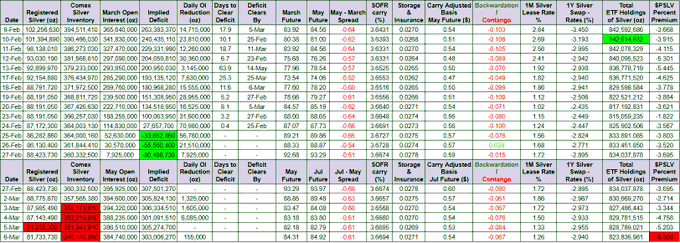
- Market watchers see regime-shift signals everywhere, from silver leaving COMEX to PSLV trading at a 5.7% discount to NAV, with some bulls now eyeing $130 silver in 2026.
Silver Goes Strategic
**Silver is being recast as a national-security input, not just a tradable metal, because defense systems, chips, solar, EVs, and medical tech all depend on it.**
Silver’s 2025 U.S. critical-mineral designation is helping recast the metal from a cyclical commodity into a strategic input tied to technology, energy, and national security. Analysts argue that in a world of rearmament and industrial policy, silver now sits at the intersection of "systems of guidance, military electronics, communications, sensors, satellites, and advanced weaponry," while also remaining indispensable to solar panels, semiconductors, EVs, data centers, and medical applications. That broader framing matters because it suggests the market is no longer pricing silver only on jewelry or investment demand, but on a structural role in the modern economy.
The defense angle is especially powerful because it turns silver demand into something closer to a permanent national-security requirement than a normal commodity cycle. One analysis bluntly argues that "every precision-guided munition contains silver" in its guidance systems, silver-zinc batteries, solder, connectors, and wiring, and says a Tomahawk may contain anywhere from 15 ounces to 500 ounces, with the exact amount classified. If that is even directionally right, then wartime consumption becomes effectively non-recyclable—"destroyed, atomized" and gone—making each missile strike a small but irreversible subtraction from supply.
That strategic lens is also changing how investors think about supply risk, because military drawdowns can outstrip visible production and there is no obvious government buffer to absorb the shock. The same analysis notes Tomahawk output runs only about 100-150 a year, while CENTCOM reportedly hit more than 1,000 targets in 36 hours—"more than a year’s production burned in a day and a half"—implying replacement demand that can linger for years. Compounding the concern, it says the United States has no strategic silver reserve and that five agencies, including DoD, DoE, Interior, USGS, and the Mint, stopped reporting inventories in the mid-1990s, leaving the market to price a strategic metal without a transparent backstop.
Taken together, the critical-mineral label is driving a re-rating because it makes silver look less like a tradeable metal and more like a constrained strategic asset whose demand is being pulled by multiple long-duration trends at once. As one Spanish-language analysis puts it, silver is converging with the "transition energética, carrera tecnológica, rearme global," and the market may be underestimating that pressure because a meaningful share of strategic demand does not show up cleanly in public statistics. That combination of hidden demand, defense urgency, and industrial indispensability is why analysts are talking about a structural repricing rather than a short-lived spike.


The Deficit Won’t Heal
**Silver’s shortage is hardwired into the mining model: most supply is a byproduct, so higher prices can’t quickly unlock enough new ounces to close a five-year deficit.**
Silver’s supply problem is not just tight; it is structurally hard to fix because most of the metal comes as a byproduct of mining other commodities, so higher prices do not automatically unlock a flood of new ounces. As Thomas Lamb put it, “Silver is just so constrained… it’s really hard to dial up production of silver,” and that constraint is why he says the deficit is “baked in.” In other words, the market can reprice silver quickly, but miners cannot meaningfully retool copper, lead, zinc, or gold operations on demand to chase the rally.
That rigidity is being compounded by a deficit that has already been running for years, leaving the market with little slack even before any new demand shock arrives. One analysis says silver has been in structural deficit since 2021, with five straight years of shortfalls and a cumulative gap approaching 800 million ounces — roughly ten months of global mining output — which helps explain why commentators argue the market cannot simply “catch up” through normal production growth. The result is a supply picture that looks less cyclical than permanently strained, with higher prices acting more like a rationing mechanism than a cure.
Military demand makes the shortage feel even more inescapable because defense use can destroy silver outright, removing it from circulation rather than merely delaying its return. The analysis on warfare-driven demand notes that a Tomahawk cruise missile may contain anywhere from 15 to 500 ounces of silver, and if CENTCOM expended 200-plus cruise missiles in 36 hours, that would amount to more than a year’s worth of Tomahawk production burned in a day and a half — with the metal “atomized… Never recycled. Gone.” With no U.S. strategic silver reserve and agencies such as DoD, DoE, Interior, USGS, and the Mint having stopped reporting inventories in the mid-1990s, there is little buffer to absorb that kind of draw.
On top of the mining bottleneck, trade policy is tightening the vise: China’s January 1 export licensing requirements on refined silver were described as effectively putting a gate on 60% to 70% of globally traded supply. That matters because even when silver exists in the system, it may not move freely to where it is needed, especially in a market already described as physically tight. The combination of byproduct production, persistent deficits, and export controls is why analysts see not a quick spike but a sustained rally driven by a market that simply cannot respond fast enough.

Wartime Burn Rate
**Defense demand is turning silver into a consumable battlefield resource, with munitions and missile strikes permanently removing metal from circulation while industrial uses keep draining inventories.**
The demand story is no longer just about solar panels and electronics; it is increasingly being framed as a strategic, wartime consumption cycle that pulls silver into uses the market cannot quickly replace. Analysts argue that precision-guided munitions, cruise missiles, guidance systems, silver-zinc batteries, solder, connectors and wiring all embed silver, and that once those weapons are used, the metal is effectively gone—"Every impact vaporizes silver... Never recycled." With CENTCOM reportedly striking more than 1,000 targets in 36 hours and Israel dropping 1,200+ munitions in a day, the point is not merely that defense demand is rising, but that it is arriving at a burn rate that can outstrip a full year of missile production in a matter of hours.
That military pull is landing on top of a broader industrial base that is already chewing through silver in ways that are hard to reverse. The metal is now embedded across solar panels, semiconductors, EVs, data centers, sensors, telecom gear and medical devices, and commentators stress that much of it never comes back to market because it is dispersed in tiny amounts across billions of products; as one analysis put it, "not only is silver consumed, it is destroyed stock available." In other words, clean-energy and digital-economy growth are not just adding demand—they are steadily removing above-ground inventory from circulation, tightening the physical market even before defense demand is counted.
Geopolitics is amplifying that squeeze by turning silver from a commodity into a strategic input whose demand may be undercounted in public data. One Spanish-language analysis argues that in a rearming world, silver becomes a resource for "sistemas de guiado, electrónica militar, comunicaciones, sensores, satélites" and advanced weapons, while warning that a meaningful share of that demand may not show up clearly in official statistics. Add in global military spending of $2.7 trillion in 2024, up 9.4% year over year, and the result is a market where classified or opaque consumption is stacking onto an already documented five-year structural deficit—one with a cumulative shortfall approaching 800 million ounces.
What makes this especially bullish for silver is that demand is rising into a supply system that cannot respond with any speed. Thomas Lamb’s blunt assessment—"Silver is just so constrained" and "There’s no escape for anybody"—captures the core problem: most silver is produced as a byproduct, so higher prices do not reliably trigger a fast supply response, and opening new mines can take years. That means every extra layer of industrial, clean-energy, military or geopolitical demand does not get met by fresh output so much as it deepens the deficit, reinforcing the view that the current rally is still in its early innings.
The Breakout Signal Set
**Physical tightness, a PSLV discount, and miner resilience are lining up like a regime change, with bulls reading the market as early in a multi-year repricing cycle.**
Commentators are translating silver’s supply squeeze into a classic breakout-cycle setup: physical metal is reportedly leaving COMEX every trading day, while retail investors are still dumping silver-backed ETFs, a divergence they read as proof that the market has shifted from paper pricing to physical scarcity. Thomas Lamb’s view that silver is "so constrained" and that "the supply deficit is baked in" reinforces the idea that this is not a one-off spike but the early innings of a multi-year regime, with Lamb calling it "the first couple innings of this cycle" and even penciling in $130 silver in 2026.
That bullish regime shift is also being read through positioning signals, especially the PSLV discount. Analysts point to PSLV trading at a steep 5.7% discount to NAV as evidence of professional accumulation and a sentiment reset, contrasting it with 2011, when the trust averaged a 17.3% premium; in their telling, the current discount is a "coiled spring" that could snap into a premium once retail money returns. If that happens, they argue, the 5.7% discount could flip to a 17.3% premium or higher, adding roughly 23% on top of the underlying silver move and confirming a higher durable floor.
Miner behavior is being used as the market’s lie detector. Silver is still about 24% below its highs, yet silver miners are only down around 1.7%, which commentators say shows the market is no longer reacting to a fleeting price spike but is repricing a higher, more durable silver floor; as one piece put it, miners are "consolidating on a new, higher base." That same logic is driving a catch-up trade in equities, with the Silver Miners-to-Silver Ratio at historic lows and analysts arguing this is a re-rating phase, not an overvaluation phase, as profitability and free cash flow at $90 silver force investors to close the valuation gap.
The rally case is further reinforced by the macro leverage embedded in gold and the miners’ own rerating potential. With gold expected to break above $5,600 and the gold/silver ratio still above 50:1 versus historical bull-market lows in the 15-20:1 range, analysts say silver has room to outperform gold by 3-4x once the next leg begins. That backdrop also helps explain why constrained-supply names like J2 Metals, with its tight share structure and recent $5.3 million funding, are being framed as beneficiaries of a broader regime shift rather than just another cyclical trade.